Stop Ruining Your Shoulders: The Real Rotator Cuff Workout Guide
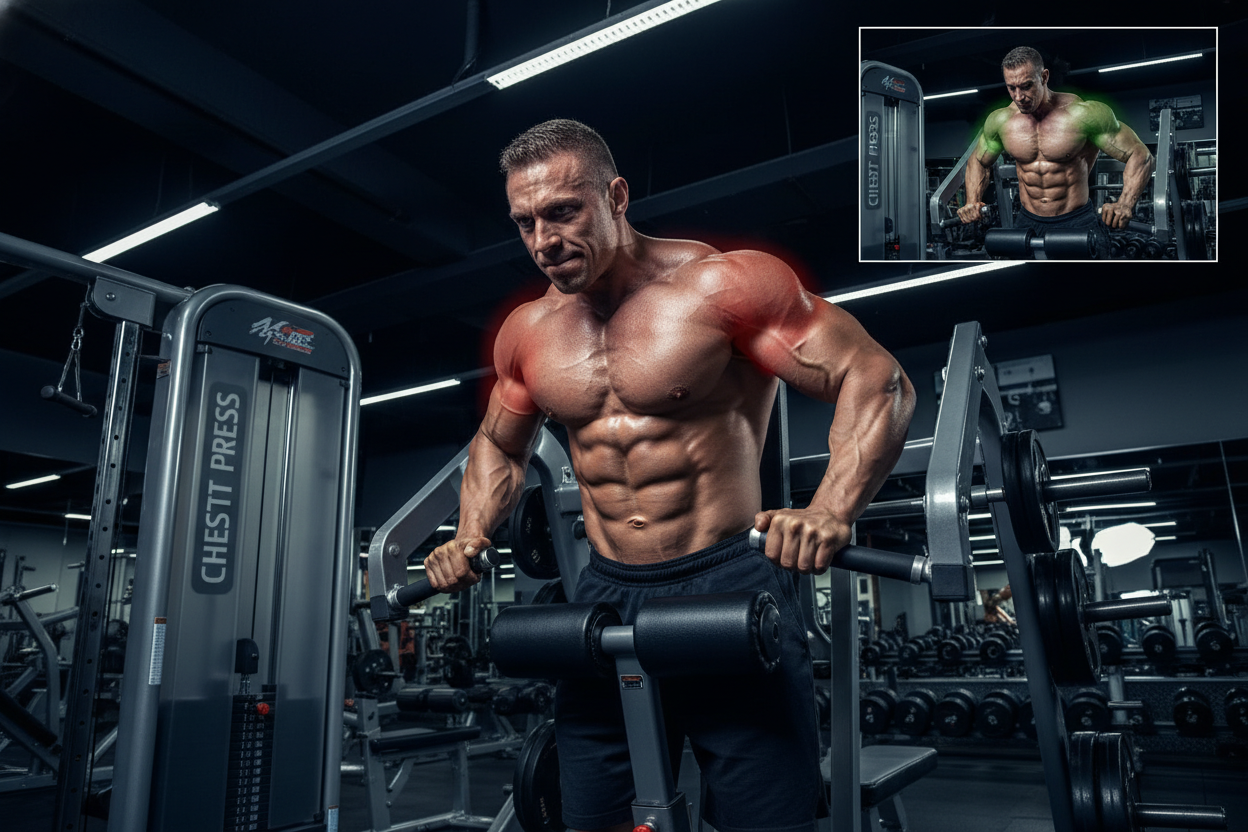
You can bench press a house, but a sharp pain deep in the socket stops you cold. It is the silent killer of gains: a weak or inflamed stabilizer system. Most lifters obsess over the mirror muscles—the front, side, and rear delts—while completely ignoring the mechanics that keep the arm attached to the body.
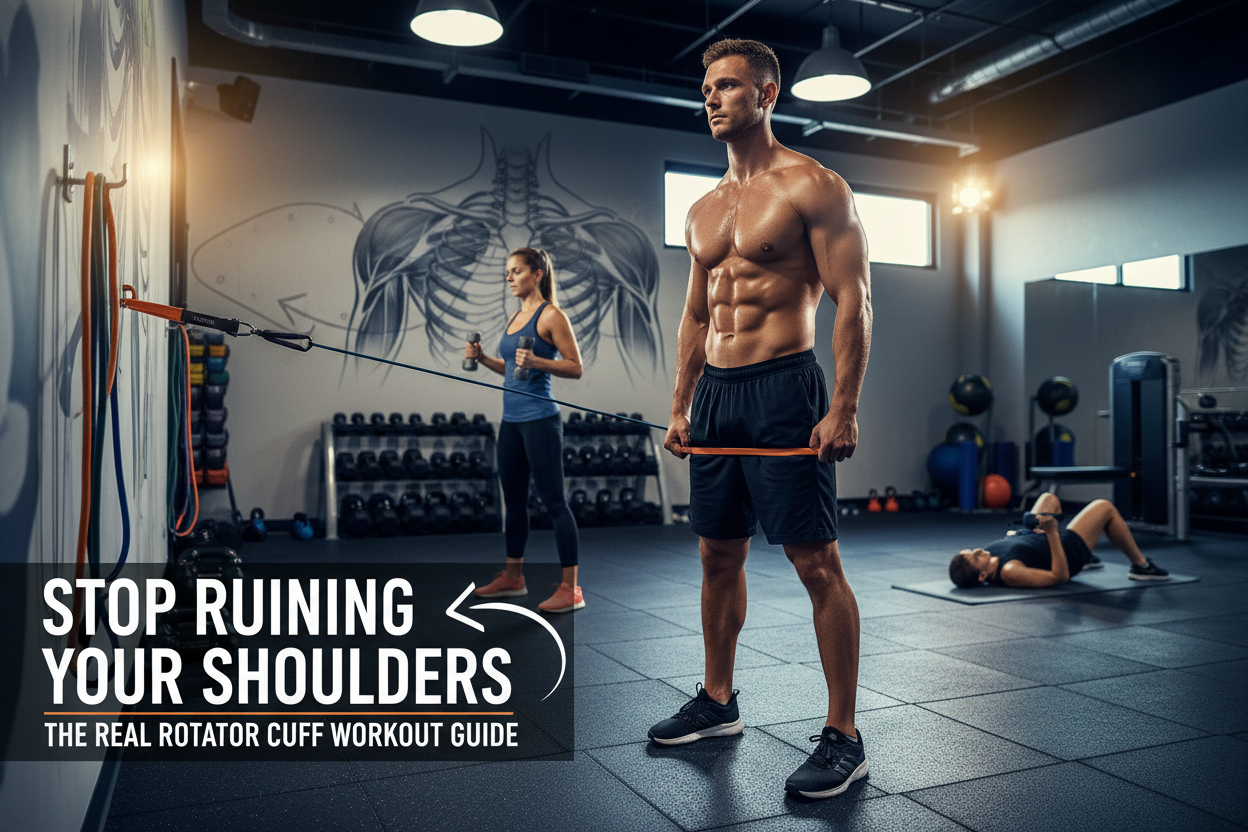
If you want longevity in the gym, you have to shift your focus to shoulder workouts rotator cuff integration. Without it, you are building a mansion on a foundation of sand. Let’s fix your mechanics before you end up in physical therapy.
Key Takeaways
- Stability Over Strength: The primary goal of the rotator cuff is to keep the humerus centered in the socket, not to move heavy loads.
- High Reps, Low Weight: These small muscles respond best to endurance work (15-20 reps) rather than max effort.
- Internal vs. External Rotation: Most lifters are tight internally (desk posture) and weak externally. Prioritize external rotation.
- Warm-up Mandatory: Never start a push day without activating the cuff first to lubricate the joint capsule.
The Science: Why Your Shoulder Needs “The Squeeze”
Think of your shoulder joint like a golf ball sitting on a tee. The "tee" is your scapula (shoulder blade), and the "ball" is your arm bone. The big deltoid muscles are designed to pull that ball up and away with force.
However, without the rotator cuff, the deltoids would pull the ball right off the tee—or in anatomical terms, jam it up against the acromion bone, causing impingement. The rotator cuff's job is to pull the ball down and in, creating a suction effect that stabilizes the joint while the big muscles do the heavy lifting. If you neglect this, friction occurs, and eventually, something snaps.
Programming Shoulder Rotator Exercises Correctly
When incorporating shoulder rotator exercises into your routine, you must leave your ego at the door. These muscles are small and fatigue easily. If you grab a heavy dumbbell, your massive deltoids will take over to compensate, rendering the exercise useless for the cuff.
1. The Face Pull (Done Right)
Most people treat face pulls like a back row. Instead, set the cable at eye level. As you pull the rope toward your forehead, actively rotate your hands back so your knuckles face the wall behind you. Hold the peak contraction for two seconds. This hits the rear delts and the external rotators simultaneously.
2. Side-Lying External Rotation
Lie on your side. Tuck a rolled-up towel between your elbow and your ribs. This towel is crucial—it prevents you from cheating by using your lat muscles. Holding a very light dumbbell (5lbs is usually plenty), rotate your arm upward toward the ceiling. Control the descent. If you feel the burn deep inside the shoulder rather than on the surface, you are doing it right.
3. The Scapular Wall Slide
Stand with your back against a wall. Press your lower back, elbows, and wrists flat against the surface. Slide your arms up into a “Y” shape without letting any contact point leave the wall. It looks easy, but it forces your stabilizers to fire aggressively to combat poor posture.
Common Mistakes That Destroy Progress
The biggest error I see is speed. Ballistic, jerky movements are dangerous here. The rotator cuff provides dynamic stability; it needs time under tension to learn how to hold the joint steady.
Another issue is range of motion. Do not force your shoulder into awkward positions. If you cannot rotate your arm past 90 degrees without pain, stop there. Forcing the joint through a "clicking" sound creates inflammation, not strength.
My Training Log: Real Talk
I learned this the hard way back in 2018. I was chasing a 315lb bench press and started feeling a pinch every time I unracked the bar. I ignored it, popped some ibuprofen, and kept pushing. Two weeks later, I couldn't even wash my hair without wincing.
The rehab process was humbling. I remember standing in the gym, surrounded by people deadlifting massive weight, while I was holding a bright pink 2-pound dumbbell doing external rotations. The physical sensation wasn't a "pump" like you get with biceps; it was a deep, toothache-like burn inside the joint that made me want to drop the weight.
But the most distinct memory was the "clunk." Before I fixed my cuff, my shoulder would audibly clunk during overhead presses. After six weeks of daily band pull-aparts and sleeper stretches, the silence in that joint was the best sound I’d ever heard. Now, I don't touch a barbell until I've done 50 band pull-aparts. It’s non-negotiable.
Conclusion
Building a massive upper body requires a base of stability. You cannot fire a cannon from a canoe. By dedicating ten minutes a week to specific rotator cuff work, you aren't just preventing injury; you are creating a stable platform that will eventually allow you to press heavier weights safely.
Frequently Asked Questions
How often should I train my rotator cuff?
You can train these muscles frequently because they recover relatively quickly. Doing light activation work (1-2 sets) before every upper body workout is excellent. For strengthening, dedicate 2-3 sessions per week at the end of your workout.
Can I use heavy weights to build the rotator cuff faster?
No. Using heavy weights almost guarantees that your larger muscle groups (deltoids, lats, pecs) will take over the movement. To isolate the cuff, you must use light resistance and focus on perfect mechanics.
What should I do if my shoulder clicks during these exercises?
Clicking without pain usually indicates a tendon snapping over a bony prominence or tight muscles. Reduce your range of motion to avoid the click and focus on scapular stability. If the clicking is accompanied by pain, stop immediately and consult a physical therapist.