Stop Using the Chest Muscle Machine Like This (Read This First)
You walk into the gym, and the barbell bench press stations are occupied. Again. Many lifters see this as a disadvantage, assuming that cables and levers are inferior to iron plates. That is a mistake. When hypertrophy (muscle growth) is the goal, stability is your best friend, and the right chest muscle machine can actually outperform free weights in specific contexts.
The problem isn't the equipment; it's the execution. Most people treat machine work as a break from "real" lifting, mindlessly pushing handles from point A to point B. If you want serious pectoral development, you need to stop moving weight and start contracting muscle.
Key Takeaways: Machine Training Summary
- Stability Equals Output: Machines remove the need to balance the weight, allowing your nervous system to drive 100% of the effort into the pec fibers.
- Converging Paths are Superior: Look for press machines where the handles move inward as you push out; this mimics the natural function of the chest.
- Safety at Failure: You can push to absolute mechanical failure without the risk of a barbell crushing your windpipe.
- Constant Tension: Unlike dumbbells, many machines (especially cables) keep tension on the muscle even at the top of the movement.
Why Stability Matters for Growth
There is a misconception that you must use stabilizer muscles to grow. While stabilizers are great for functional strength, they can actually be a limiting factor for hypertrophy. If your rotator cuff fatigues before your pecs do, your set ends prematurely.
A chest muscle machine provides external stability. Because the path of motion is fixed, your brain doesn't have to waste energy balancing the load. This allows for a higher motor unit recruitment in the pectoralis major. Essentially, you can isolate the target muscle and hammer it until it has no choice but to grow.
What Machines to Use at the Gym for Chest?
Not all hardware is created equal. Walking into a commercial gym can be overwhelming, so here is the hierarchy of effective equipment.
1. The Plate-Loaded Iso-Lateral Press
Often made by brands like Hammer Strength, this is the gold standard. It allows you to move each arm independently, correcting muscle imbalances. Crucially, good versions of this machine have a "converging" line of push—meaning your hands get closer together at the peak of the rep. This fully shortens the pec muscle, creating a contraction you simply cannot get with a straight barbell.
2. The Pec Deck (Machine Fly)
This is superior to dumbbell flys for one reason: resistance curves. With dumbbells, there is zero tension on your chest when your arms are vertical at the top. The gravity vector is straight down through your bones. The pec deck keeps tension on the muscle fibers throughout the entire range of motion, specifically in the shortened position where the chest is weakest.
3. Cable Crossovers
While technically a pulley system, this falls under the machine umbrella. It offers the most versatility for adjusting angles to hit the upper (clavicular) or lower (costal) head of the pecs.
Structuring a Chest Workout Using Gym Machines
If you are shifting to a machine-only session or an accessory block, you cannot just do three sets of ten and go home. Because machines are stable, you recover faster between reps. This means you must increase the intensity.
Focus on the Eccentric: Since you are safe from dropping the weight, take 3 to 4 seconds to lower the handles. This eccentric damage is a primary driver of growth.
Use Drop Sets: This is where machines shine. On a pin-loaded chest press, you can reach failure, immediately drop the pin down two plates, and continue. This extends the set and creates immense metabolic stress.
My Training Log: Real Talk
I want to be honest about the feel of these machines because the glossy brochures don't tell you the reality. I remember specifically training on an older, chain-driven chest press in a basement gym in Ohio. The knurling on the handles had been worn smooth, so I had to use chalk just to keep my grip from sliding as I got sweaty.
The thing about that specific machine was the friction. It wasn't a smooth glide like the new magnetic stuff. You could feel the grit in the movement, almost like a stutter, every time I transitioned from the eccentric to the concentric push. It was annoying, but it forced me to be explosive. I also recall the specific sound—that distinct, hollow clank-thud of the weight stack hitting the bottom when I failed my last rep. It’s a sound of defeat that actually signals a successful workout. If you aren't hearing that stack bottom out because your muscles literally gave up, you probably aren't pushing hard enough.
Conclusion
Don't let lifting purists tell you that you can't build a massive physique without a bench press. The chest muscle machine is a precision tool. It allows you to safely take your muscles to the brink of failure and target fibers that free weights often miss. Focus on the squeeze, control the negative, and use the stability to your advantage.
Frequently Asked Questions
Can I build a big chest using only machines?
Yes. Your muscles do not know if you are holding a barbell or a machine handle; they only recognize tension. As long as you apply progressive overload (increasing weight or reps over time) and train close to failure, you can achieve significant hypertrophy with machines alone.
How often should I use chest machines?
For most lifters, training chest twice a week is optimal. This allows for sufficient volume while giving the muscles 48 to 72 hours to repair and grow. You might dedicate one day to heavy pressing machines and another to isolation movements like flys.
What is the best seat height for the chest press machine?
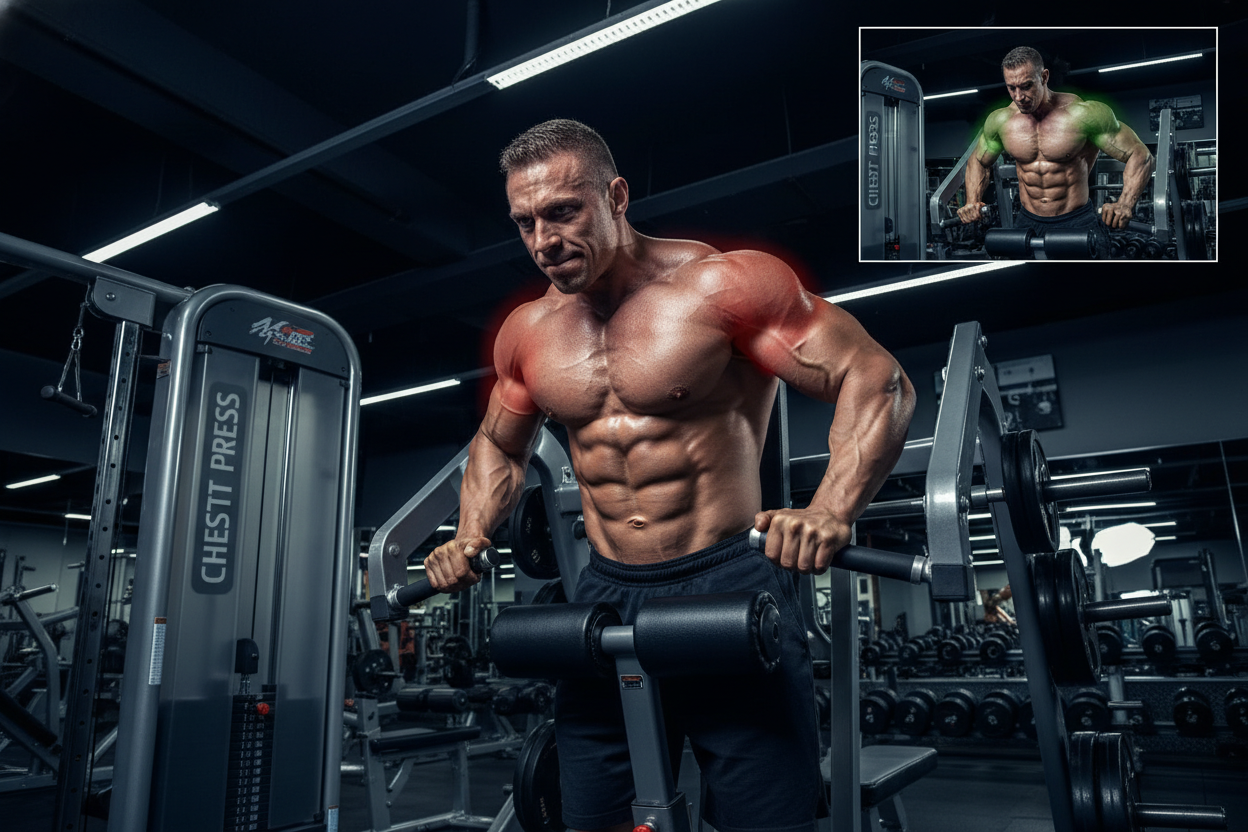
The handles should generally align with your mid-chest (nipple line). If the seat is too low, the handles will be near your neck, shifting tension to your shoulders and increasing injury risk. If it's too high, it becomes a tricep-dominant movement.