Stop Program Hopping: Commit to a 4 Week Program Workout
I have spent too many Sunday nights scrolling through social media feeds, hunting for a new 'killer' chest day routine because I got bored after exactly two sessions of my last one. It is a trap that keeps your gains stagnant and your ego bruised. If you are constantly hunting for the secret exercise or a new 'hack,' you are missing the fundamental truth of training: your body needs a reason to change, and that reason is consistency. Committing to a 4 week program workout is not just a suggestion; it is the minimum entry fee for real progress.
Quick Takeaways
- Muscle confusion is a marketing myth; neurological adaptation takes time.
- A 28-day block is the perfect balance between adaptation and boredom.
- Progressive overload requires tracking the same lifts for several weeks.
- Protecting your joints with proper flooring is non-negotiable for high-frequency blocks.
The Muscle Confusion Myth (Why You Need to Stop Winging It)
The fitness industry loves the term 'muscle confusion.' They want you to believe that if you do the same workout twice, your muscles 'get used to it' and stop growing. It is total nonsense. In reality, the first two weeks of any new routine are mostly your brain learning how to fire the right neurons to perform the movement. You aren't actually getting stronger yet; you're just getting less clumsy.
When you change your exercises every single session, you never move past that neurological learning phase. You’re essentially a permanent beginner. To actually build tissue, you need to stick with a movement long enough to master the technique so you can eventually move enough weight to cause mechanical tension. Stop trying to 'surprise' your muscles and start demanding they perform.
Why a Workout Plan for 4 Weeks Is the Ultimate Sweet Spot
I’ve found that most lifters fall into two camps: the 'same routine for three years' crowd and the 'new routine every Monday' crowd. A workout plan for 4 weeks is the middle ground that actually works. It is long enough to force physiological adaptation through progressive overload, but short enough that you won't lose your mind to boredom.
Four weeks allows you to run a condensed version of a periodized block. You spend the first week finding your baseline, the middle weeks pushing the pace, and the final week seeing what you're truly capable of. If you're looking for a long-term strategy, check out this Monthly Home Workout Plan: The 4-Week Phase Guide to see how these blocks stack together over several months.
How to Actually Progress During Your 4 Weeks Workout Plan
You can't just do the same reps and weights for twenty-eight days and expect a miracle. You need a trajectory. In week one of your 4 weeks workout plan, you’re establishing baselines. Don't go to failure. Leave two reps in the tank and focus on perfect form. You’re setting the stage.
By week two and three, you should be adding weight or adding reps. If you did 200 lbs for 8 reps last week, you’re doing 205 lbs or aiming for 10 reps this week. Week four is your 'realization' phase. This is where you push the intensity and fight for those personal records. For those looking to bring up a specific weak point, like a lagging chest, I’ve seen great results using a 4 Week Chest Focused Workout Split For Maximum Gains as a specialized block within a larger year-long plan.
A No-BS 4-Week Gym Workout Plan You Can Run at Home
You don't need a 40-piece cable circuit to get big. A solid 4-week gym workout plan should be built around the 'Big Five': Squats, Deadlifts, Overhead Press, Bench Press, and Rows. If you have a barbell and a set of dumbbells, you have everything you need to get stronger than 90% of the people at your local commercial gym.
Structure your week with a simple Upper/Lower split or a Push/Pull/Legs rotation. Focus on hitting each muscle group twice a week. Don't worry about 'finisher' moves or fancy isometric holds until you've added 20 pounds to your main lifts. The goal of these four weeks is to own the basics. If it feels repetitive, good. That means you're actually practicing a skill instead of just 'exercising.'
Your Concrete Garage Floor Is Going to Destroy Your Knees
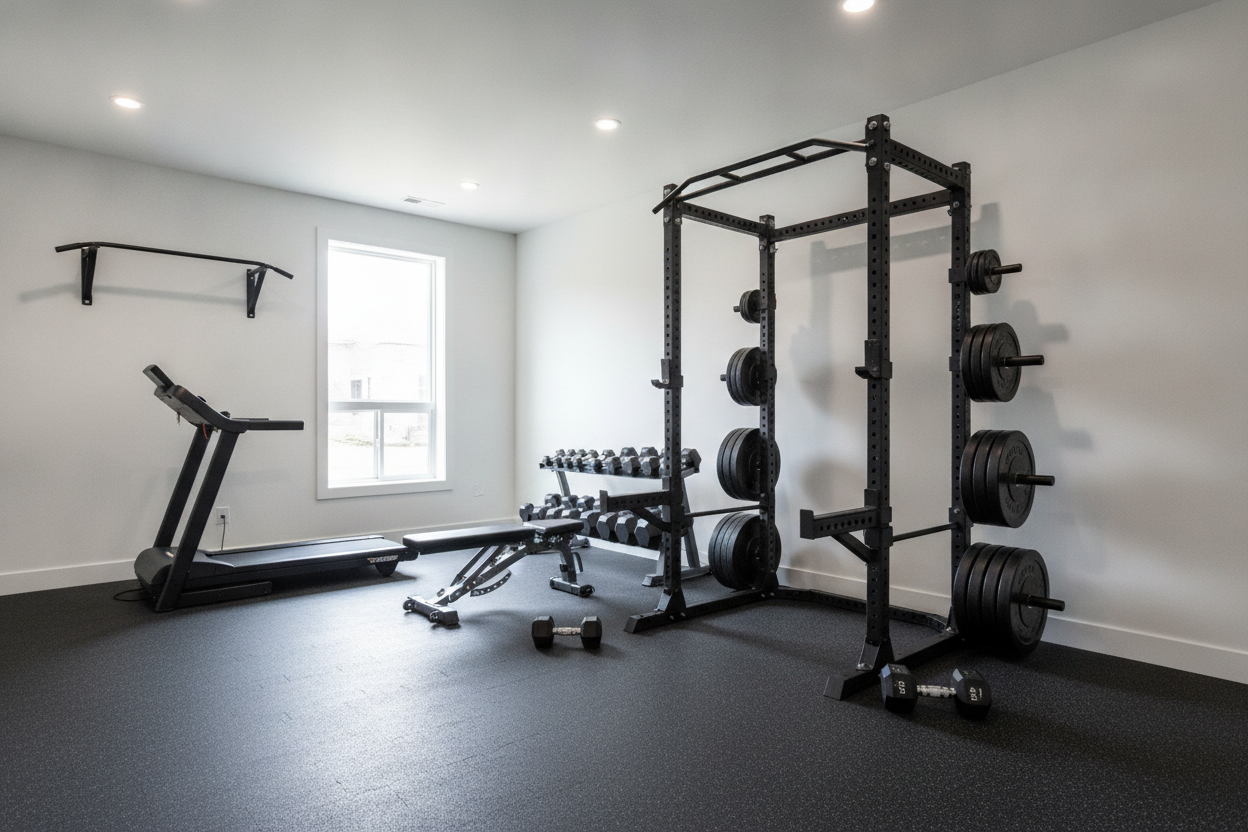
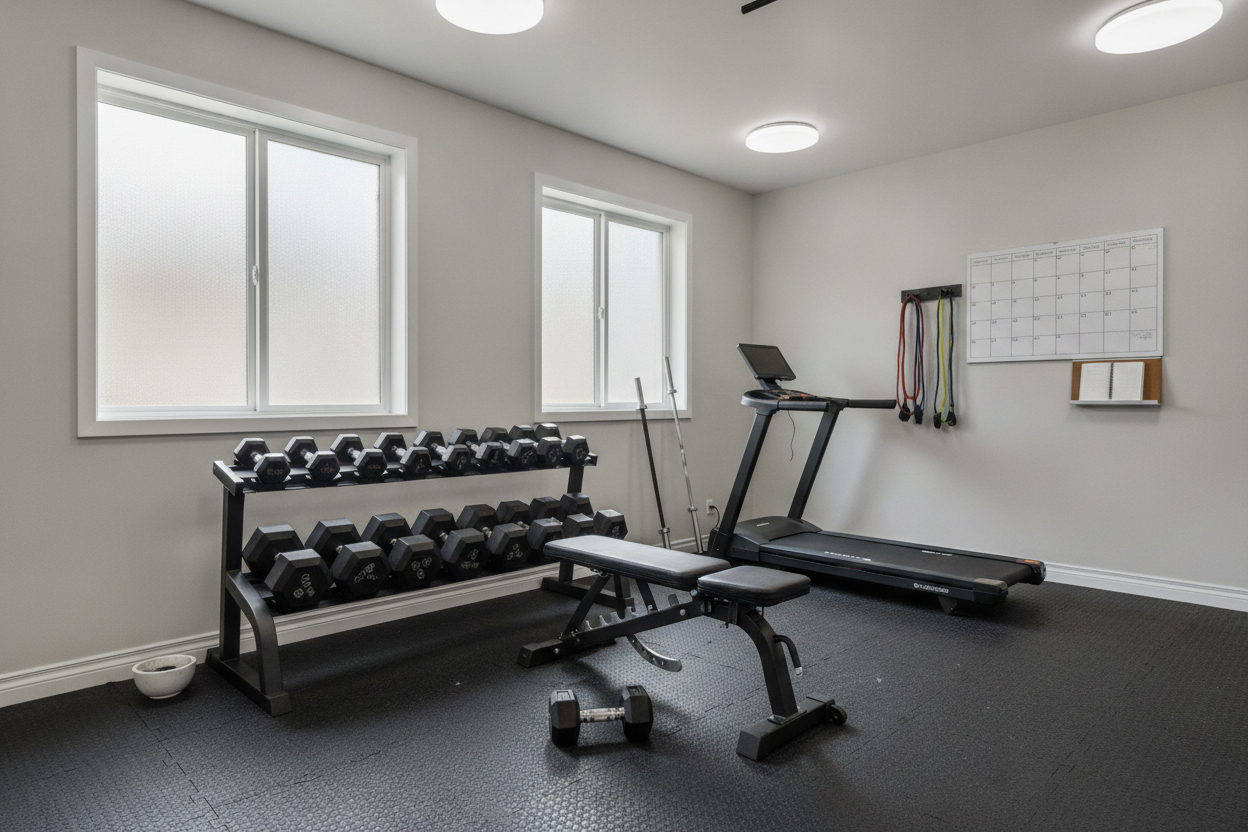
If you are training in a garage or a basement, listen up. Running consistent 4 week workout plans means you are hitting the floor hard and often. Lifting heavy on bare concrete is a recipe for chronic joint pain. I learned this the hard way after a month of heavy squats left my knees feeling like they were filled with crushed glass.
You need a surface that absorbs shock without being 'squishy' like a cheap yoga mat. I eventually upgraded to a 6X8Ft Exercise Mat Yoga Mat Gym Flooring For Home Workout, and the difference was immediate. It’s dense enough to support a squat rack but has enough give to save your joints during high-volume sessions. Don't let bad flooring be the reason you quit on week three.
What Happens on Day 29?
Once you hit the end of your block, you have a choice. If you’re still making progress and feeling fresh, add five pounds to your lifts and run the loop again. If you’re feeling beat up, take a deload week where you cut your volume in half before starting a new phase. You can find your next challenge over at the Workout Hub when you're ready to switch gears. The key is to have a plan for day 29 before day 28 even arrives.
Personal Experience: The Program Hopping Trap
I used to be the king of the 'One Week Program.' I’d find a routine online, buy all the specific supplements the author recommended, and then quit by Wednesday of week two because I didn't see a new vein in my bicep yet. My progress was non-existent. It wasn't until I forced myself to finish a boring, basic 4-week linear progression that I actually saw my deadlift move from 315 to 335. I realized that the 'boredom' I was feeling was actually just the hard work of adaptation. Now, I don't let myself change a single exercise until the 28 days are up.
FAQ
Is 4 weeks enough to see muscle growth?
You won't look like a pro bodybuilder in a month, but you will see noticeable changes in muscle fullness and significant jumps in strength. Most of the early 'gains' are your nervous system becoming more efficient.
Should I take a rest week after 4 weeks?
It depends on your intensity. If you truly pushed for PRs in week four, a 'deload' week (doing the same movements with 50% of the weight) is a smart move to let your connective tissues recover.
Can I do this with just dumbbells?
Absolutely. You can run the same 4-week structure using dumbbell variations of the main lifts. Just make sure you have enough weight to keep the 'progressive' part of progressive overload alive.