Stop Powerlifting: Real Strength and Conditioning Training for Athletes
I remember the day I finally hit a 405-pound squat in my garage. I felt like a god until I went to play a pickup game of soccer that weekend. I was heavy, my ankles felt like they were encased in concrete, and a teenager with pipe-cleaner legs blew past me in the first five minutes. I had the absolute strength, but I had zero strength and conditioning training for athletes. I was just a slow powerlifter in a pair of cleats.
Most gym rats fall into this trap. We see a barbell and think the only way to get better is to add 5 pounds every week until the bar bends. But athletics strength and conditioning isn't about your one-rep max. It is about how much force you can put into the turf in the split second before you change direction.
Quick Takeaways
- Max strength is a tool, not the destination.
- Stop doing circus acts on BOSU balls; you need stable ground to produce power.
- Focus on Rate of Force Development (RFD) to actually get faster.
- Your home gym needs shock-absorbing flooring if you value your joints.
You Are Not a Powerlifter (So Stop Training Like One)
The biggest mistake I see is people treating the weight room as the sport itself. If you are training for strength and conditioning for athletes, the barbell is just a means to an end. A 600lb deadlift is impressive, but if it takes you five seconds to grind it out, it has almost zero carryover to a 40-yard dash.
This is exactly why I hate most strength and conditioning programs for athletes that you find online. They are usually just basic bodybuilding or powerlifting templates with a few box jumps thrown in as an afterthought. You need to train movements, not just muscles, and you need to respect the fact that your recovery is a finite resource.
The BOSU Ball Trap vs. Real Athletic Power
We have all seen that trainer who has their athletes doing single-leg squats on a BOSU ball. They call it 'functional training.' I call it a waste of time. You cannot produce high levels of force on an unstable surface. Physics doesn't allow it. For effective strength conditioning athletes, you need to apply massive force against a solid floor.
Real functional training is a heavy kettlebell swing or a clean pull. These movements teach your hips to explode. If you want to improve your balance, do it on the field where the game actually happens. In the gym, we are there to build the engine. Don't trade a 400-watt engine for a 20-watt engine just because you want to look cool balancing on a rubber half-sphere.
Rate of Force Development: The Holy Grail of Sports Performance
In most sports, you have about 0.1 to 0.2 seconds to apply force. A max-effort squat takes way longer than that. This is why strength and conditioning for sports performance focuses on Rate of Force Development (RFD). It is the speed at which your central nervous system can recruit motor units.
To train this, you have to move weights fast. I am talking about 50-60% of your max moved with 'intent.' If the bar is moving slowly, you aren't training power; you're training grind. Throwing med balls, performing weighted jumps, and using sub-maximal loads for speed are what actually bridge the gap between the rack and the finish line.
Structuring Your Weekly Plan Without Frying Your CNS
You cannot go 100% every day. If you try to mix heavy lifting, sprinting, and plyometrics without a plan, your central nervous system (CNS) will redline. I have been there—waking up feeling like I got hit by a truck, wondering why my vertical jump actually went down after a month of training. Sports strength and conditioning requires a high-low approach.
You should group your high-stress CNS work (sprints, heavy squats, jumps) on the same days, followed by 48 hours of low-intensity recovery. When you are ready to get serious about your schedule, look into the 3 phases of real strength and conditioning training at home. It breaks down how to transition from a base-building phase into a true peak for your season without burning out by week four.
The Home Gym Setup for Explosive Field Athletes
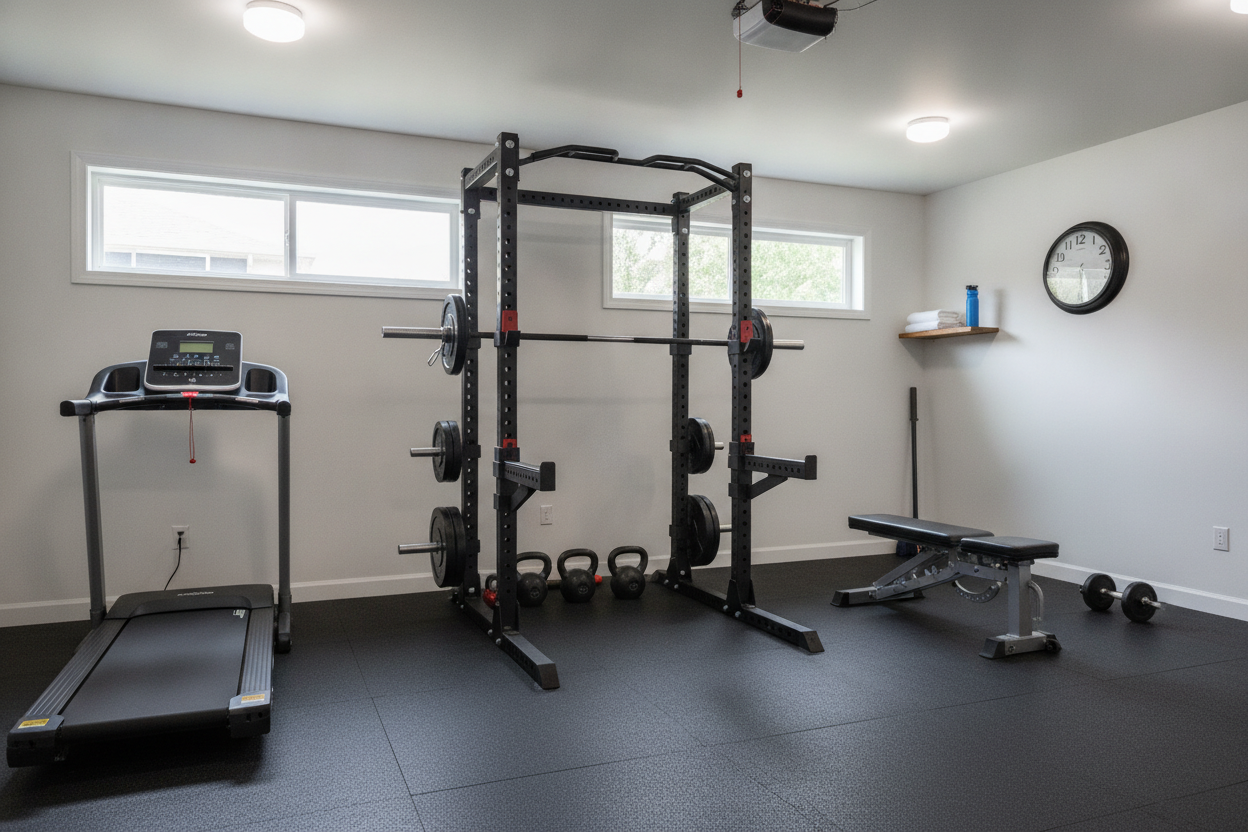
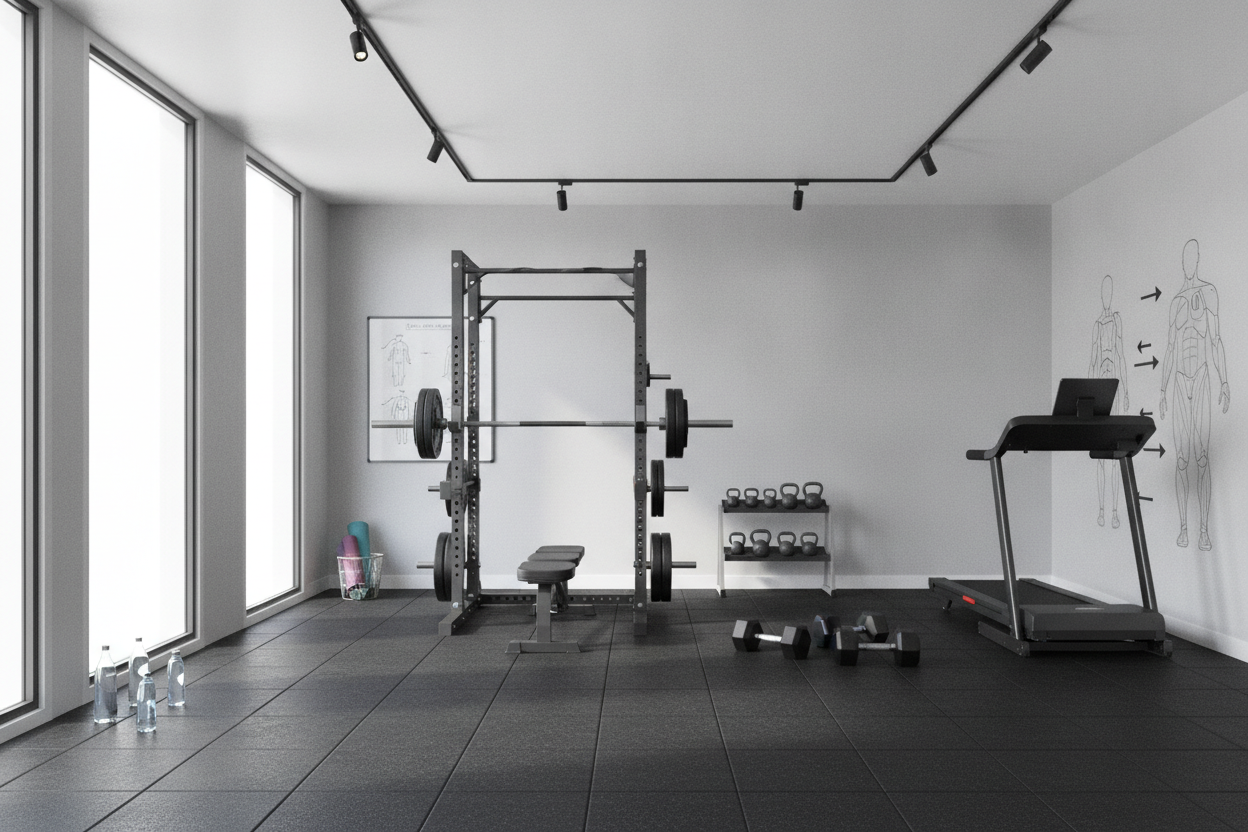
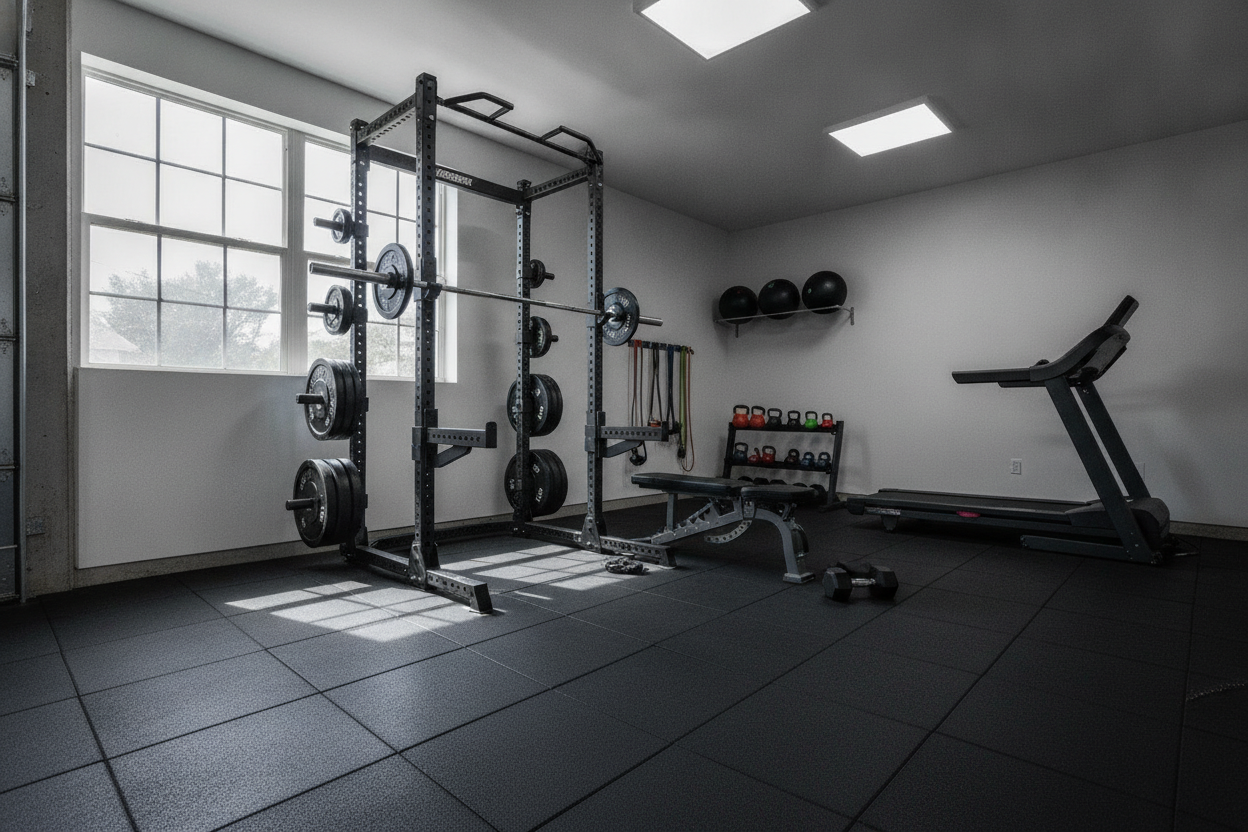
If you are training in a garage, you need more than just a rack. You need space to move laterally. Most home gyms are too cramped. I cleared out my workbench just to have a 10-foot lane for lateral bounds and medicine ball slams. Your joints will thank you if you stop jumping on bare concrete.
I highly recommend picking up a large exercise mat for cardio 6x12. Having that extra real estate means you can do agility drills and plyos without slipping or destroying your knees. It fits perfectly under a standard power rack while still giving you plenty of room to move outside the uprights. Don't cheap out on flooring; it is the most underrated piece of equipment for any field athlete.
Personal Experience: My Lead Leg Phase
A few years ago, I got obsessed with my back squat numbers. I added 50 pounds to my max in three months, but I stopped doing my sprints and plyos because I was 'too tired.' When I finally got back on the court, I felt like I was wearing lead boots. I had lost my 'pop.' It took me two months of backing off the heavy weights and focusing on reactive jumps to get my speed back. Learn from my ego: the weight on the bar is a tool, not the trophy.
FAQ
Do athletes need to deadlift?
Not necessarily. A trap bar deadlift is usually safer and more 'athletic' for most people. It puts you in a more upright position that mimics a jump start better than a straight bar does.
How many days a week should an athlete lift?
Two to three days is usually the sweet spot. Any more than that and you usually start sacrificing the quality of your actual sport-specific practice or speed work.
Are plyometrics dangerous?
Only if you are unprepared. You need a baseline of strength first. If you can't squat your own body weight with good form, you have no business doing high-level depth jumps.