Stop Mimicking Machines During Your Workout on Legs
I remember the first time I tried to 'hack squat' with a barbell wedged behind my heels in my cramped basement. I thought I was being clever, trying to replicate that 45-degree angle of a commercial machine. Instead, I spent three weeks icing a strained lower back because I ignored a basic rule of physics: free weights don't have tracks. If you are planning a workout on legs in your garage or spare room, you have to stop trying to turn your dumbbells into a $5,000 piece of commercial equipment.
- Machines provide stability; free weights demand it from your core.
- Replicating machine angles with loose weights often leads to joint shear.
- Your floor is your most important piece of 'equipment' for lower body safety.
- Functional mass comes from movements that balance over your mid-foot.
The Hidden Trap of Home Free Weight Training
The biggest mistake I see home lifters make is trying to force an exercise of leg development into a shape it doesn't belong in. You see a guy on YouTube doing a 'sissy squat' holding a plate, leaning back at a 45-degree angle, and you think that's how you hit quads. In a commercial gym, a hack squat machine supports your spine and guides your path. At home, that same lean puts massive, unnecessary shearing force on your patellar tendons and lumbar spine.
When you try to recreate these awkward angles with a dumbbell or kettlebell, you lose the ability to produce maximum force. Your brain is too busy trying to keep you from falling over to actually recruit muscle fibers. Every legs exercise you perform at home should feel 'grounded.' If you feel like you are balancing on a tightrope, you aren't building muscle; you are just practicing a bad circus act.
Why Your Living Room Isn't a Commercial Gym
Commercial machines allow you to isolate a muscle because the machine handles the stabilization. When you move to a home setting, your core and stabilizer muscles have to pick up the slack. This is why you shouldn't try to lean back or artificially shift your center of gravity during any exercise in leg routines. Without a fixed track, your body will naturally try to compensate for the weight, often by rounding the back or shifting weight into the toes.
If you really want that locked-in feeling for hypertrophy, you should master leg exercise on Smith machine setups when you have access to them. But at home? You need to respect the vertical line of gravity. Free weights want to go straight down. If you try to fight that by mimicking a machine's arc, the weight wins, and your joints lose.
Ground Up: The Foundation of Safe Lifting
In a commercial gym, the floor is usually bolted-down rubber or high-impact turf. At home, you might be dealing with slippery concrete or, heaven forbid, hardwood. Your feet are your only point of contact with the earth, and they are your primary source of stability for every legs exercise. If your feet slide even a quarter-inch during a heavy set of lunges, your knee takes the hit.
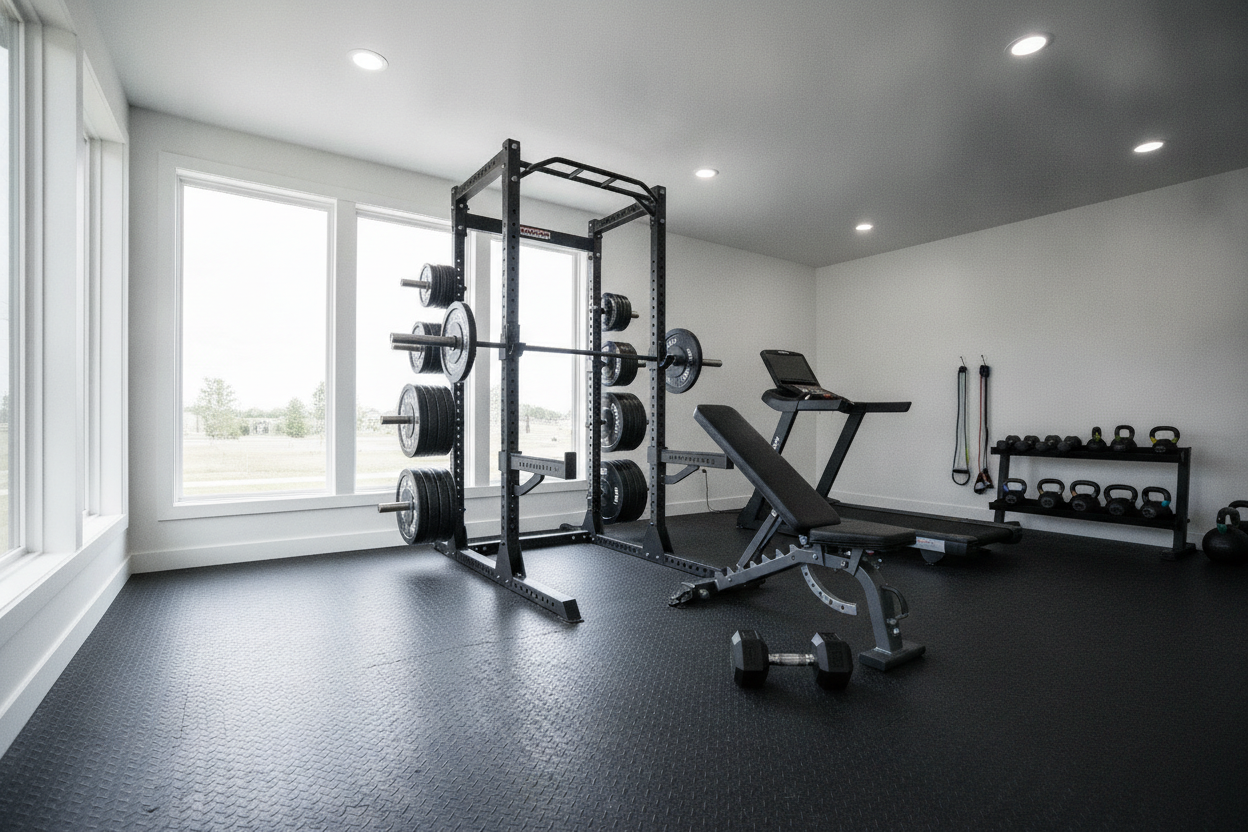
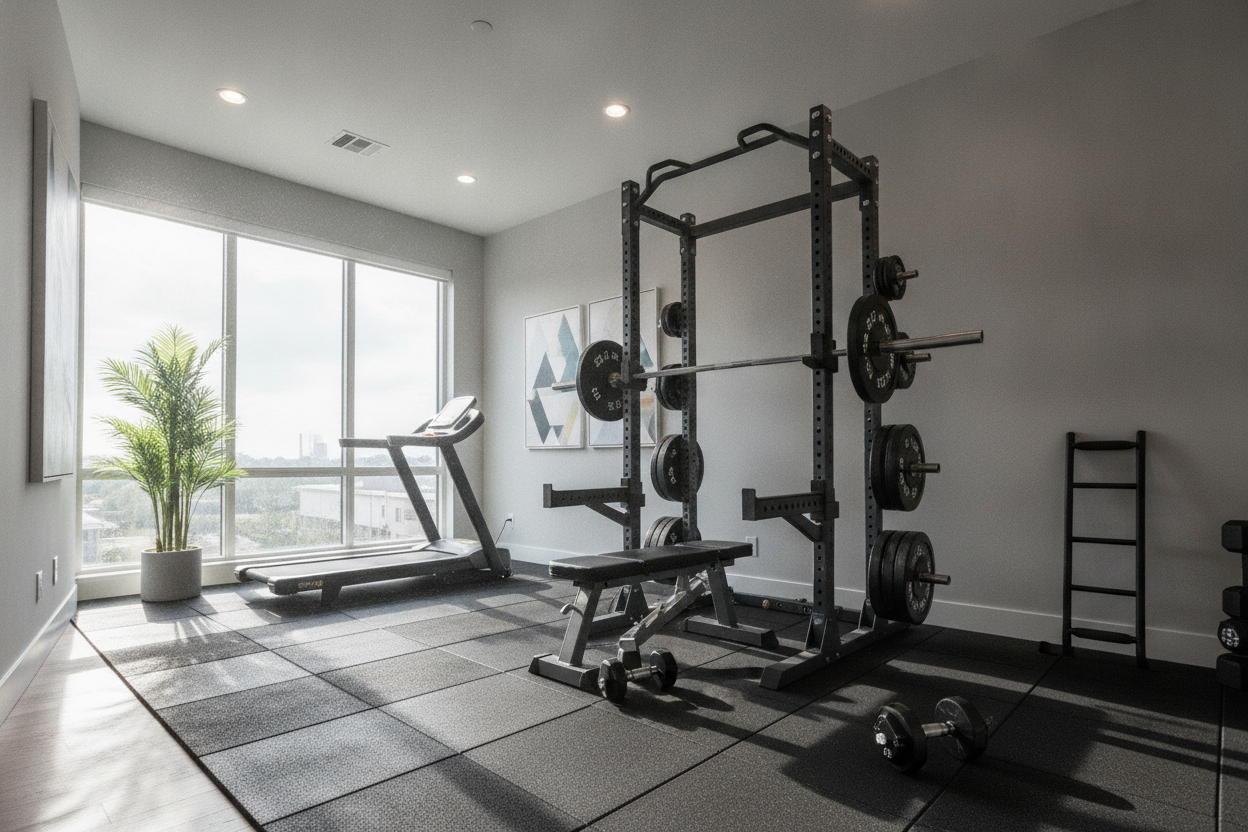
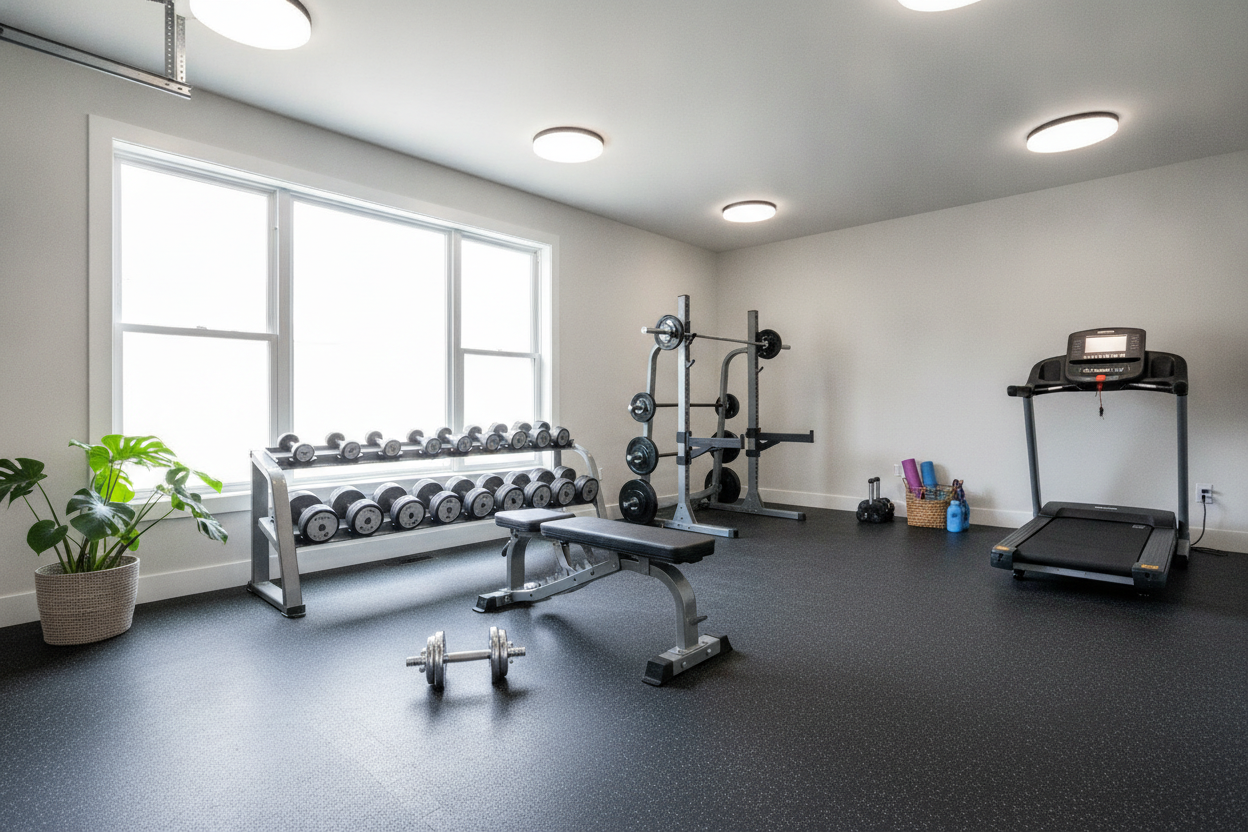
I eventually learned that a yoga mat doesn't cut it for a 200-pound squat. You need a dedicated large exercise mat for home gym use to create a high-traction environment. I personally use a heavy-duty 6x8ft exercise mat because it gives me enough runway for wide-stance squats and lateral lunges without the edges curling up. High-traction flooring allows you to drive through your mid-foot, which is where real power is generated.
A Smarter Approach to At-Home Lower Body Mass
Instead of trying to find a hack for the leg press, stick to a three-movement protocol that actually works with free-weight mechanics. Start with the Goblet Squat. It forces you to stay upright and keeps the weight centered. Follow that with a Reverse Lunge. It’s the safest exercise for leg growth because it keeps the front shin vertical, protecting the knee. Finally, hit Romanian Deadlifts to target the posterior chain.
Choosing the right exercise for leg development at home means picking movements that naturally balance over your mid-foot. Don't get distracted by flashy 'isolation' moves you see on social media. Many people get caught up in the science of exercise for losing thigh fat and end up doing high-rep fluff that doesn't build strength. If you want to change the shape of your legs, you need to move meaningful weight safely.
Forget the Fluff and Master the Basics
You don't need a dozen different daily leg exercises to see results. In fact, doing too much variety often leads to 'junk volume' where you're tired but not actually getting stronger. To effectively exercise your legs, you need to focus on progressive overload. Add five pounds to the bar, or do one more rep than last week. That is the only 'secret' that actually matters.
Stop trying to turn your garage into a 1990s Gold's Gym. You don't have the tracks, the cables, or the spotters. What you do have is the ability to master the most fundamental human movements. Stick to the basics, invest in a solid floor, and leave the complicated machine angles for the days you actually make it to a commercial facility.
My Personal Experience with Home Leg Days
I spent a year trying to do 'dumbbell leg extensions' sitting on a kitchen chair. It was awkward, my ankles hurt, and my quads didn't grow an inch. The day I ditched the 'hacks' and started doing heavy Bulgarian Split Squats on a stable mat was the day my legs actually started to fill out my jeans. The biggest mistake I made was thinking I needed to mimic every machine I saw at the gym to get a 'complete' workout.
FAQ
Can I do a leg press at home without a machine?
Not safely. Most 'hacks' involve lying on your back and pushing a barbell up with your feet. This is incredibly dangerous. Do heavy squats or lunges instead; they hit the same muscles with much higher safety.
How do I stop my feet from slipping during lunges?
Ditch the socks and the cheap yoga mats. Use a high-traction rubber mat and wear shoes with a flat, non-compressible sole. Stability starts at the floor.
Are daily leg exercises a good idea?
Generally, no. Your legs are massive muscle groups that need 48 to 72 hours to recover from heavy loading. Training them every day usually leads to tendonitis rather than growth.