Stop Squeezing: How to Load the Best Glute Exercises With Weights
I spent three years doing kickbacks with a 5-pound ankle weight because some influencer told me the 'burn' was all that mattered. My glutes didn't grow an inch, but my shins got real tired of being bruised by Velcro. If you want actual results, you have to stop treating your glutes like a small accessory muscle and start treating them like the powerhouse they are by using the best glute exercises with weights.
Quick Takeaways
- Mechanical tension beats metabolic stress (the burn) for muscle growth every time.
- Barbells and heavy dumbbells allow for the progressive overload you can't get from bands.
- Stability is the secret to glute recruitment—if you're wobbling, you aren't growing.
- A heavy hip thrust, a deep lunge, and a controlled hinge are the only three movements you really need.
Why 'Chasing the Burn' Sabotages Your Lower Body Gains
We’ve been lied to by the 'booty burn' culture. You know the vibe: 50 reps of air squats followed by 100 reps of banded side-steps. It feels like your glutes are on fire, so you assume they’re growing. In reality, you’re just accumulating metabolic waste products and fatiguing your nervous system without actually challenging the muscle fibers. To grow a muscle, you need mechanical tension—that means moving heavy weight through a full range of motion.
When you focus too much on 'the squeeze' at the top of a rep with light weights, you’re usually under-loading the muscle during the most important part of the movement: the stretch. Don't get me wrong, The Best Gym Workout to Gain Muscle Starts With the Lightest Weights when you're warming up your hips and getting your brain to talk to your glutes, but that's the appetizer. The main course has to be heavy iron.
If you can do more than 20 reps of an exercise without your form breaking down, the weight is too light. You aren't building a posterior chain; you're just doing cardio with a weird posture. To force adaptation, you need to load the muscle to a point where it has no choice but to get stronger and thicker.
My 3 Picks for the Best Glute Exercises With Weights
I’ve tried every weird cable variation and machine out there. Most of them are fluff. If you have a barbell, some plates, and a solid set of dumbbells, you have everything you need. These three movements are the gold standard because they allow for the highest amount of external load while keeping your hips in a position to do the work.
Heavy Barbell Hip Thrusts (Done Right)
The hip thrust is the king of glute isolation because it keeps the glutes under maximum tension at the shortest point of the contraction. But most people in home gyms fail here because their setup is garbage. If you’re trying to thrust against a couch or a lightweight bench that slides across your garage floor, you’ll never go heavy enough. You need a rock-solid anchor.
I personally use the Gxmmat Adjustable Weight Bench because it has the grip and the weight to stay put when I'm loading 315-plus on the bar. Set the bench height so the edge hits just below your shoulder blades. Don't just mindlessly pump out reps. Tuck your chin, keep your ribs down, and drive through your heels. If you’re doing sets of 20, you’re playing around. Aim for the 8-12 rep range where the last two reps feel like a fight.
Deficit Reverse Lunges
Standard walking lunges are fine, but deficit reverse lunges are superior for glute development. By standing on a 2-4 inch platform (like a bumper plate), you increase the range of motion at the bottom. This puts the glute max into a deep stretch under load. This 'stretch-mediated hypertrophy' is a massive driver for growth that you simply don't get with floor-level lunges.
Hold a pair of heavy dumbbells at your sides. Step back, drop your back knee toward the floor, and lean your torso slightly forward. That forward lean shifts the center of mass and forces the glutes to pull you back up to the starting position. It’s brutal, it’s humbling, and it works better than any cable kickback ever will.
Romanian Deadlifts (RDLs)
The RDL is often called a hamstring exercise, but if you do it right, it’s a glute builder. The secret is the 'soft knee.' A stiff-leg deadlift targets the hams, but by keeping a slight bend in your knees and focusing on pushing your hips as far back as possible—like you’re trying to close a car door with your butt—you shift the load to the glutes. Stop the bar just below the knees; going to the floor often rounds the back and takes the tension off the target.
How to Structure the Best Glute Workout With Weights
Programming doesn't need to be complicated. You don't need twelve different exercises. You need three or four done with high intensity. A low-volume, high-load approach is almost always better for natural lifters trying to build size. If you do these three movements with total focus, you won't have the energy for anything else.
Start with your heaviest compound movement—the Hip Thrust—while your nervous system is fresh. Move to the RDL to hit the posterior chain, and finish with the Deficit Reverse Lunge to fully fatigue the fibers. If you're looking for a specific template to follow, Stop Wasting Reps The Best Booty Workout With Weights Revealed covers the exact set and rep schemes I use to keep progress moving without hitting a plateau.
Remember: progressive overload is the only rule that matters. If you lifted 135 lbs for 10 reps last week, try for 140 lbs or 11 reps this week. Write it down. If you aren't tracking your numbers, you're just exercising, not training.
The Home Gym Equipment That Actually Matters for Heavy Loading
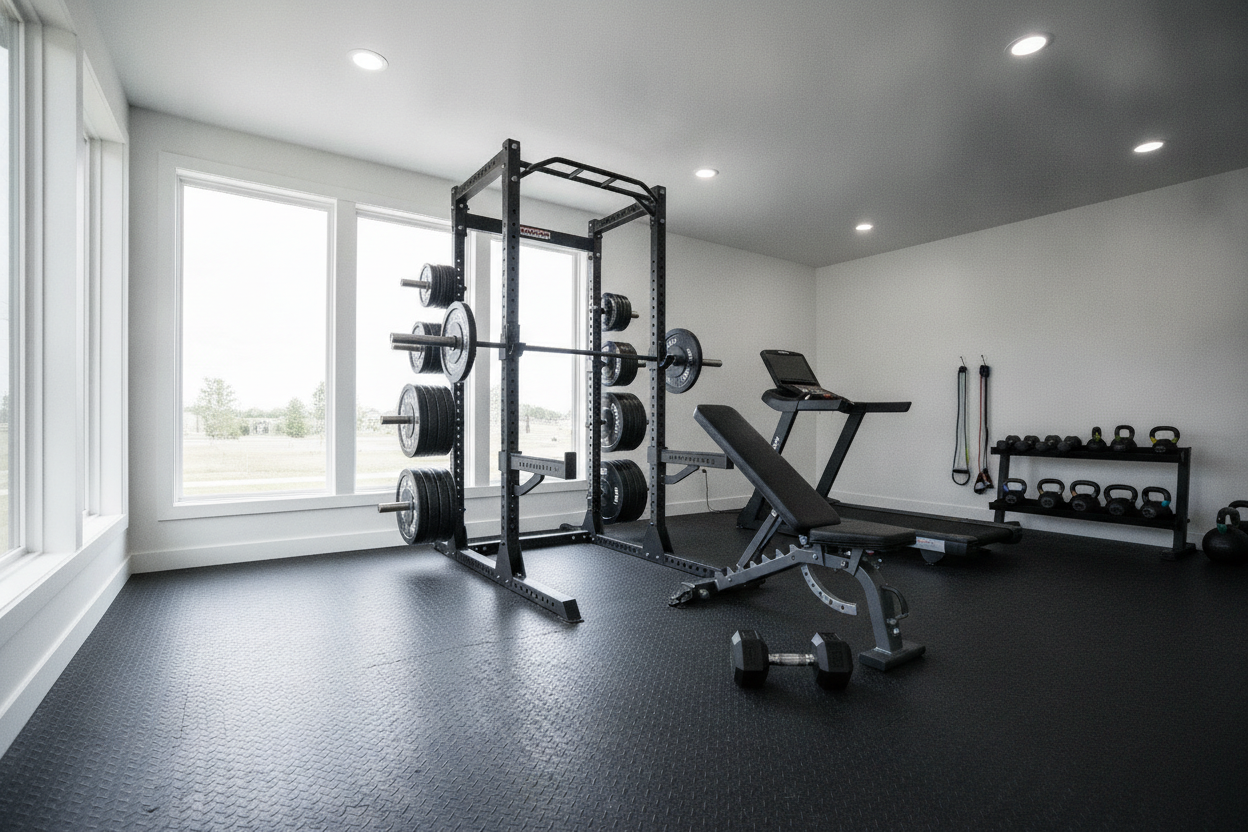
You don't need a $3,000 glute drive machine. You need a barbell that won't snap and plates you aren't afraid to drop. In a home gym, safety is your responsibility. When you're pushing to failure on an RDL or a heavy thrust, you need to know you can bail without destroying your foundation or your floor.
I always recommend Gxmmat Bumper Plate Sets for this exact reason. They have a consistent diameter which is crucial for the starting height of your hip thrusts and RDLs. Plus, the high-density rubber means if you hit true muscular failure and have to drop the bar, you won't crack your concrete or wake up the neighbors. Invest in heavy iron, a sturdy bench, and a floor that can take a beating. The rest is just noise.
My Personal Experience: The Folding Chair Incident
Early in my home gym days, I tried to save money. I didn't want to buy a real weight bench, so I used a metal folding chair for hip thrusts. I loaded up 225 lbs—which was heavy for me at the time—and on the third rep, the chair legs buckled. The bar rolled down my thighs and crushed my shins against the floor. I couldn't walk right for two weeks. It was a painful lesson: your equipment is your partner. If it's cheap and unstable, your brain will subconsciously 'cut off' your strength to protect you from falling. Once I got a real bench and some bumper plates, my numbers shot up because I finally felt safe enough to actually push hard.
FAQ
Can I get the same results with just dumbbells?
You can get close, but eventually, you'll run out of grip strength or dumbbell sizes. Barbells allow for much heavier loading, which is necessary for long-term glute growth. Dumbbells are great for lunges and RDLs, but the hip thrust really needs a bar.
How many times a week should I train glutes?
Twice a week is the sweet spot for most people. It allows for enough volume to trigger growth but gives you enough recovery time to actually get stronger between sessions. If you're still sore from Monday, don't hit them again on Wednesday.
Do I need to wear lifting shoes?
For glute work, flat shoes or even lifting barefoot is better than squishy running shoes. You want a solid connection to the floor so you can drive through your heels without your ankles wobbling.