Stop Lifting to Failure in Your Workout to Get Big
I remember a cold Tuesday night in my garage, trying to grind out one last squat rep with 315 on my back. No spotter, just me and a rack that’s seen better days. I hit the wall, the bar crashed onto the safeties, and my central nervous system felt like it had been plugged into a toaster. I thought that was the only way to trigger a workout to get big. I was wrong.
We have been fed this idea that if you aren't screaming through a final rep, you're wasting your time. But after years of testing gear and programs, I’ve realized that the 'no pain, no gain' mantra is actually keeping you small. Real growth happens through accumulated volume, not just individual set intensity.
Quick Takeaways
- Training to failure every set fries your central nervous system (CNS) and kills your weekly volume.
- Reps in Reserve (RIR) is the most effective way to track intensity for mass.
- Leaving 2 reps in the tank allows for faster recovery and more total sets per week.
- Proper floor support is non-negotiable when your volume increases.
- Deload weeks are mandatory to clear systemic fatigue.
The 'Leave It All On The Floor' Trap
The common bodybuilding misconception is that muscle growth is a direct result of suffering. You see the pros on Instagram grinding out reps until their eyes pop, and you think that’s the blueprint for a get big workout. In reality, those guys are often outliers with recovery capacities that the average garage gym lifter simply doesn't have.
When you take every single set to absolute mechanical failure, you aren't just taxing your muscles; you are taxing your central nervous system. This is especially true for heavy compound lifts like deadlifts or squats. If you're training in a home gym without a spotter, hitting failure is also a safety hazard. Once your CNS is fried, your strength drops off a cliff for the rest of the session. You might feel 'hardcore,' but you've turned your session into a burnout machine rather than a growth stimulator.
Why Keeping Reps in the Tank Actually Builds More Mass
Enter the concept of Reps in Reserve (RIR). It is exactly what it sounds like: how many more reps could you have done with good form before failing? Science and my own training logs show that stopping exactly 2 reps short of failure is the 'sweet spot' for hypertrophy.
By leaving those 2 reps in the tank, you avoid the massive fatigue spike that comes with total failure. This means you can recover in 48 hours instead of 72. It means you can perform more high-quality sets over the course of a week. In the world of get huge workouts, total weekly volume is the king. If you can do 15 high-quality sets of chest per week by using RIR, you will grow more than the guy who does 5 sets to failure and is too sore to move for the next six days.
The Math Behind Get Huge Workouts
Let's look at the numbers. Imagine you’re benching 225 lbs. You go for a set of 10 to absolute, soul-crushing failure. You’re done. Your next set, you can only manage 6 reps because you're gassed. Total reps: 16. Total weight moved: 3,600 lbs.
Now, imagine you do 4 sets of 8 reps with that same weight, leaving 2 reps in the tank each time. Because you didn't redline your CNS, you can maintain that performance across all four sets. Total reps: 32. Total weight moved: 7,200 lbs. You just doubled your workload. That is how you actually get big.
Structuring Your Volume for the Week
If you want to apply this, stick to a consistent 3-day or 4-day split. Focus on the 'big rocks'—squats, presses, and rows. For every set, pick a weight where you feel like you could hit 12 reps, but stop at 10. You should finish the set feeling like you worked hard, but not like you need a nap.
Consistency beats intensity every single time. If you can show up and hit your RIR targets for 12 weeks straight without getting injured or burnt out, you will see more progress than any 'extreme' program could offer. If you're struggling to build a routine around this pacing, you can browse our workout hub for templates that prioritize this kind of sustainable volume.
Protecting Your Foundation When Moving Heavier Iron
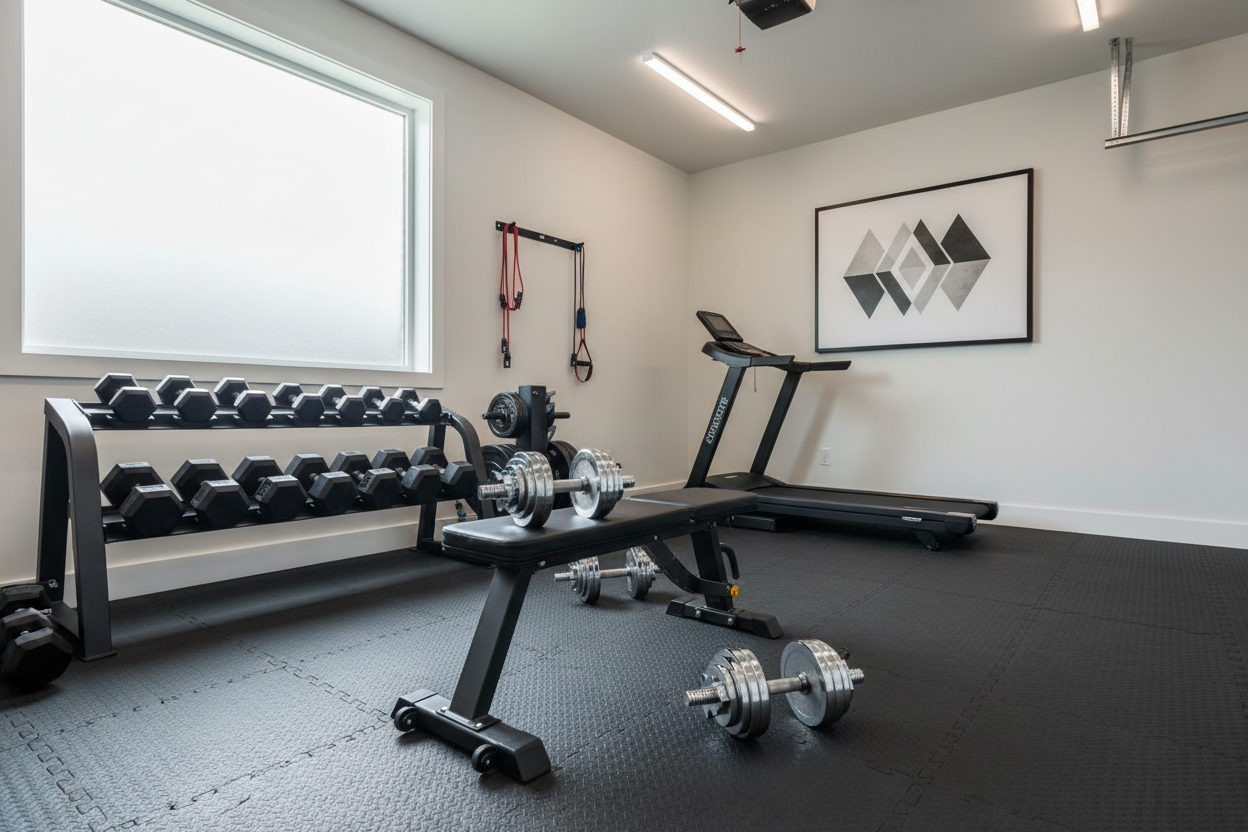
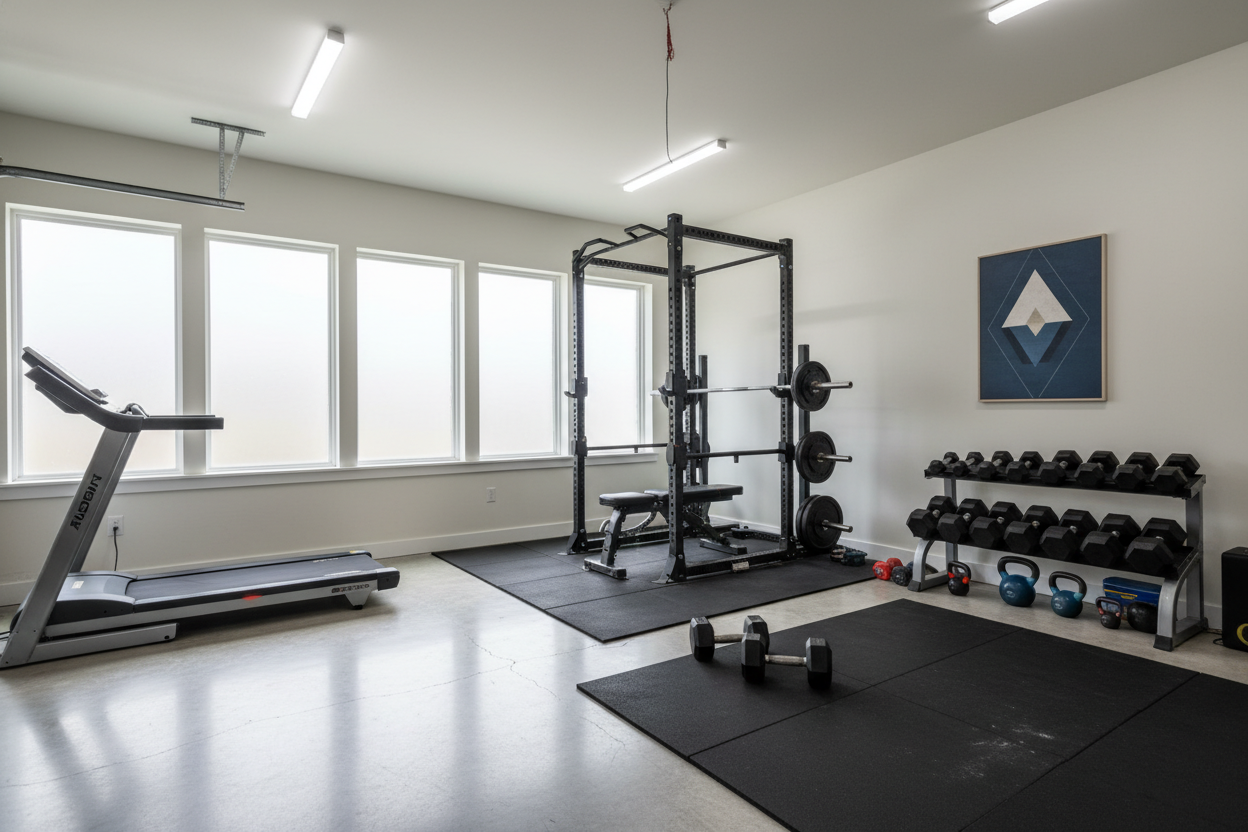
As you increase your total weekly volume, your joints are going to feel it. You’re moving more total poundage than ever before. This is where your environment matters. I spent years lifting on bare concrete, and my knees paid the price every time I dropped a heavy dumbbell or finished a high-rep squat session.
You need a foundation that absorbs shock so your bones don't have to. Investing in a high-quality shock-absorbing exercise mat is a must for a high-volume mass phase. It saves your joints during those heavy barbell complexes and protects your subfloor when you’re racking weights after a long set. Don't let a joint injury stall your progress.
What to Do During Your Inevitable Deload Week
Even with RIR pacing, fatigue eventually catches up. Every 4 to 6 weeks, you need to deload. This doesn't mean sitting on the couch; it means dropping the intensity and the heavy iron to let your connective tissues heal.
During this week, I usually swap out the heavy barbell work for something that focuses on blood flow and stability. It primes the body for the next high-volume block. A quick stability ball workout is a perfect way to keep the body moving and work on your core without adding to your systemic fatigue. Think of it as a tune-up for your engine before you start redlining again.
Personal Experience: The Ego Check
I learned this the hard way back in 2018. I was obsessed with 'grinding.' I hit failure on every set of overhead press for a month straight. My reward? A shoulder impingement that kept me out of the gym for eight weeks. I lost more muscle during that recovery time than I ever gained during those 'hardcore' sessions. Now, I live and die by the RIR 2 rule. My joints feel better at 35 than they did at 25, and I'm actually bigger because I haven't missed a week of training in two years.
FAQ
Is training to failure ever okay?
Yes, but save it for the very last set of an isolation exercise, like curls or lateral raises. Never do it on squats, deadlifts, or heavy presses if you want to stay healthy.
How do I know if I actually have 2 reps left?
It takes practice. Record your sets. If your bar speed slows down significantly (the 'grind'), you're likely at RIR 1 or 0. If the bar is moving smooth but you're breathing hard, you're usually in the RIR 2-3 zone.
Can I get big with just 3 days a week?
Absolutely. If you use the RIR method to maximize your volume on those three days, you can easily outperform someone training six days a week who is constantly overtrained and injured.