Stop Hiding Behind Math: A Simple Muscle Building Routine
I have spent more time than I care to admit staring at Excel spreadsheets, color-coding my 'optimal' RPE targets and calculating the exact percentage of my one-rep max for a Tuesday afternoon session. It is a trap. We buy the fancy apps and follow the influencers who preach 'bio-mechanically superior' movements, yet we look exactly the same as we did last year. Most of us are just using math to hide from the fact that we aren't lifting heavy enough stuff.
The truth is that a simple muscle building routine is far more effective than a complex one you can't actually finish. When you strip away the noise, you're left with the work. And the work is what actually puts meat on your frame. If your garage gym is collecting dust because your 12-page PDF program is too intimidating to start, it is time to pivot.
- Focus on four core movement patterns: Push, Pull, Squat, and Hinge.
- Progressive overload is the only metric that matters—add weight or reps every week.
- Mastering a few movements beats being mediocre at twenty exercises.
- Your environment dictates your consistency; clear the floor and get to work.
Complexity is Just Procrastination in Disguise
We love to obsess over the 'perfect' angle for a lateral raise or whether a high-bar squat is better than a low-bar squat for hypertrophy. Usually, this is just a psychological stalling tactic. It is easier to research micro-cycles than it is to grind out a set of 10 squats that makes you want to see your lunch again. This constant tweaking of a simple workout plan to gain muscle is just procrastination with a better wardrobe.
Stop worrying about 'muscle confusion.' Your muscles don't have brains; they have tension receptors. They don't know if you're using a $3,000 selectorized machine or a rusty barbell from Craigslist. They only know if they are being forced to adapt to a load they haven't handled before. If you spend more time on YouTube than under a bar, you’re doing it wrong.
The Anatomy of a Bare-Bones Mass Builder
A simple muscle building workout plan doesn't need to be a 6-day-a-week grind. You need a heavy push (overhead press or bench), a heavy pull (weighted pull-ups or rows), a squat pattern (goblet, back, or front), and a hinge (deadlift or RDL). That is it. These movements recruit the most motor units and trigger the systemic response required for growth.
When I finally realized I was doing too much 'filler,' I decided to shrink my workout plan for muscle gain to just 45 minutes. I stopped doing three variations of tricep extensions and just focused on getting my weighted dips from bodyweight to 45 lbs for reps. My arms grew more in three months of heavy basics than they did in two years of 'optimal' isolation work.
Why 4 Exercises Will Always Beat 14
Movement mastery is an underrated component of hypertrophy. If you change your exercises every two weeks, you never actually get good at them. You spend the first week just figuring out the balance and the second week finally feeling the muscle. By sticking to a simple workout plan to build muscle, you become a technician. When you are technically proficient at a movement, you can safely push it to the absolute limit of your physical capacity.
Execution Trumps Your Spreadsheets
A simple workout plan for muscle gain only works if you respect proximity to failure. Most people leave 5 reps in the tank because those last 5 reps hurt. In a home gym, without a spotter or a crowd, it's easy to bail early. You don't need a degree in sports science to know when a set is done. If the bar speed slows down significantly and your form starts to crack, you’re there. That is where the growth lives.
If you find yourself stalling after a few months of this bare-bones approach, don't go looking for a more complicated 12-week program. Look at your recovery and your intensity. Sometimes, you just need a short, focused block like the workout plan to gain muscle that fixed my plateau to spark new progress before returning to your foundational lifts.
Setting Up Your Space for Frictionless Lifting
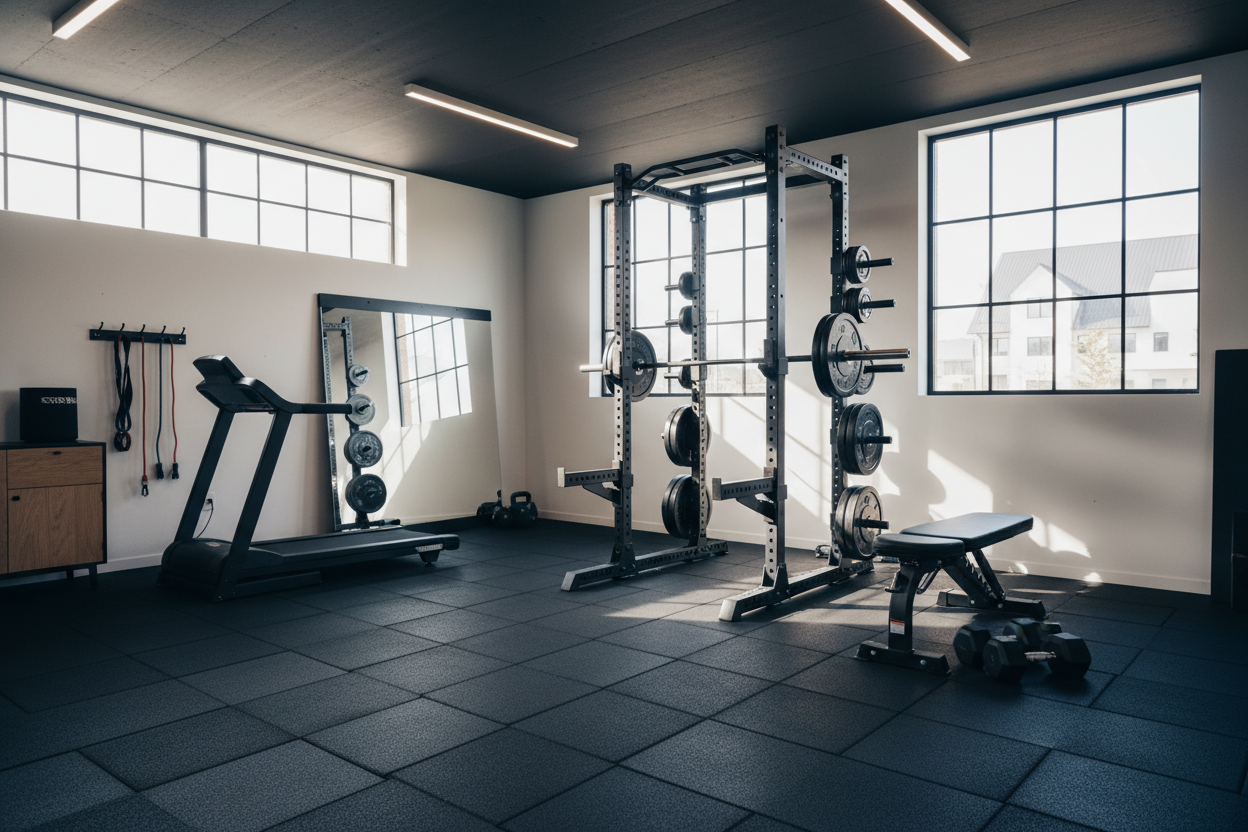
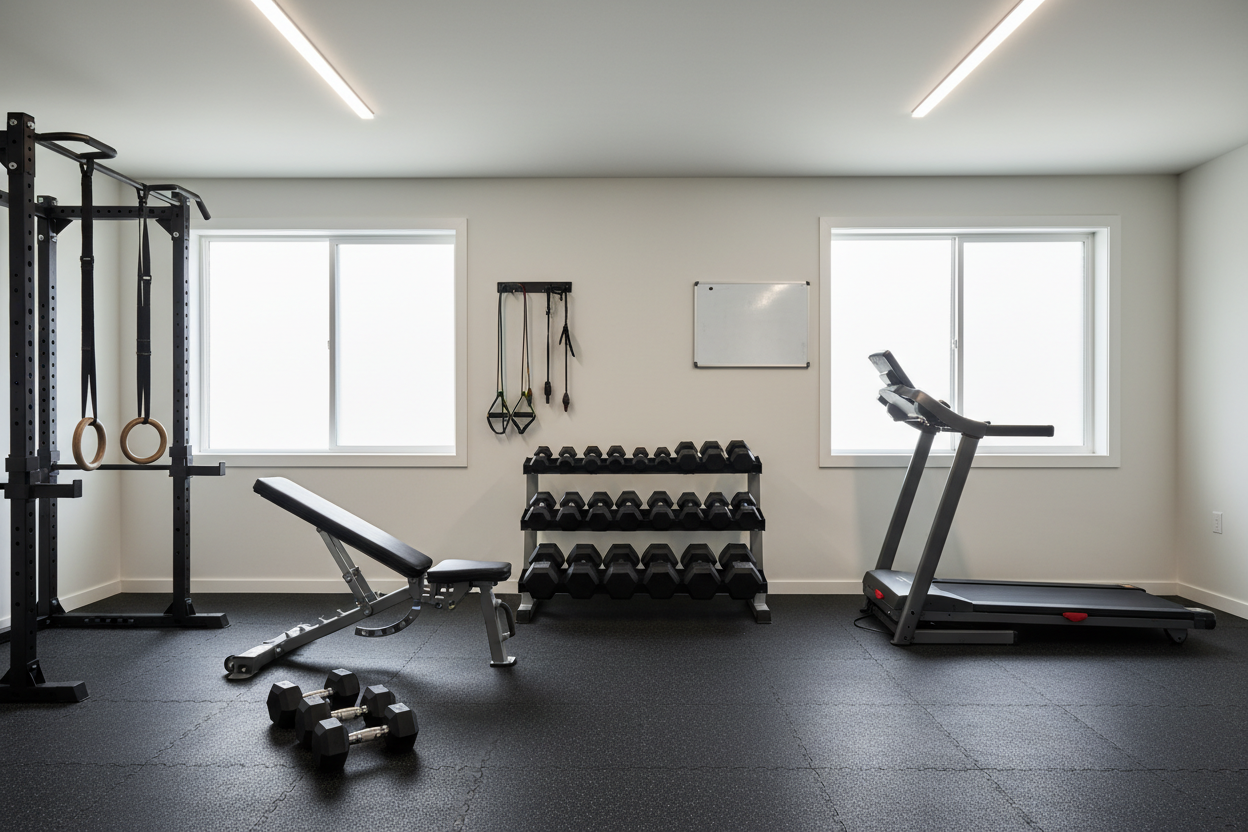
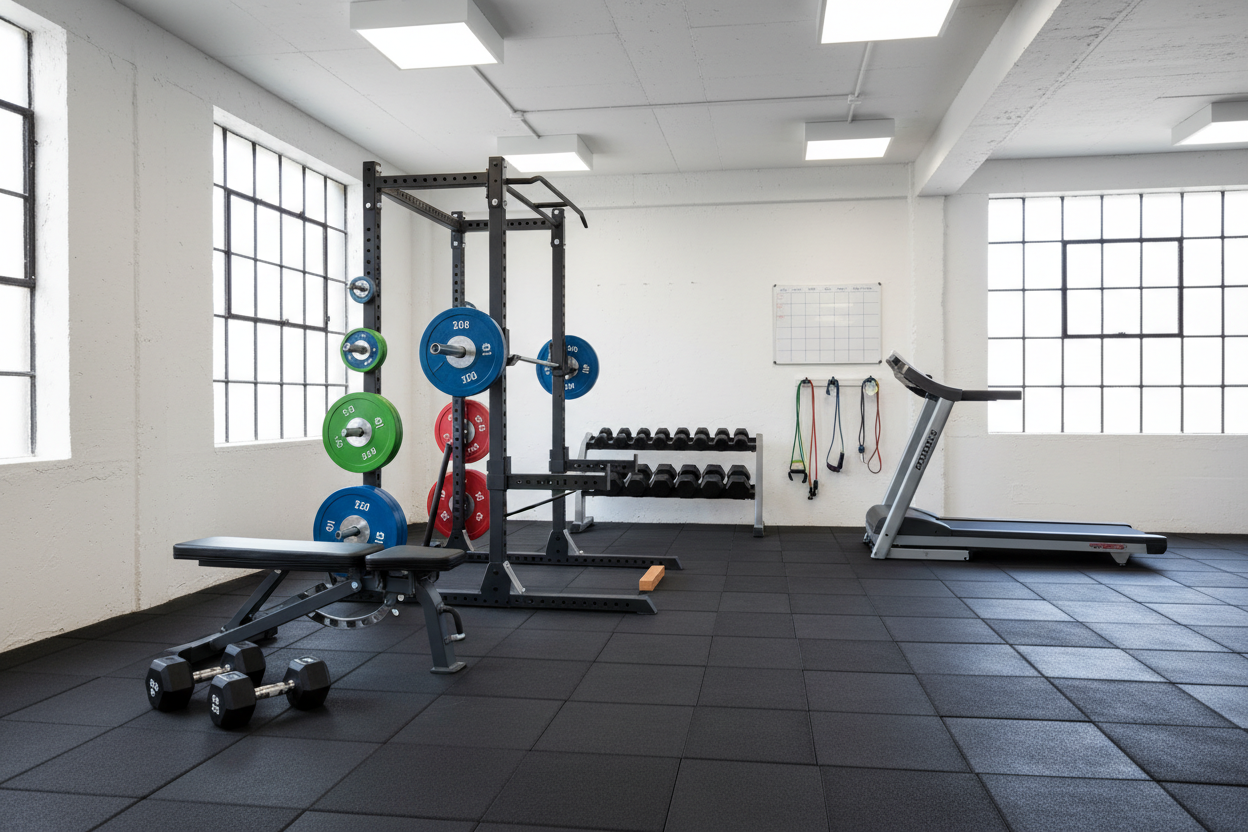
Your gym environment is your silent training partner. If you have to move a lawnmower and three boxes of holiday decorations just to get to your rack, you aren't going to train. A simple workout routine to gain muscle requires a dedicated space where you can drop a bar without worrying about the concrete or your shins. I learned this the hard way when I chipped my foundation doing power cleans on bare cement.
Invest in high-quality gym flooring for home workout setups. Having a 6x8ft non-slip zone means you can set your feet with confidence and focus entirely on the lift. When the floor is ready and the rack is clear, there are no excuses left. You walk in, you lift, you leave.
What to Do When the Routine Feels 'Too Boring'
Boredom is where the gains are made. The 'boring' middle part of a program is where you stop making 'newbie gains' and start building real tissue. Don't chase novelty; chase the logbook. If you hit 225 lbs for 5 reps last week, try for 6 this week. That extra rep is more exciting than any new exercise variation could ever be.
If you truly feel the need for variety, keep the core lifts the same and only rotate your accessories every 8 weeks. If you want to see how to structure those rotations without losing the plot, check out our Workout Hub for more foundational frameworks. Stay the course, keep it simple, and stop hiding behind the math.
Personal Experience: The Junk Volume Trap
I once ran a program that had me doing 32 sets per workout. I was in the gym for two hours, drinking intra-workout carbs, and checking my watch every three minutes. I was exhausted, but I wasn't getting stronger. My joints hurt, and my motivation was in the gutter. I cut my volume by 60%, focused on four movements, and my bench press jumped 20 lbs in a month. I wasn't under-training before; I was just doing too much garbage that didn't matter.
FAQ
Do I need machines for a simple muscle building routine?
No. Barbells and dumbbells are more than enough. Machines are great for isolation, but they aren't the foundation. If you have a rack, a bar, and some plates, you have everything you need to get huge.
How many days a week should I train?
Three to four days is the sweet spot for most people. It provides enough frequency to trigger growth but enough rest to actually recover and grow. Remember, you don't grow in the gym; you grow while you sleep.
What if I don't have a heavy barbell?
Use whatever you have—kettlebells, sandbags, or adjustable dumbbells. The principle remains the same: pick a difficult movement, do it with high intensity, and try to do more of it over time.