Stop Guessing: How to Find a Workout Routine That Works
I have spent way too many nights staring at a 12-week powerlifting spreadsheet at 1:00 AM, convinced it was the 'secret sauce' I needed to finally hit a 405-lb squat. I would look at the RPE charts and the percentage-based waves, feeling like a scientist, only to realize two weeks later that I did not have a mono-lift or a dedicated spotter to actually execute the heavy singles. Most people fail not because they lack discipline, but because they chose a program meant for a professional athlete while living the life of a busy human with a job and a mortgage. Learning how to find a workout routine that actually sticks is about matching reality to the equipment in your garage.
Quick Takeaways
- Consistency beats 'optimal' programming every single time.
- Be brutally honest about your weekly schedule before picking a split.
- Audit your home gym hardware to ensure you can actually perform the lifts.
- Avoid programs that rely on novelty over progressive overload.
The Trap of 'Optimal' Programming
Everyone wants the perfect plan. We scroll through forums and social media looking for the ultimate split, convinced that if we just find the right combination of sets and reps, the gains will be automatic. The truth about how to choose a workout routine is that the 'best' one is the one you will actually do on a rainy Tuesday when you are exhausted and the garage is freezing. We suffer from 'shiny object syndrome,' jumping from a Russian squat routine to a bodybuilding 'bro split' every three weeks. This is the fastest way to stay exactly where you are.
Stop looking for magic spreadsheets. If you are constantly searching for the perfect program, you are likely avoiding the hard work of the one you already have. Understanding how to find the best workout plan for me starts with looking in the mirror and being honest about your recovery. Are you sleeping eight hours? Is your stress low? If not, that high-volume professional athlete program will just break you in half. You do not need 'optimal' yet; you need 'sustainable.'
Step 1: Audit Your Actual Free Time
I once tried to run a high-volume Bulgarian squat cycle while working 60 hours a week in a warehouse. I lasted exactly nine days before my knees felt like they were filled with broken glass and I was falling asleep in my truck during lunch. You have to be brutally honest with yourself here. If you have kids, a career, and a life outside the gym, you probably do not have two hours a day to spend under a barbell. When people ask me about how to find the best workout plan for me, I tell them to look at their calendar first, not their goals.
A 3-day full-body split often yields better results than a 6-day split because you actually have time to recover between sessions. If you commit to 6 days and miss 2, you feel like a failure and quit. If you commit to 3 days and hit all 3, you are a winner. That psychological momentum is worth more than any specific rep scheme. Write down your non-negotiable commitments. If you only have 45 minutes four times a week, find a program designed for that window. Do not try to squeeze a two-hour session into a lunch break; you will just end up rushing your warm-ups and getting injured.
Step 2: Match the Plan to Your Hardware
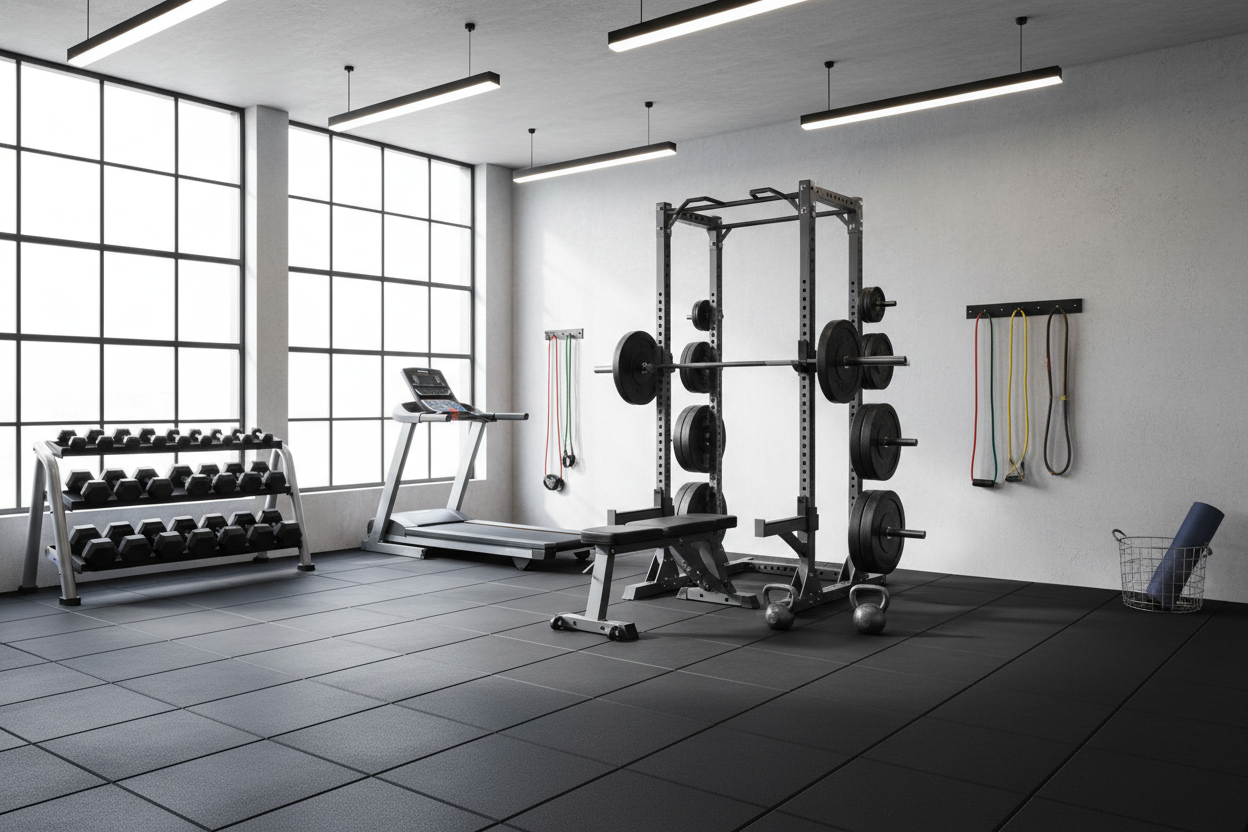
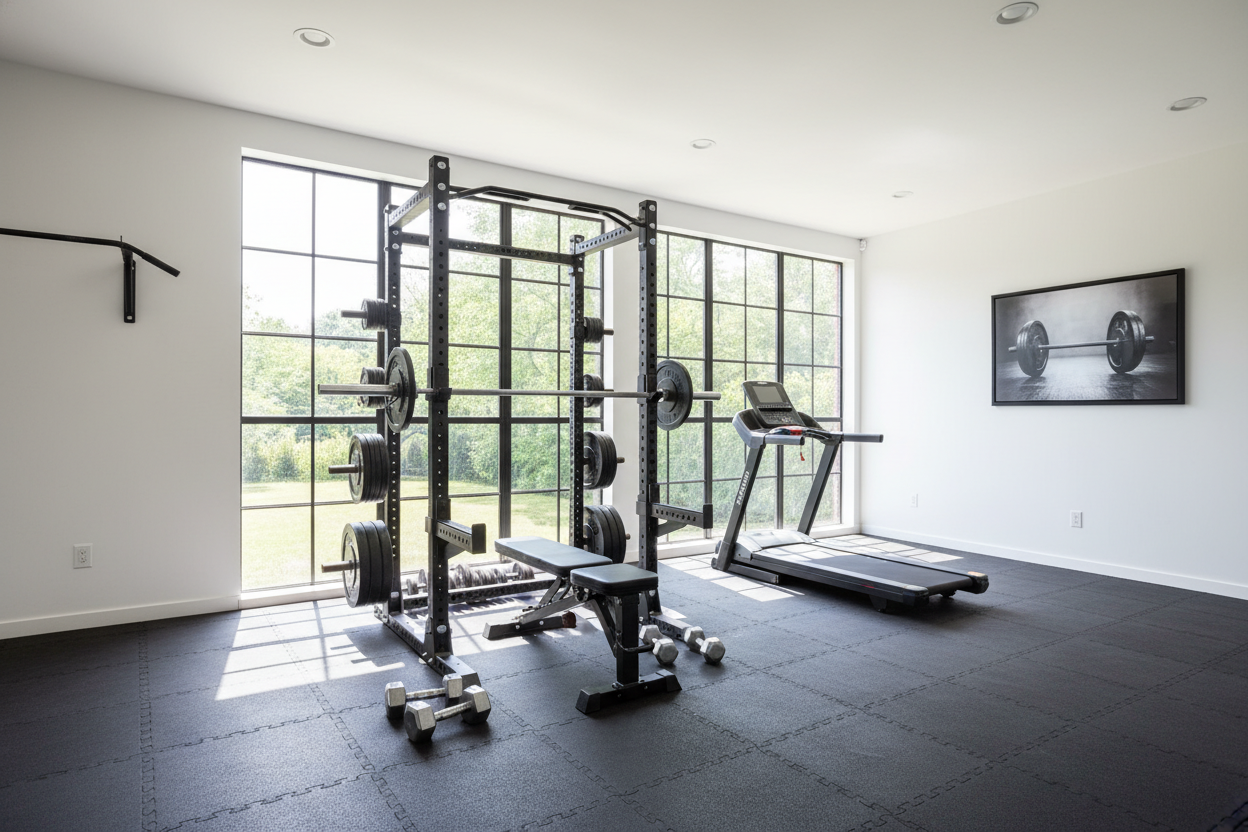
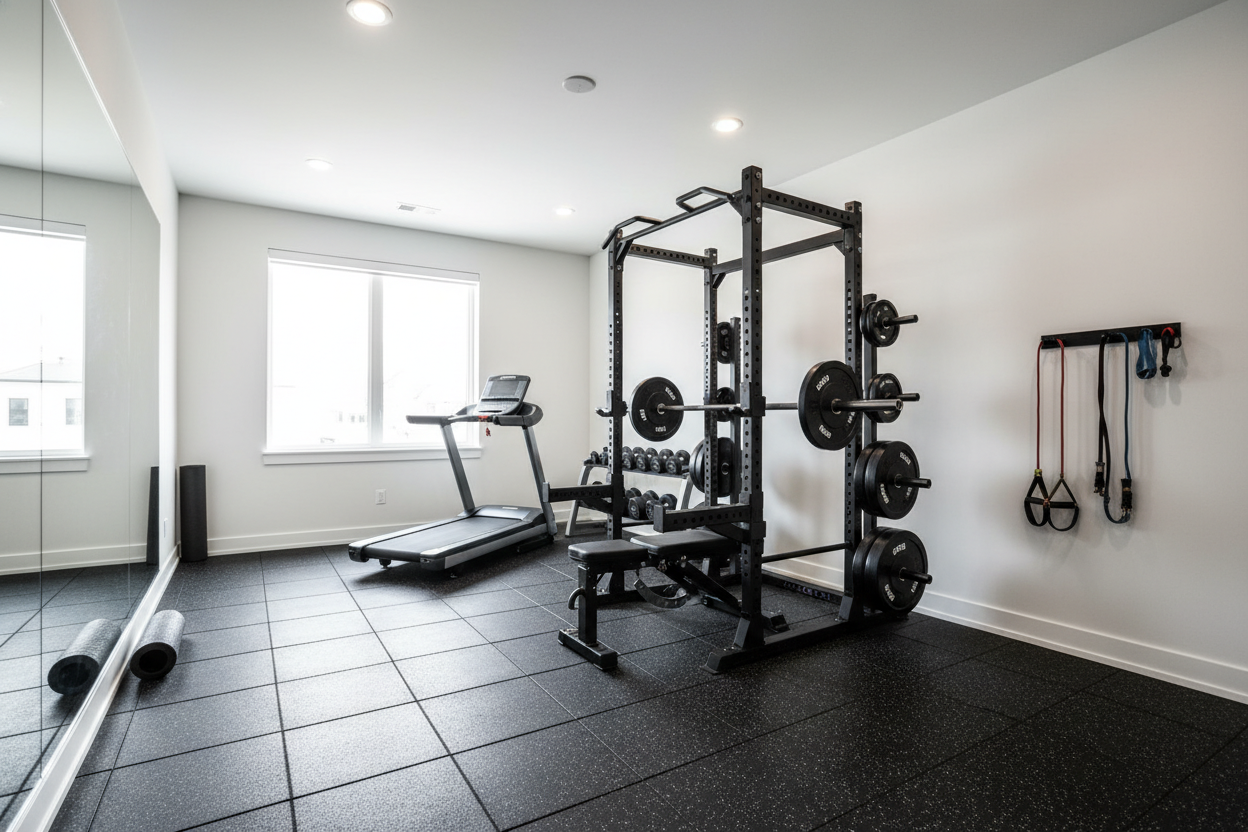
Do not buy a program that requires a cable crossover machine and a leg press if you are working out in a shed with a rusty barbell and some mismatched iron plates. I have seen too many home lifters get frustrated because they have to 'substitute' 50% of the movements in a commercial gym program. By the time you are done figuring out how to do a 'lat pulldown' with a resistance band tied to a rafter, you have lost all your training intensity. You need to audit your gear. Do you have a rack? Do you have enough overhead clearance for standing overhead presses? These things matter.
Your foundation also dictates your training. I have seen guys try to deadlift heavy on thin carpet or bare concrete, only to ruin their floors and their balance. Investing in high-quality gym flooring for home workout is a non-negotiable first step. It provides the stability you need for heavy triples and protects your equipment from the impact of dropped weights. Once your floor is set, look at your rack and plates. If you only have dumbbells that go up to 50 lbs, do not pick a program based on heavy sets of 5. Pick a program that emphasizes higher reps or unilateral movements like split squats.
Red Flags: How to Spot a Garbage Program Fast
The internet is flooded with 'influencer' programs that look great in a 15-second clip but are absolute trash in practice. When you are figuring out how to pick a workout routine, look for the 'boring' stuff. If a program is just a list of 20 different exercises with no mention of progressive overload, run away. Progressive overload is the law of the land; if there is no plan to increase weight, sets, or reps over time, it is just a circuit, not a training program.
Another red flag is excessive daily volume. If a plan has you doing 30 sets per workout, you are likely just doing 'junk volume.' You cannot maintain high intensity for that long. Also, beware of programs that rely on 'muscle confusion' or constantly changing exercises. Your body needs consistency to adapt. If you change your movements every week, you will never get skilled enough at them to actually move heavy weight. Look for a program that keeps the main lifts the same for at least 4 to 6 weeks at a time.
My Go-To Filters for a Solid Training Template
When I evaluate a new plan, I use a very specific filter. First, does it focus on the 'Big 4' or 'Big 3' compound movements? These are the movements that give you the most bang for your buck in a home gym. Second, does it have a clear progression scheme? I want to know exactly what I am supposed to do if I hit all my reps, and what to do if I fail. Third, does it allow for 'auto-regulation'? This is a fancy way of saying the program lets you back off on days when you feel like you got hit by a bus.
My personal filter for how to find a good workout routine is to look for templates that have been tested by thousands of people, not just one person with great genetics. I usually direct people to a vetted Workout Hub where the templates are built on proven strength principles like 5/3/1, Starting Strength, or GZCL. These programs work because they focus on getting you stronger in the basic patterns. They are not flashy, but they are effective. Look for something that emphasizes intensity over sheer volume and gives you a clear path forward for the next six months.
Stop Searching and Just Start Lifting
I have a confession: I once spent three weeks 'researching' the perfect power-building split while doing zero actual lifting. I was so afraid of making the 'wrong' choice that I chose nothing. Do not be that person. A mediocre plan executed with 100% effort and consistency will always beat a 'perfect' plan executed with 50% effort. The goal is not to find the magic spreadsheet; the goal is to build a habit that lasts a lifetime.
Pick a program that fits your current equipment and your current schedule today. Not the schedule you 'hope' to have next month, but the one you have right now. Once you start, commit to it for at least 12 weeks. No program hopping. Your priority should be to build a sustainable exercise routine workout that becomes a part of your daily life. Stop over-analyzing and go move some heavy iron. The best routine is the one that turns you into a person who never misses a session.
Frequently Asked Questions
How many days a week should I train?
Start with three days. If you can hit that consistently for two months without missing a single workout, then you can consider moving to four or five. Most people find that three days of high-intensity full-body training is the sweet spot for recovery and life balance.
Can I do a gym program in my garage?
Only if you have the equipment. If a program calls for a leg press and you do not have one, you have to sub in something like a Bulgarian split squat. If you find yourself substituting more than two exercises per session, find a program specifically designed for home gym equipment instead.
What if I miss a workout?
Do not double up the next day. That is the fastest way to overtrain and get injured. Just pick up exactly where you left off. One missed session in a 12-week program is statistically irrelevant. It is the 'all or nothing' mindset that kills progress, not a single missed Monday.