No Bumper Plates Needed: Power & Strength Exercises for Home
I remember the day my neighbor knocked on my garage door because my deadlifts were rattling his china cabinet three houses down. It’s a classic home gym dilemma: you want to move fast and heavy, but you’re stuck doing slow, boring tempo reps because you don’t have a 500-lb platform or a commercial-grade soundproof floor. Finding effective strength exercises for home shouldn't feel like a compromise between getting strong and keeping your security deposit.
- Prioritize floor density over mat thickness to prevent equipment 'migration'.
- Focus on intent: move the weight as fast as possible on the way up.
- Use rest periods of 3-5 minutes to actually build power, not just sweat.
- Choose tools like kettlebells for ballistic movements that don't require dropping.
Why Your Living Room Workouts Lack Explosive Speed
Most home lifters fall into the 'pump' trap. They do 15-20 reps of goblet squats because they’re afraid of the noise a heavy barbell makes. The problem is that slow, high-rep grinds only train your slow-twitch fibers. To build real athleticism, you need to recruit those high-threshold motor units. You can perform a power exercise at home like a broad jump or a kettlebell swing without ever touching a barbell. It’s about the speed of the movement, not just the number on the plate.
The biomechanics of power require a 'snap.' If you’re doing a dumbbell snatch, the goal isn't just to get the weight up; it's to accelerate it so hard it feels weightless at the top. This type of training is demanding on the central nervous system, which is why you can't just tack it onto the end of a long bodybuilding session. You do it first, while you're fresh, or you don't do it at all.
Protecting Your Floors Before Moving Heavy Weight
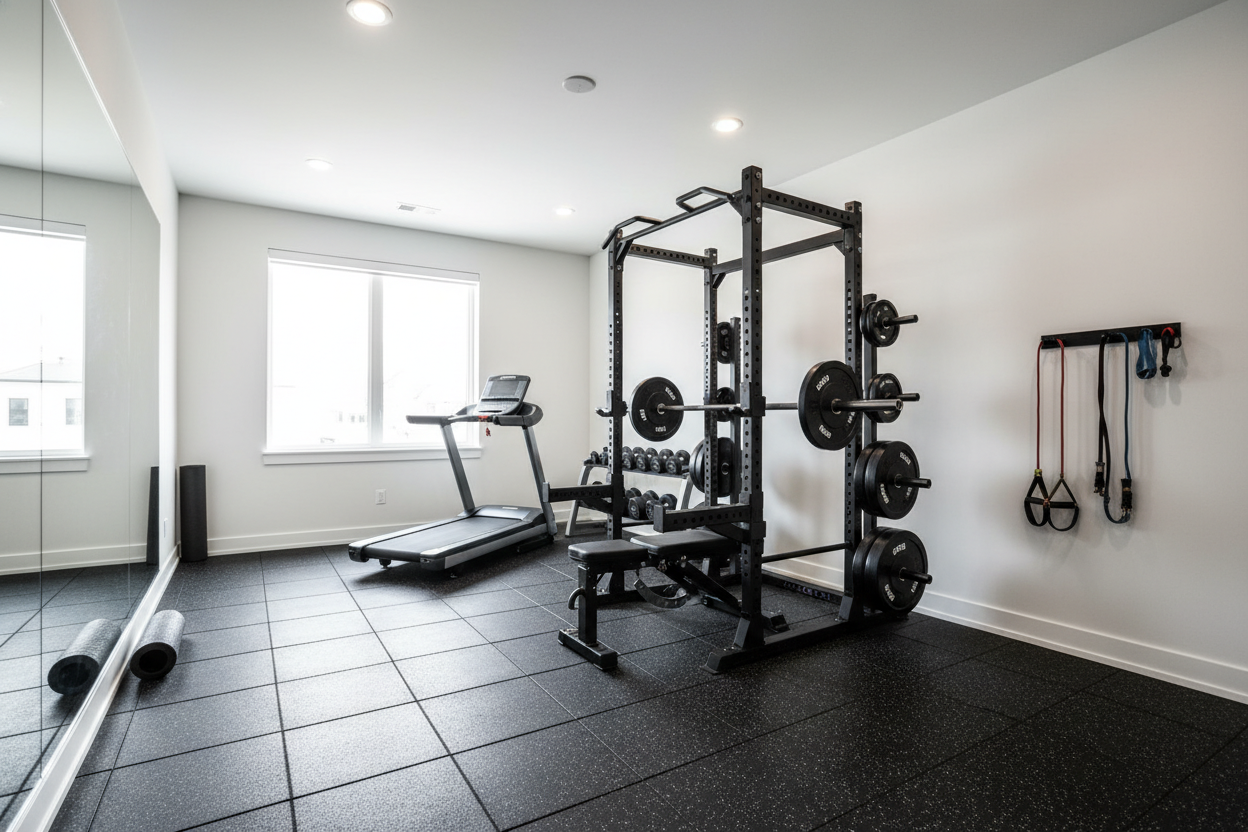
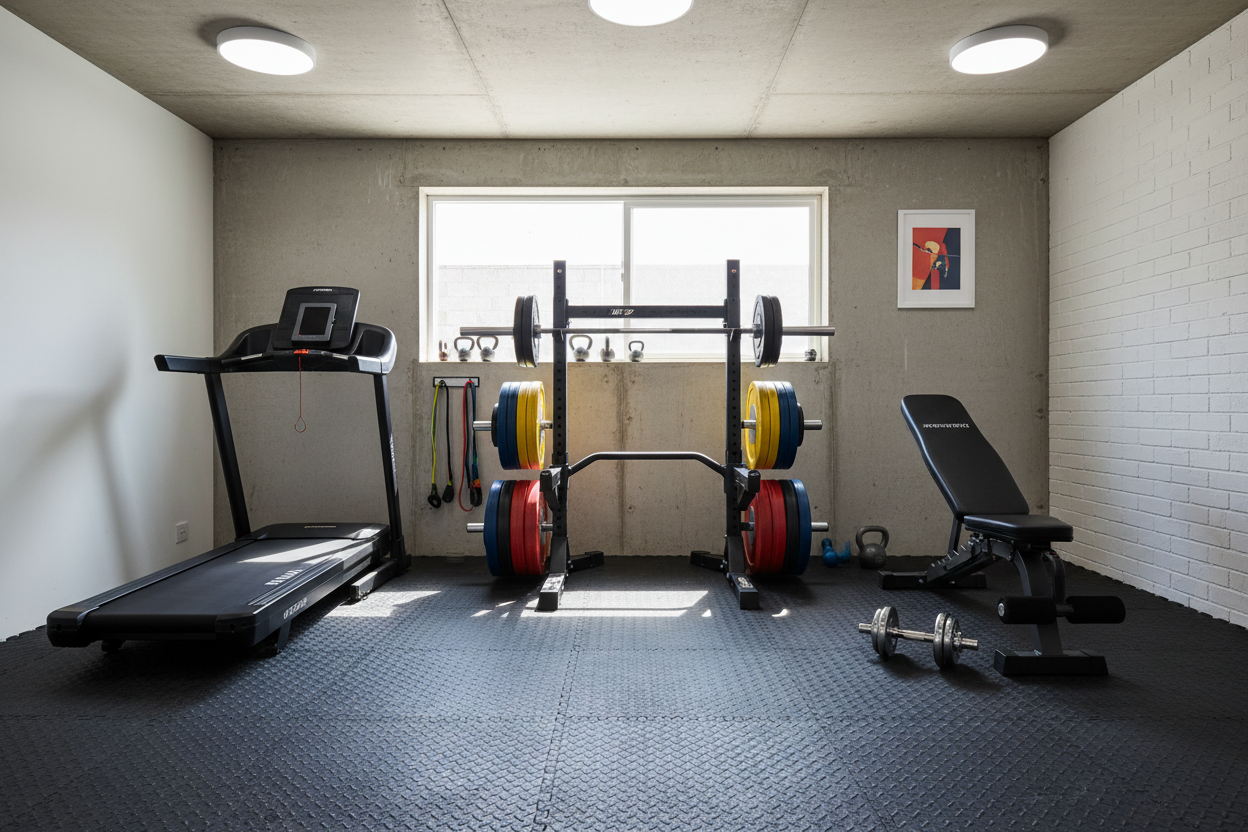
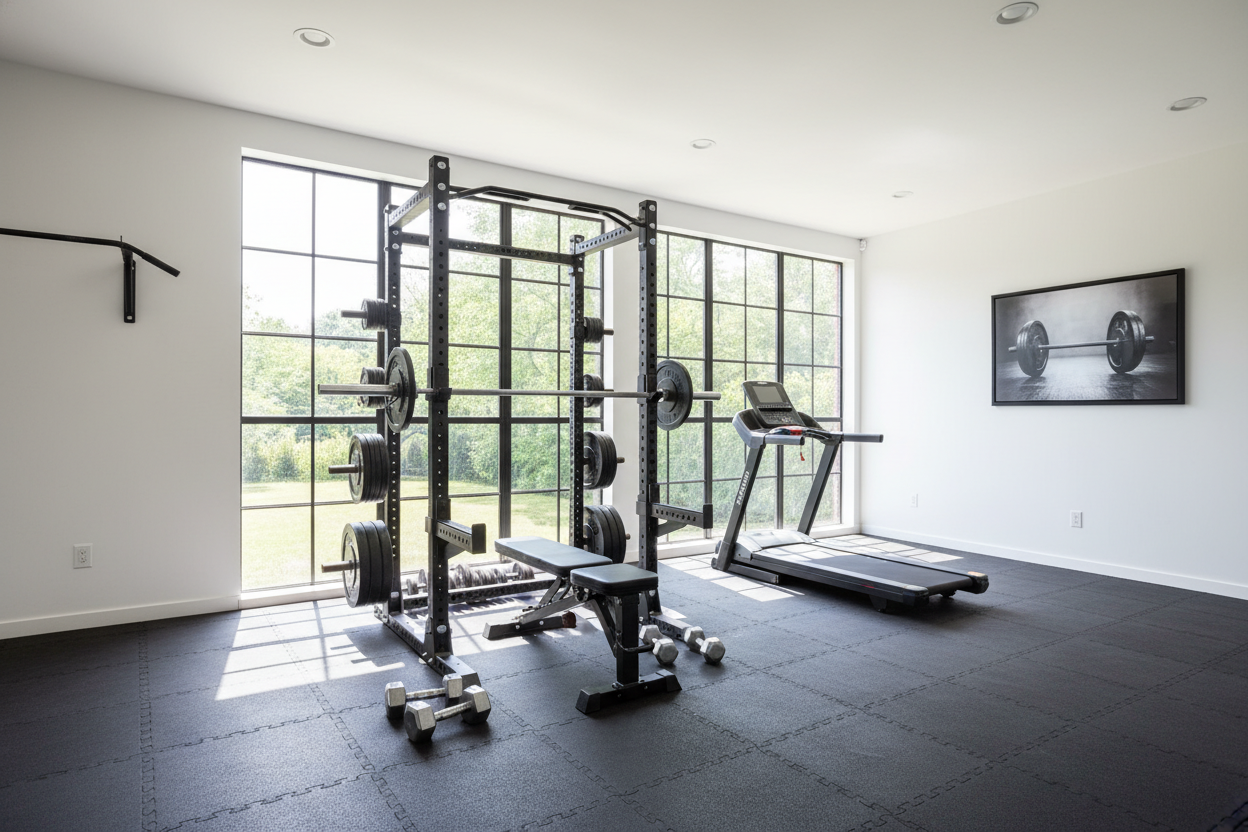
I’ve seen guys try to deadlift on bare concrete or thin carpet. Don't do it. You’ll crack the slab or, worse, your joints will take the brunt of the vibration. You need a dedicated Large Exercise Mat For Home Gym to dampen the vibration and provide a stable surface that doesn't squish under a 200-lb load. Foam puzzle mats are for playrooms; for heavy lifting, you need high-density rubber.
If you're doing anything explosive, like lateral bounds or heavy cleans, a 6X8Ft Exercise Mat Yoga Mat Gym Flooring For Home Workout is the gold standard for a 'drop zone.' It provides enough real estate so you aren't constantly adjusting your feet to stay on the mat. This specific size fits perfectly under a standard power rack or in a dedicated corner of a spare room, giving you enough space to move dynamically without sliding into a wall.
Tool Selection: What Actually Generates Force?
What are you reaching for in your rack? Dumbbells are great for unilateral stability, but kettlebells usually win for pure ballistics. When deciding between Dumbbells vs Kettlebells for At Home Strength Training Exercises, I usually tell people to pick the tool that allows for the fastest eccentric-to-concentric transition. Kettlebells allow for a 'hinge' that generates massive power through the posterior chain.
For strength training exercises at home, a heavy adjustable dumbbell set that goes up to 80 lbs is often a better investment than a full rack of fixed weights. You need that incremental loading to keep making gains. Force is mass times acceleration; if you can't increase the mass, you have to increase the acceleration, but eventually, you'll need heavier iron to keep the stimulus high.
The 'No-Drop' Power Circuit for Small Spaces
You don't need to drop weights to be powerful. Use strength building exercises at home like the Bulgarian Split Squat (loaded heavy) followed immediately by a Max Effort Box Jump. This is called post-activation potentiation. The heavy lift 'wakes up' the nervous system, and the jump allows you to express that power without needing a barbell snatch.
Another favorite is the dead-stop row. Instead of bouncing the weight, let it come to a complete rest on your high-density mat, then rip it off the floor. This eliminates momentum and forces your muscles to generate maximum force from a standstill. It’s quiet, it’s safe for your floors, and it builds a back like a barn door.
Programming Rest Periods for True Power
Stop treating your power work like a HIIT circuit. If your goal is force production, your heart rate shouldn’t be at 180 bpm. You need ATP—the fuel for short, explosive bursts—to replenish. Take 3 to 5 minutes between sets. If you aren't bored during your rest period, you aren't resting long enough. Power is about quality, not how much you're gasping for air.
My Biggest Floor-Related Mistake
I once tried to do 'heavy' snatches with a 50-lb hex dumbbell on a cheap 1/4-inch foam mat. During the third set, the mat slid on the hardwood underneath, I lost my footing, and the dumbbell took a literal chunk out of my baseboard. It was an expensive lesson in friction and floor density. Now, I don't move anything over 30 lbs unless I'm on a mat with a non-slip backing that actually weighs enough to stay put.
FAQ
Can I get powerful without a barbell?
Absolutely. Plyometrics, heavy kettlebell swings, and high-velocity dumbbell movements can build just as much explosive power for most athletes as Olympic lifting, often with a much lower risk of injury.
How do I stop the noise during home workouts?
Invest in high-density rubber flooring and focus on controlled eccentrics. If you're doing deadlifts, use 'crash pads' or extra-thick mats to swallow the sound before it hits the floor joists.
What is the best 'bang for your buck' power tool?
A single heavy kettlebell (24kg or 32kg for most men, 16kg or 20kg for most women). You can swing it, clean it, and snatch it, covering almost every power metric you need.