Stop Doing Your Neck and Shoulder Stretch Like This (Read First)
Let’s be honest: modern life is a recipe for stiffness. Whether you are hunched over a laptop, driving for hours, or scrolling through your phone, your posture takes a beating. The result is that nagging, burning sensation at the base of your skull. Naturally, your first instinct is to force a neck and shoulder stretch to snap everything back into place.
But here is the hard truth: aggressive stretching often makes things worse. Yanking on a cold, tight muscle triggers a protective reflex that causes it to tighten up even more. If you want true relief, you need a strategy, not just brute force.
Key Takeaways
- Heat First: Never perform deep static stretching on cold muscles; warm up with gentle movement first.
- The 30-Second Rule: To actually lengthen muscle tissue, holds must last at least 30 seconds.
- Don't Force Pain: A stretch should feel like a mild pull, not a sharp pinch. Sharp pain means stop immediately.
- Address the Chest: Tight pecs often pull shoulders forward, causing neck pain. Stretching your chest is as important as stretching your neck.
Why You Feel Like You're Carrying the World
Before we get into the specific movements, you need to understand the mechanics. Most neck and shoulder tension stretches target the Upper Trapezius and the Levator Scapulae.
These muscles are responsible for keeping your head upright. When your head drifts forward (hello, text neck), the effective weight of your head doubles or triples. Your muscles aren't just tight; they are exhausted. This is why exercises for stiff neck and shoulder pain must focus on relaxation and blood flow, not just pulling.
The "Golden Rule" of Neck Mobility
If you take nothing else from this guide, remember this: mobility requires stability.
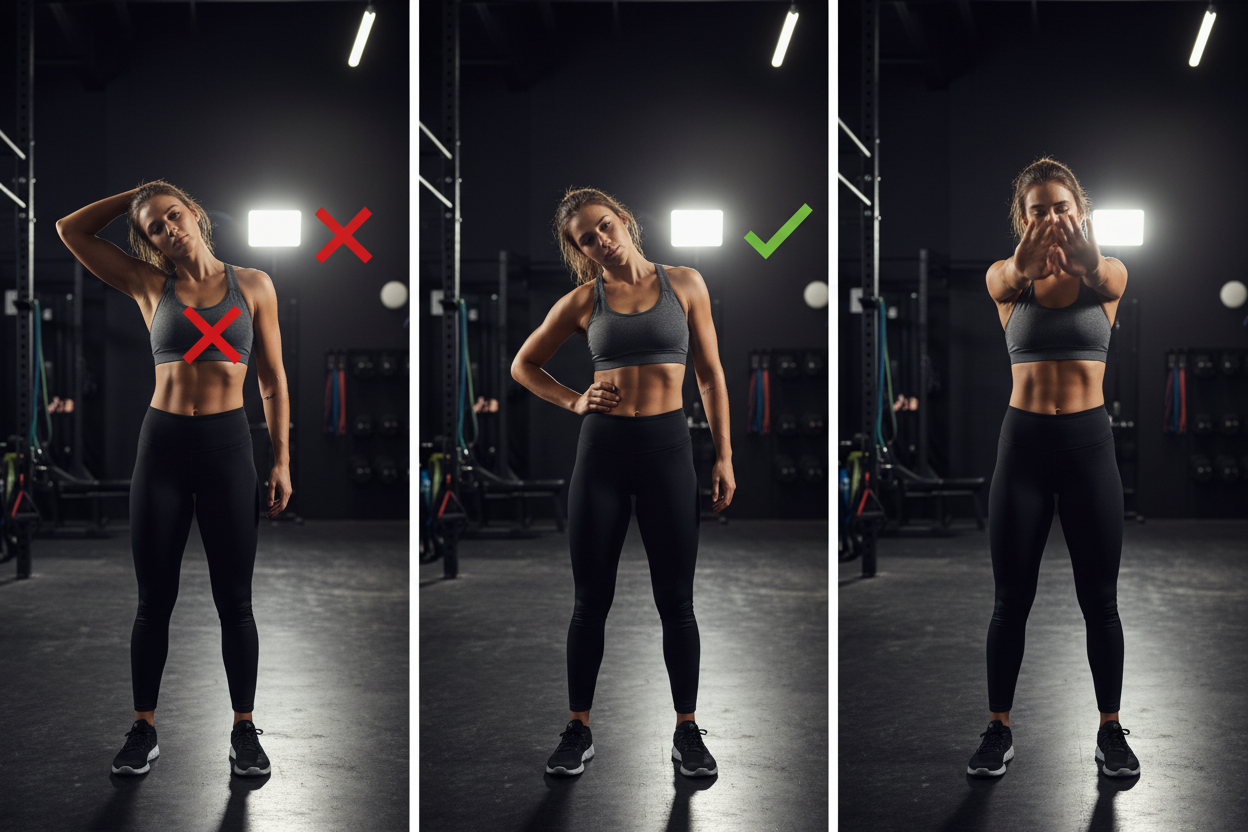
Many people looking for how to stretch shoulder and neck muscles make the mistake of moving their whole torso. When you tilt your head, keep your shoulders anchored down. If your shoulder rises to meet your ear, you are cheating the movement and losing the benefit.
Essential Moves for Instant Relief
1. The Trap Release (Ear to Shoulder Stretch)
This is the bread and butter of neck and shoulder relaxation exercises. It targets the upper traps, which are usually the primary source of that "shrugged" feeling.
- Sit tall with your hand anchored under your thigh or chair seat (this keeps the shoulder down).
- Gently tilt your right ear toward your right shoulder.
- Do not lift the shoulder.
- Hold for 30–45 seconds. You should feel a deep release down the side of the neck.
2. The "Armpit Sniff" (Levator Scapulae Stretch)
It sounds funny, but this is the best stretch for neck and shoulder pain located slightly behind the neck, traveling down to the shoulder blade.
- Turn your head 45 degrees to the right.
- Drop your chin toward your armpit.
- Use your hand to apply very gentle overpressure on the back of your head.
- This is a critical stretch for tight neck and shoulders that often harbor trigger points.
3. Doorway Pec Stretch
Why stretch the chest for neck pain? Because tight pecs pull your shoulders forward, putting constant strain on your neck. This is one of the most overlooked exercises to ease neck and shoulder pain.
- Stand in a doorway.
- Place your forearms on the doorframe at a 90-degree angle.
- Lean forward gently until you feel a stretch across your chest.
- This opens up the posture, relieving the tension upstream in the neck.
Strengthening: The Missing Link
Stretching provides temporary relief, but strengthening provides a permanent fix. If you suffer from chronic issues, you need shoulder and neck pain exercises that build resilience.
Incorporating movements like Face Pulls or Band Pull-Aparts acts as an exercise for neck and shoulder stiffness. These movements strengthen the rear delts and rhomboids, pulling your posture back into alignment so your neck muscles don't have to work overtime.
My Training Log: Real Talk
I used to think I had "bad genetics" for neck pain. I’d wake up, crank my head to the side until I heard a pop, and go about my day. By 2:00 PM, the headache would set in behind my eyes.
The turning point wasn't a fancy massage gun or a chiropractor. It was realizing that my "stretching" was actually traumatizing the tissue. I remember specifically trying the Levator Scapulae stretch (the armpit one) for the first time with proper form—anchoring my hand under the chair. I felt a weird, warm sensation travel from my skull down to the tip of my shoulder blade. It wasn't a "good hurt" like a gym pump; it felt like a guitar string finally being detuned.
Now, when I feel that familiar tightness creeping in on the right side, I don't yank. I anchor my hand, breathe, and wait for the muscle to let go on its own. The difference between pulling and allowing is everything.
Conclusion
Finding the right neck and shoulder stretch isn't about complexity; it's about consistency and form. Stop treating your neck like a glow stick you're trying to crack. Treat it like a precision instrument.
Start with the ear-to-shoulder hold, integrate the chest stretch to fix your posture, and remember to breathe. Your neck carries your head all day; give it a break, not a beating.
Frequently Asked Questions
How often should I do these stretches?
For stretches to relieve tension in neck and shoulders, frequency beats intensity. You can perform these stretches 2-3 times a day, especially if you work at a desk. However, hold the stretches for at least 30 seconds to see results.
What if I have pain only on one side?
Right side neck and shoulder pain exercises are the same as left-side ones, but you may notice significant tightness differences. It is safe to stretch the tighter side slightly longer, but always stretch both sides to maintain symmetry and balance.
Can exercise make neck pain worse?
Yes, if done incorrectly. Exercises for painful neck and shoulder areas should never cause sharp, shooting pain or numbness. If you feel tingling down your arm, stop immediately, as this could indicate nerve compression rather than muscle tightness.