How to Build Thigh Muscle: The Ultimate Hypertrophy Protocol
You can’t cheat your way to massive legs. While upper body training often allows for some ego-lifting and momentum, leg development requires a level of intensity and mechanical tension that scares most gym-goers away. If you want to know how to build thigh muscle effectively, you have to accept that it’s going to be uncomfortable.
Many lifters spin their wheels doing endless light leg extensions or skipping leg day entirely because they don't see immediate results. The truth is, building impressive quads and hamstrings is simple in theory but difficult in execution. It requires a blend of heavy compound movements, high-volume accessory work, and a caloric surplus.
Key Takeaways: The Thigh Growth Formula
If you are looking for the fastest route to results, these are the non-negotiable pillars of leg hypertrophy:
- Prioritize Compound Lifts: Squats and lunges must form the base of your routine to recruit the maximum amount of muscle fibers.
- Progressive Overload: You must consistently add weight or reps; legs adapt quickly and need constant new stimuli.
- Full Range of Motion: Half-reps yield half-results. Deep knee flexion is required to stretch and tear the muscle fibers for growth.
- Caloric Surplus: You cannot build significant tissue in a deficit. Eat enough protein and carbs to fuel recovery.
- Frequency: Training legs once a week is rarely enough for natural lifters. Aim for 2 times per week.
Understanding the Anatomy of Strong Thigh Muscles
To fully grasp how to gain muscle on thighs, you need to know what you are targeting. The thigh isn't just one slab of meat; it's a complex system of pushing and pulling muscles.
The Quadriceps (front) are responsible for knee extension. If you want that sweeping outer curve or the "teardrop" above the knee, this is your focus. The Hamstrings (back) control knee flexion and hip extension. They give your legs that thick, 3D look from the side.
Finally, the Adductors (inner thigh) are often neglected. When you ask how to build upper thigh muscle, the adductors are usually the missing link that adds substantial girth to the upper leg.
The Core Exercises to Gain Thigh Muscle
Forget the fancy bosu ball tricks. If you want to build thighs that demand respect, you need to move heavy iron.
1. The Barbell Back Squat
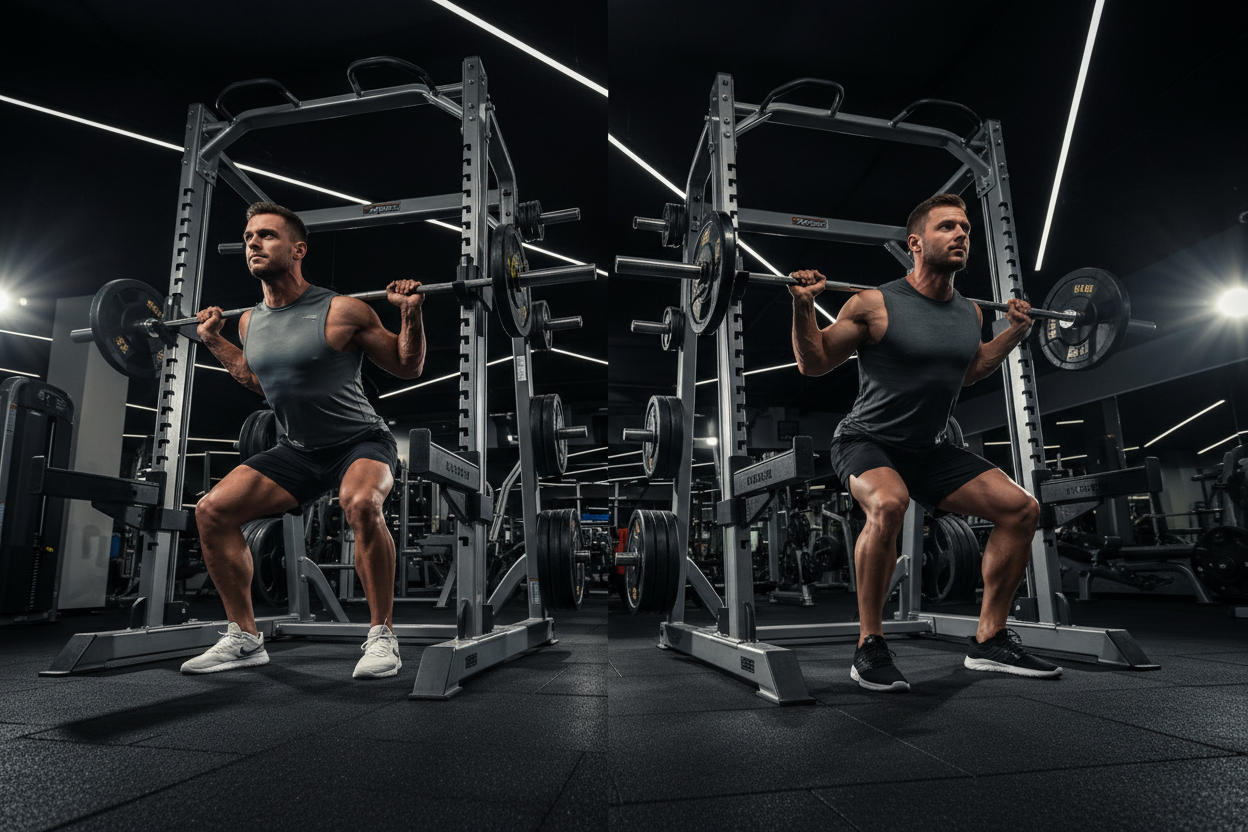
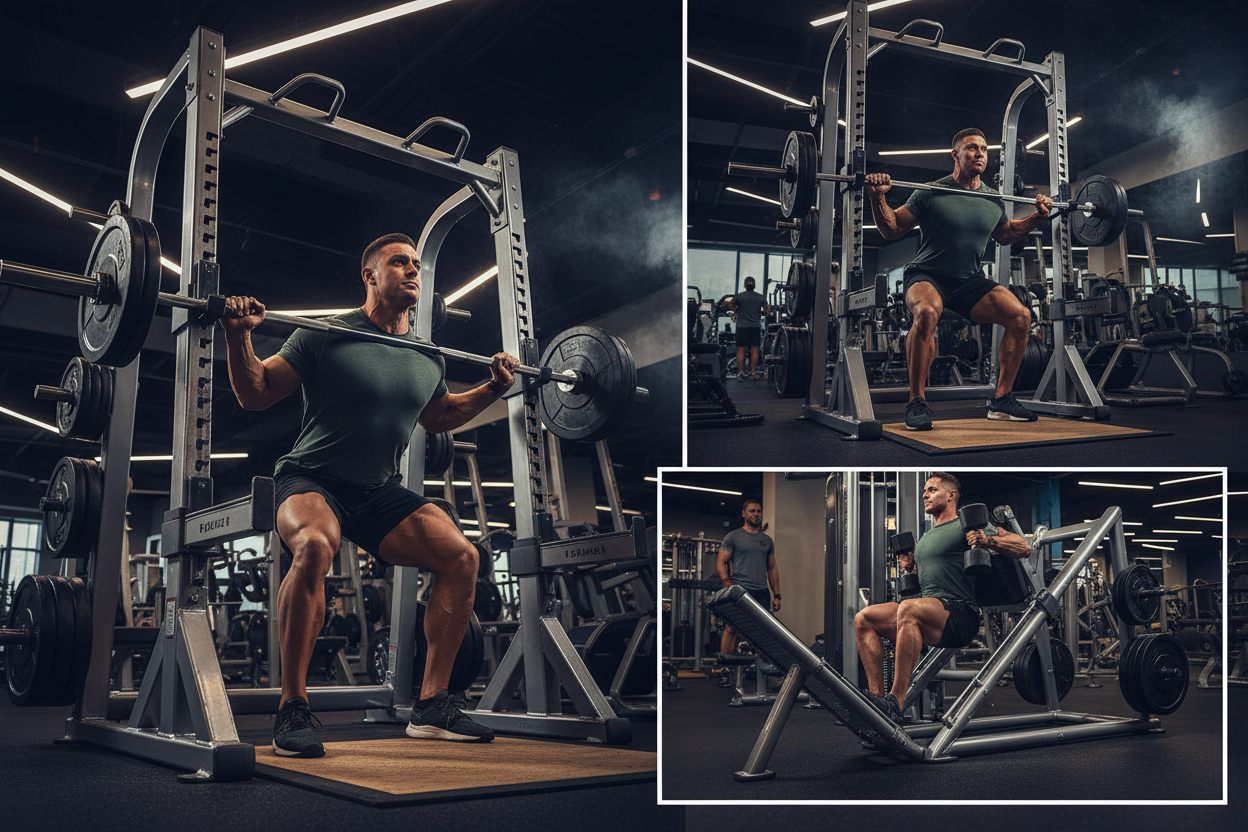
This is the king for a reason. It loads the entire lower body. To emphasize the quads, keep your torso more upright and allow your knees to travel forward (while keeping heels down). This is the primary answer to how to get thigh muscles that are both strong and large.
2. Romanian Deadlifts (RDLs)
You can't have big legs with twiggy hamstrings. RDLs focus on the stretch under load. Keep your knees slightly bent, push your hips back, and feel the tension in your hamstrings before exploding up. This is crucial for posterior chain development.
3. Bulgarian Split Squats
This is the exercise everyone loves to hate. It isolates one leg at a time, fixing imbalances and placing massive tension on the quads and glutes. If you are wondering how to build muscle in your thighs without loading your spine heavily, this is your go-to movement.
4. Leg Press
The leg press allows you to overload the muscles safely without worrying about balance. It is excellent for volume work to finish off the legs after your heavy compounds.
Programming: How to Gain Muscle in Your Thighs
Exercise selection is only half the battle. The volume and intensity are what dictate growth. To build muscle on thighs, you generally need a mix of rep ranges.
Start your workout with heavy sets (5–8 reps) of squats or deadlifts. This builds mechanical tension. Follow this with moderate sets (8–12 reps) of lunges or leg presses for metabolic stress. Finish with isolation movements like leg extensions for high reps (15–20) to pump blood and nutrients into the tissue.
Nuances for Different Goals
How to build thigh muscle woman vs. man: Biologically, muscle grows the same way regardless of gender. However, women often recover faster and can handle slightly more volume. The principles of progressive overload remain the absolute standard for everyone.
Nutrition: Fueling the Growth
You can do all the thigh muscle building exercises in the world, but if you aren't eating, you won't grow. Leg training is metabolically expensive.
Ensure you are consuming at least 1.6g to 2.2g of protein per kilogram of body weight. Carbohydrates are equally important here; they spare protein and fuel the glycogen stores needed for those high-rep squat sets. If you want to build up thigh muscles, don't fear the kitchen.
My Personal Experience with how to build thigh muscle
I spent the first three years of my lifting career with "chicken legs." I thought running and the occasional leg extension were enough. I was wrong.
The turning point for me wasn't a new supplement; it was the Bulgarian Split Squat. I remember the specific, nausea-inducing burn of doing drop sets on these. It wasn't just about "feeling the burn"; it was about the mental grit required to pick up the dumbbells for the left leg after I had already decimated the right.
I also learned that the "waddle" is real. If I can walk down the stairs normally after a leg session, I know I didn't push hard enough. The sensation of my quads twitching involuntarily while I'm trying to drive home is now my benchmark for a successful session. That specific, deep muscular fatigue is the only thing that ever added inches to my thighs.
Conclusion
Learning how to gain thigh muscles is a lesson in patience and pain tolerance. It requires heavy lifting, smart nutrition, and the discipline to not skip the hardest workout of the week. Focus on getting stronger on your squats and lunges, eat to support that growth, and the size will follow.
Frequently Asked Questions
How long does it take to build noticeable thigh muscle?
With consistent training and a caloric surplus, you can expect to see noticeable changes in 8 to 12 weeks. However, significant hypertrophy (adding inches to your circumference) is a long-term project that takes months to years of dedicated training.
Can I build thigh muscle without weights?
Yes, but only to a point. Beginners can use bodyweight squats and lunges to build muscle in thighs. However, to continue growing, you eventually need progressive overload, which usually requires external resistance like dumbbells, kettlebells, or barbells.
Why are my thighs getting stronger but not bigger?
This usually boils down to volume and diet. You might be training for neurological strength (low reps, long rest) rather than hypertrophy. Alternatively, you might not be eating enough calories to support new tissue growth. Increase your rep ranges to 8–12 and track your food intake.