Smith Machine vs Squat Rack: Which Is Actually Better for Hypertrophy?
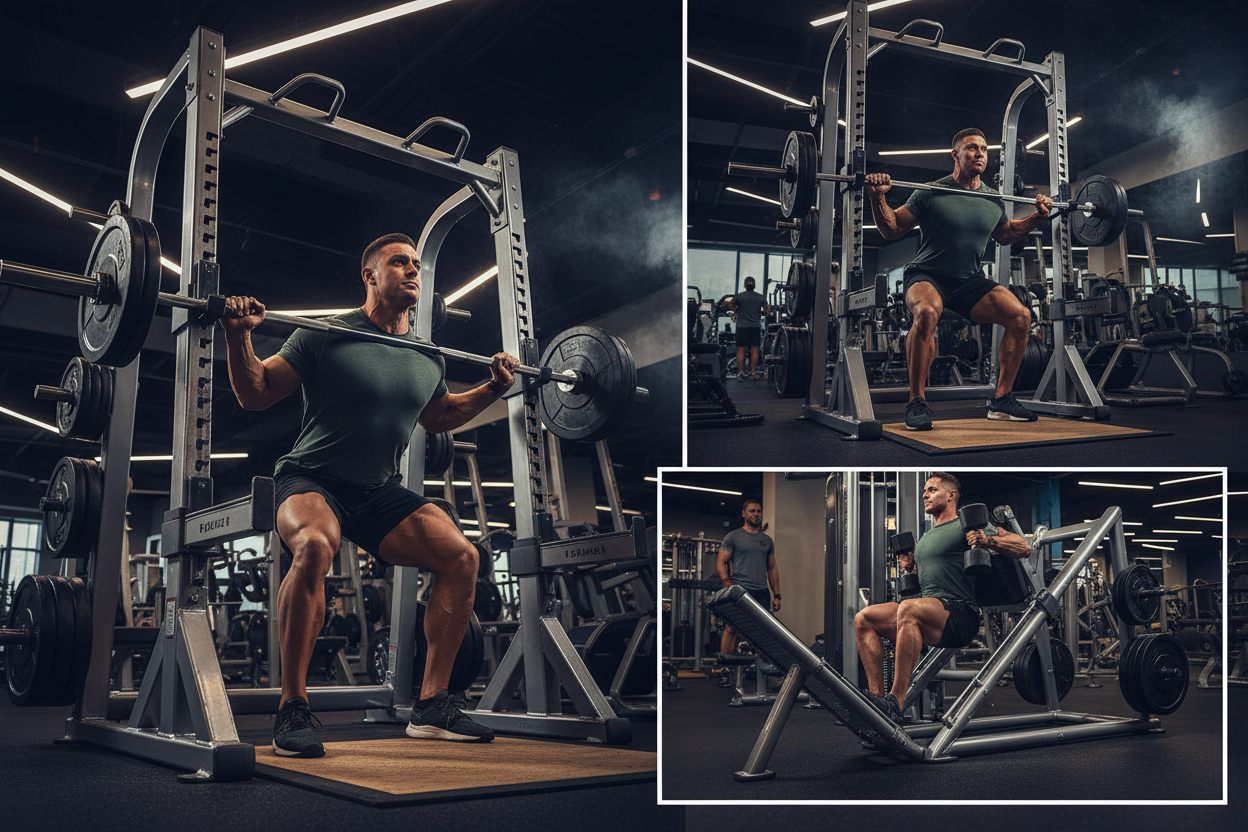
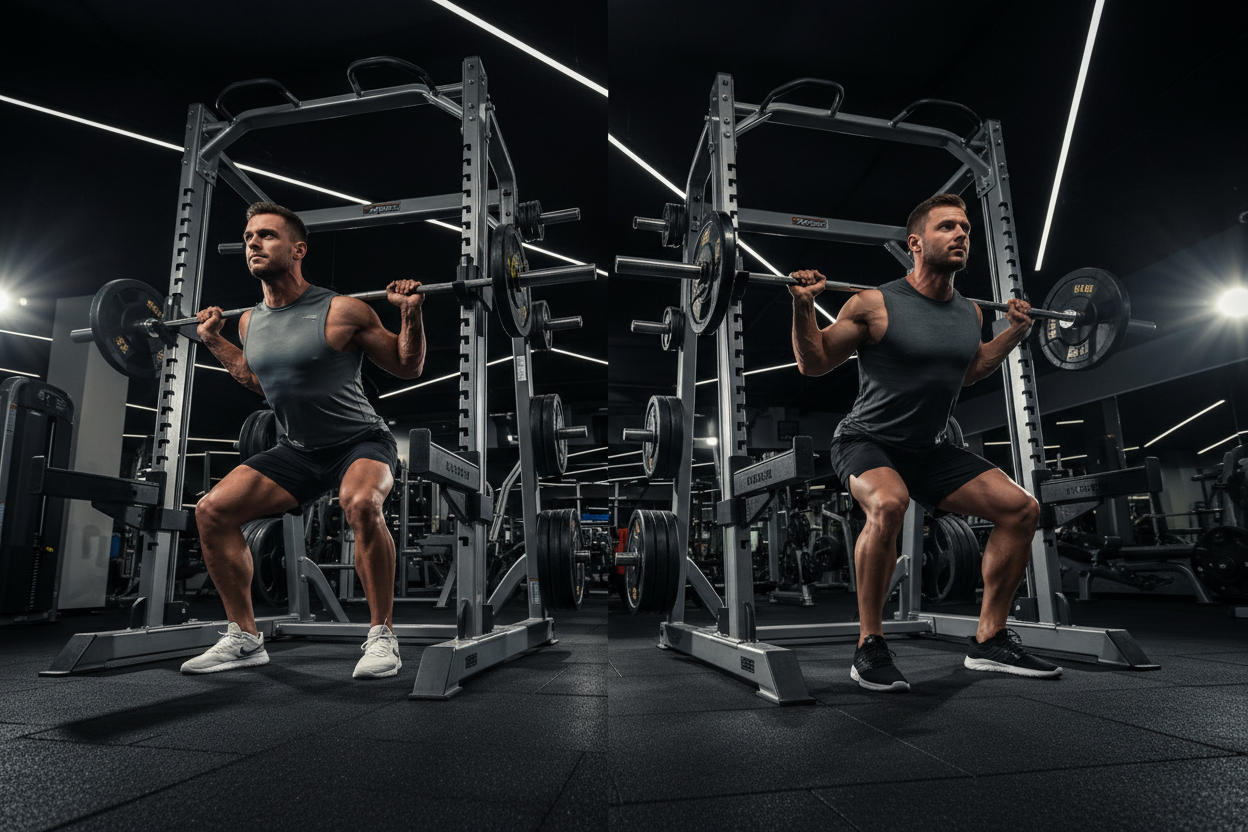
You walk into the gym on leg day, and you're faced with a common dilemma. Do you head for the open power cage, or do you slide under the guided bar of the machine? The debate of the smith machine vs squat rack is one of the oldest arguments in weightlifting circles.
Many purists claim the Smith machine is useless. Others swear it’s the secret to isolating quads without back pain. The reality isn't black and white. It comes down to your specific biomechanics, injury history, and whether you are chasing raw strength or aesthetic muscle growth.
Key Takeaways: The Quick Comparison
If you are in a rush to decide which station to use today, here is the high-level breakdown of how they differ:
- Stabilization: The Squat Rack requires you to stabilize the load, recruiting more core and secondary muscles. The Smith Machine stabilizes the weight for you.
- Movement Path: Free weights allow a natural, curved bar path. The Smith Machine forces a strict vertical linear path.
- Safety: The Smith Machine has built-in safety stops accessible at a wrist turn, making it safer for solo lifting.
- Hypertrophy: Use the squat rack for total body mass and functional strength; use the Smith machine to isolate specific muscle heads near failure.
The Science of Stability and Muscle Recruitment
To make the right choice, you have to understand the mechanics at play. The primary difference lies in the plane of motion.
The Free Weight Squat (Squat Rack)
When you use a standard barbell, you are fighting gravity in three dimensions. You aren't just pushing up; you are preventing the bar from falling forward, backward, or tilting sideways. This forces your Central Nervous System (CNS) to light up.
A study published in the Journal of Strength and Conditioning Research showed that free-weight squats result in significantly higher muscle activation in the gastrocnemius, biceps femoris, and vastus medialis compared to the Smith machine. Essentially, you get more "bang for your buck" regarding total body stimulation.
The Smith Machine Mechanics
The Smith machine removes the need for balance. Because the bar travels on fixed guide rods, you can alter your foot placement in ways that would be impossible with free weights. For example, placing your feet further forward allows you to keep your torso upright, effectively taking the glutes and lower back out of the equation and hammering the quads.
However, this fixed path is a double-edged sword. A natural squat movement isn't perfectly vertical; it usually has a slight curve. Forcing your body into a rigid linear line can cause shearing forces on the knees and lower back if your form isn't adjusted for the machine.
When to Choose the Squat Rack
If your goal is athletic performance, functional strength, or powerlifting, the squat rack is non-negotiable. The ability to balance a heavy load is a skill that translates to real-world movement.
You should choose the rack if:
- You want to improve core strength and stabilizer muscles.
- You are training for a sport that requires balance and coordination.
- You want to maximize hormonal response (compound movements generally elicit a greater testosterone response).
When to Choose the Smith Machine
Don't let the "bro-science" fool you into thinking this machine is useless. It is a tool for hypertrophy (muscle growth). When you remove the stability requirement, you can push a muscle to absolute failure safely.
You should choose the Smith machine if:
- You are training alone and want to push heavy weight without a spotter.
- You are rehabbing an injury and need a controlled environment.
- You want to perform "drop sets" quickly without re-racking weights.
- You are specifically trying to target the quads with a "hack squat" style foot placement.
My Training Log: Real Talk
I’ve spent years under both bars, and I want to share a specific nuance regarding the squat rack or smith machine that spec sheets don't tell you.
I remember training at an older commercial gym while rehabbing a lower back strain. I opted for the Smith machine, thinking it was safer. The problem wasn't the weight; it was the maintenance of the machine. I was midway through a heavy eccentric (lowering) phase when I felt the bar "stutter" on the guide rods. The grease had dried up, and the friction created a jagged, stop-start motion.
That specific, gritty friction threw off my tempo and actually caused a jerk in my lower back that hurt more than a free weight squat would have. On the flip side, the knurling on that Smith bar was practically non-existent compared to my Power Bar at home, which meant my grip was slipping before my legs were tired. The lesson? The Smith machine is excellent for muscle isolation, but only if the guide rods are well-oiled. If you feel that friction, move to the rack or grab dumbbells.
Conclusion
Stop looking for a winner and start looking for the right tool. If you want to be an athlete and move heavy loads in the real world, the squat rack is your home. If you want to safely grind out those last three painful reps to force quad growth without worrying about falling over, the Smith machine is your ally.
Smart lifters don't choose one; they cycle both based on their mesocycle goals.
Frequently Asked Questions
Is the Smith machine safer than the squat rack?
Generally, yes, for solo lifters. The Smith machine has locking mechanisms that allow you to re-rack the weight at any point in the movement with a simple wrist turn. However, the fixed path can cause chronic overuse injuries if your form forces your joints into unnatural positions.
Can I squat more weight on a Smith machine?
Most people can lift slightly more on a Smith machine because they do not have to expend energy stabilizing the weight. However, this "strength" is specific to the machine and does not translate 1:1 to a free-weight squat.
Does the Smith machine count as a real squat?
It counts as a leg press variation more than a squat. While it mimics the squatting motion, the biomechanics are different enough that it should be treated as an accessory movement rather than a direct replacement for the barbell back squat.