Stop Doing Laundry Between Sets: Muscle Building Tips for Home Gyms
I remember staring at my squat rack while a load of towels buzzed in the dryer ten feet away. I thought I was winning because I was multitasking—hitting a set of heavy rows, then folding a few shirts. I was wrong. My intensity was non-existent, my heart rate was floor-level, and my progress had stalled for months. To see real changes, you need muscle building tips that respect the psychology of the home environment as much as the physiology of the lift.
Quick Takeaways
- Eliminate domestic distractions; if you are in the gym, you are 'at work.'
- Prioritize floor stability to maximize force production on heavy lifts.
- Control the eccentric phase to compensate for a lack of spotters or heavy machines.
- Stick to heavy compound movements over cheap, flimsy isolation equipment.
The Casual Trap of the Garage Gym
The convenience of a home gym is its greatest strength and its biggest weakness. When your squat rack is twenty steps from your refrigerator, the urgency to perform disappears. In a commercial gym, you’ve commuted, paid a membership, and you’re surrounded by people working. At home, you’re in your pajamas-adjacent gear, and the couch is calling your name. This casual mindset is the silent killer of muscle growth tips you’ve read online.
Hypertrophy requires a specific level of mechanical tension and metabolic stress. You cannot achieve that if your rest periods are dictated by letting the dog out or checking your email. I’ve found that the most effective tips for building muscles at home start with a mental 'threshold'—once you cross the gym floor, the house no longer exists. If you treat your garage like a playground, your physique will reflect that lack of seriousness. You need to cultivate a 'clocked-in' mentality to see actual muscle growth.
Tip 1: Enforce Strict Rest Periods (No Chores Allowed)
If you want to know how to effectively build muscle, look at your stopwatch. Metabolic stress is one of the primary drivers of hypertrophy. When you walk away from the bar to flip a load of laundry or respond to a text, your heart rate drops and the accumulation of metabolites in the muscle tissue dissipates. You’re essentially starting your workout over with every elongated break.
My best tips for muscle growth involve a strict 60-to-90-second rest window for accessory work and 3 minutes for heavy compounds. No exceptions. This is one of the keys to building muscle mass that home lifters ignore because there’s no one waiting for the rack. Use a dedicated gym timer—not your phone, which is a portal to distraction. When you treat your session like a commercial facility, you maintain the density required for muscle mass gain tips to actually work. If you wouldn't do it at a powerhouse gym, don't do it in your garage.
Tip 2: Fix Your Floor to Fix Your Force Transfer
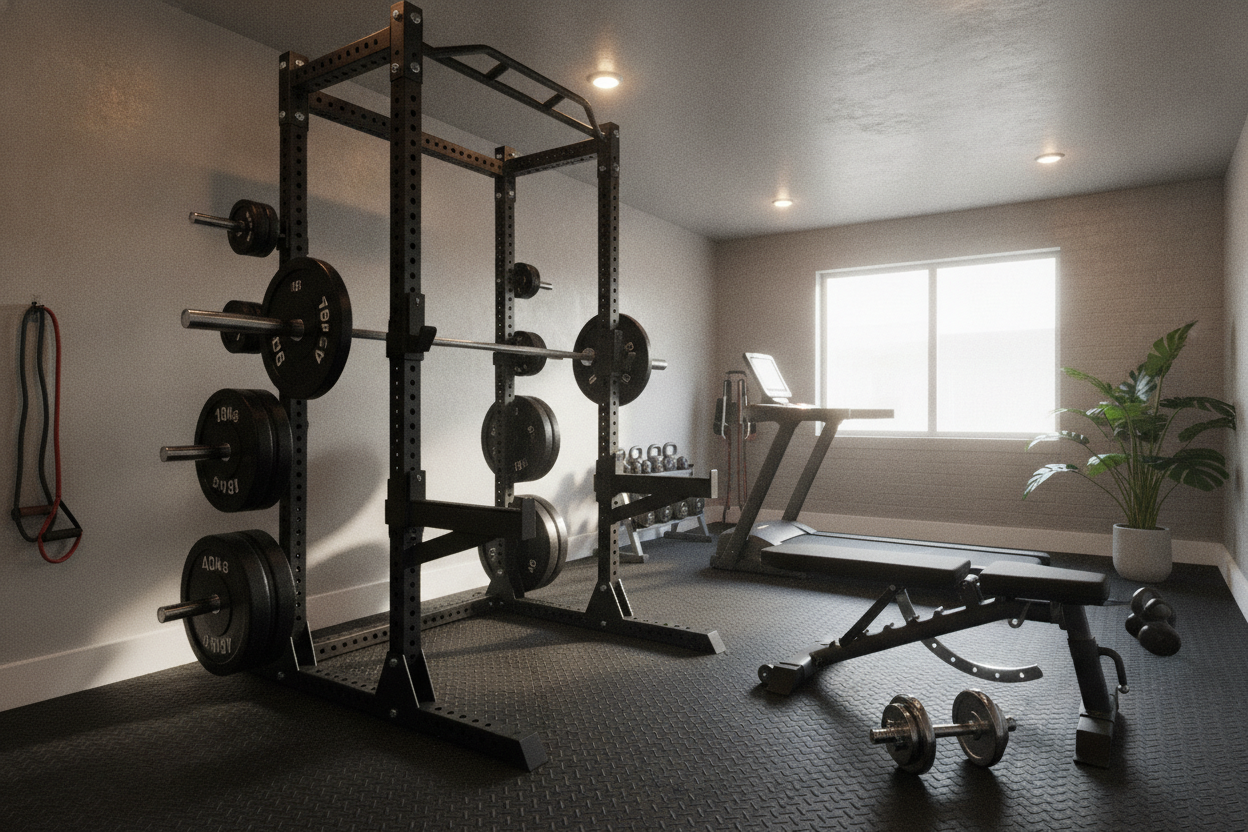
You can’t build a skyscraper on a swamp. Most home gyms are built on bare concrete or, worse, those squishy, interlocking puzzle mats from big-box retailers. If your feet are shifting or the floor is compressing under a 315-lb squat, you are losing force. This instability is a major hurdle for anyone looking for keys to building muscle because your nervous system will literally throttle your power output to keep you from falling over.
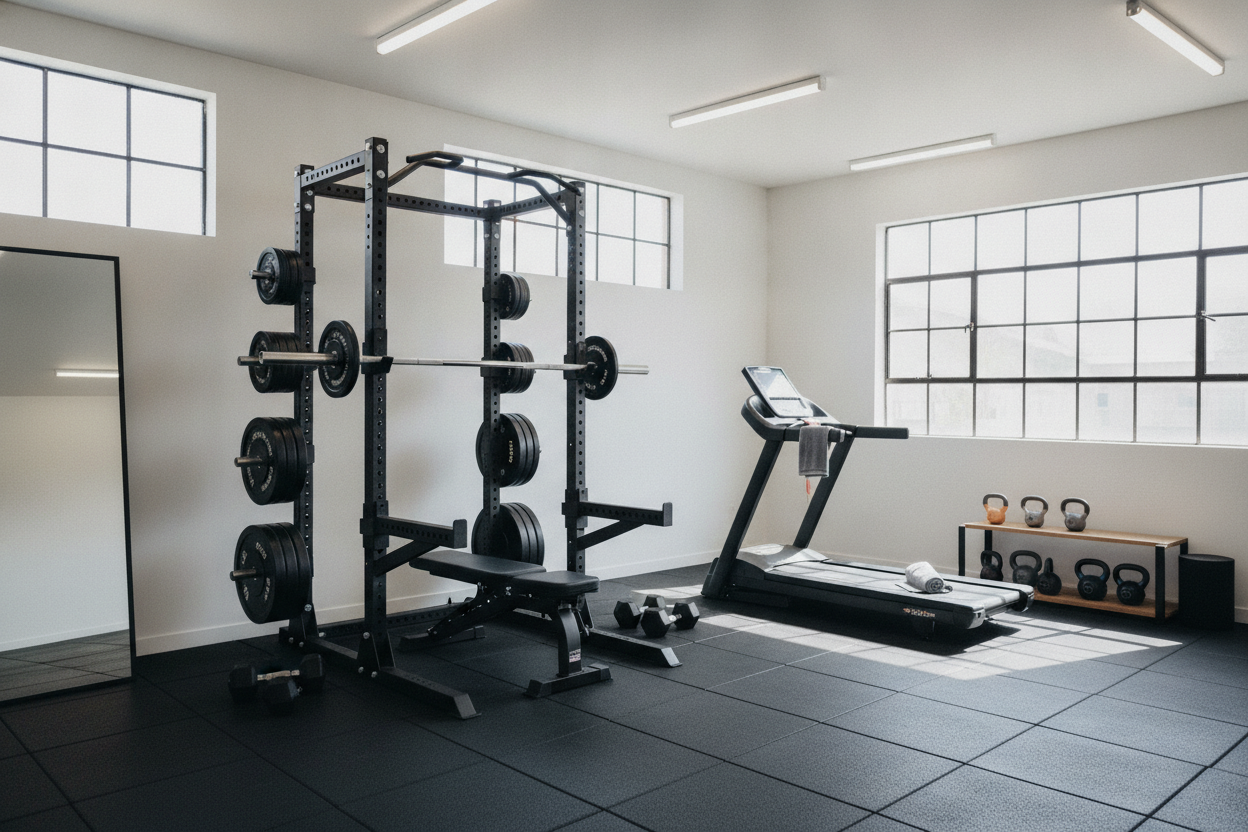
Investing in a high-quality large exercise mat for home gym use is non-negotiable. You need a surface that offers enough 'bite' for your shoes to grip while remaining dense enough not to squish under load. For those doing heavy deadlifts or lunges, a 6x8ft exercise mat gym flooring provides the necessary footprint to ensure your stance is always on a level, predictable surface. A stable base is one of the most underrated muscle gain techniques because it allows you to focus entirely on the muscle contraction rather than your balance.
Tip 3: Master the Eccentric When You Train Alone
Training alone in a garage means you likely don't have a spotter to help you grind out that last 'suicide' rep on the bench. Because of this, many home lifters rush through their sets, fearing they'll get stuck. This is a mistake. Slowing down the negative, or eccentric phase, is one of the best tips to gain muscle mass because it causes more muscle fiber micro-tears than the concentric (lifting) phase.
This is exactly why I stopped adding weight to my workout every single week and started focusing on a 3-second descent. By controlling the weight, you increase time under tension without needing to risk a failed rep under a heavy bar. It’s one of the best muscle building tips for the solo lifter. You get the growth stimulus without the injury risk of ego-lifting. Focus on the 'stretch' at the bottom of the movement; that's where the magic happens for tips on growing muscle.
Tip 4: Stop Trying to Replicate the Commercial Gym
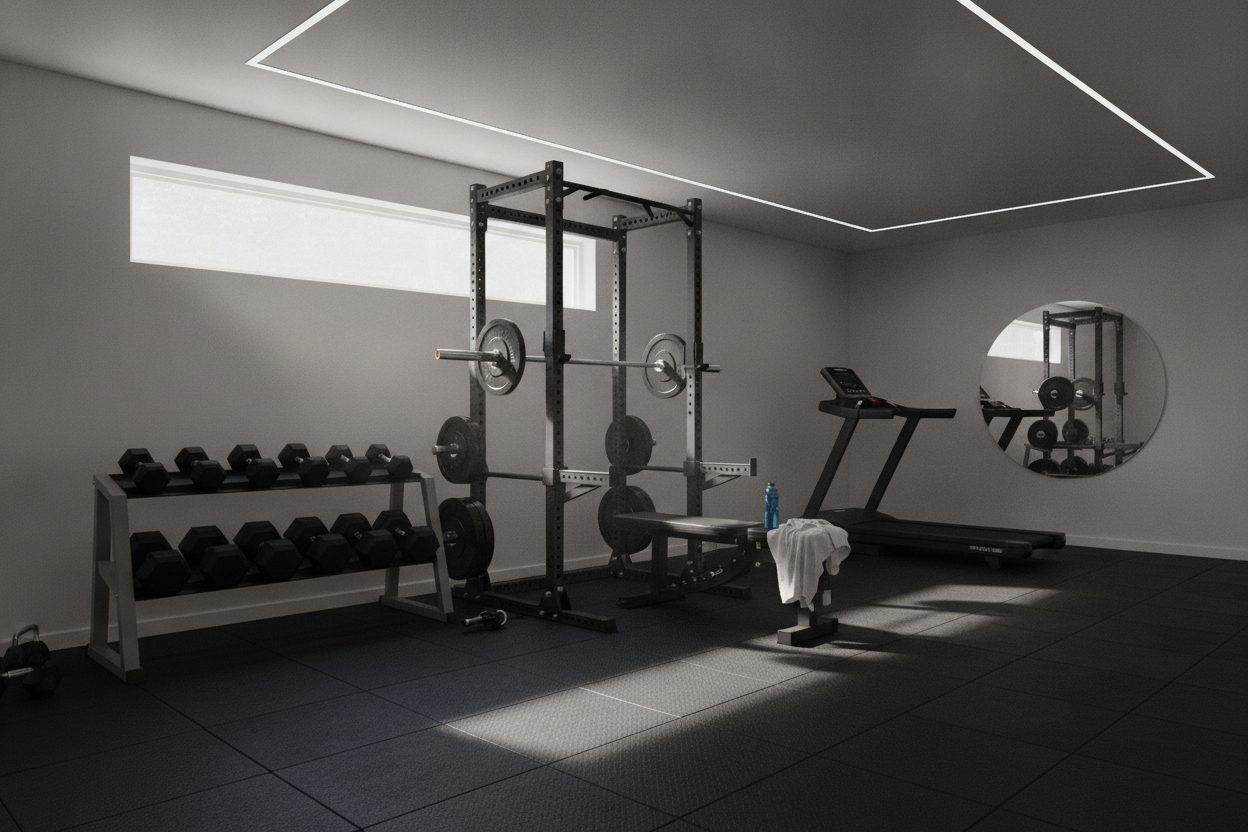
One of the biggest mistakes I see is people buying cheap, cable-crossover clones or flimsy leg extension machines that feel like toys. These machines often have poor leverage curves and max out at 150 lbs. Instead of trying to mimic a 10,000-square-foot facility, focus on mastering the basics. A high-quality barbell, a solid rack, and a heavy set of dumbbells are all you need for the best tips for muscle building.
If you want real weight lifting tips to build muscle, look at the legends. They didn't have 15 different isolation machines; they had heavy rows, presses, and squats. These compound movements recruit the most muscle fibers and trigger the greatest hormonal response. Don't waste your budget or your floor space on equipment that doesn't allow for progressive overload. Simple, heavy, and hard is the ultimate muscle building secret.
My Personal Experience: The 'All-in-One' Disaster
A few years ago, I fell for a 'total body' home gym machine I saw on a late-night ad. It promised to replace 20 machines. In reality, it did everything poorly. The cables were sticky, the seat wobbled, and I couldn't get a decent pump because I was too busy fighting the machine's friction. I wasted $800 and six months of training time. I eventually sold it for $100 on Craigslist and bought a used set of iron plates. My growth exploded once I went back to basic, heavy movements on a stable floor. Learn from my mistake: quality over quantity, every single time.
FAQ
Do I need a spotter to build muscle at home?
No, but you do need safety pins or spotter arms in your rack. If you have those, you can safely push to failure. If you don't, focus on high-intensity techniques like slow eccentrics or pause reps to reach fatigue without needing a save.
How many days a week should I train for muscle gain?
For most, 3 to 5 days is the sweet spot. The key is consistency and recovery. Since you're at home, it's easy to overtrain or undertrain. Pick a program and stick to it for at least 12 weeks.
Is concrete flooring okay for lifting?
It’s okay for the house, but bad for your joints and your gear. Bare concrete is slippery when dusty and has zero shock absorption. At the very least, get a dedicated lifting mat to protect your plates and your ankles.