Stop Deadlifting Your Couch: Moving Heavy Objects With Leverage
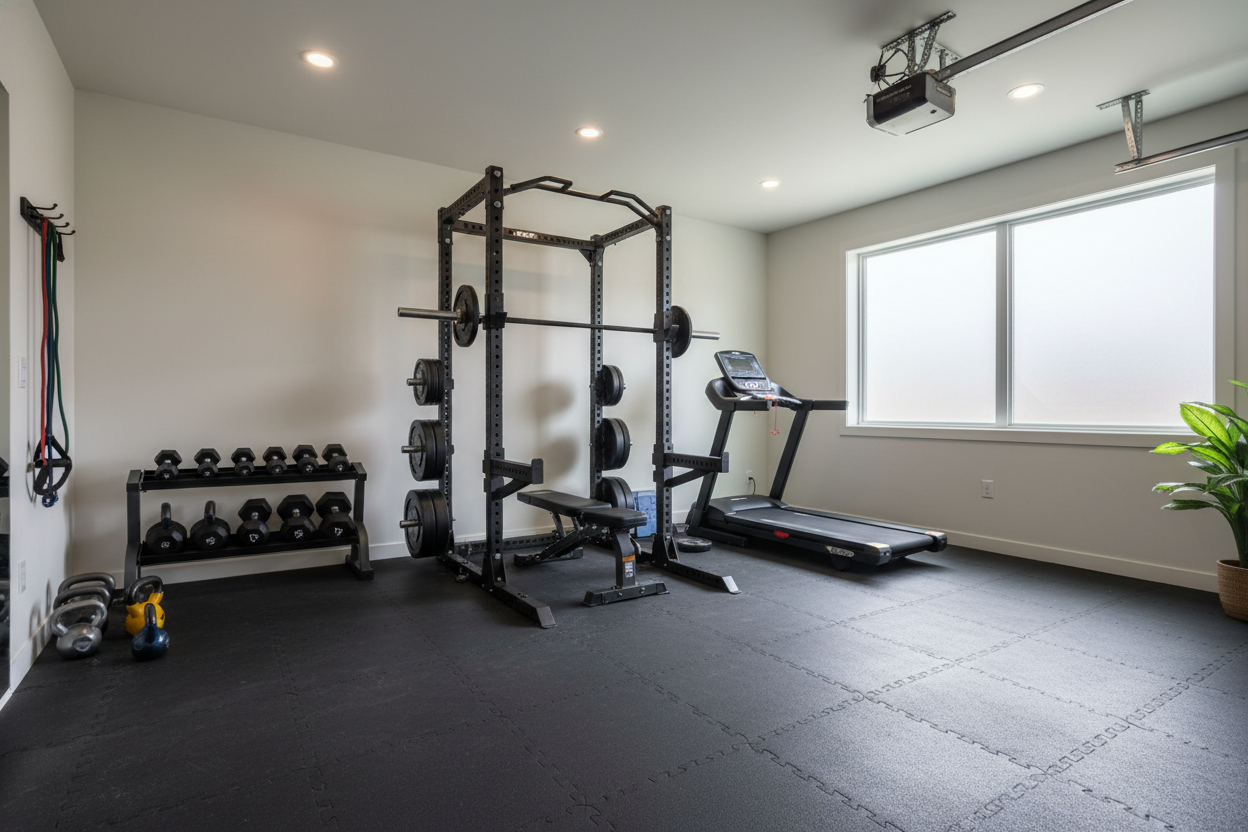
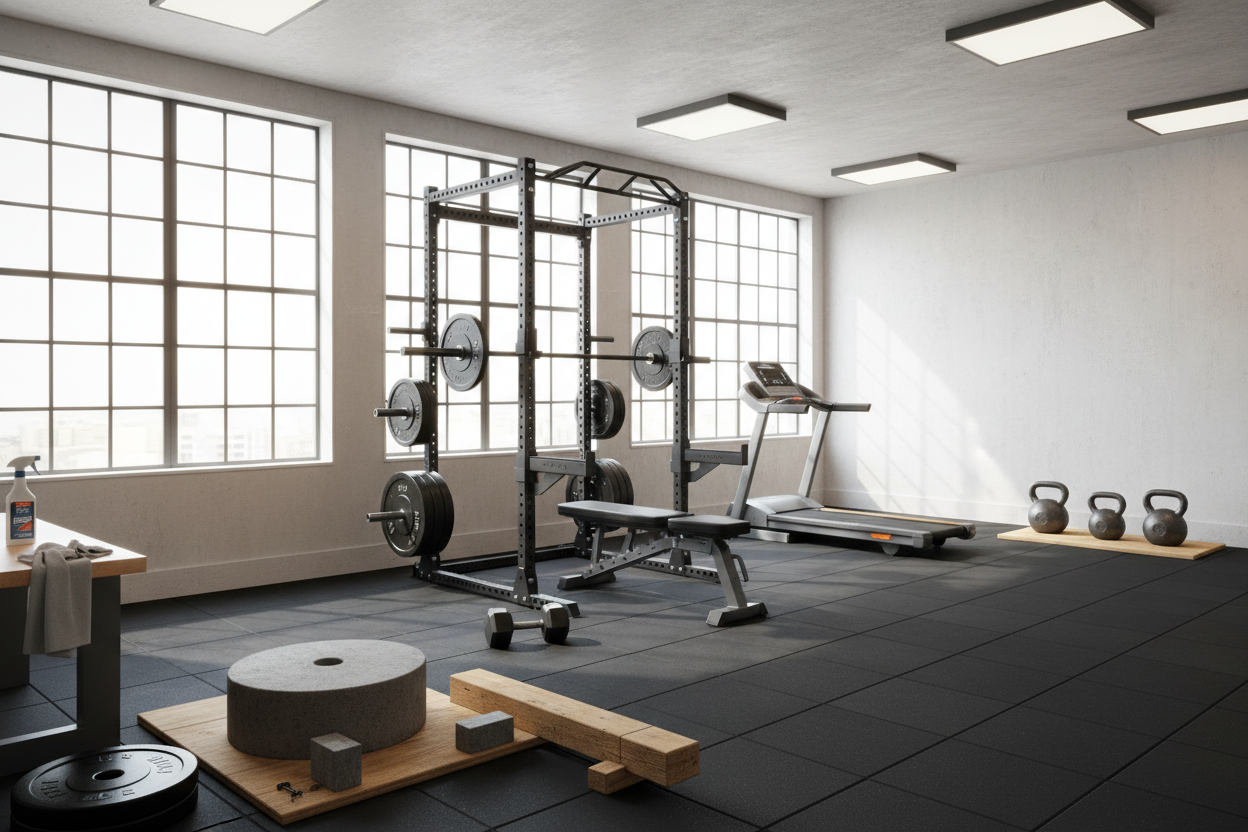
I remember when my first 3x3 power rack showed up. The freight driver dropped a 500-pound crate at the end of my driveway and basically said, 'Good luck, pal.' I stood there looking at that mountain of steel, realizing my ego was about to write a check my lower back couldn't cash.
Most home gym owners face this eventually. Whether it's a new functional trainer or a commercial-grade treadmill, you're often solo. Learning the art of moving heavy objects with leverage is the difference between a successful Saturday project and a Monday morning appointment with a physical therapist.
- Leverage beats luck: Use tools to multiply your force.
- Walk, don't carry: Pivot heavy upright items instead of deadlifting them.
- Rollers are king: PVC pipes can move almost anything on a flat floor.
- Protect the floor: Use plywood or scrap rubber to prevent gouging.
You Are Not a Forklift (And Neither Am I)
We’ve all been there—staring at a 400lb piece of heavy-duty strength equipment and thinking we can just 'manhandle' it into place. Stop. That’s how you end up with a hernia. Learning how to move heavy objects without a forklift is about working with gravity, not against it.
When you're maneuvering a massive power rack or a loaded leg press, the goal is to keep the center of gravity low and the friction lower. If you try to muscle a piece of gear that weighs more than your 1RM squat, you're asking for trouble. Brute force is for the platform; physics is for the garage floor.
The Simple Physics of Moving Heavy Stuff
The easiest way to move heavy stuff is to turn your body into a counterweight. By leaning your weight away from the object while maintaining a grip, you can tip and slide things that would be impossible to lift vertically. Moving heavy objects with leverage is always smarter and safer than trying to 'i lift heavy things' your way through a renovation.
Think of it like a seesaw. If you can find a pivot point, you only need to manage a fraction of the total weight. This is how to move very heavy objects without needing a crew of four guys. You aren't lifting the whole mass; you're just managing its balance, which is the best way to lift safely.
Cheap Tools Used to Carry Heavy Things
You don't need a $5,000 pallet jack. The best tool used to carry heavy things is often sitting in the plumbing aisle of Home Depot. Four-foot sections of 2-inch PVC pipe are legendary force multipliers. Slide them under a heavy base, and you’ve got a DIY conveyor belt.
Furniture dollies are another easy way to lift heavy objects. If you have to move something heavy up a hill or over a threshold, a pry bar—also called a 'mule bar'—is essential. It lets you lift a corner just enough to slip a dolly or a roller underneath. Forearm lifting straps are also great for how to carry large objects like appliances where you can't get a good handhold.
Step-by-Step: How to Move Very Heavy Objects Solo
Maneuvering moving large heavy objects requires a plan. Don't just start pushing. Clear the path, check for floor height changes, and ensure you have an 'out' if the object starts to tip. Here is how to lift and move heavy objects without losing your mind.
The 'Walk' Technique for Upright Gear
If you have tall squat stands or a narrow cabinet, don't try to carry it. This is how to lift heavy appliances or tall gear: tip it slightly to one side, pivot it on the corner, then tip it to the other side and pivot again. You are essentially 'walking' the item. It’s the best way to carry heavy objects across a room without ever taking the full weight onto your spine.
Using Rollers to Move Heavy Objects
This is the ancient Egyptian trick. By placing three or four PVC pipes under a heavy platform, you can roll it with one hand. As the back pipe pops out, you move it to the front. This is crucial when you're trying to protect your extra wide exercise mats. Sharp metal edges on a rack will tear rubber instantly if dragged, but using rollers to move heavy objects keeps the weight distributed and the surface safe.
How to Flip Heavy Objects Safely
Sometimes you need to know how to flip heavy objects like a tractor tire or a deadlift platform. The key is to drive with the legs, not the back. Get your chest against the object, take a wide stance, and 'power clean' the edge up. Never pull with your arms alone—that’s how you tear a bicep. Once it’s past the 45-degree mark, shift your hands to a pushing position to complete the lift heavy objects easily.
What Should You Do When Lifting a Heavy Object Is Unavoidable?
Sometimes there is no trick; you just have to pick it up. What is the key to safe lifting? It’s treating that couch or crate exactly like a 500lb barbell. You need to know how to lift a heavy weight by bracing your core and setting your lats before the move starts.
How to lift heavy objects at home starts with your feet. Get as close to the object as possible. If you can’t get your feet around it, you shouldn't be lifting it solo. Pull the object into your center of mass. It is important not to when lifting to let the object drift away from your shins, as that multiplies the torque on your lumbar spine. Always focus on how to lift heavy objects without hurting your back.
Lowering Heavy Objects Without Losing Your Toes
The job isn't done until the item is flat and your fingers are clear. Lowering heavy objects is where most people get lazy. Use the same 'walk' or 'tip' method to settle it down. Most importantly, it is important not to twist when lowering heavy objects. Your spine is most vulnerable under load when rotating. Square your hips, keep your chest up, and bend at the knees to lift up heavy objects or set them down.
Personal Experience: The 600lb GHD Incident
I once tried to move a fully assembled GHD (Glute Ham Developer) across my garage by myself. I thought I could just 'deadlift and drag' the front end. Halfway through, the weight shifted, and I felt that terrifying 'twinge' in my lower back. I spent the next three days on a heating pad. Now? I use a pry bar and two $15 dollies for everything. Don't be a hero. Use the tools.
FAQ
What can I use to lift heavy objects?
A pry bar is your best friend for getting an initial gap. From there, use furniture dollies, PVC rollers, or forearm straps to finish the job.
How to lift heavy things by yourself?
Focus on 'walking' the item or using rollers. If you must lift, keep the object tight to your body, use a wide stance, and drive through your heels. Never pull heavy objects with a rounded back.
How to move something heavy up a hill?
Use a winch or a come-along if it's extreme. For moderate slopes, a heavy-duty hand truck with pneumatic tires is the only way to go. Never stand downhill from the object while trying to how to pull heavy objects.