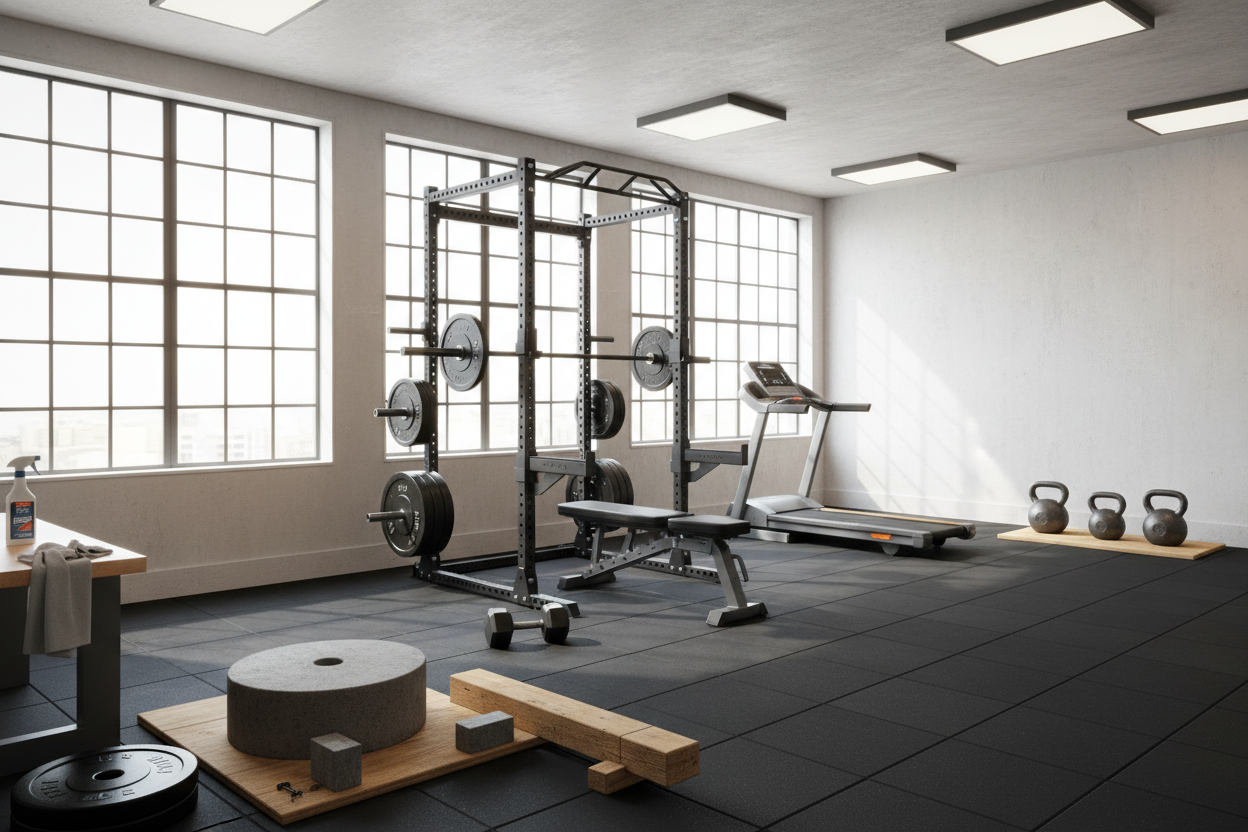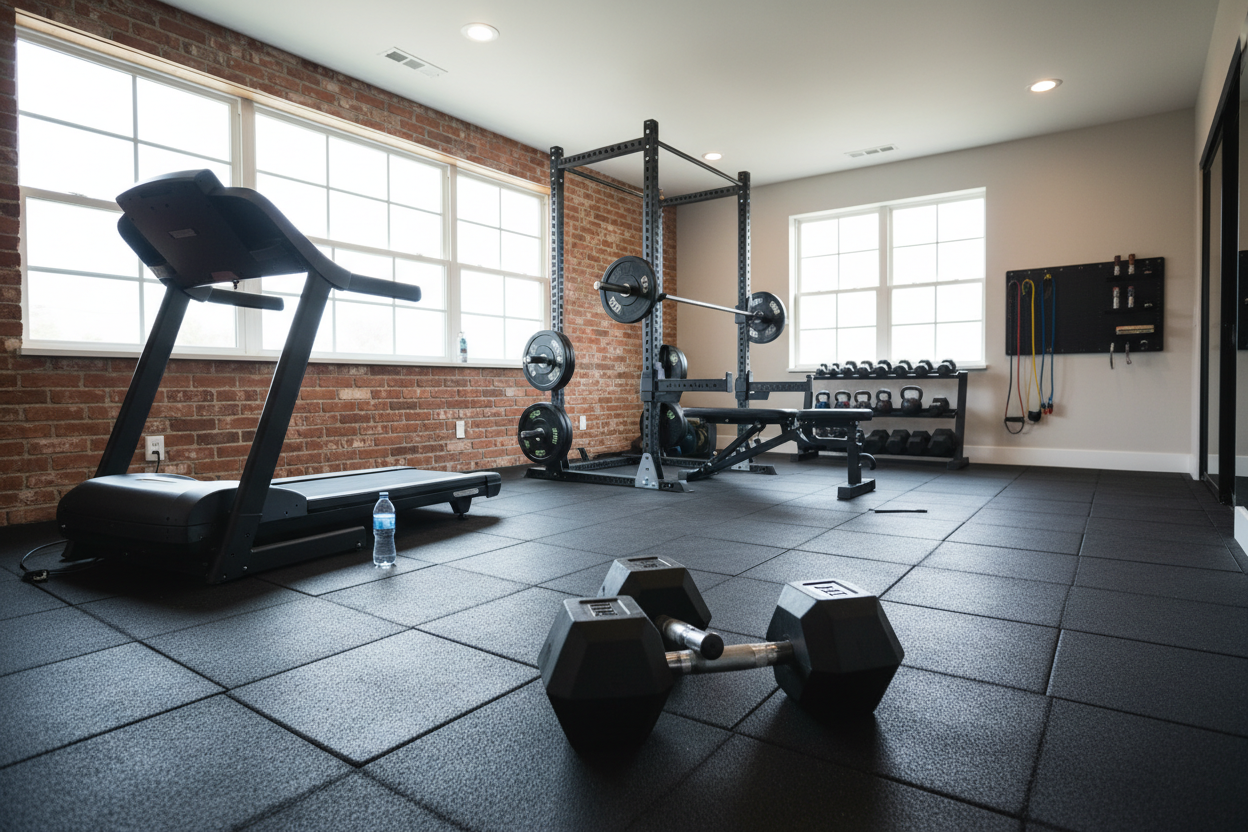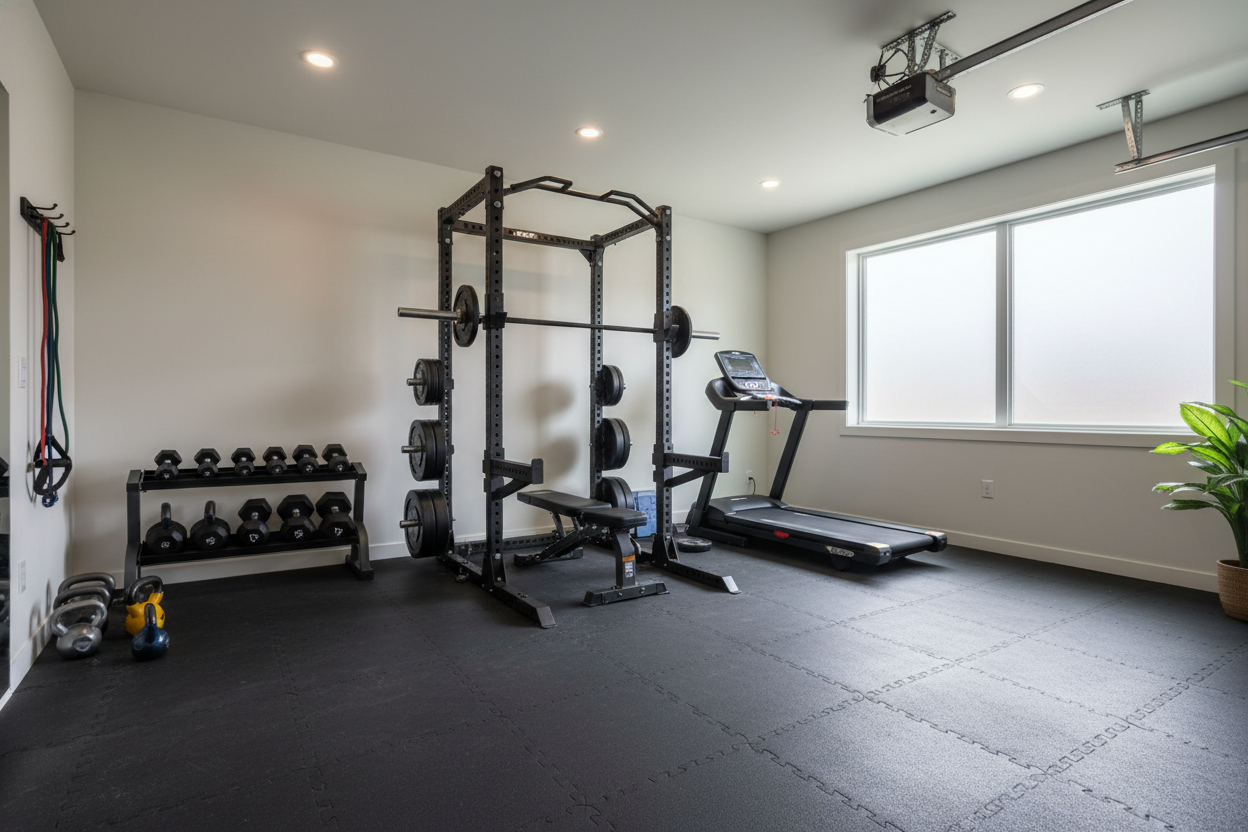
How Can I Get Stronger at Home? Start With Your Floor
I spent years training in commercial powerlifting dungeons where the floor was basically one giant slab of high-density rubber. Then I tried to replicate a heavy session in my spare bedroom. If you are asking how can i get stronger at home, you have probably realized that your bedroom carpet or that slick laminate floor is a literal death trap for heavy squats. You cannot build a skyscraper on a swamp, and you cannot build a 400-pound squat on a surface that slides every time you breathe.
We obsess over the knurling on our barbells and the increment jumps on our adjustable dumbbells, but we ignore the only thing connecting us to the earth. Most home gym setups fail because the trainee is fighting for balance instead of fighting the weight. If your feet are sliding even a millimeter, your brain sends a signal to your muscles to shut down. It is a safety mechanism, and it is killing your gains.
Quick Takeaways
- Hardwood and carpet are for living, not for heavy triples.
- Micro-slipping causes your nervous system to 'brake' your power output.
- Horse stall mats are cheap but smell like a literal barn for six months.
- A dedicated 7mm to 10mm high-density mat is the sweet spot for home stability.
- Proper traction allows for the aggressive foot-rooting needed for heavy glute work.
The Commercial Gym Advantage You Did Not Notice
Commercial gyms do not just use that thick rubber flooring because it looks 'gym-like.' They use it because it creates a high-friction environment that allows for maximum force transfer. When you push against a commercial-grade floor, 100% of that energy goes into the bar. On a plush carpet or a slippery hardwood floor, a significant percentage of your effort is wasted on stabilizing your ankles and preventing a catastrophic slide.
Lifting on carpet is like trying to bench press on a waterbed. It feels 'fine' until the weight gets heavy, and then the lack of a rigid base makes your technique fall apart. If you want to know how can i get stronger at home, start by looking at what is under your shoes. You need a surface that bites back when you dig your heels in.
Power Generation Starts From the Ground Up
Your nervous system is smarter than you are. If it senses that your foundation is unstable, it will not allow you to recruit maximum muscle fiber. This is called neural inhibition. When I first started training in my garage, I couldn't figure out why my deadlift was 40 pounds weaker than at the local club. It wasn't the bar; it was the dusty concrete floor. My feet were micro-slipping, and my brain was pulling the emergency brake.
To fix this, you need to master the high tension protocol for bigger legs, which requires you to 'screw' your feet into the ground. You cannot create that torque on a floor that does not offer grip. Once you secure your footing, you will likely find that you are actually stronger than you thought—you just haven't been able to express that strength because of your floor.
Fixing Your Foundation Without Ruining Your House
The 'hardcore' answer is usually to go buy horse stall mats from a farm supply store. I have done it. They are 3/4-inch thick, weigh 100 pounds each, and smell like a tire fire for the first three months. They also shed black soot that ruins baseboards. Unless you are training in a literal barn, there are better ways to create a high-traction zone.
I prefer a high-density, large-scale mat that stays put without needing to be glued down. A 6x8ft exercise mat gym flooring setup is usually the sweet spot. It is wide enough for walking lunges and stable enough for a wide-stance sumo deadlift. Plus, it actually protects your subfloor from the vibration of a 50-pound dumbbell drop, which your landlord or spouse will appreciate.
Adapting Your Stance for Living Room Lifts
Once you have a floor that actually grips, you can start tweaking your biomechanics. For many, especially female lifters, the ability to take a wider stance without sliding is the key to unlocking glute growth. When the floor is slippery, we tend to stay in a narrow, 'safe' stance that is quad-dominant and limits how much weight we can move.
With a solid base, you can follow a science-based leg guide for females to adjust your foot angle and stance width for better posterior chain recruitment. Whether you are doing Bulgarian split squats or heavy kettlebell swings, the confidence that your lead foot isn't going to shoot forward allows you to actually push toward failure safely.
Stop Blaming Your Lighter Dumbbells
I see people all the time complaining they can't get strong because they only have 50-pound dumbbells. But then I watch them lift on a rug, and their form is a mess because they are wobbling. Before you drop $500 on a new rack or a set of heavy iron, fix your surface. You cannot utilize the strength you already have if you are standing on an ice rink.
Investing in large exercise mats for home gyms is the most underrated upgrade you can make. It transforms a 'room with some weights' into a legitimate training space. Secure your ground, root your feet, and stop letting your floor dictate your PRs.
Personal Experience: The Great Basement Slide
I once tried to hit a 315-pound squat PR in a finished basement on a thin yoga mat laid over laminate. Halfway through the ascent, the mat slid three inches to the left. I didn't get hurt, but I had to dump the bar, and I put a nice dent in the floor. It was a stupid mistake. I realized then that 'good enough' flooring is a myth. If it moves, it’s garbage. I switched to a heavy-duty 7mm mat the next week and my stability issues vanished instantly.
FAQ
Is carpet okay if I use a plywood board?
It is better than nothing, but plywood can slide on carpet too. If you go this route, put a rubberized gripper pad under the wood. Ideally, just get a dense mat that has enough mass to stay put.
Do I need shoes if I have a good mat?
Training barefoot or in socks on a high-traction mat is actually great for foot strength. Just make sure the mat has a non-slip texture so your sweat doesn't turn it into a slide-and-glide.
How thick should a home gym mat be?
For most people using dumbbells or kettlebells, 7mm to 10mm is perfect. If you are dropping 400-pound deadlifts, you want 3/4-inch rubber, but for 90% of home lifters, the thinner, high-density mats are much easier to clean and move.