Stop Chasing the Pump: How Should Athletes Lift Weights?
I remember standing on the sideline of my college soccer field, feeling like a tank. I’d spent the entire off-season hammering bench press and curls until my shirt sleeves barely fit. Then the whistle blew, and a guy 40 pounds lighter than me blew past me like I was standing in wet concrete. That’s when I realized I had no idea how should athletes lift weights if they actually want to win.
We have been conditioned to believe that a bigger muscle is always a better muscle. But in the world of competitive sport, mass is just extra luggage if it doesn't come with a motor that can move it fast. Most guys in the gym are training for a mirror; athletes need to train for the scoreboard.
Quick Takeaways
- Prioritize movement speed over just adding more plates to the bar.
- Train in all directions—not just up and down—to stay injury-free.
- Free weights develop the stability that machines simply can't mimic.
- Strength sessions should support your sport, not drain your energy for it.
The Big Lie About Gym Strength vs. Field Speed
There is a massive disconnect between being 'gym strong' and being 'field strong.' I’ve seen guys who can squat 500 pounds struggle to get off the line of scrimmage because their nervous system only knows how to move slowly. Weight training for sport isn't about the maximum weight you can move for a single, grinding rep. It is about how much force you can apply in the 0.1 seconds your foot is in contact with the ground.
When you focus purely on weight training sports like bodybuilding, you are training your muscles to grow through high volume and slow eccentric movements. That’s great for a beach trip, but it’s poison for a point guard. If you spend all your time moving slowly in the gym, you are essentially teaching your brain to be slow. Real weightlifting for athletic performance requires a shift in mindset: the goal is to be as strong as possible without sacrificing an ounce of twitch.
Force Production: The Secret to Moving Faster
If you want to understand power, you have to understand the force-velocity curve. On one end, you have max strength (heavy and slow). On the other, you have max velocity (sprinting). Athletes need to live in the middle. Moving a 225-lb bar at a high speed does more for your explosive power than grinding out 315-lb like a turtle.
I’ve seen a lot of athletes try to get 'functional' by using only rubber bands or light bodyweight movements. It doesn't work. I eventually realized that basic weight training with weights is the only way to build the raw horsepower needed for high-level competition. You need the iron to create ground reaction force. Without heavy resistance, your body never learns how to recruit the high-threshold motor units that make you fast. The trick is to lift that heavy iron with violent intent.
Ditch the Mirrors and Start Moving Sideways
Most gym rats live in the sagittal plane. They squat, they deadlift, they bench. It’s all up and down, forward and back. But sports happen in the gaps. If you can't move laterally or rotate with power, you’re a liability. Real weight training for sport needs to include lateral bounds, Cossack squats, and rotational med ball throws.
I used to ignore anything that didn't help my 'Big Three' totals. The result? I had the hip mobility of a brick and eventually popped my adductor trying to change direction. Don't be that guy. Your training should prepare you for the chaos of a game, which means moving in every direction under load. If your routine looks the same as a guy who never leaves the treadmill, you’re doing it wrong.
Why Free Weights Beat Fixed Paths for Athletes
I get the appeal of weight lifting machines. They are safe, they are easy to use, and they let you isolate a muscle until it burns. But a leg extension machine doesn't require you to balance. It doesn't force your core to engage to keep you from tipping over. In a game, you are rarely on two stable feet with a backrest supporting you.
Athletes need barbells, dumbbells, and kettlebells because they are 'unstable.' When you have a bar on your back, your entire posterior chain and core are screaming to keep you upright. That stability translates directly to the field. Machines have a place for rehab or adding a bit of extra quad volume, but the meat of your program should be movements where you are responsible for the path of the weight.
The 'Minimum Effective Dose' Approach to the Iron
The biggest mistake I see is athletes trying to train like pro powerlifters during their season. Your weight room work is a supplement, not the main event. If you are too sore to practice your skills, your gym time is actually making you a worse athlete. You want to do just enough to get the adaptation you need, then get out and recover.
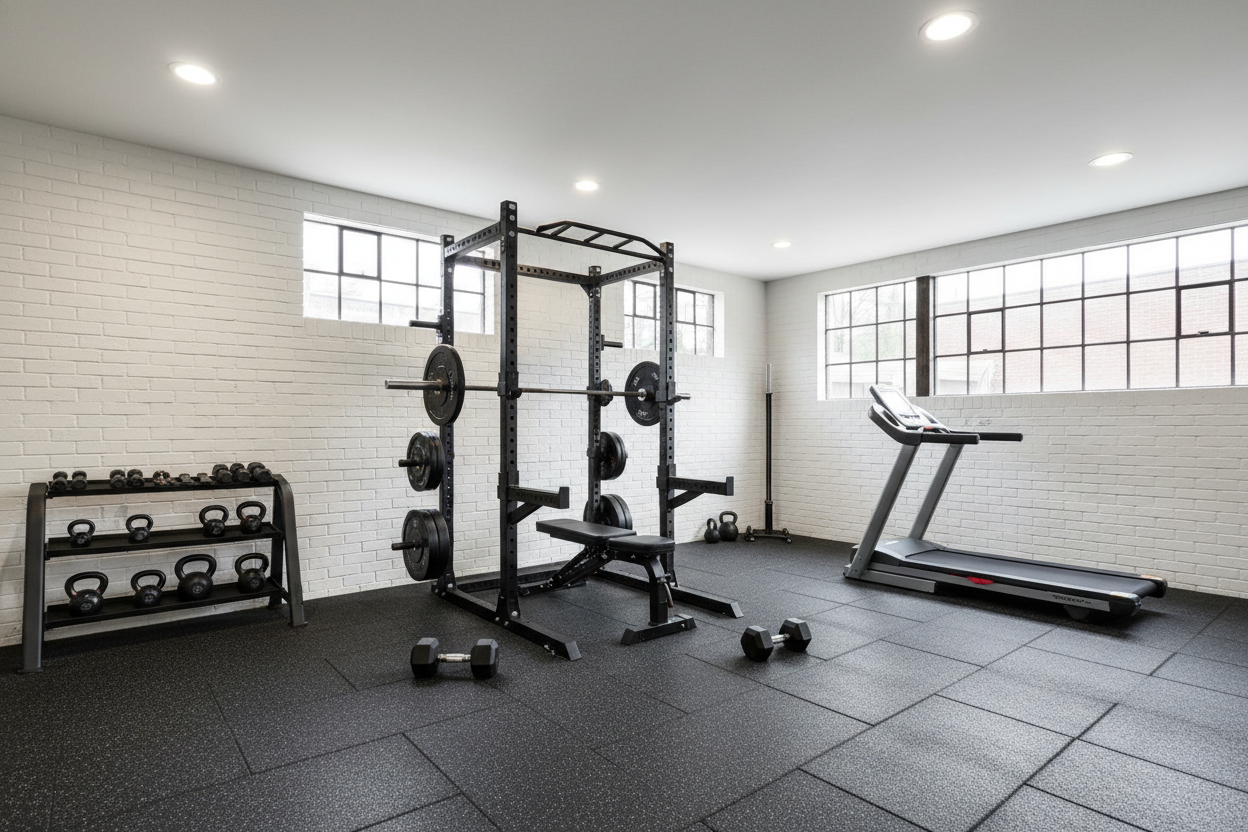
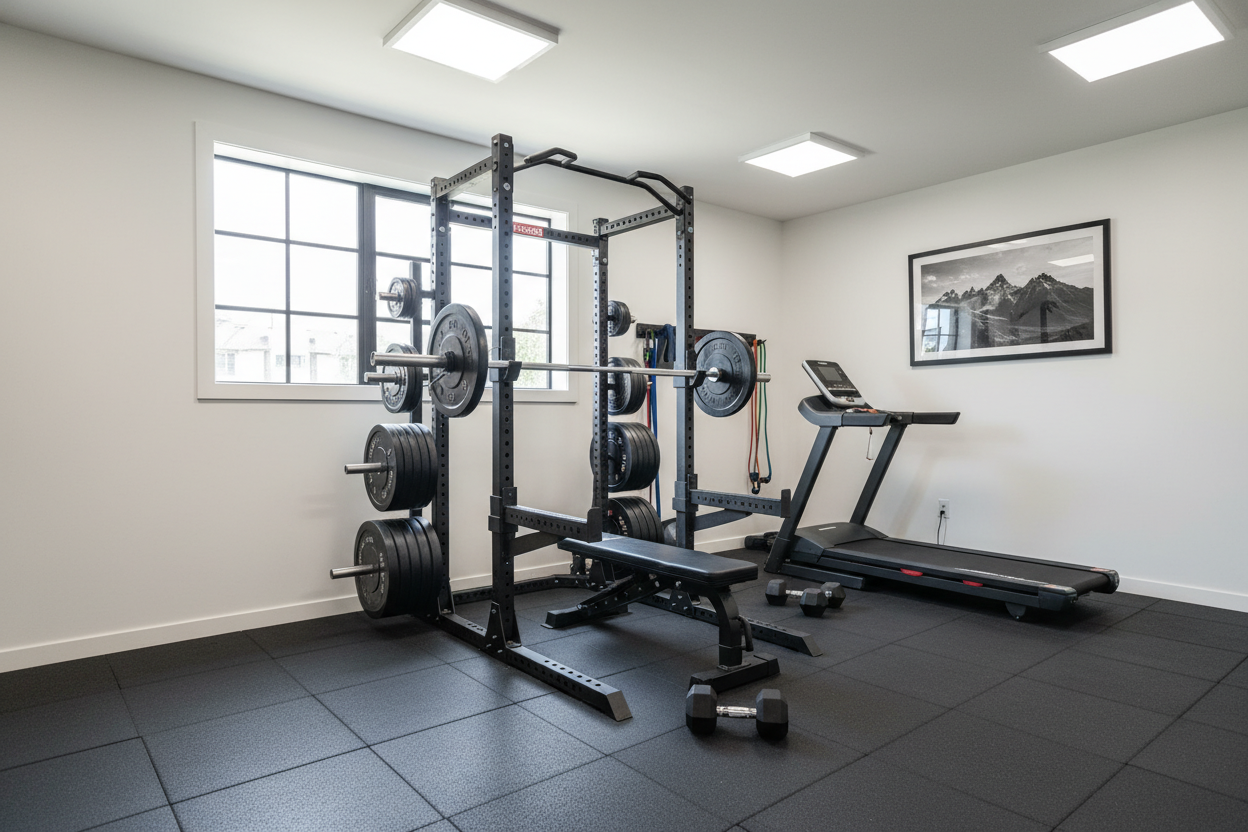
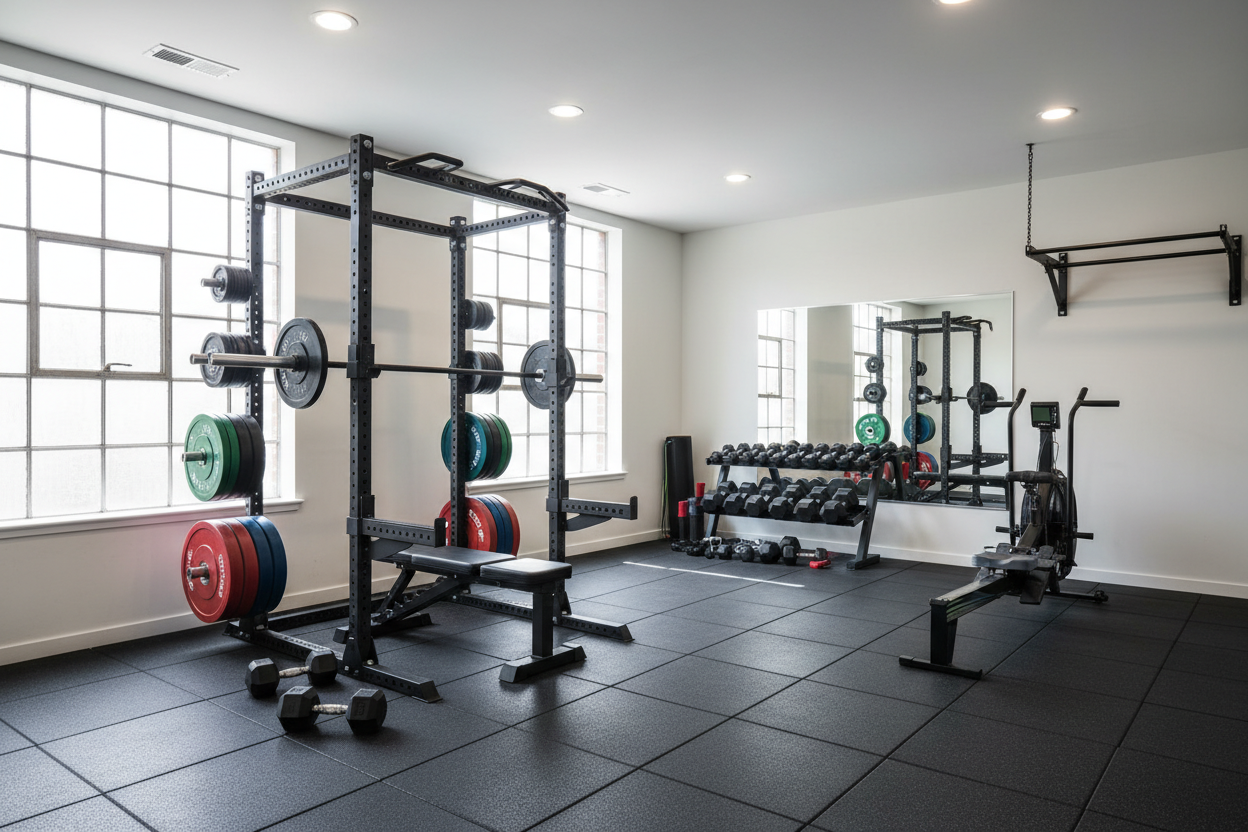
For a home setup, you don't need a thousand gadgets. A solid centerpiece like the Gxmmat X6 Power Rack Weight Bench Package gives you everything you need to hit the big compound movements safely. It’s about quality over quantity. Two or three high-intensity sessions a week—focusing on explosive pulls, heavy squats, and overhead presses—is usually plenty to maintain and build strength while staying fresh for game day.
My Personal Lesson in Hubris
A few years ago, I decided I wanted a 600-lb deadlift while also trying to play competitive ultimate frisbee. I hit the number, but I was so beat up that I couldn't sprint for more than two points without my lower back seizing. I had become 'strong' by a powerlifter's standards, but I was useless as an athlete. I had to strip the weight back, focus on my power cleans and plyometrics, and accept that a 400-lb deadlift moved fast was better for my goals than a 600-lb grind. It was a hard pill to swallow for my ego, but my performance improved immediately.
FAQ
Is bodybuilding bad for athletes?
It’s not 'bad,' but it’s inefficient. Bodybuilding focuses on muscle size (hypertrophy) through high volume, which often leads to excessive fatigue and 'slow' muscle fibers. Athletes should focus on neural adaptations—teaching the brain to fire muscles faster.
How many days a week should an athlete lift?
Usually 2 to 4 days. During the season, twice a week is enough to maintain strength. During the off-season, you can bump it to four to build a new base of power.
Should I do cardio before or after weights?
If you're training for power, do your explosive movements first when your nervous system is fresh. Save the conditioning for the end of the session or a separate time of day so it doesn't sap your explosiveness.