Stop Buying Standard Yoga Mats: The Real Exercise Mat for Men Guide
Most guys treat their floor padding as an afterthought. You grab whatever is rolled up in the corner of the gym or buy the cheapest option online. Then, halfway through a heavy set of dumbbell presses, you realize your head is on the floor, your shoulders are hanging off the sides, and the material is disintegrating under your sneakers. Finding the right exercise mat for men isn't about vanity; it is about biomechanics and safety.
If you are over six feet tall or weigh more than 180 pounds, standard equipment simply wasn't built for your frame. Here is the engineering breakdown of what you actually need to protect your joints and maintain stability.
Key Takeaways: What to Look For
If you are in a rush to upgrade your home gym, here is the checklist you need to follow to avoid buyer's remorse:
- Dimensions Required: Look for a minimum length of 72 inches (standard is 68) and a width of 26+ inches to accommodate broader shoulders.
- Density Over Thickness: You want high-density rubber or PVC, not thick, squishy foam. Soft mats kill your stability during compound lifts.
- Surface Texture: Ensure the mat has a non-slip, textured grip that handles heavy sweat without becoming an ice rink.
- Shoe Compatibility: Verify the material is abrasion-resistant if you plan on doing HIIT or plyometrics in sneakers.
Why Size and Geometry Matter
The average commercial gym mat is designed for a user who is roughly 5'5". If you are a 6-foot male, a standard mat leaves your head or feet on the cold concrete during floor work. This isn't just uncomfortable; it breaks your focus.
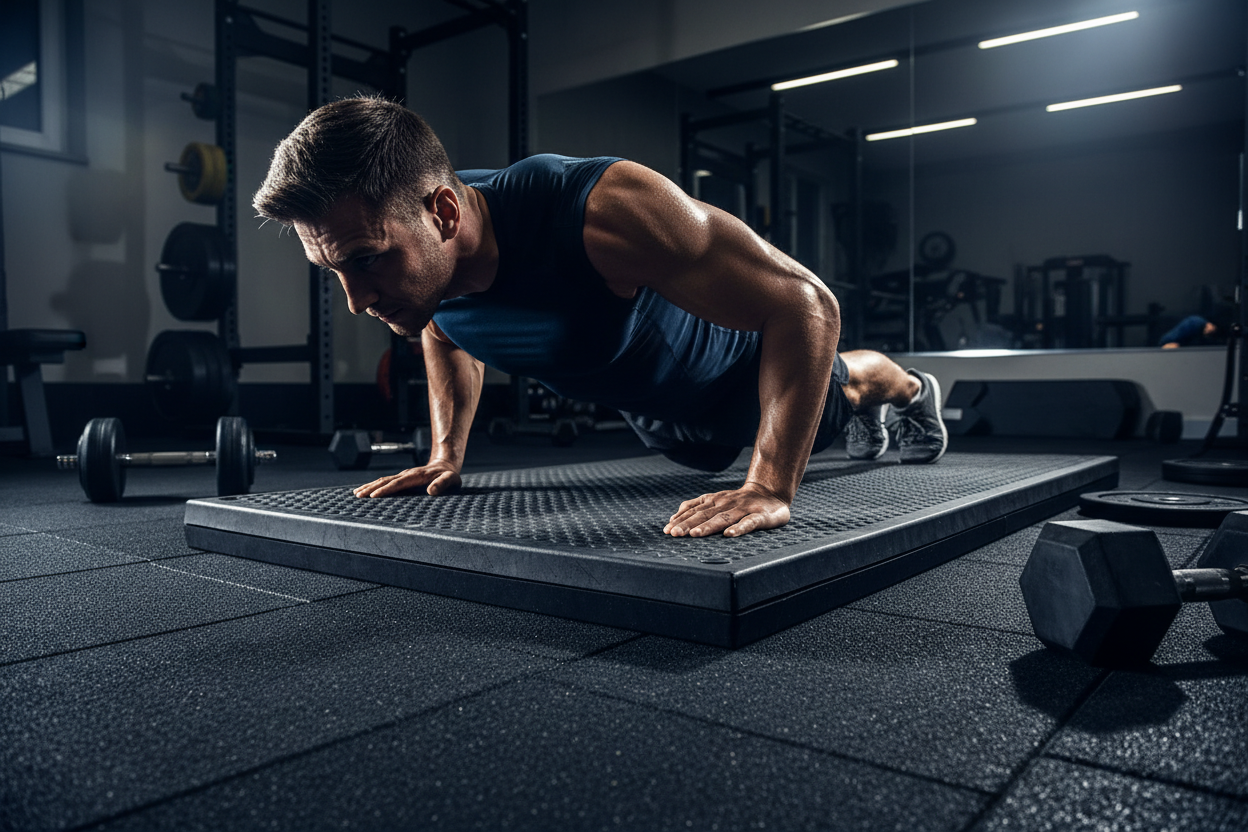
When shopping for a men's workout mat, you need to look at the geometry. You need a landing pad, not a strip. Broader shoulders require a wider surface area—ideally 26 to 30 inches wide. If your elbows touch the floor during a push-up or floor press, the mat is too narrow. You need enough real estate to sprawl without constantly repositioning.
Density: The Stability Factor
Here is where most people get it wrong. They assume a thicker mat is a better mat. This is false. A super-thick, soft foam mat (often 1/2 inch or more) introduces instability. If you step onto a soft mat for a squat or a lunge, your ankle has to work overtime to stabilize because the ground is shifting beneath you.
A proper men's exercise mat should be high-density. You want compression resistance. It should protect your knees during kneeling movements but remain firm enough that you can balance on one leg without wobbling. Look for high-density natural rubber or heavy-duty PVC blends.
Durability Against Friction and Footwear
Yoga mats are designed for bare feet and slow movements. A workout mat for men needs to survive the friction of rubber sneaker soles. If you are doing burpees, mountain climbers, or jumping lunges, the tread on your shoes acts like sandpaper.
Standard TPE (Thermoplastic Elastomer) or cheap foam will shred within weeks under this kind of stress. You need closed-cell surfaces that resist tearing. If the product description says "barefoot recommended," avoid it for general strength training.
My Training Log: Real Talk
I learned this lesson the hard way back in 2018. I bought a highly-rated, plush foam mat online, thinking I was doing my joints a favor. The first time I used it, everything seemed fine until I started doing mountain climbers.
Mid-set, I felt the surface literally stretch and warp under my toes. It felt like running in loose sand. But the real kicker happened two weeks later. I was doing renegade rows with hex dumbbells. When I lifted the weight, the rubber coating of the dumbbell had bonded slightly to the cheap foam of the mat due to the friction and heat. It ripped a divot right out of the center of the mat. That little chunk of foam stuck to the dumbbell was the end of that gear. Since switching to a high-density, 8mm rubber mat, I can drop weights (gently) and jump in shoes without seeing a single scratch.
Conclusion
Your foundation dictates your performance. Stop trying to fit a large frame onto a small, flimsy surface. Investing in a specialized exercise mat for men ensures that your focus remains on the rep count, not on whether your feet are about to slip. Get the right size, get the right density, and get to work.
Frequently Asked Questions
Is a thicker mat always better for heavy men?
No. While thickness provides cushioning, too much softness causes instability. Heavy men should prioritize density over thickness. A dense 6mm mat offers better joint protection and balance than a soft 15mm foam mat.
Can I use a yoga mat for weightlifting?
Generally, no. Yoga mats are often too thin to protect floors from dropped weights and too fragile for training in shoes. A dedicated workout mat for men is built to withstand abrasion and heavy loads.
What is the ideal length for a men's exercise mat?
Aim for a mat that is at least 6 to 12 inches longer than your height. For most men, a mat that is 72 inches (6 feet) to 84 inches (7 feet) is ideal to ensure your head and feet stay supported during supine exercises.