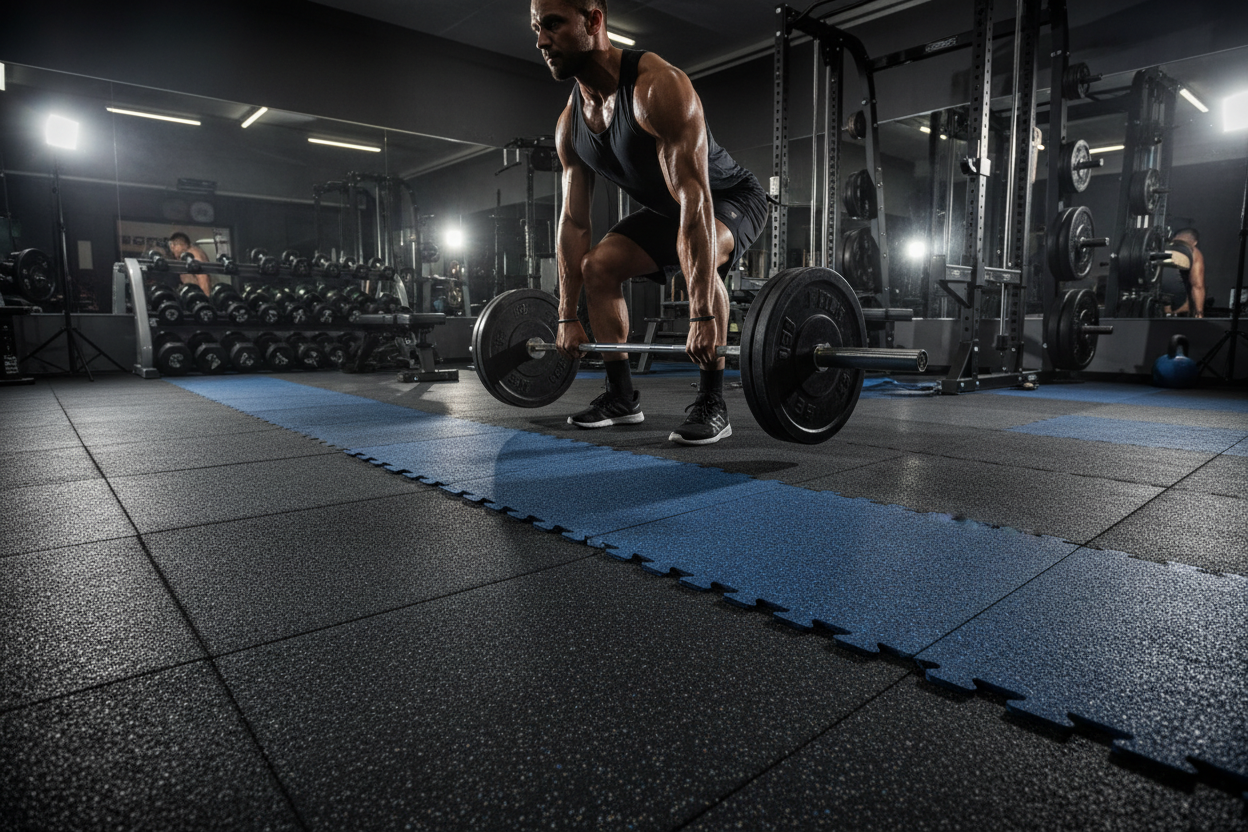
Rubber Tec Reversible Gym Flooring: Worth The Investment?
Building a home gym is an exciting process, but there is one critical element most people overlook until a 45-pound plate chips their garage floor: the foundation. If you are tired of cheap foam puzzle mats peeling apart or the deafening crash of heavy deadlifts on concrete, you are likely looking for a serious upgrade.
Enter rubber tec reversible gym flooring. In this guide, we will break down exactly why this heavy-duty flooring solution has become a staple for North American garage and basement setups, and whether it makes sense for your specific training style and budget.
Key Takeaways
- Dual-sided design: Flipping the mats effectively doubles the lifespan of your investment.
- High-density protection: Superior shock absorption protects both your expensive equipment and your home's subfloor.
- Textured grip: Provides excellent slip resistance, even during sweaty high-intensity interval training (HIIT) sessions.
- Heavy-duty performance: Ideal for barbell training, power racks, and heavy dumbbell drops.
The Anatomy of Premium Gym Flooring
Density vs. Thickness
When shopping for gym flooring, thickness is often the only metric people look at. However, density is just as crucial. A highly dense rubber mat will not compress under the weight of a 500-pound power rack. This stability is vital for heavy lifting, as a squishy floor can negatively impact your balance during heavy squats and overhead presses.
The Reversible Advantage
One of the biggest selling points of rubber-tec reversible gym flooring is its two-sided wear capability. Most home gym owners naturally create high-traffic zones—usually right in front of the squat rack or the dumbbell rack. When one side starts showing signs of wear after a few years of heavy use, you simply flip it over for a brand-new surface, drastically improving its lifetime value.
Space Planning: Fitting It Into Your Setup
Garage Gyms vs. Basement Retreats
North American home gyms typically fall into two categories: the garage and the basement. In a garage, temperature fluctuations and moisture can be an issue. High-quality rubber mats resist moisture and will not warp when the winter cold hits. For basement setups, the primary concern is usually noise reduction. While rubber flooring will not completely soundproof a room, it significantly dampens the sharp acoustic crack of dropping iron plates.
Clearance and Dimensions
When measuring your space, remember that a standard power rack requires at least an 8-foot by 8-foot footprint of flooring (64 square feet) to safely accommodate the rack, bench clearance, and a 7-foot Olympic barbell. If you are fitting this into an apartment corner, you can easily score and cut these mats with a heavy-duty utility knife to fit around baseboards.
From Our Gym: Honest Take
When we outfitted our testing facility last spring, we laid down 400 square feet of rubber tec reversible gym flooring under our primary lifting platforms. The first thing I noticed was the sheer density—these are not your standard lightweight interlocking foam pieces. During heavy deadlift sessions, the thick rubber absorbed the shock of 405-pound drops without sending aggressive tremors through the concrete below.
One honest caveat: they do have a distinct rubber odor straight out of the factory. We had to leave the garage doors open and run a high-velocity fan for about three days before the smell completely dissipated. But eight months in, after daily abuse from dropped kettlebells and dragging heavy metal benches, there is zero peeling, and the textured grip remains as aggressive as day one.
Frequently Asked Questions
Is rubber tec reversible gym flooring waterproof?
Yes, solid high-density rubber is naturally water-resistant. It will not absorb sweat or spilled water, making it exceptionally easy to mop and sanitize after a grueling workout.
Do I need to tape or glue the mats down?
In most home gym applications, no. Because these mats are incredibly heavy and dense, they generally stay locked in place under their own weight, especially once you place a power rack or heavy equipment on top of them.
How do I clean and maintain the rubber surface?
Maintenance is straightforward. Sweep or vacuum loose dirt regularly. For a deeper clean, use a damp mop with a mild soap or a pH-neutral floor cleaner. Avoid harsh chemicals like bleach, which can break down the rubber over time.