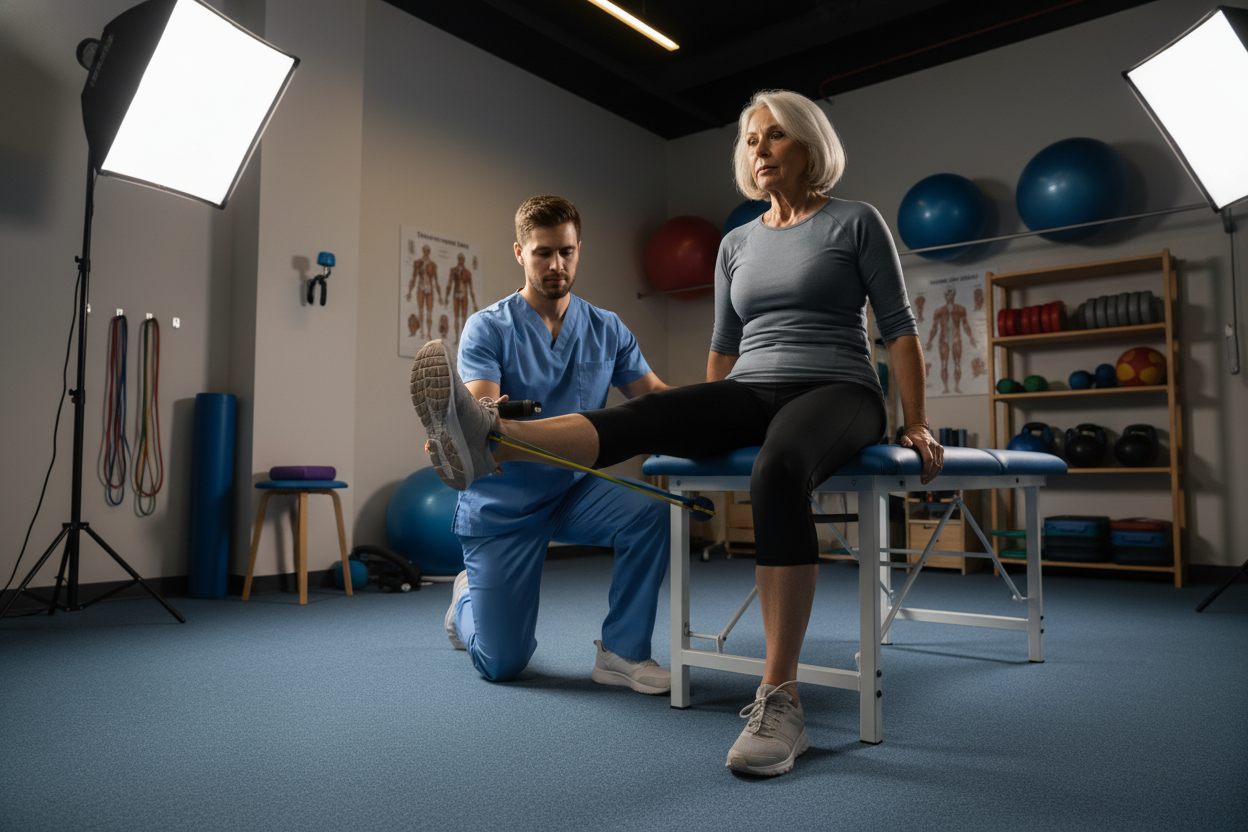
How to Safely Master Exercises for Thigh Muscle Atrophy
Losing strength in your legs is terrifying. It isn't just about the aesthetic of smaller legs; it is about the fear of losing your independence. Whether you are recovering from surgery, an injury, or a prolonged period of bed rest, finding the right exercises for thigh muscle atrophy is the first step toward reclaiming your mobility.
Muscle wasting happens faster than most people realize, but the neuromuscular system is incredibly resilient. You don't need a gym membership to start. You need a systematic approach that wakes up the dormant muscle fibers without overloading your joints.
Quick Summary: The Rebuilding Protocol
- Start with Isometrics: Static contractions (like Quad Sets) are the safest starting point to re-establish the mind-muscle connection without joint movement.
- Prioritize Frequency over Intensity: When treating atrophy, performing low-intensity movements multiple times a day is often more effective than one heavy workout.
- Progress to Closed-Chain Movements: Once you can bear weight, move to supported squats or wall sits to integrate stability.
- Don't Ignore Nutrition: You must consume adequate protein to fuel the synthesis required for how to rebuild leg muscle.
Understanding the Mechanism of Atrophy
Before we move the body, we must understand the physiology. Atrophy generally stems from two causes: disuse (mechanical) or neurogenic (nerve damage). For most people reading this, it is disuse atrophy.
When you stop using your quads, your body breaks down muscle protein for energy. To reverse this, we have to flip the switch on protein synthesis. This requires mechanical tension. You don't need heavy weights yet; you just need to convince your nervous system that these muscles are necessary for survival again.
Phase 1: Leg Muscle Atrophy Exercises While Sitting
If you cannot stand for long periods, or if you are in the early stages of rehab, you must begin seated. These movements focus on the quadriceps and hamstrings without the risk of falling.
The Isometric Quad Set
This is the gold standard for early rehab. Sit on the floor or a firm bed with your legs extended.
Place a small rolled-up towel under your knee. The goal is to tighten your thigh muscle to push the back of your knee down into the towel. Hold this "crushing" motion for 5 to 10 seconds. You should feel the muscle right above your kneecap engage. Repeat this 10 to 15 times.
Seated Leg Extensions
Sit in a sturdy chair. Slowly straighten your knee until your leg is parallel to the floor. Hold the top position for two seconds—this is where the muscle works hardest. Lower it slowly. Control is the variable that matters here, not speed.
Phase 2: Transitioning to Weight-Bearing Movements
Once you have mastered the leg muscle atrophy exercises while sitting, you need to introduce gravity. This is how you build functional mass.
The Supported Mini-Squat
Stand facing a kitchen counter or the back of a sturdy chair. Hold on for balance. Keep your feet shoulder-width apart.
Push your hips back as if you are about to sit in a chair, but only go down a few inches. The depth isn't important yet; keeping your knees stable is. Push through your heels to return to standing. This is one of the most effective thigh muscle atrophy exercises for teaching your glutes and quads to work together again.
The Wall Sit
Lean your back flat against a wall. Slide down until your knees are slightly bent. Hold this position. You will feel a burn in your thighs. This isometric hold floods the area with blood and lactate, which can help trigger growth factors without the wear and tear of grinding your knees.
My Personal Experience with Exercises for Thigh Muscle Atrophy
I want to be real about what this process actually feels like. A few years ago, after a knee injury sidelined me, I had to rebuild my left quad from scratch. The clinical guides tell you to "contract the muscle," but they don't tell you how frustrating it is when the muscle doesn't answer.
I remember doing Quad Sets on my living room floor. I would stare at my atrophied leg, willing it to fire, and seeing absolutely nothing happen. It wasn't just weak; it felt like the wiring had been cut. When it finally did flicker, the shaking was uncontrollable. It wasn't the "good shake" of a heavy squat; it was a spasmodic, weak tremble.
The hardest part wasn't the pain; it was the boredom and the mental fatigue. Doing 100 leg lifts while watching TV sounds easy, but doing them with intention—squeezing at the top until the VMO (that teardrop muscle) actually pops—is exhausting. I found that if I didn't physically poke the muscle with my finger while trying to flex it, my brain wouldn't connect. That tactile cue was the turning point for me.
Conclusion
Reversing atrophy is a slow climb, but it is entirely possible. Consistency beats intensity every single time in this game. Start with the seated movements, master the isometric holds, and gradually demand more from your legs. Do not rush the process. Your muscles remember how to be strong; you just have to remind them.
Frequently Asked Questions
How long does it take to rebuild atrophied muscle?
Visible changes usually take 4 to 6 weeks of consistent work. However, neurological improvements (feeling stronger and more stable) can happen within the first two weeks as your brain relearns how to fire the muscle fibers efficiently.
Can I rebuild muscle if I am elderly?
Absolutely. Research consistently shows that muscle tissue remains responsive to resistance training at any age. The principles of how to rebuild leg muscle remain the same, though recovery times may be slightly longer for older adults.
Should I exercise if I feel pain?
You need to distinguish between discomfort and pain. Muscle burning or fatigue is normal and necessary for growth. Sharp, shooting pain in the joints or tendons is a warning sign to stop immediately. Never push through joint pain during rehab.