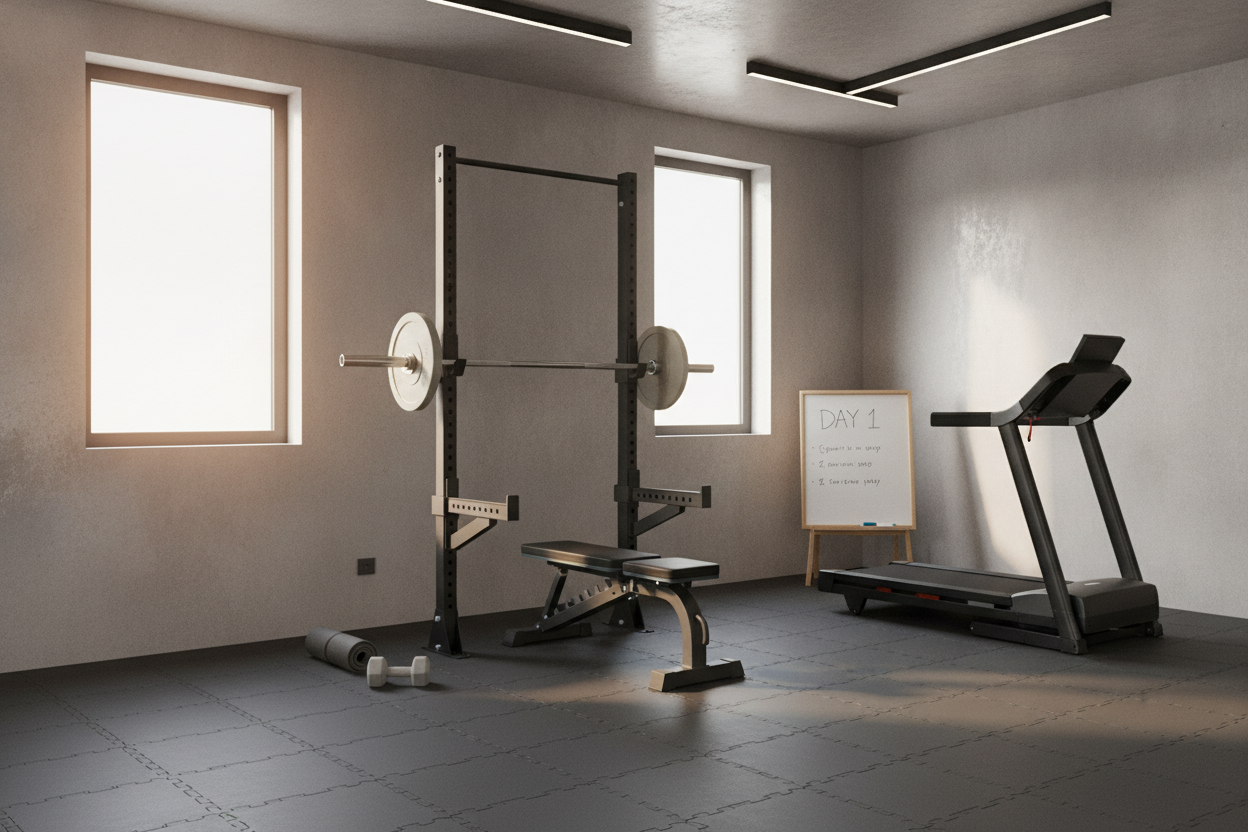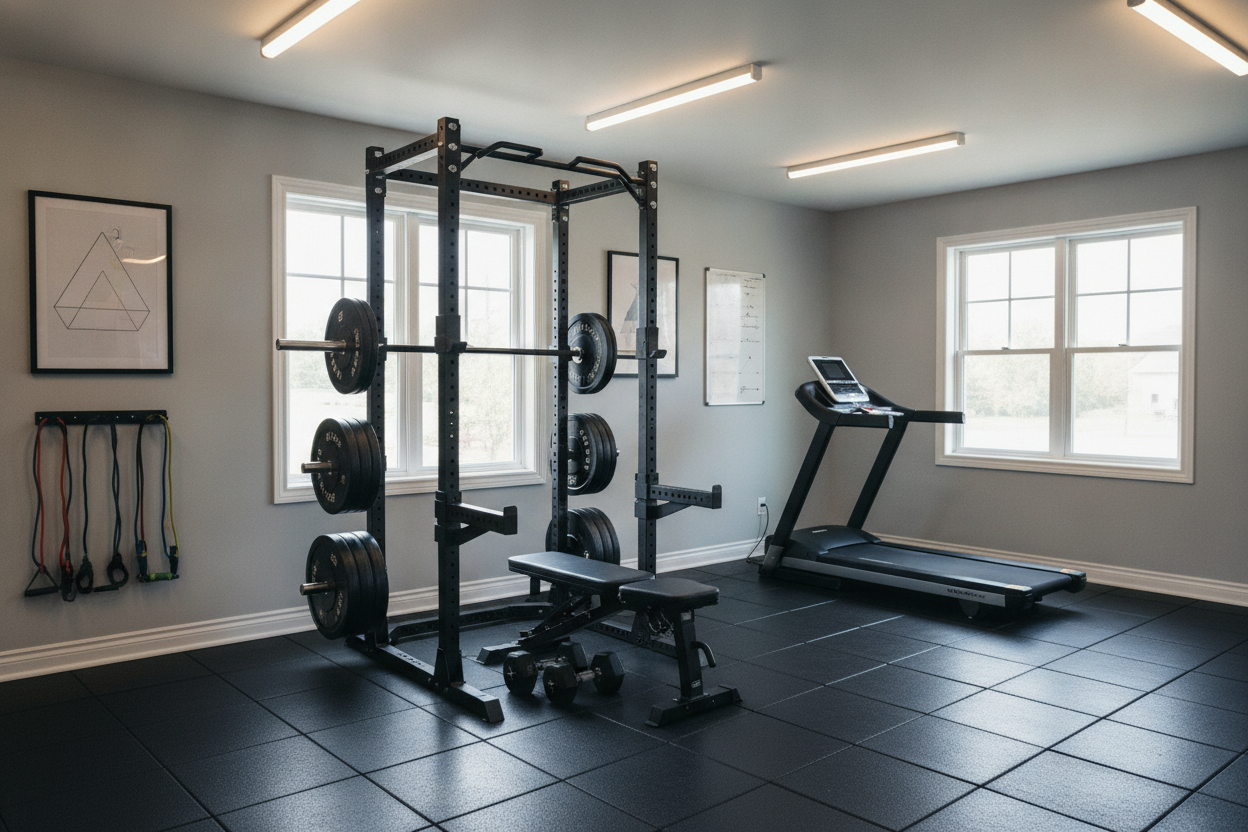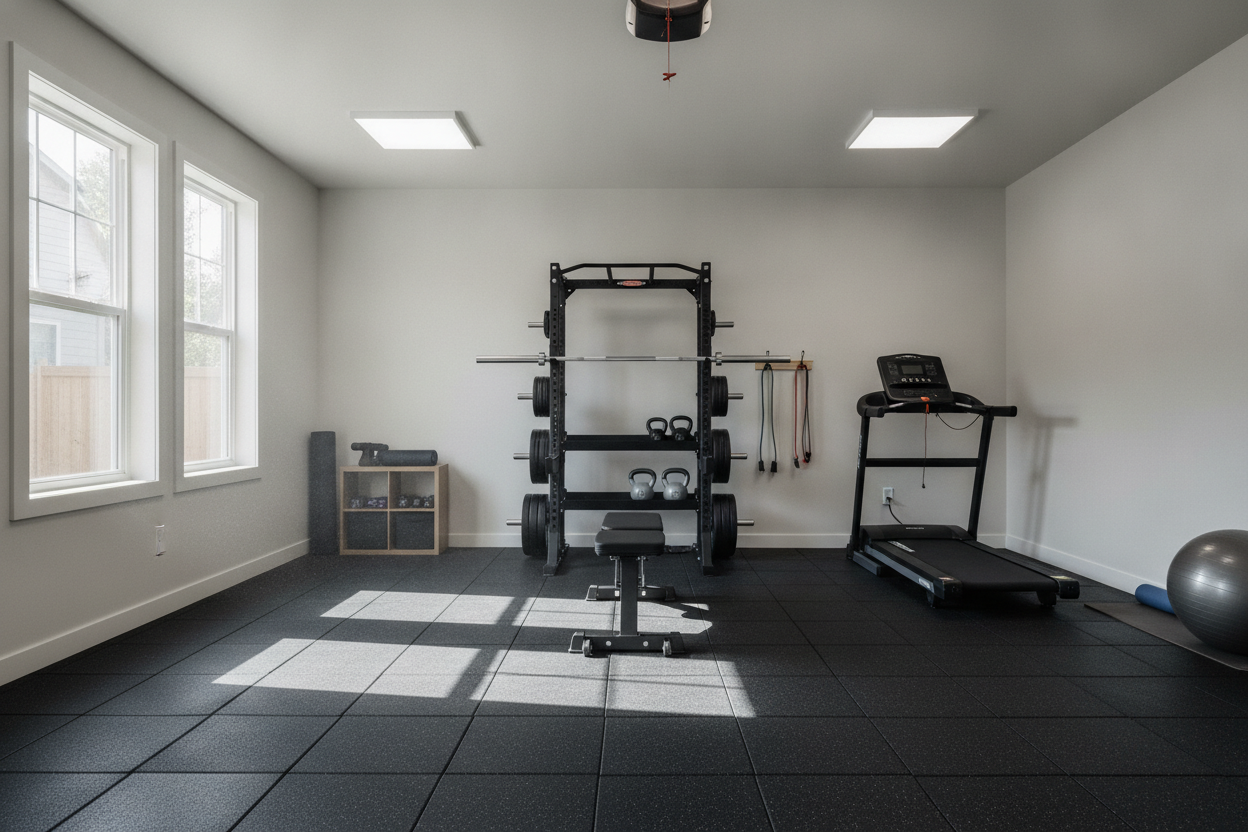
Stop Buying Dumbbells: The Real First Step in a Gym for Beginners
I’ve seen it a thousand times. You buy a set of adjustable dumbbells, hide them under the bed, and promise yourself you’ll start Monday. Monday comes, you’re tired, and the thought of dragging those 50-pound blocks out and clearing the floor feels like a second job. If you want to build a gym for beginners that actually works, you need to stop thinking about equipment and start thinking about friction.
- Friction is the number one reason beginners quit within 14 days.
- A permanent, dedicated space is more important than expensive weights.
- A 6x8 ft area is the 'sweet spot' for most home movements.
- Focus on showing up for 20 minutes daily before increasing intensity.
The 'Friction' Problem Killing Your New Routine
Friction is the silent killer of any gym start workout plan. It’s the mental and physical resistance you feel before you even start moving. If your routine involves moving a heavy oak table, vacuuming dog hair, or unrolling a flimsy mat that stays curled at the edges, you’ve already lost the battle. Your brain is a master at finding excuses to avoid discomfort.
For a gym newbie, the goal isn't to hit a new PR; it's to make starting so easy that it’s harder to skip than to do. When your equipment is buried in a closet, you’re adding layers of 'work' before the actual workout. This is why most people who are starting workout at gym environments fail—they haven't optimized their environment for zero-effort entry.
Why a Dedicated Zone Beats Expensive Equipment
Willpower is a finite resource. You use it up at work, in traffic, and deciding what’s for dinner. You shouldn't have to use it to set up your gym. A permanent, designated training area acts as a psychological trigger. It’s a physical boundary that tells your brain, 'We are here to work, not to scroll on the phone.'
Defining this boundary is the first real step in how to start workout in gym spaces at home. I always tell people to invest in a large exercise mat for home gym use before they buy a single kettlebell. Why? Because a mat that stays on the floor 24/7 claims that territory. It transforms a corner of your bedroom or garage into a professional-feeling facility, signaling that your fitness is a permanent fixture of your life, not a temporary hobby.
The 'Always Ready' Floor Plan for Your Setup
You don't need a 500-square-foot basement. You need a footprint that doesn't move. I’ve found that a 6x8 foot area is the gold standard. It’s large enough for full-body sprawls, lateral lunges, and overhead reaches without risking a hole in your drywall or a kicked shin. If you have to move furniture to stretch, you won't stretch. Period.
Using a 6X8Ft Exercise Mat as your foundation ensures you have the grip and joint protection needed for going to the gym for beginners without the commute. Unlike those interlocking foam tiles that pull apart during mountain climbers, a solid one-piece mat stays put. It’s the difference between a 'workout corner' and a legitimate home gym. You want to be able to walk into that space in your socks and start moving immediately.
What to Actually Do: Your First 30 Days
Most gym beginners fail because they try to go from zero to hero. They search for how to exercise at gym for beginners and find a pro bodybuilder's six-day split. That is a recipe for burnout and injury. For the first month, your only goal is showing up in your dedicated space for 20 minutes. It doesn't even have to be hard.
Focus on the basics: squats, hinges, pushes, and pulls. If you aren't sure where to start, check out this definitive guide for beginners to see which movements actually move the needle. The objective is to build the habit of training at the gym (even your home version) before you worry about the weight on the bar. Consistency is the only metric that matters in the first 30 days.
Gear That Can Wait (And What You Need Today)
Marketing will tell you that you need a $3,000 smart mirror or a full rack of dumbbells to get results. They’re lying. Those things are great once you have a habit, but they won't build the habit for you. A gym starter needs a floor that doesn't suck and enough space to move safely. That’s it.
If you're looking for a low-barrier entry point, look into a beginners workout for women at gym or home that focuses on high-impact movements with minimal gear. Once you’ve spent a month actually using your 6x8 space every single day, then you’ve earned the right to buy the fancy adjustable dumbbells. Until then, the floor is your most important piece of equipment.
My Personal Experience: The Closet Gym Mistake
Years ago, I bought a high-end bench and a set of weights but kept them tucked in a hallway closet because I didn't want to 'clutter' the room. I used them exactly three times in two months. The effort of dragging the bench out and lining everything up was just enough friction to make me choose the couch every time. It wasn't until I cleared a permanent spot in the garage and laid down real flooring that I actually started training consistently. I realized I didn't have a motivation problem; I had a logistics problem.
FAQ
Do I need shoes for a home gym?
If you have a high-quality, high-density mat, you can absolutely train barefoot or in socks. It actually helps build foot and ankle stability. Just make sure the mat has enough grip so you aren't sliding around during planks.
How do I stop my mat from sliding on carpet?
Look for mats with a textured underside or use a rug pad. However, a heavy, 6x8 ft mat usually stays put just by its own weight, especially once you're standing on it.
What is the best time of day to work out?
The time you will actually do it. For most beginners, first thing in the morning is best because it prevents the 'day' from getting in the way, but if you're a night owl, just make sure your space is ready for you when you get home.