Why Going to the Gym Is the Hardest Part of Your Workout
I spent years paying $60 a month to fight for a squat rack that was perpetually covered in someone else's sweat. The worst part of the day wasn't the heavy sets or the cardio; it was the 5:00 PM dread of going to the gym. By the time I navigated traffic, found a parking spot, and realized I'd forgotten my lifting belt, my motivation was dead. If you've ever sat in your driveway for ten minutes scrolling through your phone because you just can't bring yourself to shift into drive, you know exactly what I'm talking about.
Quick Takeaways
- The commute is the single biggest point of friction in any fitness routine.
- A home setup eliminates the 'pack-a-bag' mental hurdle.
- You can replicate almost any commercial machine with high-intensity floor work.
- A high-quality mat is the most important piece of equipment you'll ever buy.
The Logistics of Getting Out the Door
The mental load of how to go to the gym starts hours before you actually lift a weight. You have to ensure your headphones are charged, your shaker bottle is clean, and you have a pair of socks that don't have holes in them. For most of us, the physical act of leaving the house is where the workout fails. When you're tired after a nine-hour shift, figuring out how to get in the gym feels like a second job. I've seen more people quit their goals because of a rainy commute than because of the actual difficulty of the exercises.
If you're constantly overthinking how to go gym, it's because the process is too complex. We treat it like an expedition. By the time you actually get to the gym, you've already spent 30 minutes on logistics. That's energy that should have gone into your first heavy set of deadlifts. This is why the home gym isn't just a luxury; it's a strategic move to kill the friction that leads to 'I'll just go tomorrow' syndrome.
The Math Behind Your Commute
Let's look at the numbers because they're depressing. If you spend 20 minutes driving each way, that's 40 minutes a day. At four days a week, you're burning nearly three hours every single week just sitting in your car. When beginners ask me how to get into going to the gym, they never factor in the 150+ hours a year they'll spend in traffic. That is time you could spend sleeping, eating, or actually training.
Wasting time on how to get to the gym is a hidden tax on your progress. I've found that when I moved my training to my garage, my consistency shot up by 40%. Why? Because I stopped worrying about the 'get to the gym' part of the equation. If I only have 30 minutes, I can still get a brutal session in. In a commercial setting, 30 minutes barely covers the locker room transition and the hunt for a working cable station. Stop asking which way to the gym and start looking at the empty space in your spare room.
Recreating the Commercial Experience at Home
One of the biggest lies in fitness is that you need a $5,000 selectorized leg press to build big quads. You don't. You can easily match exercise in a gym without the commute by focusing on mechanical tension and high-intensity intervals. I’ve reached a point where my home workouts are more productive than my commercial ones because I’m not waiting for some guy to finish his 10-minute rest period on the only power rack.
If you wonder how do gym without the fancy lighting and the rows of treadmills, the answer is simple: intensity. A pair of heavy dumbbells and a solid floor are enough to hit every muscle group. You can mimic a cable fly with resistance bands or a chest press with floor presses. The key is to stop viewing your home as a 'lesser' version of the commercial floor. Once you realize you can get the same pump in your pajamas, the allure of the big-box gym vanishes.
Building Your Un-Commutable Setup
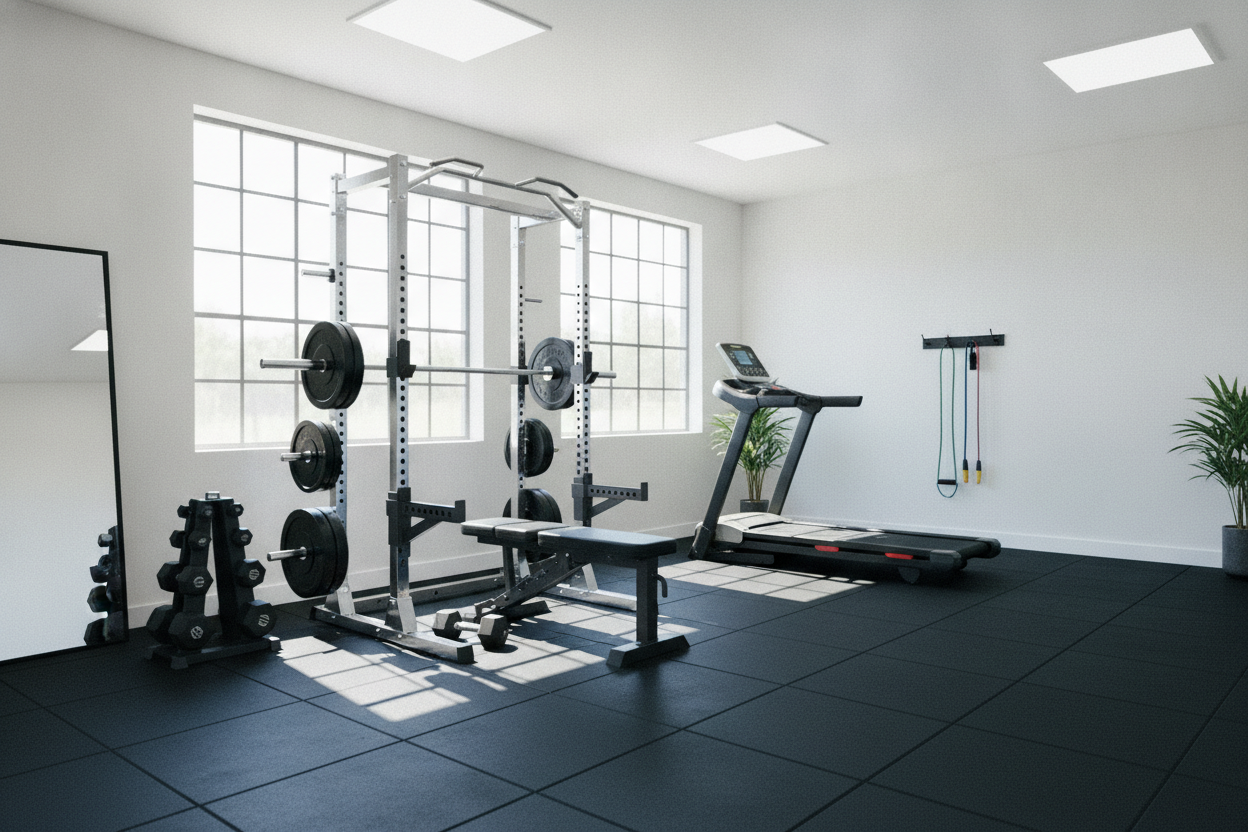
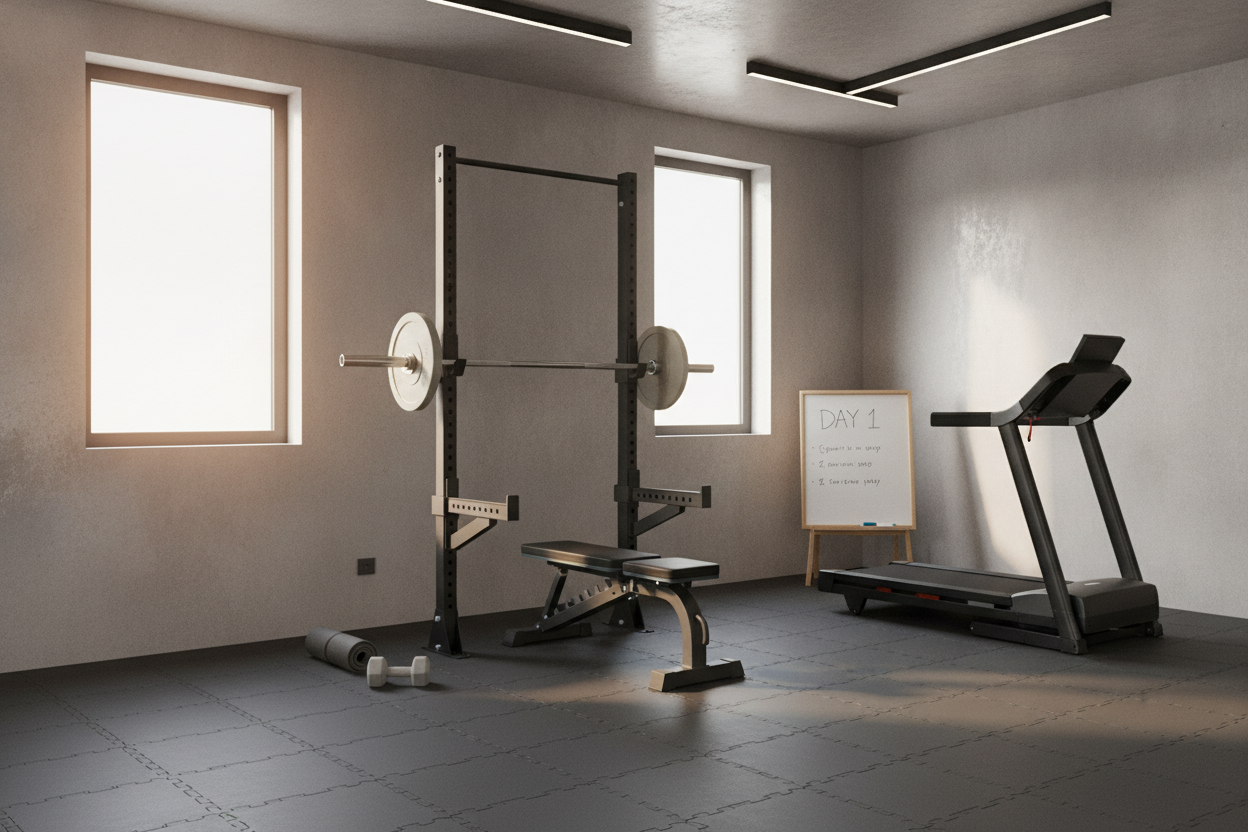
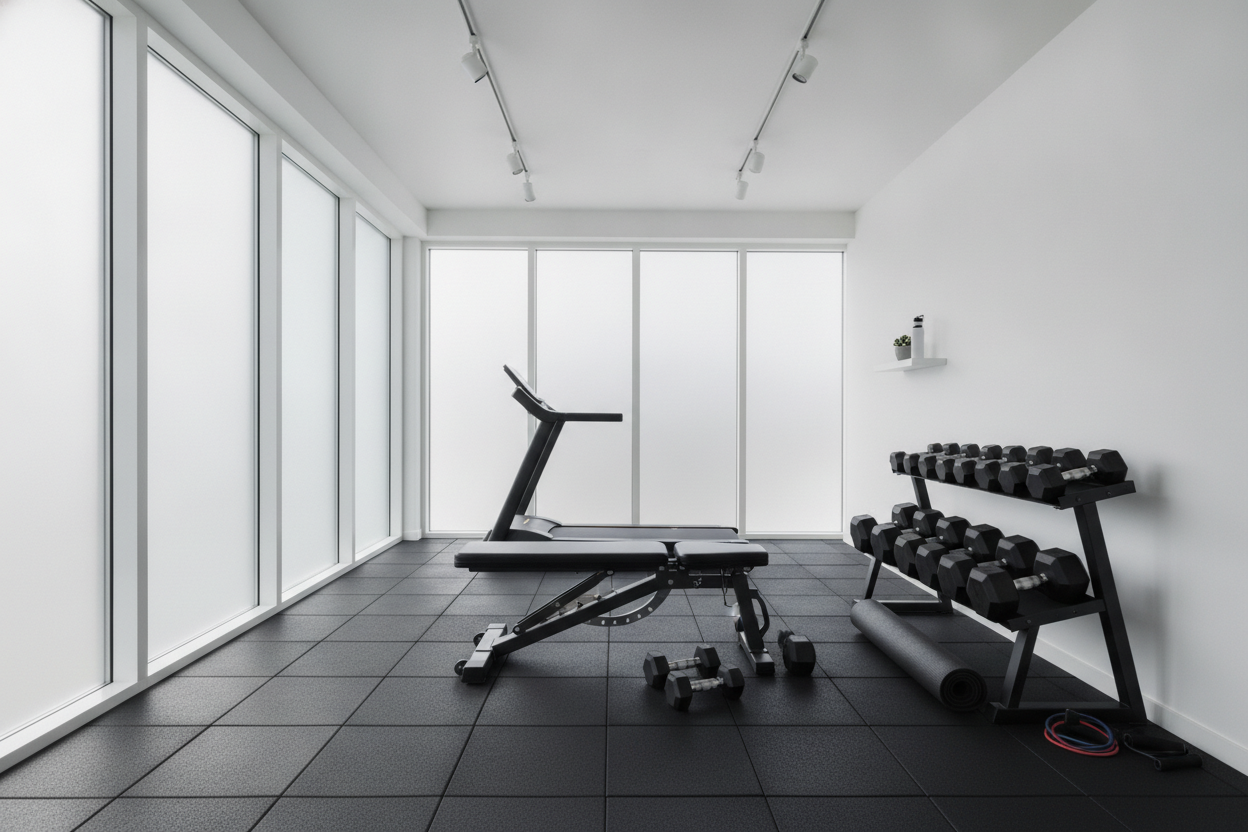
If you want to stop the cycle of failing to get in the gym, you need to claim your territory. The biggest mistake people make is trying to work out on their living room carpet. It feels temporary and cheap. A large exercise mat for home gym use is the psychological anchor for your training. It defines the space. When you step onto that rubber, you aren't in your house anymore; you're in the lab.
I personally recommend a 6x8ft setup because it gives you enough room to sprawl out without hitting the coffee table. This gym flooring for home workout is thick enough to handle dropped weights and grippy enough that you won't slide during mountain climbers. It’s about creating a dedicated environment so you can stop worrying about how to do a gym setup and just start moving. A good mat is the difference between a 'workout' and just moving around in your living room.
Curing At-Home Cabin Fever
I’ll be honest: training at home can get lonely. Sometimes you start to feel the walls closing in, and you miss the energy of other people. But instead of going back to a crowded commercial facility, I suggest taking the work outside. You can crush a leg day in the great outdoors with nothing but a kettlebell and some fresh air. It breaks the monotony without the headache of a membership.
Knowing how to go to the gym isn't about the building; it's about the effort. If you’re feeling stuck, take your mat to the park or the driveway. You get the vitamin D, the change of scenery, and a brutal workout without having to listen to the gym’s terrible 2010s pop playlist. It’s the ultimate hack for staying consistent when the basement starts to feel a little too quiet.
My Personal Experience: The 'All-In-One' Disaster
When I first started my home gym, I bought one of those 'all-in-one' home gyms from a big-box store. It had pulleys, a bench, and about 400 bolts. It was a nightmare. The cables were sticky, the seat wobbled like a Jenga tower, and the '150-lb stack' felt more like 80 lbs. I hated using it so much that I actually started going back to the commercial gym just to avoid it. I learned the hard way: buy quality basics. A solid floor, a heavy set of weights, and a rack you can trust are worth ten times more than a flimsy machine that tries to do everything and does nothing well.
FAQ
How do gym at home with zero equipment?
Focus on calisthenics. Pushups, air squats, and planks are the foundation. Use your furniture for incline work or dips. The floor is your best friend until you can buy a mat.
How to get to the gym mindset when I'm at home?
Put on your lifting shoes. It sounds stupid, but the moment you lace up, your brain switches from 'relax mode' to 'work mode.' Never train in your socks if you're struggling with focus.
Which way to the gym for a beginner?
The shortest path is the best. If you have a garage, that's the gym. If you have a corner in your bedroom, that's the gym. The best gym is the one that takes you less than 60 seconds to reach.