How to Match Exercise in a Gym Without the Commute
I remember the panicked text I got from a client last year. He had just canceled his commercial membership to save a 45-minute daily commute, but standing in his 10x10 spare bedroom, he felt completely lost. The energy of heavy plates clanking and the endless rows of machines were gone. He was terrified he was going to lose all his hard-earned muscle and strength.
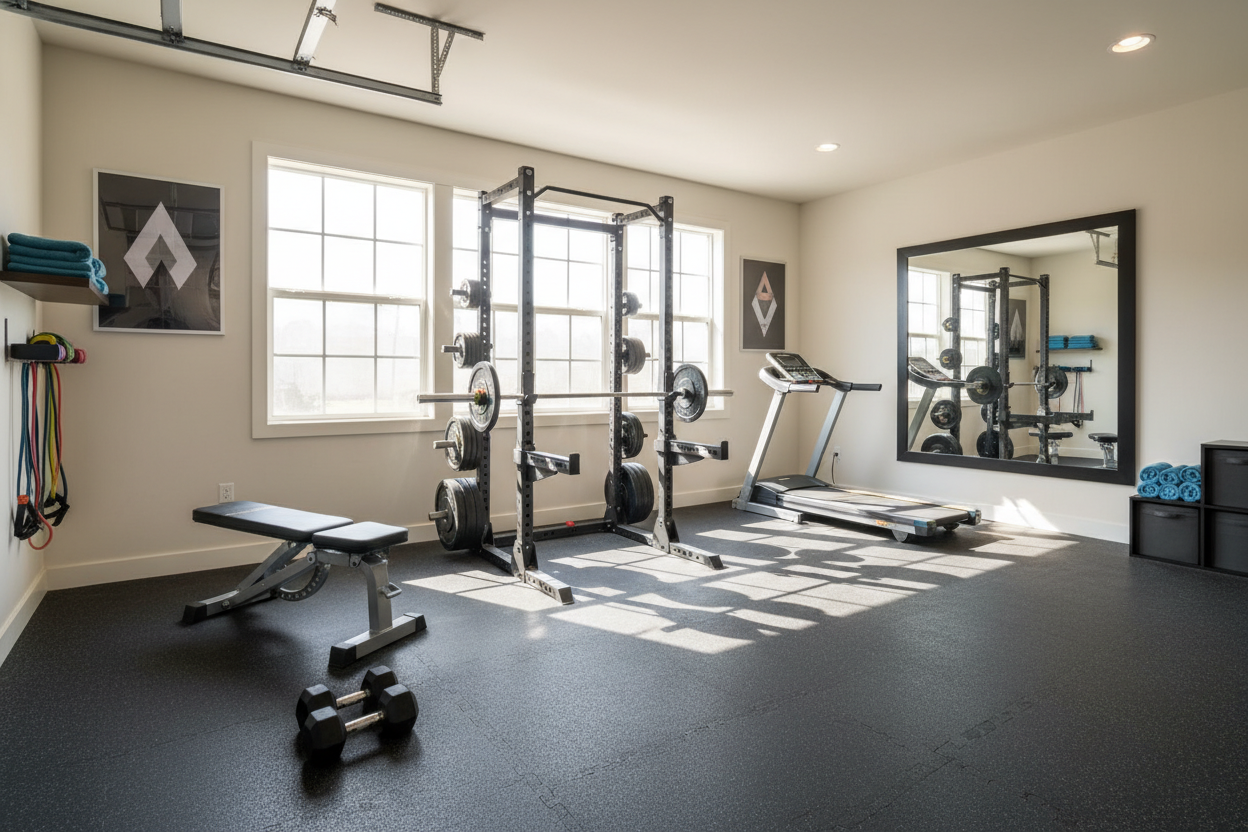
Replicating the stimulus of exercise in a gym without leaving your house isn't just about buying a set of dumbbells. It is about matching the programming and intensity you relied on in that public space. When you are alone in your garage or spare room, the psychological drive to push to failure shifts drastically.
Having built and tested dozens of home setups for clients ranging from apartment dwellers to suburban garage lifters, I know exactly where the drop-off happens. Let's break down how to keep your volume high, your joints safe, and your progressive overload on track without ever scanning a key fob again.
Quick Takeaways
- Match your commercial volume by tracking total weekly sets per muscle group.
- Swap machine isolation work for free weight equivalents that challenge your stabilizers.
- Invest in heavy-duty flooring to protect your foundation and dampen noise.
- Record your sets to maintain the intensity you normally get from a crowded weight room.
The Intensity Gap: Why Home Sessions Often Fall Short
The biggest mistake I see when clients move their training home is accidental volume reduction. In a commercial facility, you might hit a barbell bench press, move to the incline Smith machine, and finish with cable flyes. At home with just a bench and dumbbells, people often do three sets of flat presses and call it a day. That sudden drop in volume will stall your progress immediately.
There is also a major psychological component. When you are surrounded by other people pushing heavy weight, you naturally lift heavier and rest less. Alone in your basement, taking a three-minute rest can easily turn into a ten-minute scroll on your phone. Understanding why exercise in a gym feels different is the first step to fixing the intensity gap. You have to manufacture that urgency yourself.
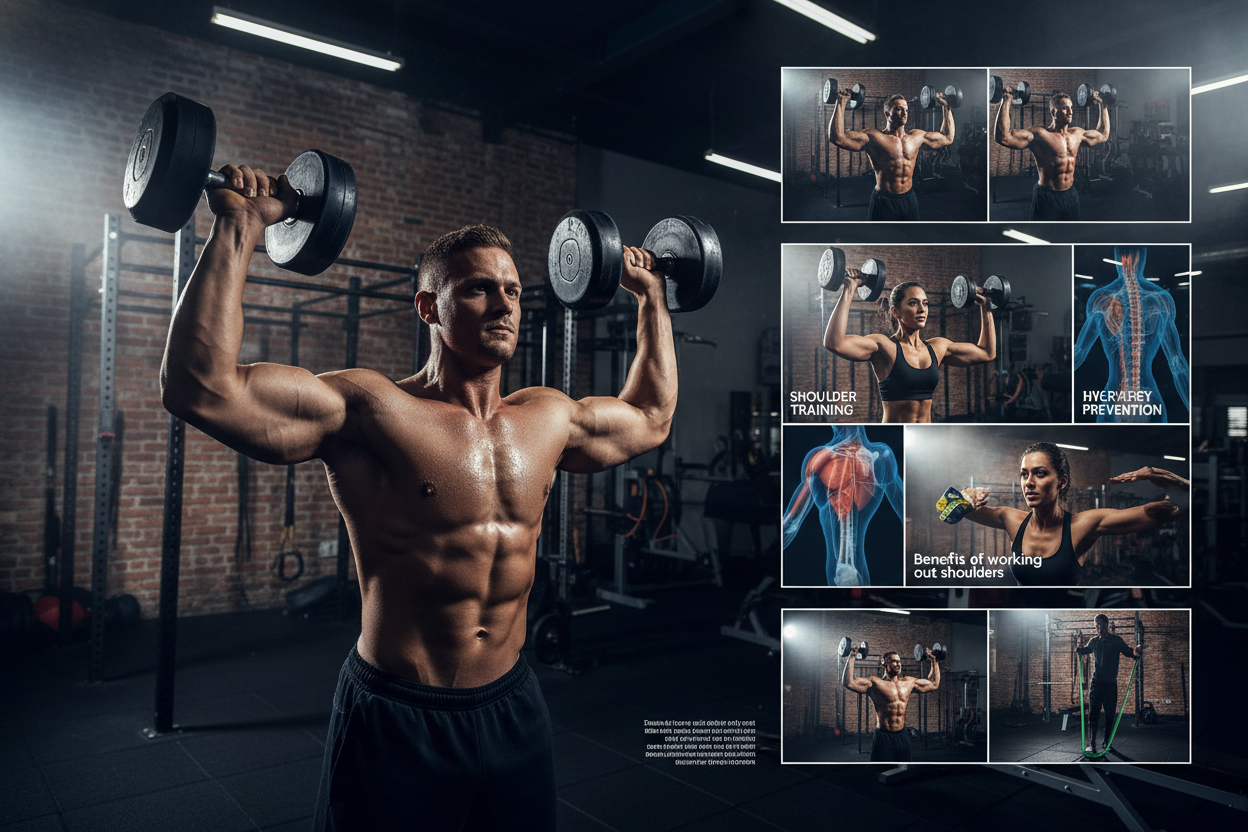
I always tell my clients to set a strict timer for rest periods. If you used to rest 90 seconds between sets of squats, hold yourself to that exact standard at home. You also need to ensure your workout and fitness exercises are actually pushing you close to technical failure. If your adjustable dumbbells max out at 52.5 lbs, but you used to press 70s, you cannot just do the same 8 reps. You need to push those 52.5s to 15 or 20 reps to achieve the same hypertrophic stimulus.
Adapting Your Split: Fitness Workouts and Exercises at Home
You do not need to abandon your favorite push/pull/legs split just because you lost access to a lat pulldown and a seated leg press. You just need to adapt the mechanics. The primary goal of your fitness workouts and exercises remains exactly the same: apply mechanical tension to the target muscle and progressively increase that tension over time.
Let us look at a typical pull day. In a commercial setting, you might start with heavy T-bar rows, move to seated cable rows, and finish with machine pullovers. At home, you can replicate this entire stimulus with a barbell, some plates, and an adjustable bench. Start with heavy bent-over barbell rows. For the seated cable row, set your bench to a 45-degree incline and perform chest-supported dumbbell rows to eliminate momentum. Finish with dumbbell pullovers lying across the bench.
The key is hitting the muscle from multiple angles using the equipment you have. If you are struggling to map out your routine, you can browse our workout hub for specific templates that translate commercial splits into home-friendly formats.
Leg days are notoriously tricky to adapt. A heavy leg press is hard to mimic with limited weight. Instead of chasing absolute load, shift your focus to unilateral movements. Bulgarian split squats, single-leg Romanian deadlifts, and pistol squat progressions will absolutely torch your legs using half the weight. I had a client who could squat 315 lbs for reps but was humbled by 50 lb dumbbells on a set of deep, slow-eccentric Bulgarian split squats.
Swapping Machines for Free Weights Safely
Transitioning from fixed-path machines to free weights requires a brief adjustment period for your central nervous system. Machines stabilize the load for you, allowing you to focus purely on the prime mover. Free weights demand that your core and stabilizing muscles work overtime to keep the weight path strict.
When swapping your exercises and workout routines, start by dropping your working weight by about 15 percent. If you normally use 100 lbs on a pec deck, do not immediately grab 50 lb dumbbells for flat bench flyes. Your rotator cuffs and stabilizing muscles need time to adapt to the unstable load.
Cable machines are another common sticking point. Cables provide constant tension throughout the entire range of motion, whereas dumbbells have a resistance curve dictated by gravity. To fix this, use resistance bands in conjunction with your free weights. Looping a light band around your back and holding the ends along with your dumbbells during a press will mimic that constant tension at the top of the movement.
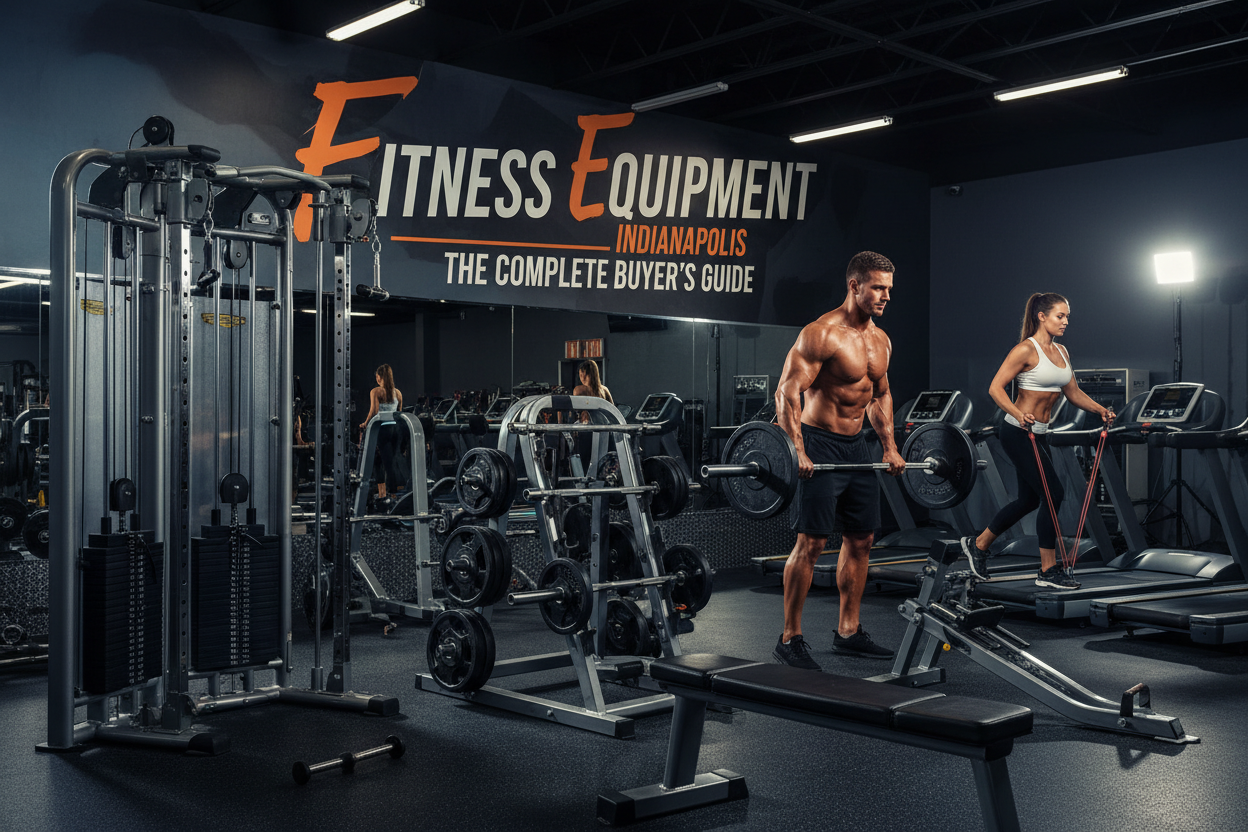
Of course, some people simply prefer the feel of mechanical resistance. If you have the space and budget, you can always integrate the top home fitness machines into your setup. A functional trainer or a compact dual-pulley system fits into a 4x4 foot corner and replaces dozens of commercial stations.
I recently tested a highly-rated compact cable tower in my own garage gym. While the versatility was incredible, I noticed one honest downside: the weight stack maxed out at 160 lbs, which translates to 80 lbs per handle due to the 2:1 pulley ratio. For heavy lat pulldowns, it just wasn't enough resistance for advanced lifters. I had to supplement with heavy weighted pull-ups to get the stimulus I needed.
Protecting Your Floors During Heavy Lifts
You cannot train with true intensity if you are terrified of cracking your floor tiles or waking up the neighbors. Dropping a 45-pound barbell after a heavy deadlift generates massive kinetic energy that will easily destroy standard hardwood or laminate.
Proper foundation is non-negotiable for any serious workout ex movement. Thin yoga mats or cheap interlocking puzzle tiles will compress under heavy loads, creating an unstable lifting surface that can lead to rolled ankles or blown-out knees during heavy squats. You need high-density shock absorption.
I strongly advise clients to lay down a heavy-duty 6x8ft exercise mat over their primary lifting area. At 7mm thick, a high-quality PVC mat provides enough density to keep your feet planted solidly during heavy rows, while absorbing the impact of dropped dumbbells. It fits perfectly into a standard bedroom setup and dampens the noise significantly, which is crucial if you live in a second-story apartment or train while your kids are sleeping.
Tracking Your Metrics Like a Pro
The final piece of the puzzle is data. When you are not surrounded by the visual cues of a commercial facility, it is easy to stagnate. You might grab the 30-pound dumbbells for curls every single week simply out of habit.
Treat your home sessions with the exact same clinical precision you would use elsewhere. Keep a physical logbook or use a tracking app. Write down your exercises, sets, reps, and the specific weight used. Track your Rate of Perceived Exertion (RPE) for each set. If you hit 3 sets of 10 reps with 60 lbs this week at an RPE of 8, your job next week is to hit 11 reps, or bump the weight to 65 lbs.
Filming your sets is another excellent tool. Set up your phone and record your top working sets. Review the footage to check your bar path, depth, and tempo. This self-coaching replaces the mirrors and training partners you left behind. By strictly managing your metrics, you ensure that your home setup delivers results that rival any commercial facility.
Frequently Asked Questions
Can I build muscle at home with just dumbbells?
Absolutely. As long as you are pushing close to failure and progressively overloading the muscle, your body does not know if you are holding a dumbbell, a barbell, or a machine handle. Just ensure you have enough weight to keep challenging yourself.
How do I replace a leg curl machine at home?
Lying dumbbell leg curls are highly effective. Place a dumbbell between your feet while lying face down on a bench or the floor. You can also use slider pads on a smooth floor for bodyweight hamstring curls.
Is it safe to deadlift on a second floor?
It can be, but you must mitigate the impact. Use thick rubber crash pads or a dedicated deadlift platform over your mat, and never drop the weight from the top of the movement. Always control the eccentric portion of the lift to protect your floor joists.