Stop Bouncing: Real power exercises for upper body Start at Zero
I watched a guy at my old local gym bounce 225 lbs off his sternum so hard I thought I heard a rib crack. Sure, the bar went up, but he wasn't strong—he was just a human trampoline. If you are serious about power exercises for upper body, you need to stop treating your chest like a launchpad and start your lifts from a dead stop.
Most garage gym lifters hit a plateau because they never actually learn how to generate force from zero. They rely on the 'bounce'—the elastic energy stored in their tendons—to get the weight moving. By the time the muscles actually have to work, the bar already has momentum. We are going to kill that momentum today.
- Kill the Momentum: Starting from a dead stop forces maximum muscle fiber recruitment.
- Save Your Joints: No more high-impact bouncing off the ribcage or shoulders.
- Specific Strength: Pin presses build strength exactly where you usually fail.
- Equipment Matters: You need a rack with reliable safety pins and a stable bench.
The Stretch Reflex Trap You Don't Even Notice
Every time you lower a weight and immediately drive it back up, you're using the Stretch-Shortening Cycle (SSC). Think of your muscles and tendons like a rubber band. When you stretch them quickly, they want to snap back. This is great if you're a vertical jumper, but it's a crutch when you're trying to build an upper body power workout that actually translates to raw strength.
When you rely on that 'pop' at the bottom, your Central Nervous System (CNS) gets lazy. It doesn't have to 'turn on' all your motor units instantly because the elastic energy is doing the heavy lifting for the first three inches. By removing that bounce, you force your brain to signal every available muscle fiber to fire at once. It's the difference between a car rolling into a hill and one starting from a dead stop on a 45-degree incline.
Why 'Dead-Stop' Reps Build Brutal Force
Dead-stop training is the ultimate truth-teller. When the bar is sitting motionless on a pair of safety pins, there is no 'give.' To move it, you have to overcome static inertia. This builds what we call 'starting strength,' which is the foundation of upper body power. If you can't move a weight from a dead stop, you don't own that weight.
This style of training specifically targets your fast-twitch Type II fibers. These are the fibers responsible for explosive movements and size. Because you're starting from zero, the Rate of Force Development (RFD) has to be incredibly high. You aren't just lifting the bar; you're trying to explode through it. This creates a level of neurological drive that standard 'touch-and-go' reps can't touch.
Dialing In Your Rack for Pin-Presses and Rows
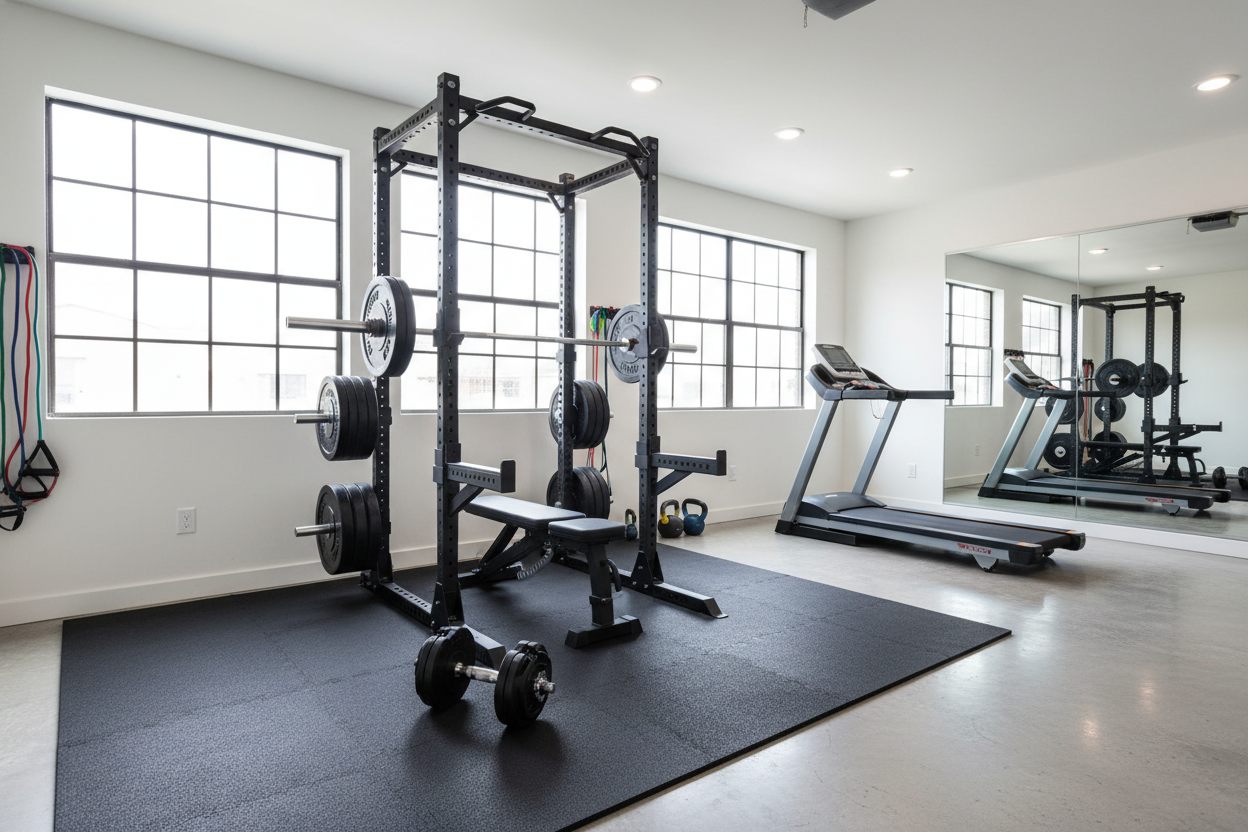
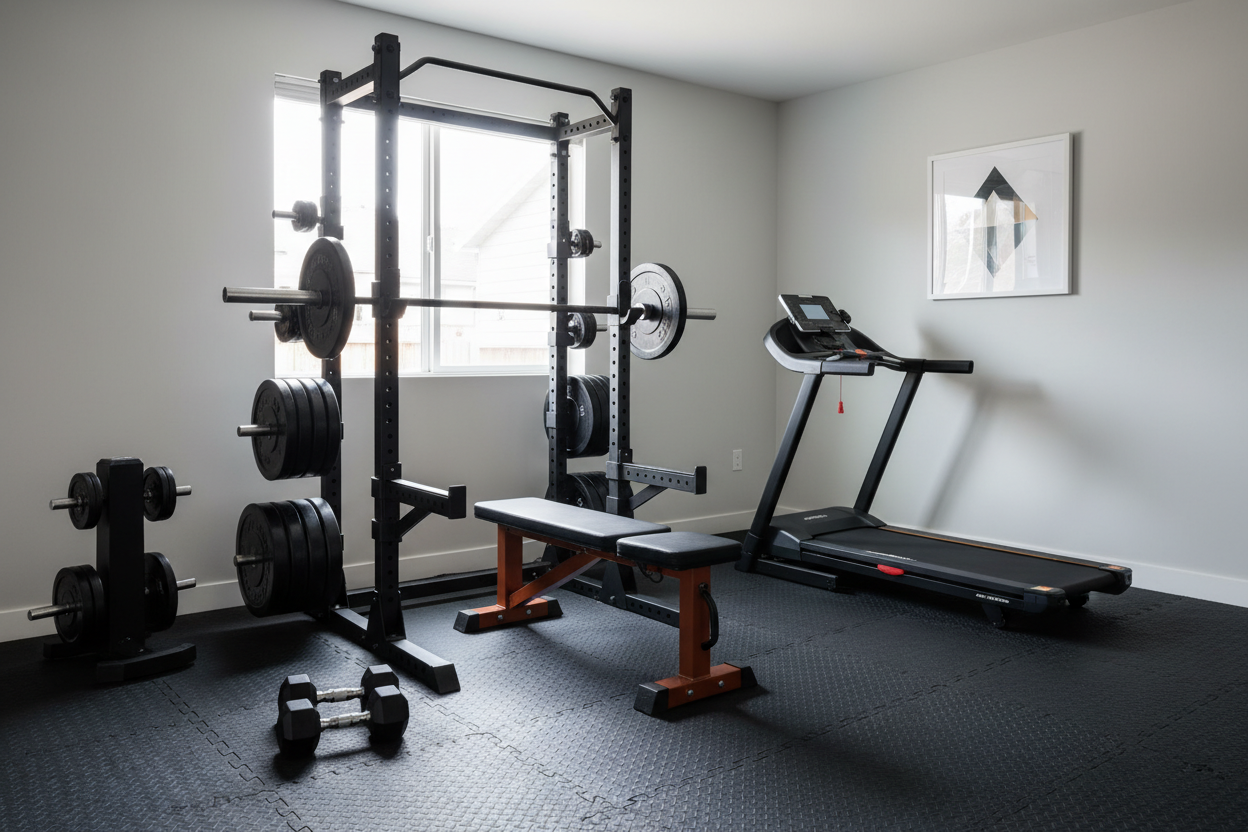
You can't do this safely with a cheap, flimsy setup. If you're going to be slamming or resting heavy iron on safety pins, you need a rack that isn't going to walk across the garage floor. The Gxmmat X6 Power Rack is a solid choice here because the pin adjustments are frequent enough to find your 'sticking point' without being three inches too high or too low.
Setup is everything. For a pin press, set the safeties about an inch or two above your chest. You want to be able to slide under the bar, get your grip set, and be in a position of slight disadvantage. If you're using the Gxmmat X6 Power Rack Weight Bench Package, make sure the bench is bolted or locked into the center of the rack. If you're even an inch off-center, the bar will hit one pin before the other, which is a one-way ticket to a shoulder impingement. I usually mark my bench position on the floor with tape so I don't have to guess every session.
My 3 Favorite Zero-Momentum Lifts
If you want a real upper body workout for strength and power, swap your standard lifts for these three variations. First is the Bottom-Up Pin Press. Start with the bar on the pins at chest height. Get tight, take a breath, and drive. No descent, just the ascent. It’s humbling. You’ll likely have to drop your ego and about 20% of the weight you usually brag about.
Second is the Dead-Stop Pendlay Row. Unlike a standard barbell row where the weight hangs in the air, every single rep of a Pendlay row starts with the plates resting completely on the floor. This protects your lower back and forces your lats and mid-back to do the work without using a hip hinge to 'cheat' the weight up. It's the king of upper body power exercises for the posterior chain.
Third is the Floor Press. By lying on the floor, your elbows hit the ground before the bar hits your chest. This completely kills the momentum and forces a massive tricep lockout. You can even integrate these into a broader Chest Blast Workout Power Up Your Upper Body Strength by substituting your main movement for one of these dead-stop variations. The change in stimulus will shock your system into new growth.
How to Program This Without Frying Your Nerves
Dead-stop lifting is taxing. Because the neurological demand is so high, you can't run these like a high-volume bodybuilding split. If you try to do 5 sets of 12 on pin presses, your CNS will be fried before you finish your second exercise. Keep the volume low and the intensity high.
I recommend staying in the 3 to 5 rep range. Each rep should be treated like its own set. Reset your air, re-grip the bar, and ensure the weight is completely motionless before the next rep. Do this once a week as your primary heavy movement, and watch your standard 'bouncing' lifts skyrocket in a few weeks. Just don't go back to your old ways once you see how much stronger you've become at zero.
I learned the hard way that my 'strong' bench was a lie.
A few years ago, I thought I was hot stuff because I could touch-and-go 315 lbs for reps. Then I tried to pin press 275 from an inch off my chest. I couldn't move it. Not even a wiggle. It was a massive wake-up call that my triceps were weak and I was relying entirely on the bounce. I spent three months doing nothing but dead-stop work. When I went back to standard benching, my 315 felt like a warm-up. My biggest mistake was not using a 'beater bar'—constant impact on the pins can slightly bend a high-end barbell, so use a cheaper utility bar if you have one.
FAQ
Do dead-stop reps damage my barbell?
If you're dropping 400 lbs from a height onto steel pins, yes. For controlled dead-stops or pin presses where you're starting from the bottom, a standard chrome or zinc bar is fine. If you're worried, look for 'sandwich' style J-cups or pipe safeties with a rubber sleeve.
Can I do these every workout?
I wouldn't. The CNS fatigue is real. Pick one 'dead' movement per workout and keep the rest of your accessory work more traditional. Once a week per muscle group is plenty for most people.
What if my rack doesn't have enough pin holes?
If your rack has 3-inch or 4-inch spacing, you might find the bar is either too high or crushing your chest. You can 'micro-adjust' by putting a couple of flat weight plates under your bench to raise yourself up an extra inch or two.