Squat and Bench Rack Guide: Dimensions, Setup Architecture, and Essential Floor Protection
The Core of Home Strength: Understanding the Squat and Bench Rack Setup
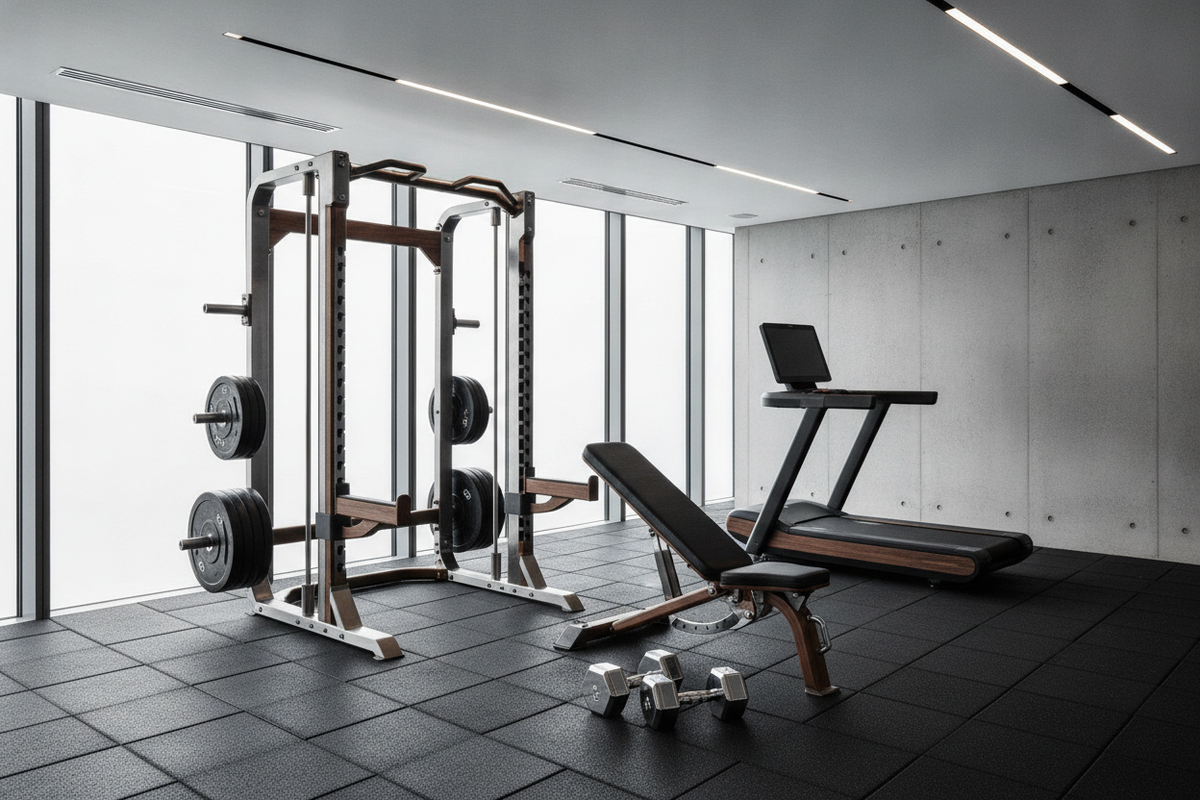
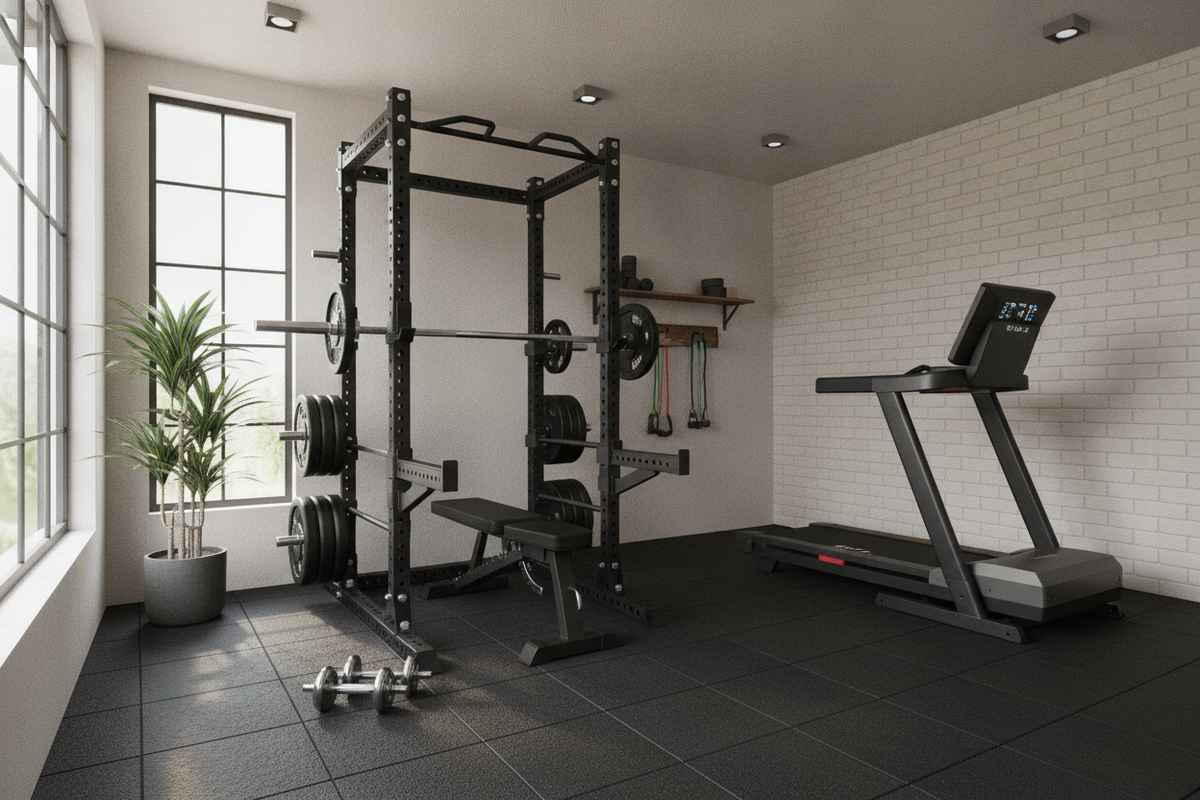
Building an effective lifting station begins with the central relationship between two compound movements: the squat and the bench press. A dedicated squat and bench rack configuration anchors your workout zone, consolidating heavy barbell training into an efficient footprint. Rather than spreading individual pieces of hardware across different rooms or corners, pairing these exercises within a unified station streamlines movement transitions and maximizes floor utility.
Lifters often find that balancing equipment stability with domestic space restrictions requires thoughtful structural choices. A robust lifting frame must withstand repeated barbell racking, hold plate inventory, and maintain stability through intense training sessions. By exploring a balanced weight set bench collection, athletes can assess how integrated frame dimensions interact with benches, barbells, and floor surfaces before committing to an installation plan.
Understanding setup archetypes is the first step in creating a reliable strength environment. Whether your training takes place in a basement, a repurposed bedroom, or a garage, the structural style you select dictates your exercise variety, load safety, and overall footprint efficiency.
Selecting Your Configuration: Power Rack, Half Rack, Squat Stand, or Wall Mounted Frame
Choosing the right station involves evaluating how each design manages load distribution, footprint, and workout versatility.
- Power Rack: Featuring a four-post or six-post perimeter cage, the power rack provides full structural enclosure. It accommodates adjustable interior spotter pins or safety straps, making it suitable for unassisted training. Most models include an integrated pull up bar across the top crossmembers, along with mounting uprights for plate horns, dip bars, and resistance band pegs. While it demands the largest floor footprint, it offers comprehensive support for heavy training.
- Half Rack: Built with two primary front uprights and shorter rear support posts, the half rack delivers an accessible walk-in design. It offers generous interior room for bench movement while retaining rear storage pegs for weight plates, which adds functional ballast to the base.
- Weight Bench and Squat Stand: Freestanding or connected dual uprights create a compact lifting rack solution. A modular weight bench and squat stand pairing allows you to move uprights independently or slide a bench into place without navigating an enclosed cage. These units suit multi-use rooms where equipment must occasionally be set aside.
- Wall Mounted Folding Racks: For spaces where floor area must be reclaimed when workouts finish, a wall mounted hinge rack pins securely against structural wall studs. When extended, it functions like a heavy-duty upright station, then folds flush against the wall to clear the floor.
Before purchasing standalone bars and weights, reviewing a weight lifting set guide can clarify why cage framing and catch bars remain essential companions to free-weight progression.
Bench Press Alignment and Squat Ergonomics Inside the Station
Integrating a flat, incline, or decline weight bench into your station requires careful ergonomic alignment to maintain natural bar paths and dependable catch positions.
During a bench press setup, horizontal clearance between uprights determines how cleanly you can unrack the bar. The bench spine must sit centered along the station base, allowing your eyes to align beneath the racked bar while keeping the upright J-cups close enough for a smooth lift-off without shoulder strain. Spotter pins or safety arms should be set just above chest level when your back is arched, ensuring that the catches support the barbell if you fail a repetition while allowing full touch-and-go range of motion.
When transitioning from bench presses to squats, unrack mechanics require open forward and rear clearance. Athletes using a comprehensive rack weight bench product package can set upright hooks at mid-sternum height for easy walk-outs, ensuring adequate lateral sleeve span so loaded weight plates avoid colliding with upright hardware during repetitions.
Squat Rack Floor Protection: Safeguarding Hardwood, Concrete, and Subfloors
Subfloor preservation is a critical yet frequently overlooked component of lifting station planning. A fully loaded barbell combined with an upright frame concentrates hundreds of pounds onto small steel feet. Without dense barrier padding, this concentrated point-loading can compromise flooring integrity.
Direct contact between steel baseplates and bare surfaces produces several structural concerns:
- Concrete Cracking and Dusting: Garage concrete, while rigid, can chip or spall under localized shock loads from dropping barbells or shifting rack feet, generating fine concrete dust that infiltrates bearings.
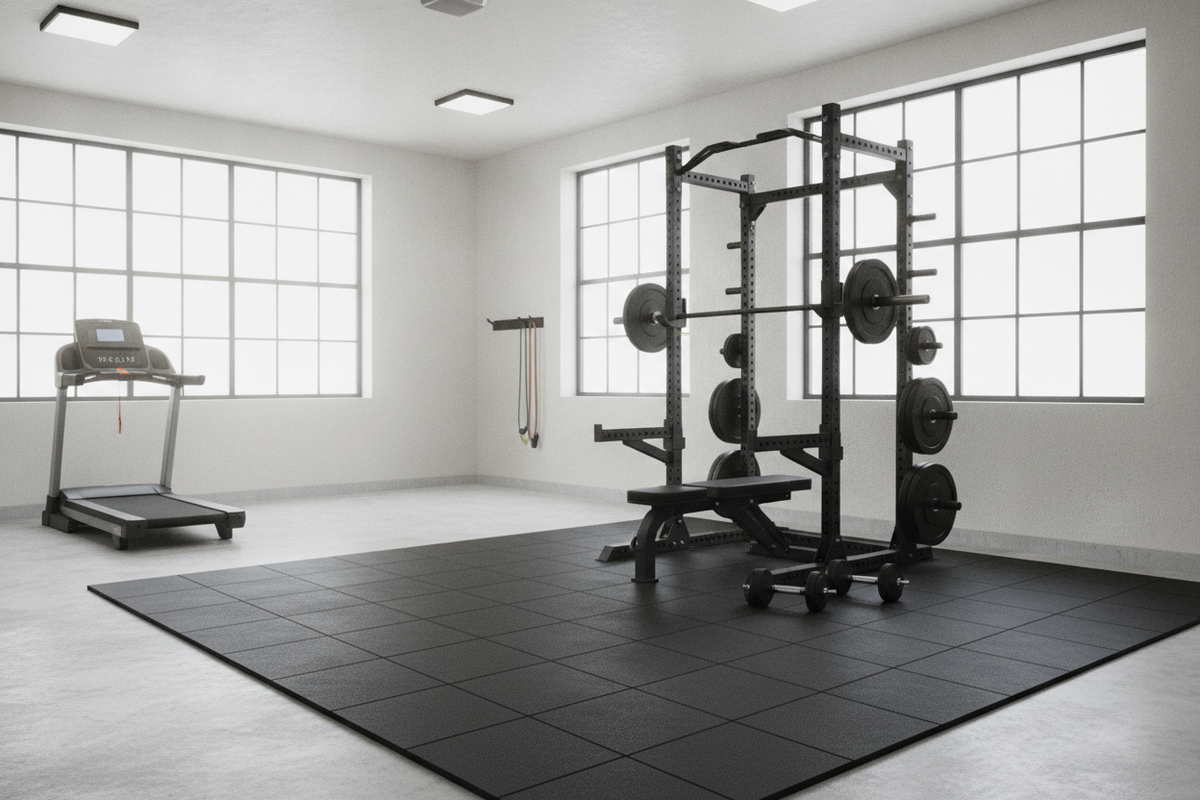
- Hardwood and Tile Destruction: Hardwood planks buckle and gouge under concentrated point loads, while ceramic tiles crack under slight frame settlement. High-density rubber matting acts as an essential load-spreading layer, absorbing downward force and shielding delicate finishes.
- Acoustic and Vibration Transmission: Racking a barbell resonates throughout residential framing. Dense protective matting dampens vibration transference, muffling mechanical clatter across adjacent living areas.
Home lifters often ask whether racks require structural floor bolting. While competitive training rigs with external spotter arms benefit from concrete anchors, standard four-post cages placed on high-traction mats rarely need floor penetration for regular domestic workouts. High-friction rubber matting prevents lateral migration while preserving the concrete or wood subfloor underneath.
Spatial Dimensions and Clearance Planning for Your Home Gym
Designing a reliable layout requires measuring three primary spatial planes: vertical overhead height, lateral barbell span, and peripheral walk-around zones. Consulting a comprehensive weight lifting gym guide helps lifters contextualize room geometry within broader progressive fitness planning.
Begin by calculating ceiling height against the full extension of an overhead press and the clearance needed above your pull-up bar. A rack that fits neatly beneath ceiling joists may still leave insufficient head space for chin-ups if your head approaches the ceiling at the apex of the movement.
Next, account for standard barbell length. Standard Olympic barbells require a wide horizontal envelope, plus additional side clearance to slide weight plates onto the sleeves without scraping drywall. Maintain dedicated buffer margins around the perimeter so you can move around the frame, adjust safety spotters, and access rear plate storage horns comfortably.
Maintenance, Mat Staging, and Upkeep for Long-Term Durability
Routine inspection and environmental maintenance keep your station stable, clean, and safe over years of consistent use. Steel frames flex subtly under repeated load cycles, making scheduled bolt checks advisable to eliminate frame sway and upright tilt.
Subfloor moisture control is equally vital, especially on garage concrete or basement floors where ground dampness can collect under rubber mats. Periodically lifting mat edges permits air circulation and helps prevent trapped condensation. Clean mat surfaces regularly with mild detergent to remove chalk dust and shoe grime, preserving the high-traction texture required for stable foot drive during heavy sets.