Don't Buy a Weight Lifting Set Without a Power Rack
I remember the day my first 300-lb barbell bundle arrived. I was ecstatic, standing in my garage with a stack of iron and a shiny new bar. Then it hit me: I had nowhere to put the bar except the floor. I could deadlift and row, but the moment I wanted to squat or bench press, I was stuck. If you're shopping for a weight lifting set, learn from my frustration—the iron is only half the equation.
- A standalone bar and plates limit you to floor-based movements like deadlifts and rows.
- Safety pins in a rack are your only 'spotter' when training alone at home.
- Buying a bundled kit usually saves 15-20% compared to piecing gear together.
- A power rack provides the structural foundation for pull-ups, dips, and heavy presses.
The Trap of the 'Naked' Barbell Bundle
It’s tempting to grab the cheapest weightlifting sets you find online just to get started. You see a 160-lb or 300-lb set and think you’re set for a year. But a 'naked' barbell—one without a rack—is functionally useless for the big compound movements that actually build mass. You can’t safely get a heavy bar onto your back for squats, and you certainly can’t overhead press your max if you’re cleaning it from the floor every single set.
I spent three months doing nothing but floor presses and Zercher squats because I didn't have a rack. My progress stalled because I couldn't safely handle the loads my legs were actually capable of moving. Don't let your equipment be the bottleneck for your gains.
Why a Real Weight Lifting Set for Home Starts With a Rack
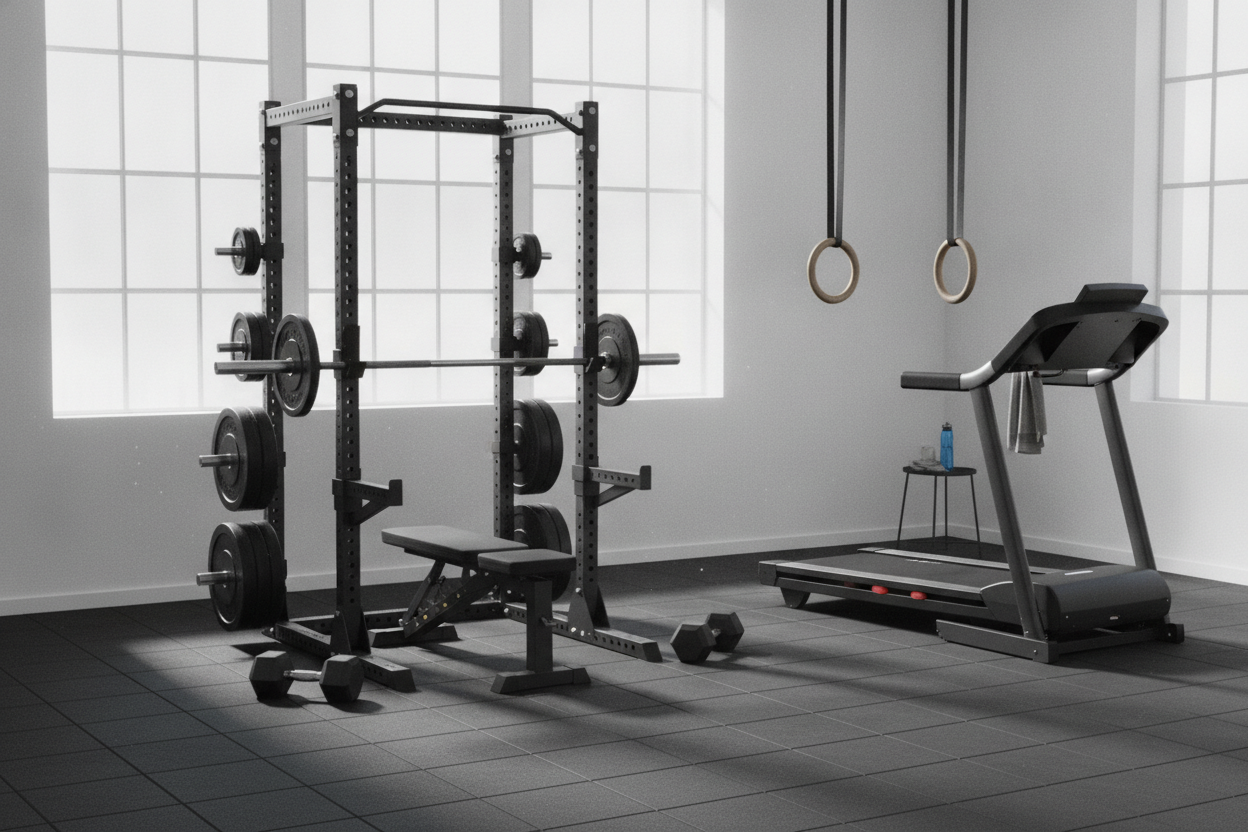
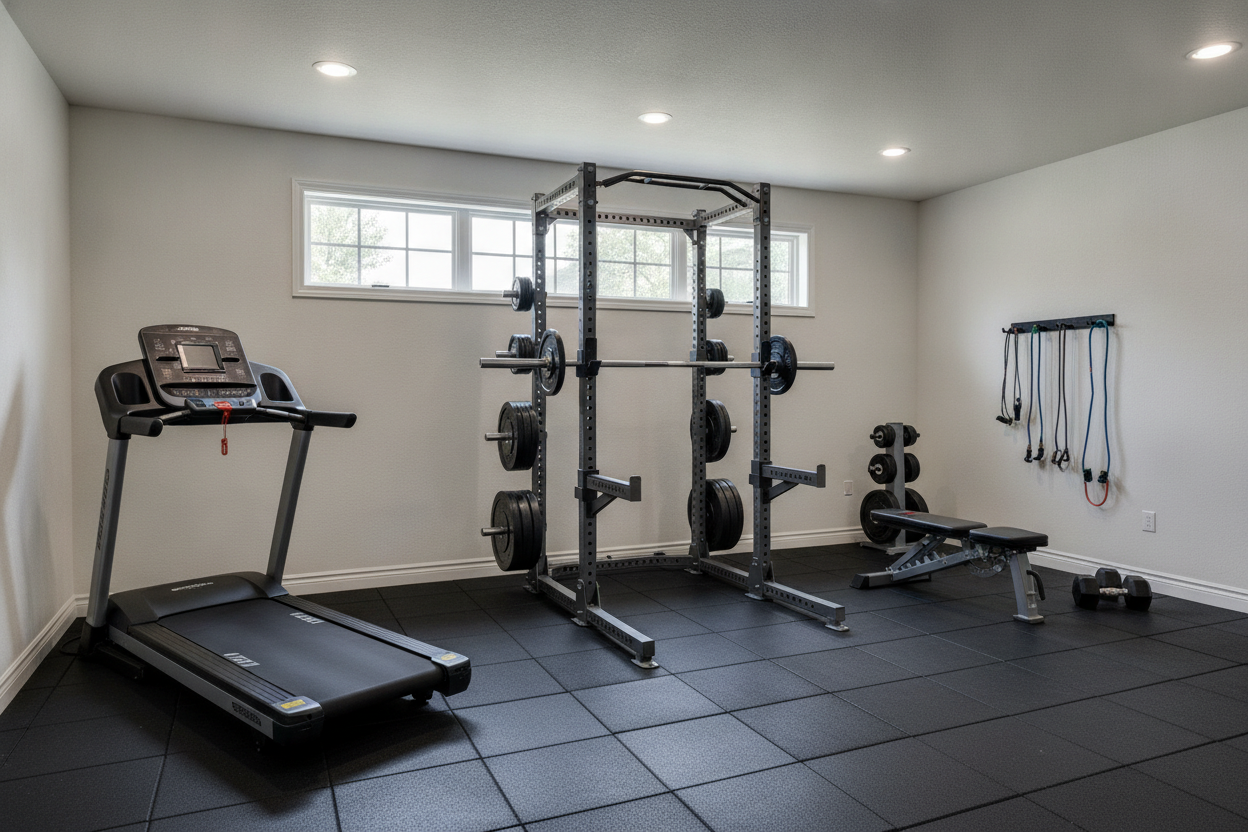
The power rack is the heart of the home gym. It’s not just a place to hang your bar; it’s a safety system and a multi-tool. When you have a solid frame, you can integrate a reliable weight set and bench to unlock the incline, decline, and flat bench press. Without those uprights, your bench is just a padded stool.
A rack also allows for micro-adjustments. Being able to set the J-cups at the exact height for your specific arm length makes a massive difference in your setup. It ensures you aren't wasting energy just getting the bar out of the 'cradle' before your set even starts.
The Safety Factor Nobody Talks About
Lifting in a garage is peaceful until you fail a rep. I’ve been there—pinned under 225 lbs on a bench press at 6:00 AM with nobody else awake in the house. It’s a terrifying, humbling experience that ends with a 'roll of shame' across your ribs. If I’d had a rack with properly set safety pins, I would have just lowered the bar and walked away. Safety isn't optional when you're training solo.
What Actually Belongs in Your Weight Lifting Kit?
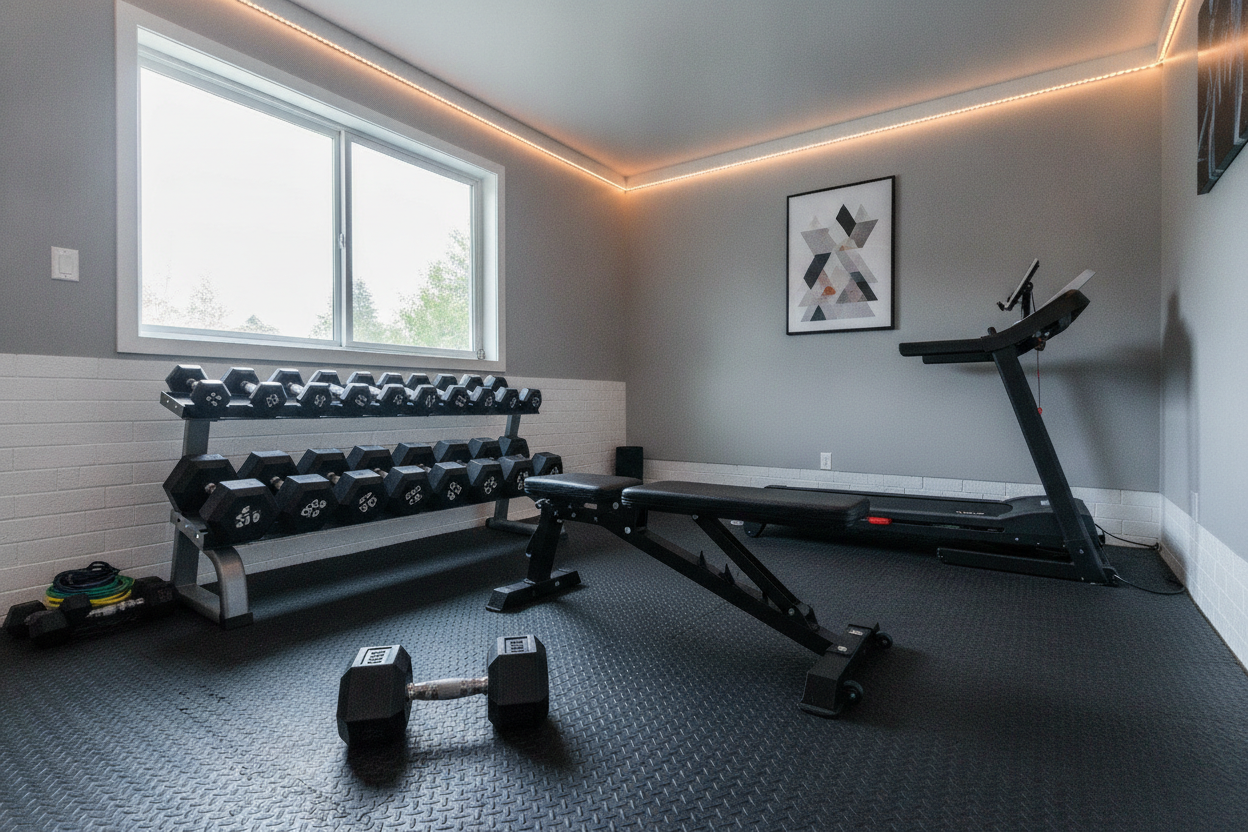
A functional weight lifting kit should be minimalist but high quality. You need a 7-foot Olympic barbell with decent knurling (not that chrome-plated stuff that feels like a wet noodle), a set of iron or bumper plates, and a rack. I always tell people to skip the bulky weight lifting machines that take up half a garage just to perform one specific leg extension. A rack and a bar can do everything those machines can and more, using a third of the floor space.
Your kit should include: 45lb, 25lb, 10lb, 5lb, and 2.5lb plates. If you're following a linear progression program, those 2.5lb plates are the most important pieces in the room. They represent the difference between hitting a PR and hitting a wall.
Doing the Math on Packaged Weightlifting Sets
If you buy a rack today, a bench next month, and plates the month after, you’re going to get destroyed by shipping costs. Weight is expensive to move. Buying a complete power rack weight bench package in one shot is the smartest financial move for a home lifter. It ensures all your gear is compatible—nothing is worse than buying a bench that's too tall for your rack's safety arms.
I once tried to save $50 by buying a used bar from a local 'big box' store and it didn't even fit my power rack's J-cups because the sleeves were too short. Buy the package, get it delivered on one pallet, and start training the right way from day one.
FAQ
Can I just use a squat stand instead of a full power rack?
Squat stands are fine for space-saving, but they lack the stability of a four-post rack. If you're planning on moving heavy weight or doing pull-ups, the extra footprint of a power rack is worth the investment for the peace of mind.
How much weight do I really need to start?
A standard 300-lb set (which includes the 45-lb bar) is the gold standard. It gives you enough overhead to grow for at least the first 6-12 months of serious training. You can always add more 45s later.
Are bumper plates better than iron plates for a home gym?
If you're lifting on concrete and doing Olympic movements like cleans or snatches, get bumpers. They're quieter and won't crack your floor. If you're just doing the big three (squat, bench, deadlift) on a rubber mat, iron plates are thinner and allow you to fit more weight on the bar.