Shoulder Pain? Try this chest workout easy on shoulders
I remember the exact Monday my right shoulder decided to quit. I was halfway through a heavy set of 225, felt a sharp pop, and spent the next six months unable to even reach for the seatbelt in my car. Years of flared elbows and ego-lifting on the barbell finally caught up to me. I thought my days of heavy pressing were over, but I eventually learned that a chest workout easy on shoulders isn't just possible—it's often more effective for pec growth because you aren't limited by joint pain.
If you are currently scrolling through forums looking for chest exercises for shoulder pain, you've probably realized that the standard bench press is a shoulder-shredding machine. I had to strip my training back to the basics and prioritize mechanics over the weight on the bar. This is how I rebuilt my chest without a single trip to the surgeon.
- Stop the range of motion at the floor to protect the rotator cuff.
- Swap the barbell for dumbbells to allow for a neutral grip.
- Prioritize constant tension over explosive, jerky movements.
- Avoid deep dips and wide-grip barbell work like the plague.
Why Traditional Benching Wrecks Your Joints
The barbell bench press is the king of ego, but it's a nightmare for biomechanics. When you use a fixed straight bar, your wrists are locked, which forces your elbows to flare out. This position shoves the head of the humerus forward into the anterior capsule. Basically, you're grinding your joint into the socket while under a heavy load.
Dropping the bar all the way to your chest might look impressive, but for many of us, that last two inches of travel is where the damage happens. It stretches the front delts to their breaking point. If you want a chest workout without shoulders taking the brunt of the load, you have to accept that the 'full range of motion' touted by powerlifters might be the very thing killing your progress. I spent years ignoring that 'pinch' until it became a permanent resident in my labrum.
The Mechanics of a Chest Workout That Doesn't Hurt Shoulders
Training around an injury requires a shift in mindset. You aren't 'taking it easy'; you're training smarter. The goal is to shift the leverage back onto the pec fibers and away from the delicate connective tissues of the shoulder. This starts with tucking your elbows to about 45 degrees. If you're wondering how to train chest with a shoulder injury, the answer is almost always: stop trying to be a wide-grip specialist.
By limiting the range of motion—specifically the bottom portion of the lift—you keep the humerus from extending past your torso. This is where the joint is most vulnerable. You can find more structured programming for these modifications in our Workout Hub, where we break down routines that don't require you to sacrifice your joints for gains. It's about maintaining constant tension. Instead of bouncing the weight, control the eccentric and squeeze the muscle at the top.
4 Best Chest Exercises for Bad Shoulders
These aren't just 'alternative' moves; they are the staples of my current routine. Whether you are dealing with a chest workout with injured shoulder limitations or just want to prevent future issues, these four movements are the gold standard for longevity.
1. The Dumbbell Floor Press
The floor press is the single most important exercise for anyone with a history of impingement. By lying on the ground, the floor acts as a physical 'stop' for your elbows. This prevents the humerus from dipping too low and protects the labrum from unnecessary shearing forces. It is the ultimate chest exercise for shoulder pain because it forces you to use a heavy load without the dangerous stretch at the bottom.
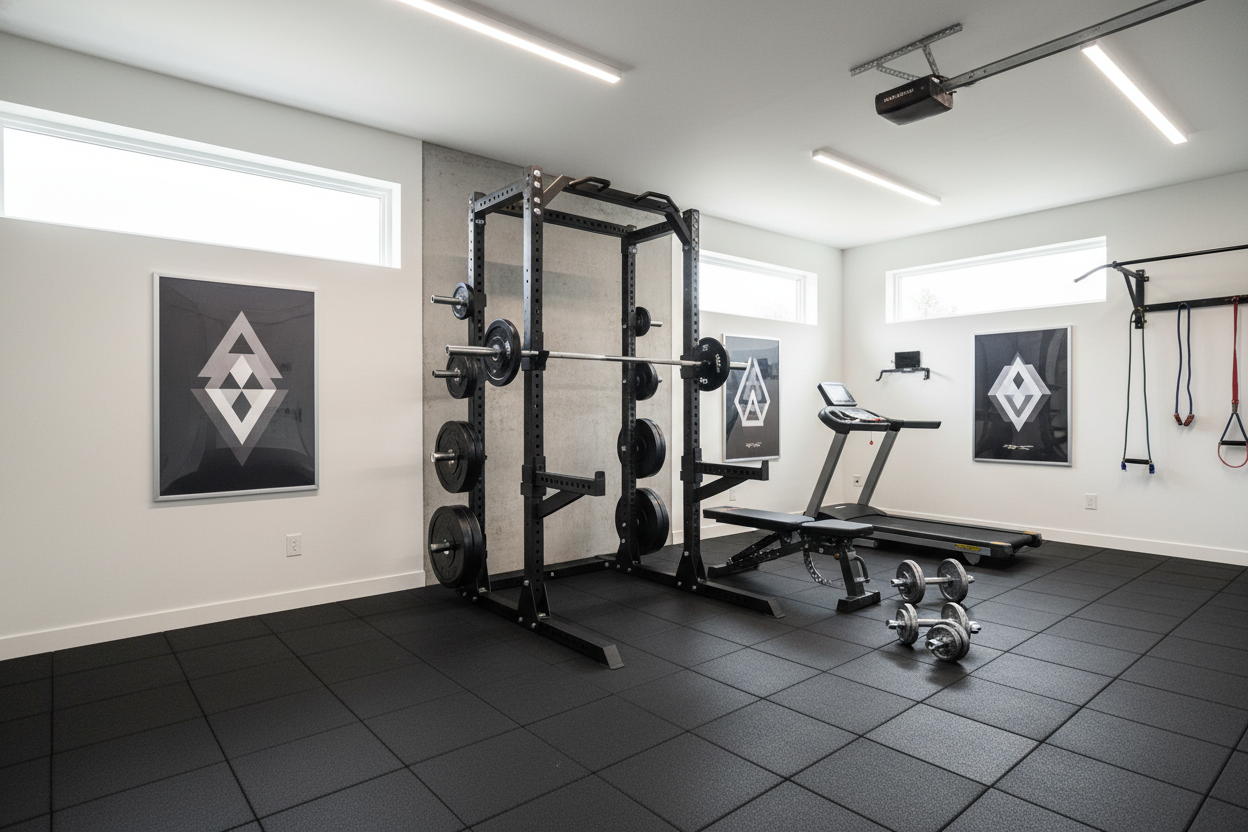
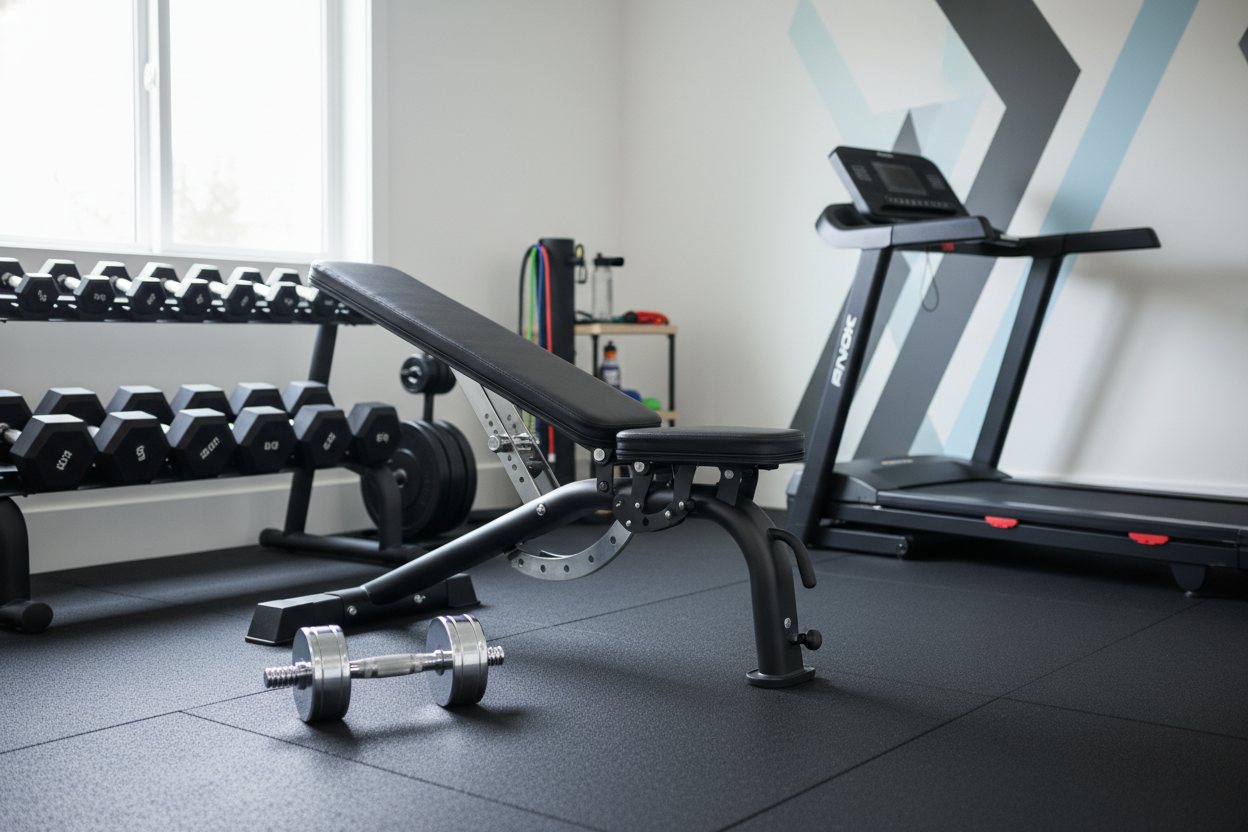
I recommend laying down some high-quality gym flooring for home workout sessions before you start. If you're pressing 80-lb dumbbells and your elbows hit bare concrete, you're going to have a bad time. A bit of density under your back and triceps makes a massive difference in how stable you feel during the lift.
2. Neutral Grip Dumbbell Press
When you turn your palms to face each other (neutral grip), you immediately open up the subacromial space in your shoulder. This is one of the safest chest exercises with bad rotator cuff history because it takes the 'grind' out of the movement. I found that I could press 100s with a neutral grip with zero pain, whereas a standard overhand grip made 60s feel like a torture device.
3. Floor-Based Resistance Band Flyes
Standard dumbbell flyes are arguably the most dangerous chest move for a compromised shoulder. However, doing them on the floor with resistance bands changes the resistance curve. You get the peak contraction at the top where the band is tightest, and the floor protects you from over-stretching at the bottom. It's proof you can find effective chest exercises with torn labrum issues if you just respect the floor's boundaries.
4. The Svend Press
This is an isometric powerhouse. You take a couple of small plates, pinch them together between your palms, and press them straight out in front of you. Because there is no 'pulling' or deep extension, it's perfect for how to workout chest with bad shoulder flare-ups. The pump is intense, and the shoulder involvement is almost zero.
The Protocol: A Chest Workout With Injured Shoulder Limitations
Don't just throw these moves together. Start with the floor press as your heavy hitter—3 sets of 8-10 reps. Follow that with the neutral grip press for higher volume, maybe 3 sets of 12-15. Finish with the Svend press and band flyes to engorge the muscle with blood without stressing the joint. If you're curious about what to workout with your chest, I usually pair this with high-volume pulling like face pulls to keep the rear delts strong and the posture upright.
Movements to Avoid If You Have Rotator Cuff Issues
You have to be disciplined. That means no deep dips, no wide-grip barbell bench, and no behind-the-neck presses. Knowing how to train chest with rotator cuff injury is 50% about what you do and 50% about what you refuse to do. If a movement causes a sharp, stabbing pain, stop immediately. If you're at a commercial gym and find free weights too unstable, a chest workout using machines like a converged chest press can be a safer way to reach failure without the stabilizers giving out.
FAQ
Can I still build a big chest without the barbell bench press?
Absolutely. Your pecs don't have eyes; they only respond to tension. Dumbbells and floor-based movements provide plenty of stimulus for hypertrophy without the joint destruction.
How do I know if my shoulder pain is serious?
If you have a dull ache, it's usually inflammation or poor form. If you feel a sharp, 'lightning' sensation or your shoulder feels 'loose' in the socket, see a physical therapist. Don't try to out-train a genuine tear.
Is a neutral grip better for chest growth?
It can be. By taking the shoulder out of the equation, you can often move more weight or perform more volume with better pec isolation, which leads to more growth over time.