Selectorized Machines Examples: The Ultimate Guide to Pin-Loaded Gear
Walking into a commercial gym can feel like entering a factory floor. You have rows of iron, complex pulley systems, and stacks of weights. If you are looking to build muscle with safety and speed, you are likely looking for selectorized machines examples. These are the staples of modern fitness facilities, offering a specific type of resistance that differs significantly from free weights or plate-loaded gear.
Whether you are a bodybuilder looking to isolate a lagging muscle or a beginner intimidated by the squat rack, understanding these tools is essential. Let's break down exactly what these machines are, identify the most common ones, and discuss how to integrate them into your programming effectively.
Quick Summary: Common Selectorized Machines
If you are looking for a fast answer, here are the most standard examples of selectorized equipment you will find in almost every gym:
- Lat Pulldown: Targets the back muscles (latissimus dorsi) using a vertical pulling motion.
- Seated Chest Press: A safe alternative to the bench press for developing pectoral muscles.
- Leg Extension: Isolates the quadriceps with a fixed pivot point.
- Seated Leg Curl: Targets the hamstrings through knee flexion.
- Cable Crossover/Functional Trainer: A versatile machine allowing for adjustable angles and movements.
- Triceps Pushdown: Isolates the back of the arm using a high pulley system.
What Actually Is Selectorized Strength Equipment?
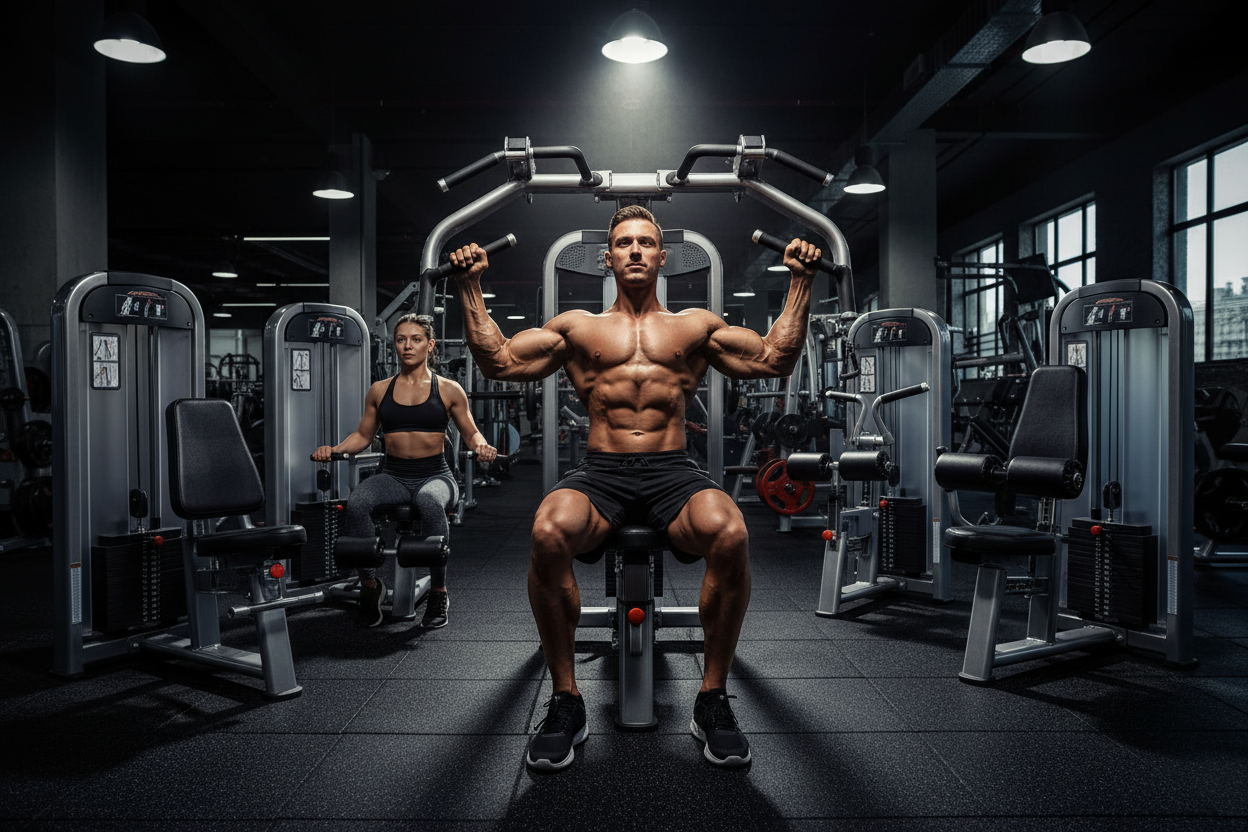
Before analyzing specific examples, we need to define the category. Selectorized strength equipment is defined by the rectangular weight stack and the magnetic pin (the selector). Unlike plate-loaded machines where you physically carry 45lb plates onto a bar, here you simply slide a pin into the desired weight level.
The magic lies in the mechanics. These machines use a system of cables, pulleys, and cams. The cam (that kidney-shaped wheel usually at the pivot point) is designed to manipulate the resistance curve. This means the machine can match your muscle's natural strength curve, keeping tension consistent throughout the rep—something gravity-dependent free weights struggle to do.
Upper Body Selectorized Machines Examples
The Lat Pulldown
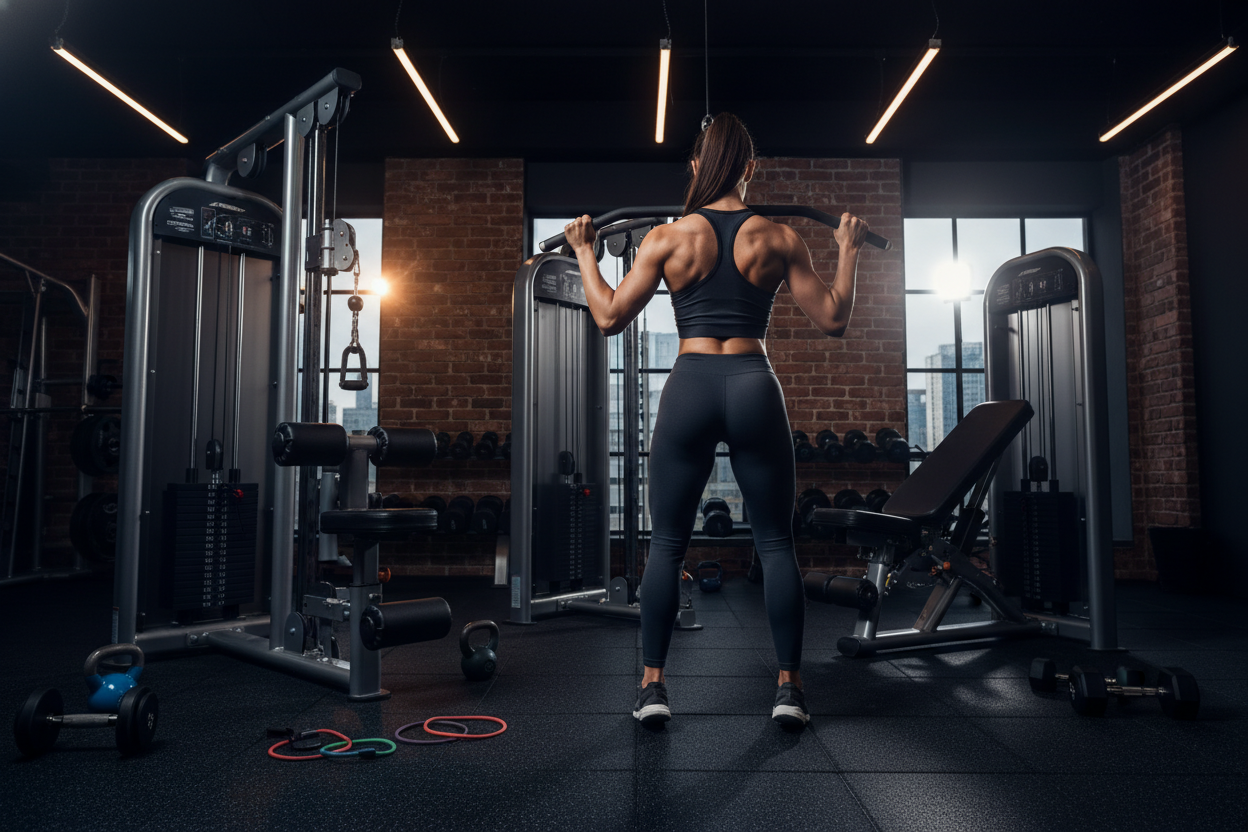
This is arguably the most popular piece of selectorized gear. It mimics the pull-up but allows you to use less than your body weight. The key here is the thigh pad; it locks you in place so you can drive force purely through your elbows, isolating the lats without swinging.
The Pec Deck / Machine Fly
While dumbbells lose tension at the top of a fly movement (when the weights are stacked over your shoulders), the Pec Deck maintains tension. The cables pull outward even when your hands are touching, creating a superior peak contraction for the chest.
Lower Body Selectorized Machines Examples
Leg Extension
This is the primary example of an "open kinetic chain" exercise. Your feet aren't fixed against a surface. It is the single best tool for isolating the rectus femoris (the quad muscle that runs down the middle of the thigh). It eliminates the need for balance, allowing you to focus entirely on the squeeze at the top.
Lying or Seated Leg Curl
Hamstrings are notoriously difficult to train with free weights alone. Deadlifts hit them, but mostly as hip extensors. To train the knee flexion function of the hamstring, you need a leg curl machine. The selectorized stack allows for rapid drop sets, which is useful because hamstrings respond well to high metabolic stress.
Why Choose Selectorized Over Free Weights?
It is rarely an "either/or" scenario, but selectorized units offer distinct advantages:
- Speed and Convenience: Changing weight takes one second. This makes them ideal for drop sets (doing a set, lowering the weight immediately, and continuing).
- Safety: If you fail a rep on a selectorized chest press, the stack just slams down. If you fail a barbell bench press without a spotter, you are in trouble.
- Isolation: By stabilizing your body with seat belts and pads, the equipment removes the need for stabilizer muscles to fire, directing 100% of the stimulus to the target muscle.
My Training Log: Real Talk
I want to be honest about the user experience here. I’ve spent years training in everything from gritty garage gyms to high-end health clubs. While the brochures talk about "smooth biomechanics," the reality of using selectorized equipment often comes down to maintenance.
There is a very specific, annoying friction you feel on a leg press machine where the guide rods haven't been greased in six months. You can feel the weight "stutter" on the way down, which ruins the eccentric portion of the lift. Also, let's talk about the pins. On older machines, the pin is often bent or the hole in the 50lb plate is slightly misaligned. You have to do this little jiggle-lift maneuver with the stack just to get the pin to seat properly.
However, nothing beats the convenience of a selectorized stack for drop sets. I remember finishing a shoulder workout with lateral raises on a machine; being able to drop the pin up two slots every time I hit failure gave me a pump I could never replicate fumbling with a rack of dumbbells.
Conclusion
Incorporating these selectorized machines examples into your routine isn't about replacing free weights; it's about filling the gaps in your strength curve. They offer safety, speed, and isolation that barbells simply cannot match. Next time you are in the gym, don't just stick to the iron—use the pin-loaded machines to force growth in stubborn areas.
Frequently Asked Questions
Are selectorized machines effective for building muscle?
Absolutely. Muscle hypertrophy requires tension and progressive overload. Selectorized machines provide constant tension and allow for easy micro-loading, making them highly effective for muscle growth, particularly for hypertrophy-focused training.
What is the difference between selectorized and plate-loaded?
Selectorized machines use a captive weight stack with a pin to select resistance. Plate-loaded machines require you to manually load circular weight plates onto the machine's arms. Selectorized is faster to adjust, while plate-loaded often has a higher maximum weight capacity.
Can beginners use selectorized machines?
Yes, they are actually recommended for beginners. Because the movement path is fixed (guided), there is less risk of form breakdown compared to free weights. This allows beginners to build a base level of strength safely before moving to complex compound movements.