Why the Backward Leg Extension Machine is Your Glute Secret
If you have been grinding out heavy squats and lunges week after week but your posterior chain remains lagging, you aren't alone. Compound movements are fantastic, but they often allow the quadriceps to take over, leaving the glutes understimulated. This is where the backward leg extension machine enters the chat.
Often ignored in favor of the flashy squat rack, this piece of equipment—technically known as a glute kickback machine—provides the pure hip extension necessary for hypertrophy without the systemic fatigue of heavy free weights. Let's break down how to use it to finally wake up those dormant muscles.
Key Takeaways
- Targeted Isolation: Unlike squats, this machine removes the quads from the equation, placing 100% of the tension on the glutes and hamstrings.
- Safety First: It significantly reduces lower back strain compared to barbell movements, provided you don't hyperextend your lumbar spine.
- Terminology: You might see this labeled as a "reverse leg extension machine" or "glute master" in different gyms.
- Volume Friendly: Because it is an isolation movement, you can train with higher reps and frequency for metabolic stress.
Understanding the Mechanics: What is This Machine?
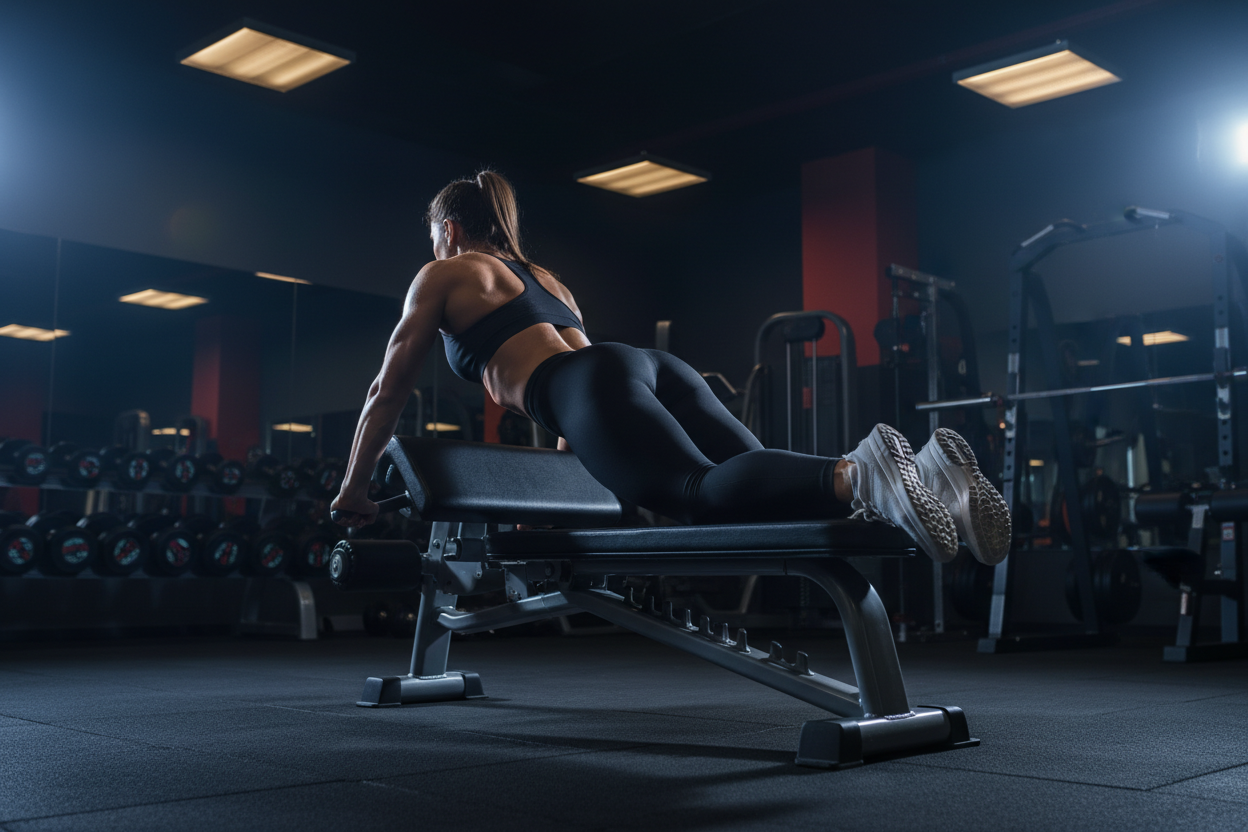
In the gym world, terminology can get muddy. When we talk about a "backward" extension, we are referring to hip extension—moving your leg behind your body against resistance. While a standard leg extension targets the quads by straightening the knee, this machine does the exact opposite.
You will often hear this equipment referred to as a reverse leg extension machine or a glute kickback station. Regardless of the label, the biomechanics are the same: you push a padded lever or cable attachment backward, shortening the glute max and hamstrings.
Why Not Just Do Squats?
Squats are king, but they are also a skill. If you have long femurs or poor ankle mobility, your body will naturally shift the load to your lower back and quads. The backward extension locks your torso in place. This stability removes the need for balance, allowing your brain to focus entirely on the muscular contraction of the glute.
How to Execute the Perfect Rep
Using a reverse leg lift machine looks simple, but most people butcher it by using momentum. Here is the proper setup for maximum recruitment.
1. Set the Pad Height
Adjust the chest or forearm support so that your active hip aligns with the machine's pivot point. If you are too high or too low, the lever arm won't track naturally with your leg, causing joint friction.
2. Brace the Core
This is the most critical step. Before you move your leg, tighten your abs as if someone is about to punch you. This prevents your lower back from arching. If your lower back arches, you are training your spine, not your glutes.
3. The Kickback
Drive your heel back and up. Focus on initiating the movement with your glute, not by swinging your leg. Pause at the top for a full second. You should feel a distinct cramp-like sensation in the upper glute shelf.
Common Mistakes That Kill Gains
Even seasoned lifters get this wrong. Avoid these errors to keep tension where it belongs.
The "Donkey Kick" Swing
If you are swinging the weight up using momentum, you are wasting your time. The eccentric phase (lowering the weight) builds muscle. Control the weight on the way down for a count of three seconds. Do not let the weight stack slam.
Hyperextending the Spine
Watch yourself in the mirror. Does your lower back dip every time you kick back? That is a recipe for a herniated disc. Keep your spine neutral. Your leg does not need to go as high as possible; it only needs to go as high as your hip extension allows.
My Training Log: Real Talk
I have a love-hate relationship with the backward leg extension machine. I remember specifically training for a powerlifting meet a few years back, and my lockout was suffering because my glutes were weak. I added this machine in as a finisher.
Here is the unpolished truth: the chest pad on most of these machines is absolutely suffocating. When you are bracing hard to protect your back, that pad digs right into your diaphragm/solar plexus, making it surprisingly hard to breathe during high-rep sets. I also noticed that the footplate often has a weird, slick texture. If I didn't wear shoes with a very specific grippy rubber sole, my foot would slide off the pedal right at the peak of the contraction, slamming the weight stack down. It's jarring and embarrassing.
However, despite the awkward breathing and the slipping, nothing else gave me that specific, deep soreness right in the upper glute-ham tie-in the next day. It’s an uncomfortable machine to use, but the isolation is undeniable.
Conclusion
The backward leg extension machine is more than just an accessory for aesthetics; it is a functional tool for correcting imbalances and building a bulletproof posterior chain. By stabilizing the torso and isolating the hip, it allows you to fail safely and push your muscles to true exhaustion. Stop swinging the weight, brace your core, and embrace the burn.
Frequently Asked Questions
Is the backward leg extension machine the same as a leg curl?
No. A leg curl targets the hamstrings by bending the knee (bringing the heel to the glute). A backward leg extension targets the glutes and upper hamstrings by extending the entire leg backward from the hip joint.
Can I use the reverse leg extension machine if I have back pain?
Generally, yes. It is often safer than squats for back pain sufferers because it doesn't load the spine vertically. However, you must maintain a rigid core and avoid arching your back during the movement to ensure safety.
How often should I use the reverse leg lift machine?
Since this is an isolation exercise that causes less systemic fatigue than heavy compounds, you can use it more frequently. 2 to 3 times per week for 3 to 4 sets of 12-15 reps is usually the sweet spot for hypertrophy.