Seated Exercise Machine: The Definitive Low-Impact Guide
Many people wrongly assume that to get a "real" workout, you have to be standing, jumping, or pounding the pavement. That mindset leads to burnout and injury more often than it leads to fitness. The reality is that the right seated exercise machine can deliver a high-intensity metabolic stimulus without destroying your connective tissue.
Whether you are recovering from an injury, managing mobility issues, or simply want to isolate muscle groups without stabilization fatigue, sitting down doesn't mean slacking off. It means you are training smarter, not just harder.
Key Takeaways
- Joint Preservation: Seated equipment removes the ground reaction force, saving knees and hips from impact trauma.
- Isolation Focus: By stabilizing the torso, you can direct 100% of your effort into the target muscles (legs, back, or arms) rather than balance.
- Accessibility: Modern seated cardio machines allow for high-intensity interval training (HIIT) regardless of balance limitations.
- Consistency: The comfort factor leads to longer duration sessions, which creates a higher total calorie burn over time.
Why Low-Impact Doesn't Mean Low-Intensity
There is a massive misconception that "seated" equals "easy." This creates a barrier for people who could benefit most from seated workout machines. The mechanism here is simple: biomechanical leverage.
When you stand, your body burns energy just to keep you upright. When you sit, you remove that baseline expenditure, yes. However, this allows you to push the moving parts of the machine with significantly more force. Think about a leg press versus a squat. You can move much more weight on a leg press because your back is supported. The same logic applies to cardio.
The Evolution of Seated Exercise Equipment
Years ago, seated exercise equipment was relegated to the corner of the gym for rehabilitation. Today, we see performance athletes using seated rowers and recumbent bikes for zone 2 training.
The engineering has changed. We aren't just looking at stationary bikes anymore. We are looking at:
- Recumbent Cross Trainers: These engage the upper and lower body simultaneously.
- Seated Steppers: These mimic the climbing motion without the sheer force of gravity bearing down on the lumbar spine.
- Rowing Machines: Perhaps the ultimate sitting cardio machine, engaging 86% of the body's musculature.
Choosing the Right Machine for Your Goal
Not all machines serve the same purpose. Selecting the wrong one will leave you frustrated and seeing zero results.
For Cardiovascular Health
If your goal is heart health and calorie burn, you need a seated cardio machine that allows for continuous, rhythmic movement. The Recumbent Bike is the gold standard here. The back support opens up the hip angle, which is crucial if you suffer from lower back tightness during upright cycling.
For Muscular Endurance
If you want to tone muscles while doing cardio, look at rowing machines. Unlike a bike which is lower-body dominant, the rower forces your lats, rhomboids, and core to work. It is the most efficient use of time for total body conditioning.
Common Mistakes to Avoid
Even in a seated position, form failures happen. The most frequent error I see is poor posture. Just because there is a backrest doesn't mean you should slump into it. Slouching compresses the diaphragm, reducing your oxygen intake.
Another issue is the "set and forget" mentality. Using a seated exercise machine requires progressive overload. If you aren't increasing the resistance or the speed every few weeks, your body will adapt, and your progress will plateau.
My Training Log: Real Talk
I want to share a specific experience from my time testing various seated units, specifically a popular mid-range recumbent bike. Marketing brochures always show people smiling effortlessly, but they rarely mention the "heat trap."
During a 45-minute steady-state session, I realized that while the seat was ergonomically contoured, the material was a dense vinyl that didn't breathe. By minute 20, a pool of sweat had formed at the base of my spine that was genuinely distracting. It's a gritty detail, but if you are buying one for home use, look for a mesh back. It makes a massive difference in whether you actually finish your workout or quit early because you feel gross.
Also, there's the adjustment lever. On this specific machine, the rail had a "dead zone" between notches 4 and 5. My legs were either slightly overextended (locking the knee, which is dangerous) or too cramped. I had to use a folded towel behind my back to create a custom fit. These are the mechanical nuances you only find out when you're three miles into a ride.
Conclusion
Integrating a seated exercise machine into your routine isn't a step backward; it's a strategic move for longevity. It allows you to maintain high training volume while minimizing the wear and tear on your skeletal system. Whether you choose a rower, a recumbent bike, or a cross-trainer, the key is consistency and progressive intensity.
Frequently Asked Questions
Can you lose belly fat using a seated exercise machine?
Yes, but spot reduction is a myth. You cannot lose fat only from your belly. However, using a seated machine for high-intensity interval training (HIIT) creates a calorie deficit that reduces overall body fat, including the abdominal area.
What is the best seated machine for seniors?
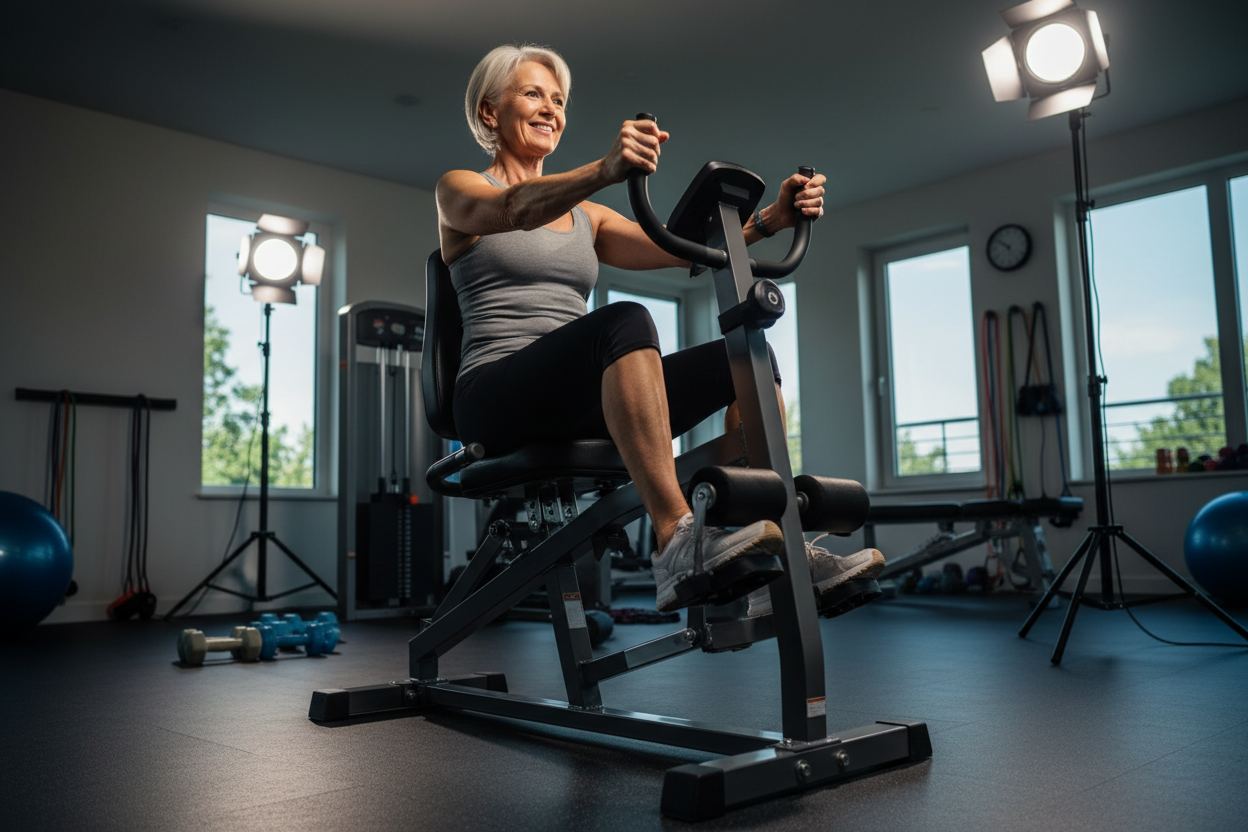
Recumbent cross-trainers (like the NuStep) are generally considered the best. They provide a full-body workout, have a swivel seat for easy entry/exit, and offer stability handles, making them safer than standard rowers or bikes.
Is a seated workout as effective as standing?
For cardiovascular health and muscle endurance, yes. Your heart does not know if you are sitting or standing; it only knows demand. If you push your heart rate into the target zone using a seated machine, you get the same aerobic benefits as running, with less joint risk.