Squat Rack on Rails Explained: What to Know Before You Buy
Setting up a home gym often involves a crucial debate: how do you push your limits safely when lifting alone? If you have ever found yourself struggling under a heavy barbell in your garage, you know the value of reliable safety mechanisms. Enter the squat rack on rails—a piece of equipment that blends the heavy-lifting potential of a power rack with the guided safety of a machine. This guide breaks down exactly what this equipment does, how it transforms solo training, and whether it deserves a dedicated spot in your home gym setup.
Key Takeaways
- Provides a fixed or semi-fixed bar path, eliminating the need to balance the barbell.
- Built-in safety catches allow you to train safely to muscular failure without a human spotter.
- Perfect for muscle isolation, injury rehabilitation, and building confidence under heavy loads.
- Requires a dedicated footprint, typically 4x6 feet, with a minimum ceiling height of 84 inches.
Understanding the Mechanics
Linear Bearings vs. Bushings
The secret to a high-quality rail system lies in its glide mechanism. Entry-level models often use plastic or brass bushings. While cost-effective, they can feel highly restrictive and sticky under heavy loads. Premium models utilize linear bearings—steel cylinders packed with tiny ball bearings that roll smoothly along the guide rods. If you are investing for the long haul, linear bearings are non-negotiable for a fluid, natural-feeling lift.
2D vs. 3D Rail Systems
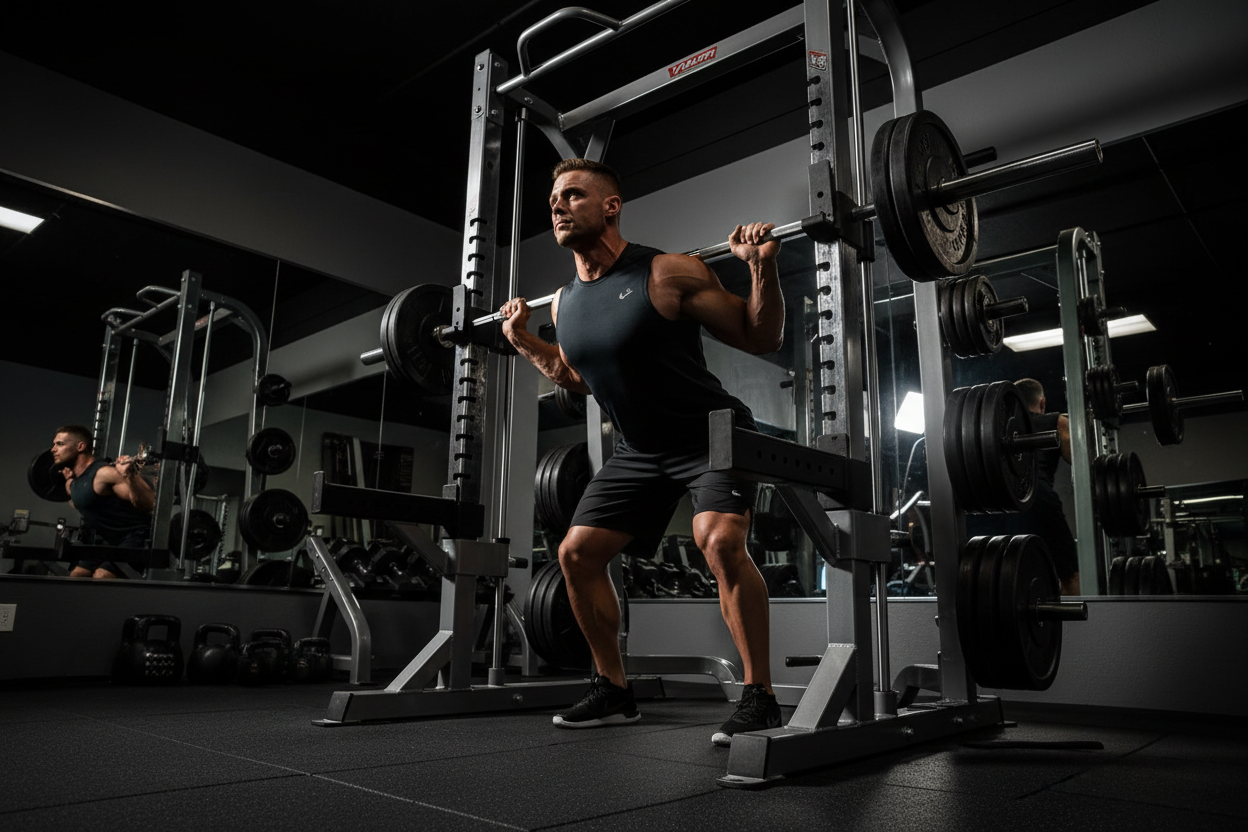
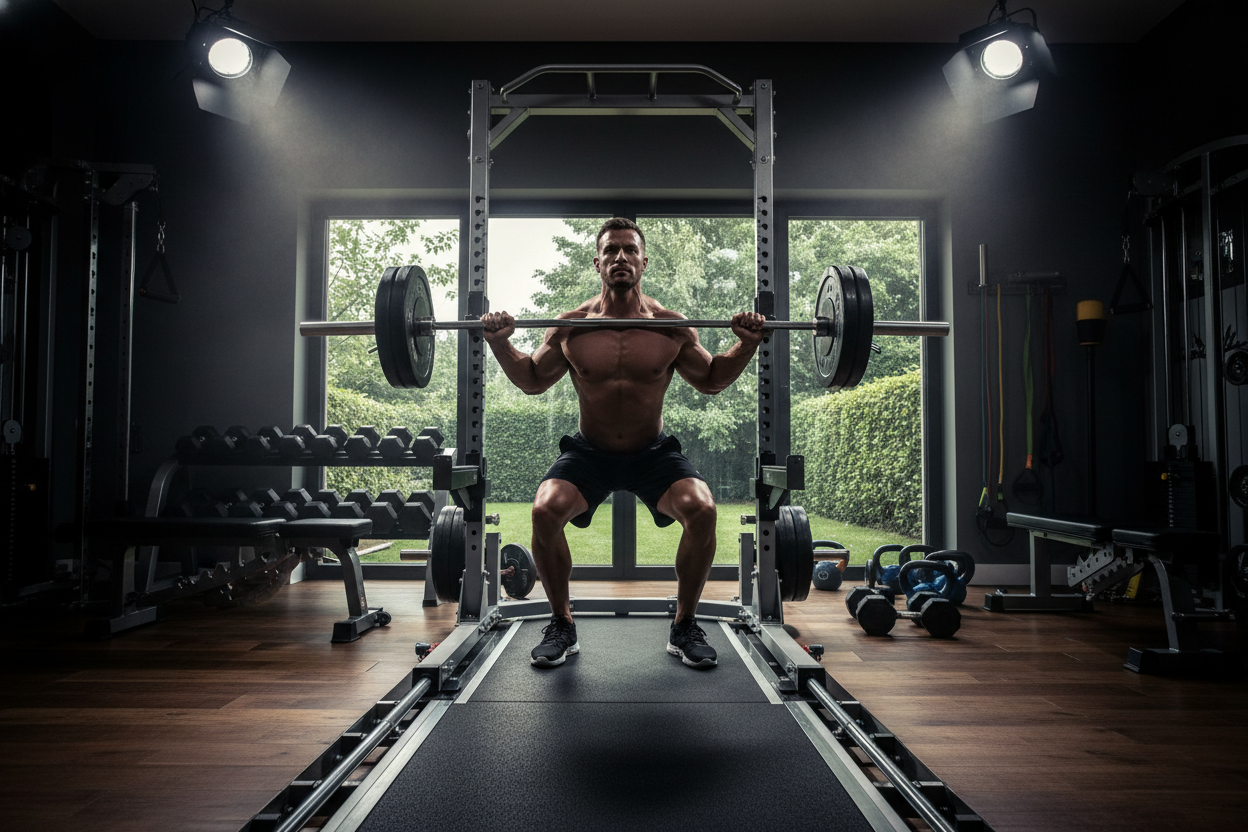
Traditionally, rail-based racks (often called Smith machines) lock you into a strict vertical or slightly angled path. However, modern 3D rail systems allow the bar to move both vertically and horizontally. This hybrid approach mimics the natural bar path of free weights while retaining the safety of a tracked system.
Training Applications for the Home Gym
Unmatched Safety for Solo Lifters
When you train in a basement or garage gym, a failed rep can be dangerous. A rail-based system features lock-out points every few inches. A simple flick of the wrist secures the bar, allowing you to push through heavy squats or bench presses without fear of getting pinned.
Hypertrophy and Muscle Isolation
Because you don't have to expend energy stabilizing the weight, you can direct 100% of your effort into the target muscle. Bodybuilders have used rail systems for decades to isolate the quads during hack squats or target the upper chest during incline presses. It is an incredible tool for breaking past stubborn muscle-growth plateaus.
Space and Budget Considerations
Footprint and Clearances
North American garage and basement gyms often fight a battle against ceiling height. A standard rail rack requires a footprint of about 4 feet deep by 6 feet wide. Crucially, you need to account for ceiling clearance. Most units stand between 82 and 84 inches tall. Always measure your ceiling—and account for exposed pipes or garage door tracks—before hitting the checkout button.
From Our Gym: Honest Take
When we set up our latest garage gym prototype, I spent three months exclusively using a commercial-grade squat rack on rails for my heavy pressing and squatting. The linear bearings on the guide rods were incredibly smooth, but what stood out most was the confidence it gave me during late-night solo sessions. At 6'2", I usually struggle with the fixed vertical path of traditional machines, as it forces my knees into an uncomfortable angle. Upgrading to a 3D rail system that allowed horizontal tracking was a game-changer for my biomechanics. The only minor caveat? You definitely lose some core activation compared to a standard free-weight power rack. I had to actively program extra core stabilization work to compensate.
Frequently Asked Questions
Is a squat rack on rails the same as a Smith machine?
Yes and no. A traditional Smith machine is a type of rack on rails that restricts movement to a single vertical or angled plane. Newer 3D racks on rails allow for forward and backward movement as well, offering a more natural lifting experience.
Can you build real strength on a fixed-rail system?
Absolutely. While it reduces the need for smaller stabilizing muscles, it allows you to safely overload the primary prime movers (like your pecs, glutes, and quads) with heavier weights than you might attempt unspotted.
How much maintenance do the guide rods require?
Very little, but consistency is essential. You should wipe down the guide rods with a dry cloth weekly to remove dust and chalk. Once a month, apply a light silicone-based lubricant to keep the linear bearings gliding silently and smoothly.