Sculpt Your Lower Body: The Ultimate No-Gym Guide to Stronger Legs and Glutes
Building a powerful lower body doesn't require a squat rack, a leg press machine, or an expensive monthly membership. In fact, you can achieve significant muscle definition and strength right in your living room with nothing more than gravity and focused intensity. The most effective approach involves mastering bodyweight movements, manipulating tempo, and maintaining consistent progressive overload. By focusing on compound movements that target the quadriceps, hamstrings, and glutes simultaneously, you create a metabolic demand that drives results.
I remember when I first cancelled my gym membership. There was a genuine fear that I would lose all the progress I had made over the years. I stared at my empty living room floor, wondering if a legs and bum workout at home could really compare to heavy barbell squats. For the first few weeks, I just went through the motions, doing high reps without much thought. Nothing changed. It wasn't until I started treating my carpet like a gym floor—focusing on the mind-muscle connection and slowing down every single rep—that my legs actually started looking more defined than they did when I was lifting heavy iron. That experience taught me that tension is the primary language muscles understand, regardless of where that tension comes from.
The Physiology of Home Training
Understanding why bodyweight training works is crucial for sticking to it. Your muscles cannot see how much weight is on a bar; they only sense mechanical tension. When performing exercises for legs and buttocks at home, you compensate for the lack of heavy external load by increasing the time under tension. This means taking three to four seconds to lower yourself into a squat or lunge. This eccentric phase causes micro-tears in the muscle fibers, which then repair stronger and larger during your recovery period.
To get the most out of a home leg and bum workout, you must also prioritize full range of motion. In a gym, ego often gets in the way, leading to half-reps with too much weight. At home, you have the privacy and safety to go as deep as your mobility allows, recruiting more muscle fibers in the glutes and hamstrings.
Essential Compound Movements
The Squat and Its Variations
The foundation of any solid routine starts with the squat. It is the king of lower body movement patterns. For a standard air squat, set your feet shoulder-width apart and drive your hips back as if sitting in a chair. Keep your chest up and core braced. To turn this into a comprehensive leg and buttocks workout at home, depth is key. Aim to get your hips below your knees if your mobility permits.
Once the standard squat feels too easy, switch to the Bulgarian Split Squat. Elevate one foot on a couch or sturdy chair behind you and lower your hips until the back knee hovers just above the floor. This single-leg variation places a tremendous load on the front leg and forces the glute specifically to stabilize the hips. It is arguably one of the most challenging exercises for legs and bum at home, often leaving you more sore than a heavy machine press would.
Lunges for Unilateral Strength
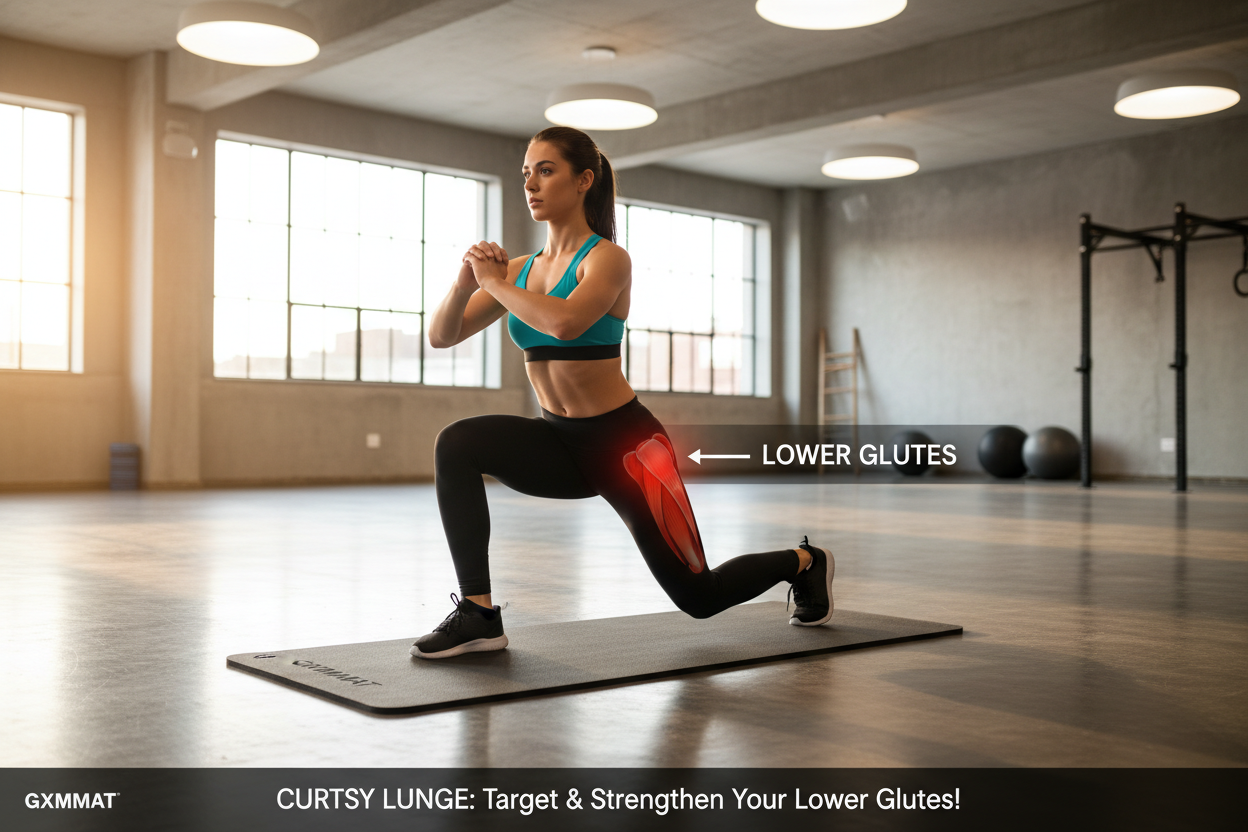
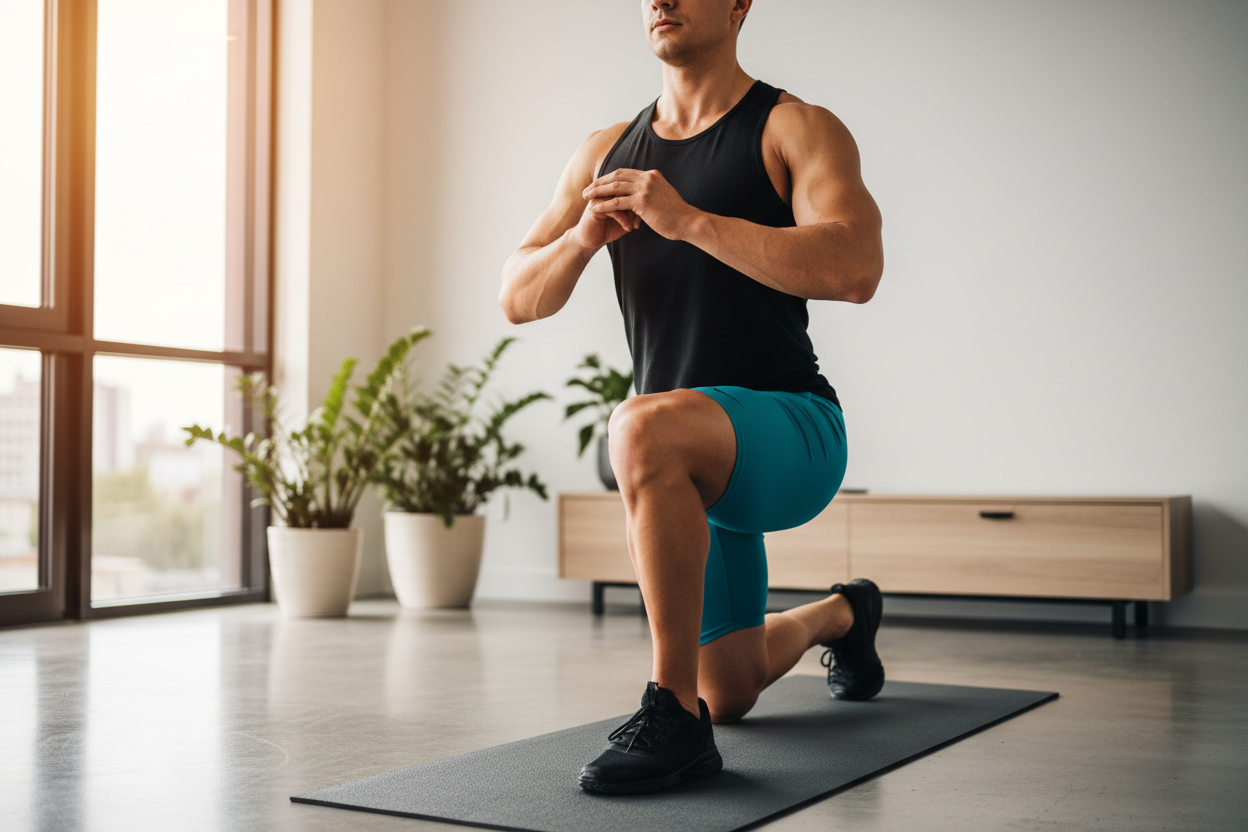
Imbalances are common, with one leg often being stronger than the other. Lunges correct this. Walking lunges are fantastic if you have the hallway space, but reverse lunges are generally safer for the knees and better for glute engagement. Step back far enough that your front shin remains vertical. Drive through the front heel to return to standing. This movement pattern is a staple in any effective leg and booty workout at home because it demands balance, coordination, and strength simultaneously.
Glute Bridges and Hip Thrusts
While squats and lunges hit the glutes, they are primarily knee-dominant exercises. To fully round out your physique, you need hip-dominant movements. The glute bridge is performed lying on your back with knees bent and feet flat. Drive your hips toward the ceiling, squeezing the glutes hard at the top. For a more intense booty and leg workout at home, upgrade this to a hip thrust by resting your upper back on the edge of a couch. This increases the range of motion. Single-leg variations here are humble-makers; they require intense focus and isolate the glute muscles effectively.
Structuring Your Routine
Randomly selecting exercises won't yield the best results. You need a structure that fatigues the muscles systematically. A circuit style works exceptionally well for at home workouts for legs and bum because it keeps the heart rate up, adding a cardiovascular benefit to the strength work.
Try performing the following sequence without rest between exercises:
- Bodyweight Squats: 20 repetitions
- Reverse Lunges: 15 repetitions per leg
- Glute Bridges: 20 repetitions (hold for 2 seconds at the top)
- Side Lying Leg Raises: 20 repetitions per side
After completing one full round, rest for 90 seconds. Repeat this cycle three to four times. This volume ensures you approach muscular failure, which is necessary for growth when loads are lighter.
Progressive Overload Without Weights
The biggest question people face is how to keep progressing. In the gym, you just add a 5lb plate. With at home workouts for legs and bum, you have to be more creative. Increasing the number of repetitions is the obvious answer, but eventually, doing 50 squats becomes tedious and turns into cardio rather than strength training.
Instead, manipulate tempo. Try a 1-1-4 tempo: take one second to stand up, hold for one second at the top, and take four full seconds to lower yourself. This eccentric focus dramatically increases the difficulty of even basic movements. Another method is adding pauses. At the bottom of a squat or lunge, hold the position for three seconds before rising. This eliminates the stretch reflex (the bounce) and forces your muscles to generate force from a dead stop.
You can also create resistance using household items. A backpack filled with books or water bottles can serve as a weighted vest. Holding a heavy jug of laundry detergent at chest level turns a standard squat into a Goblet Squat. These small adjustments keep the legs and bum workout at home challenging over months and years.
Consistency and Recovery
The convenience of training in your living room can sometimes be a double-edged sword. It is easy to skip a session because you are already on the couch. Treat your home workout with the same respect you would a gym appointment. Schedule it. Put on your workout clothes. The mental shift is just as important as the physical exertion.
Finally, remember that muscles grow while you sleep, not while you train. Even though you aren't lifting heavy barbells, bodyweight high-volume training is taxing on the central nervous system and muscle tissue. Ensure you are consuming enough protein and getting adequate sleep to support the repair process. Consistency with your home leg and bum workout combined with proper recovery is the formula that changes your physique.
Frequently Asked Questions
How often should I do this leg workout?
For most people, training legs 2 to 3 times per week is ideal. This frequency allows for 48 hours of recovery between sessions, which is when muscle repair and growth occur. If you are extremely sore, take an extra rest day to prevent overtraining.
Can I actually build muscle without heavy weights?
Yes, muscle growth is driven by mechanical tension and metabolic stress, both of which can be achieved with bodyweight exercises. By training close to failure, using high repetitions, and focusing on single-leg movements, you can stimulate significant hypertrophy (muscle growth) at home.
What should I do if my knees hurt during lunges?
Knee pain often stems from improper form or lack of hip stability. Ensure your front knee tracks over your toes and doesn't cave inward, and try stepping backward into a reverse lunge rather than forward, as this places less shearing force on the knee joint. If pain persists, stick to glute bridges and squats until you build more strength.