Quick Leg Workout: Standing-Only Circuit Architecture, Movement Mechanics, and Floor Traction Staging
The Architecture of a Quick Leg Workout: Why Standing-Only Flows Maximize Time
When time is limited, structuring a training session around standing-only movement patterns removes transition latency. Traditional lower-body sessions frequently alternate between standing lifts, prone positions, and seated machine stations. These constant position shifts introduce operational friction into the training block. By keeping both feet grounded or in upright single-leg stances throughout the routine, lifters create an unbroken progression that transforms a fast leg workout into a dense, continuous sequence.
Standing circuits maximize density by organizing exercises by movement plane rather than isolation equipment. For those exploring structured training plans across multiple muscle groups, consulting a structured training library and workout resource helps frame how express training fits alongside broader split routines. When planning a short leg workout, the objective is to maintain uninterrupted mechanical tension across the quadriceps, hamstrings, glutes, and calves through strategic tempo adjustments and directional variation.
Core Movement Patterns for an Express Lower-Body Session
Executing an effective session without equipment or floor-based mat work relies on compound knee-dominant and hip-dominant mechanics. By varying stance width, depth, and cadence, you can complete quick leg exercises at home while challenging stability across multiple planes of motion.
Squat Variations and Pulse Cadence
Squat patterns form the foundation of any quick at home leg workout. Rather than rushing through repetitions with loose form, deliberate pacing increases time under tension. Standard bodyweight squats can alternate with wide-stance sumo setups to shift emphasis across the adductors and posterior chain. Integrating mid-range isometric pulses at the bottom of the movement increases localized muscular demand without requiring heavy external loads.
Multi-Directional Lunges and Hinge Mechanics
Transitioning immediately from bilateral squats to unilateral lunges challenges dynamic balance. Reverse lunges place steady tension on the glutes and anterior thighs while minimizing forward shearing forces at the knee. Lateral lunges demand hip mobility and lateral stability, engaging the inner and outer thigh musculature. Incorporating standing single-leg Romanian deadlifts introduces an effective hip-hinge pattern that targets the hamstrings without requiring a bench or mat lie-down position.
Designing a Quick and Effective Leg Workout: The No-Repeat Blueprint
A no-repeat format keeps the mind engaged while eliminating redundant fatigue in identical motor pathways. In this format, each movement pattern appears exactly once within the sequence, shifting immediately from knee flexion to hip extension to unilateral balance drills. To examine how foundational lower-body programming scales across different experience levels, reviewing a comprehensive leg workout guide provides additional perspective on progressive loading principles.
A well-structured 15-to-20-minute standing sequence can follow this progressive blueprint:
- Phase 1: Bilateral Knee Dominance – Tempo bodyweight squats transitioning into sumo stance squats with bottom pulses.
- Phase 2: Unilateral Sagittal Plane – Alternating reverse lunges shifting into static split-squat holds.
- Phase 3: Frontal and Transverse Planes – Lateral lunges paired with curtsy lunges to engage the hip stabilizers.
- Phase 4: Posterior Chain and Ankle Complex – Standing single-leg bodyweight hinges followed by elevated calf raises.
Structuring a quick and effective leg workout around these non-overlapping patterns ensures that every major lower-body muscle group receives focused mechanical stimulus within a concise training window. This approach turns a quick leg day workout into a compact, repeatable habit.
Home vs. Gym Adaptations for Quick Leg Days
Adapting an express session to different environments depends on available equipment and layout. In a commercial fitness facility, moving between scattered machines can introduce delays during peak hours. Adapting the routine to a quick leg workout gym format involves selecting a single dumbbell or kettlebell and remaining in a compact station to perform goblet squats, walking lunges, and standing calf raises without walking across the gym floor. To understand how minimal-equipment strategies compare across full-body programming, see our streamlined exercise workout gym guide.
At home, a quick leg day relies on uninterrupted cadence and spatial control. Without the option to load heavy barbell racks quickly, the training stimulus comes from controlled eccentrics, pause cadences, and continuous movement transitions. This makes floor staging and surface grip central to maintaining consistent exercise output.
Floor Staging, Traction, and Joint Cushioning for Standing Circuits
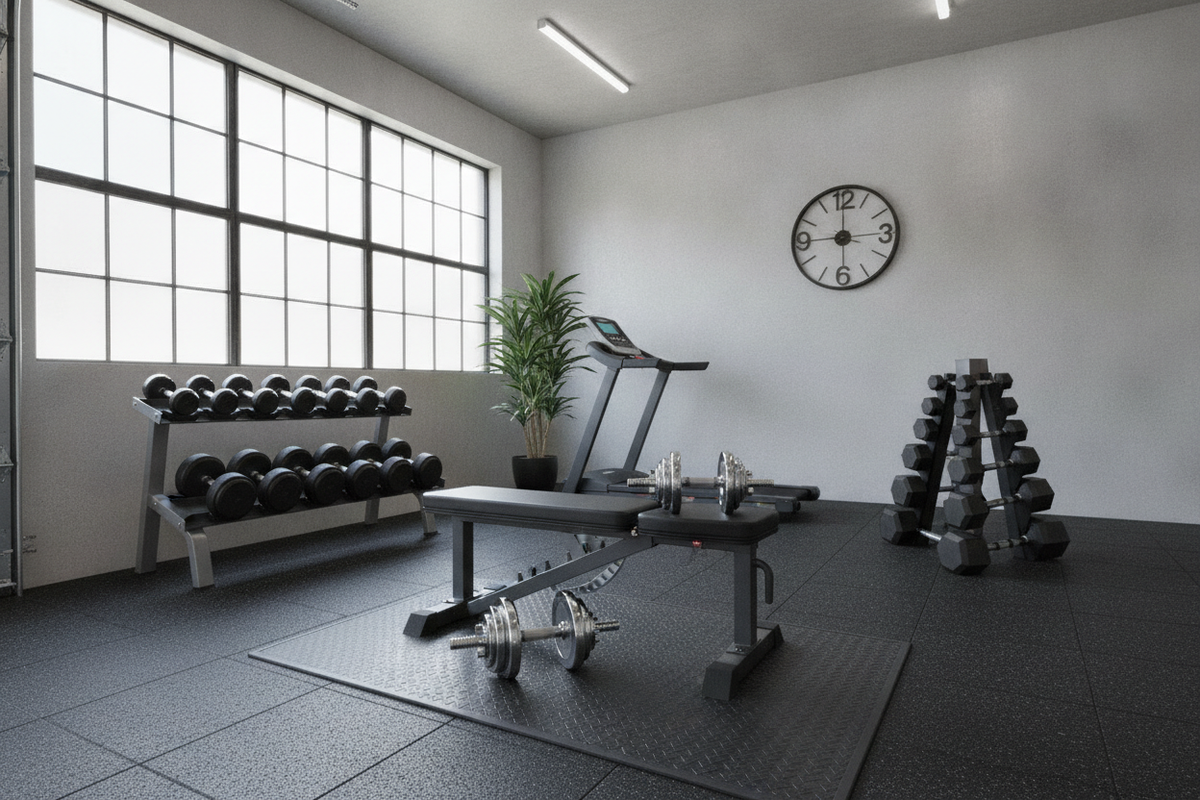
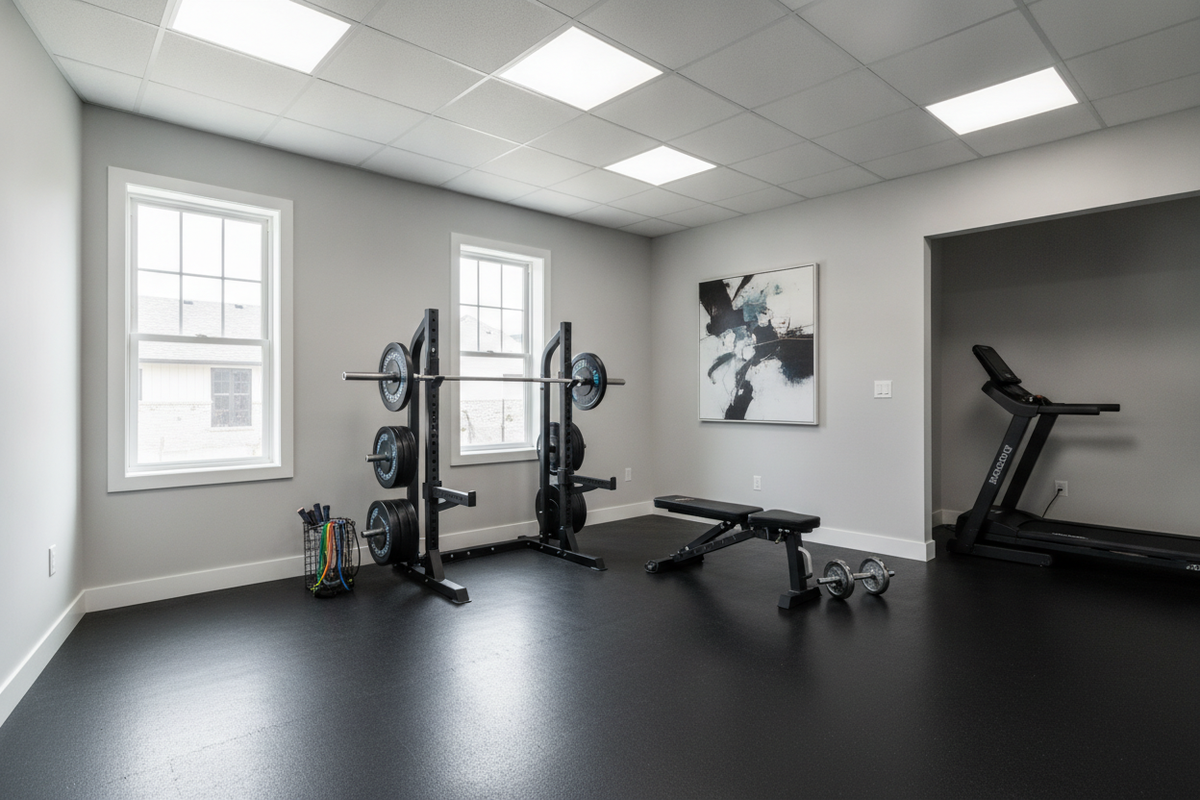
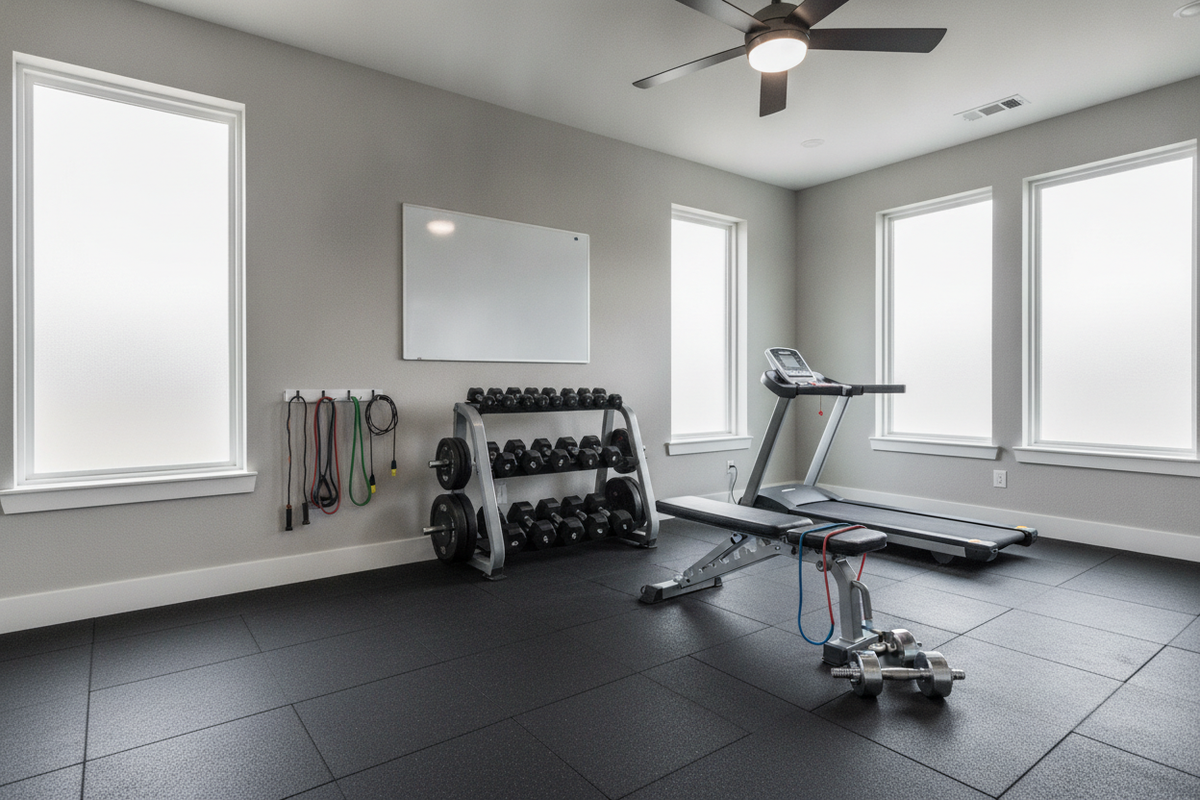
Dynamic standing circuits generate multi-directional forces that require a dependable base. Performing rapid lateral lunges, reverse steps, and pulse squats on bare concrete or slippery hardwood can compromise balance and foot positioning. Setting up a dedicated workout zone with a large-format gym workout product provides a stable foundation that cushions impact while protecting home subflooring from scuffs and moisture.
Traction Under Dynamic Stance Shifts
Lateral and rotational movements place high shear forces on the training surface. A non-slip textured mat helps maintain firm foot purchase during curtsy lunges and wide-stance transitions. Consistent footing allows the user to focus on knee alignment, depth, and cadence rather than compensating for sliding feet during dynamic stance changes.
Subfloor Protection and Mat Maintenance
High-density flooring absorbs footstrike shock during repeated split-squat repetitions and lunges. Maintaining the surface requires wiping away perspiration after intense sessions using mild, non-abrasive cleaners. Keeping the mat surface clean preserves grip quality and ensures the home training space remains ready for daily express workouts.