Printable Leg Workout: Visual Routine Templates, Movement Sequencing, and Home Floor Staging Frameworks
Anatomy of an Effective Printable Leg Workout Template
Relying on a digital screen during intense physical exercise often introduces unwanted distractions and workflow interruptions. A dedicated physical training sheet allows you to track reps, monitor rest cadences, and review movement sequences at a glance. Designing a functional printable leg workout template requires balancing comprehensive exercise selection with immediate visual clarity.
Essential Movement Categorization
An effective lower-body routine is built on balanced movement patterns rather than random exercise groupings. When planning a single-page layout, dividing your exercises into clear biomechanical categories prevents overlapping fatigue and ensures complete muscular engagement:
- Knee-Dominant Flexion: Movements such as goblet squats, front squats, and split squats that target the quadriceps.
- Hip-Dominant Hinges: Variations like Romanian deadlifts, glute bridges, and good mornings that emphasize the hamstrings and posterior chain.
- Unilateral Stability: Single-leg reverse lunges, lateral step-ups, and Bulgarian split squats designed to address bilateral strength imbalances.
- Lower-Leg and Calves: Standing or seated calf raises and ankle mobility drills that support overall ankle stability and athletic mechanics.
Structuring your sheet to alternate between knee-dominant and hip-dominant exercises keeps fatigue manageable across consecutive sets. For an in-depth breakdown of foundational movement patterns, consult this detailed leg workout guide.
Glanceable Tracking Metrics
A training sheet is only as useful as the clarity of its tracking grid. Dense paragraphs of instructions are difficult to read mid-set, so a clean tabular format works best. Consider organizing each exercise row with the following dedicated tracking columns:
- Target Rep Range: Specify whether the focus is endurance, hypertrophy, or pure strength.
- Set Logging Blocks: Provide open checkboxes or blank fields for three to five working sets to write down completed reps and loads.
- Tempo Notation: Include a small notation box for eccentric and concentric cadence to encourage controlled repetitions.
- Perceived Effort Field: Allow space for a quick numerical rating or note regarding mechanical fatigue.
Modular Printable Lower-Body Workout Blueprints
Depending on available equipment and time constraints, your printable layout should reflect a distinct session objective. Below are two modular workout architectures formatted for single-sheet printing and logging.
The 20-Minute Time-Dense Bodyweight Circuit
Designed for compact spaces and zero-equipment training, this circuit relies on continuous tension and short transitions across multiple rounds:
- Station 1: Tempo Air Squats — 4 sets of 15 reps (3 seconds down, 1 second pause at bottom).
- Station 2: Alternating Reverse Lunges — 4 sets of 10 reps per leg with controlled knee descent.
- Station 3: Single-Leg Glute Bridges — 3 sets of 12 reps per side with a momentary peak contraction.
- Station 4: Lateral Squat Shifts — 3 sets of 10 reps per side to engage the adductors and lateral stabilizers.
- Station 5: Standing Isometric Calf Raises — 3 sets of 20 reps with a controlled hold at the top.
The Progressive Dumbbell and Resistance Blueprint
When resistance implements are available, the tracking sheet must prioritize progressive overload, recording precise load values and rep milestones over consecutive weeks. For athletes looking to incorporate dynamic drive alongside standard strength movements, pairing this setup with insights from a specialized workout leg guide helps structure loading parameters effectively:
- Exercise A: Dumbbell Romanian Deadlifts — 4 sets of 8 to 10 reps, logging exact weight per hand.
- Exercise B: Goblet Bulgarian Split Squats — 3 sets of 8 reps per leg, recording elevated foot stability and dumbbell load.
- Exercise C: Dumbbell Sumo Squats — 3 sets of 10 to 12 reps focusing on deep hip engagement.
- Exercise D: Dumbbell Farmer's Walk on Toes — 3 rounds of 30 paces for lower-leg endurance and grip reinforcement.
Workout Environment Staging and Floor Traction
Executing an offline training routine requires intentional layout design in your workout area. A well-organized environment prevents interruptions and supports clean movement mechanics throughout your session.
Line of Sight and Sheet Placement
Constantly bending down to check a piece of paper on the floor can disrupt spinal posture and neck alignment. To optimize your training workflow:
- Mount your printable sheet on a magnetic board or clipboard positioned at chest or eye level on an adjacent wall or rack.
- Ensure the sheet sits within your direct forward line of sight during standing rests.
- Keep a reliable writing implement attached directly to the clipboard so logging requires minimal movement between sets.
Impact Absorption and Surface Stability
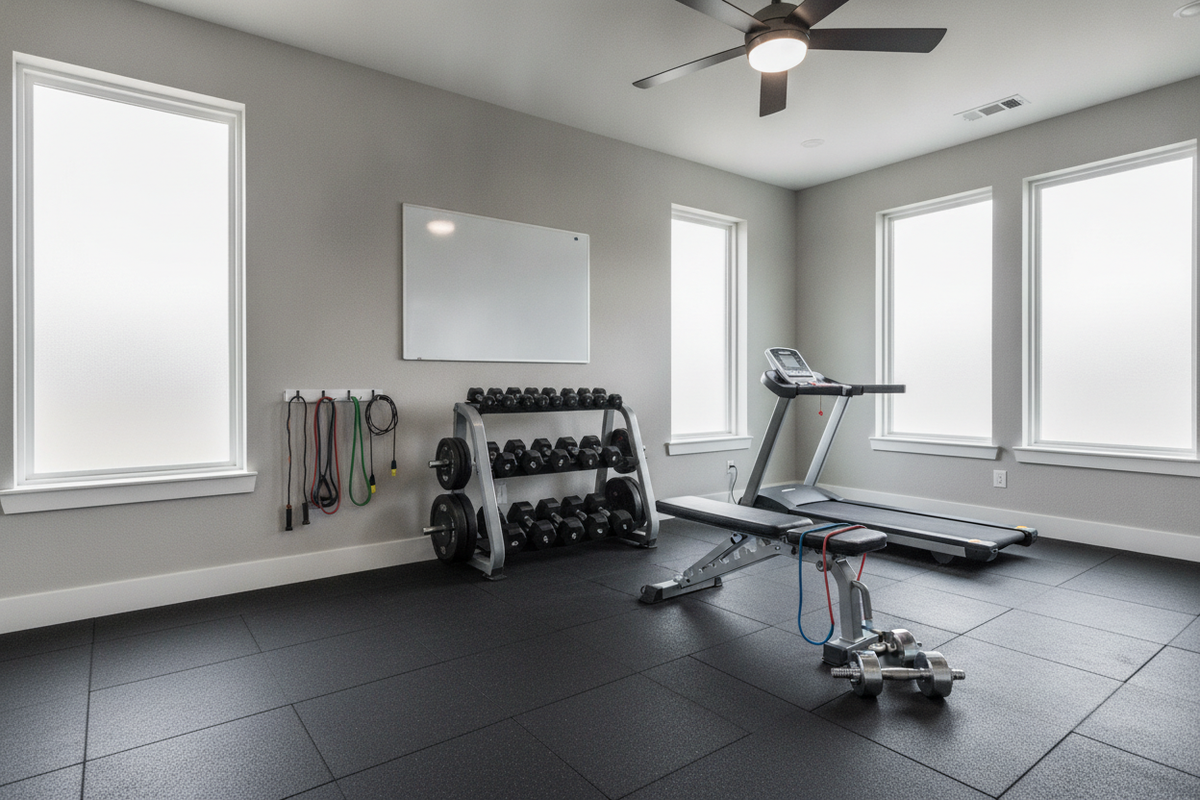
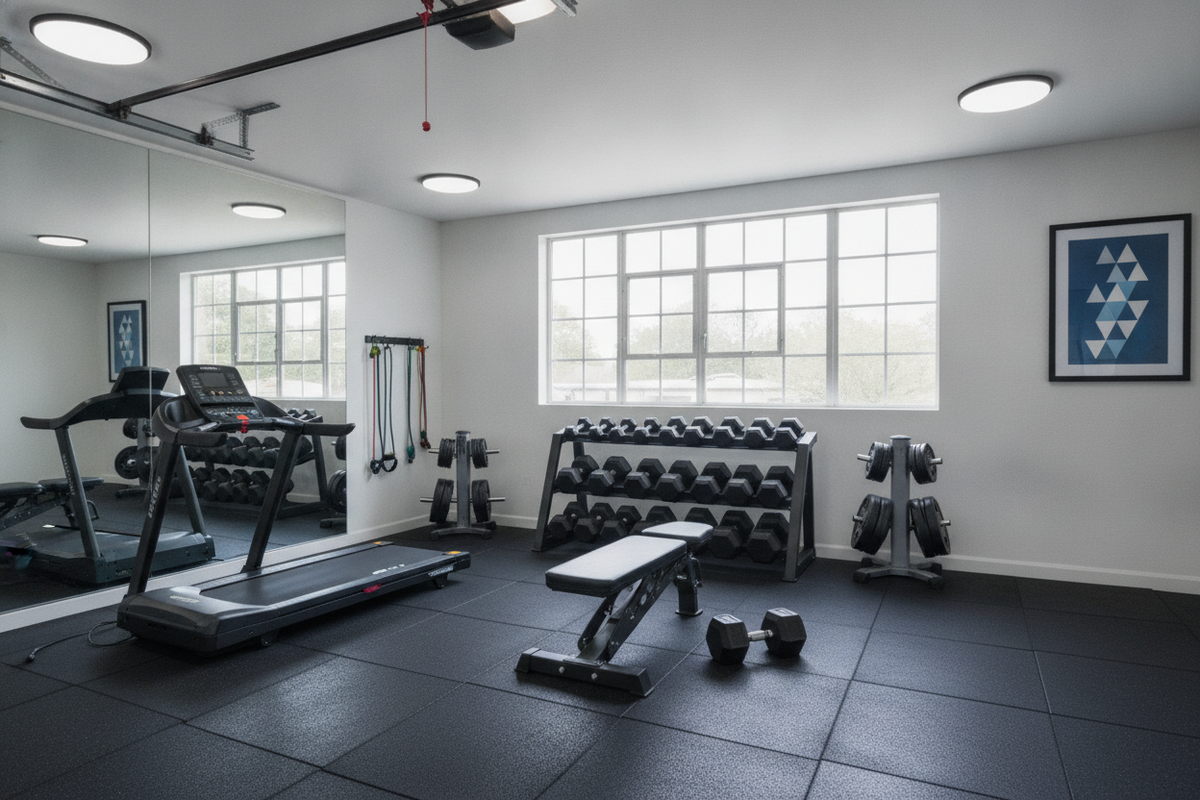
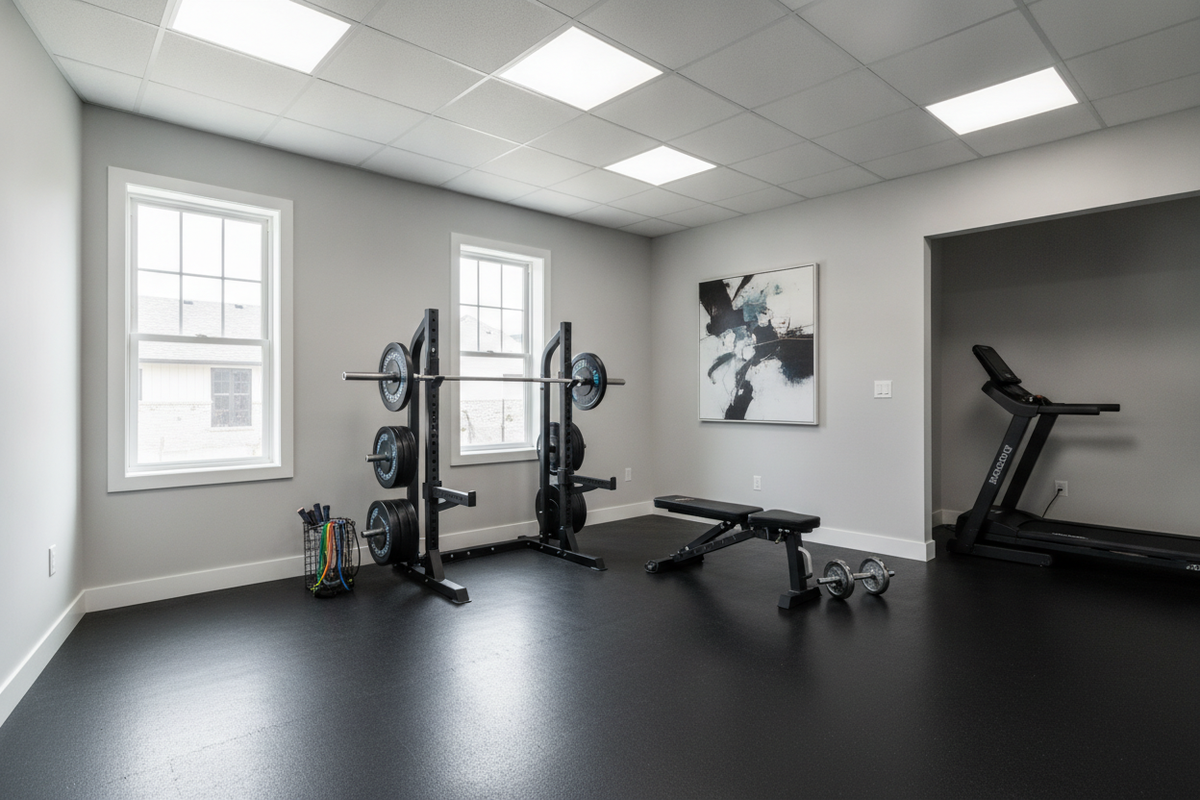
Dynamic lower-body movements, particularly deep lunges and split squats, place localized pressure on joints when performed on bare hard floors. Establishing a supportive, non-shifting foundation ensures steady footing during multi-directional steps. Selecting a spacious, high-density workout product offers adequate surface area for wide stance squats and floor-based bridge variations while protecting underlying subfloors.
A stable, textured exercise surface prevents sliding during explosive transitions, allowing you to maintain strict form throughout unilateral exercises without readjusting your footing.
Progressive Adaptation and Template Customization
A printable workout routine provides a baseline, but physical adaptations require systematic progression over time. Rather than discarding your sheet after a few weeks, modify key variables to sustain ongoing development.
Modifying Variables Before Changing Exercises
Before rotating in entirely new movements, maximize the stimulus of your existing template by manipulating training density and tempo:
- Adjusting Time Under Tension: Increase the eccentric duration of squats and lunges to intensify the movement without adding external load.
- Shortening Rest Intervals: Reduce the recovery window between rounds to elevate conditioning and muscular endurance.
- Expanding Range of Motion: Elevate the front foot during split squats or use deficit platforms for deadlifts to deepen joint articulation.
For additional routine layouts, mobility progressions, and training templates, explore our comprehensive workout resource archive to refine your training program.
Maintaining Training Space and Mat Hygiene
To preserve non-slip surface traction and maintain a clean workout area, regular surface care is essential. Wipe down exercise mats and equipment surfaces after each session using mild cleansing solutions. Keeping high-contact areas clean prevents dust buildup, supports long-term material durability, and ensures a stable training foundation for every printed routine you complete.