Dumbbell Leg Workouts: 20-Minute Home Strength Blueprints, Movement Mechanics, and Floor Protection
Executing effective lower-body strength sessions within a residential setting requires a deliberate balance between load distribution, mechanical efficiency, and environmental setup. While barbell training often requires dedicated racks and substantial floor footprints, structured dumbbell leg workouts offer a versatile alternative capable of targeting every major muscle group in the lower chain. Dumbbells permit natural tracking along individual joint paths, allowing lifters to train through full ranges of motion while managing localized joint stress.
Building a dependable lower-body routine at home relies on understanding fundamental movement mechanics and pairing them with a stable training surface. As explored in our full exercise weights guide, multi-joint resistance exercises form the core of time-efficient home training by engaging primary movers alongside stabilizing muscle groups across multiple planes of motion.
Core Movement Patterns in Dumbbell Leg Workouts
A comprehensive lower-body regimen requires more than random exercise selection. Organizing a session around foundational movement categories ensures balanced structural development between the anterior and posterior chains while addressing stabilizing musculature.
Knee-Dominant Patterns: Goblet and Front-Loaded Squats
Knee-dominant movements primarily load the quadriceps while requiring active engagement from the core and adductors. The goblet squat serves as a fundamental movement pattern, where a single dumbbell is held vertically against the sternum. This anterior load acts as a natural counterweight, encouraging an upright torso and promoting deeper hip flexion without excessive forward lean.
For lifters seeking increased loading, dual front-racked dumbbell squats place the weights across the anterior shoulders. In both variations, maintaining deliberate foot pressure across the tripod of the foot—the heel, the base of the big toe, and the base of the pinky toe—ensures balanced force distribution throughout the ascent and descent.
Hip-Dominant Patterns: Dumbbell Romanian Deadlifts and Hinges
Hip-dominant exercises target the posterior chain, including the hamstrings, gluteal complex, and spinal erectors. The dumbbell Romanian deadlift (RDL) emphasizes a horizontal hip displacement rather than vertical knee flexion. Initiating the movement by pushing the hips backward while maintaining a neutral spine allows the dumbbells to track closely along the shins, maintaining mechanical tension on the hamstrings.
Controlling the range of motion to match individual hamstring flexibility prevents compensatory spinal rounding. Pausing briefly at the bottom of the hinge reinforces positional awareness before driving the hips forward to return to an upright standing posture.
Unilateral Patterns: Split Squats, Lunges, and Step Variations
Single-leg training provides a direct method to address bilateral strength disparities while demanding active stabilization from the hip abductors and ankle complexes. Unilateral movements challenge balance and pelvic alignment under load, exposing asymmetries that dual-leg exercises might mask.
- Bulgarian Split Squats: Elevating the rear foot increases the load on the front leg, delivering deep quadriceps and gluteal engagement.
- Reverse Lunges: Stepping backward reduces shear forces at the lead knee compared to forward lunges, making it an accessible option for maintaining joint comfort.
- Walking Lunges: Combining dynamic forward translation with unilateral loading challenges core bracing and balance across extended sets.
Structuring a 20-Minute All-Strength Dumbbell Leg Session
When training time is constrained, structuring workouts around focused supersets maximizes training density while preserving movement quality. A well-organized 20-minute session delivers meaningful training volume without requiring extensive rest periods between non-competing muscle groups.
Antagonistic and Agonist-Postural Pairings
Pairing exercises that target opposing movement patterns allows one muscle group to recover while another works. For example, alternating a knee-dominant goblet squat with a hip-dominant dumbbell RDL keeps the session moving efficiently without overloading a single movement pattern. For detailed exercise libraries and program schedules, explore our dedicated workout resource to discover structured training layouts suited for home environments.
Tempo Control and Continuous Tension Frameworks
Home lifters working with a fixed set of dumbbells can increase training stimulus through tempo manipulation rather than simply adding external weight. Slowing the eccentric (lowering) phase to three or four seconds increases time under mechanical tension, demanding sustained muscular engagement throughout the full range of motion. Incorporating isometric pauses at the point of peak contraction reinforces positional strength and eliminates momentum.
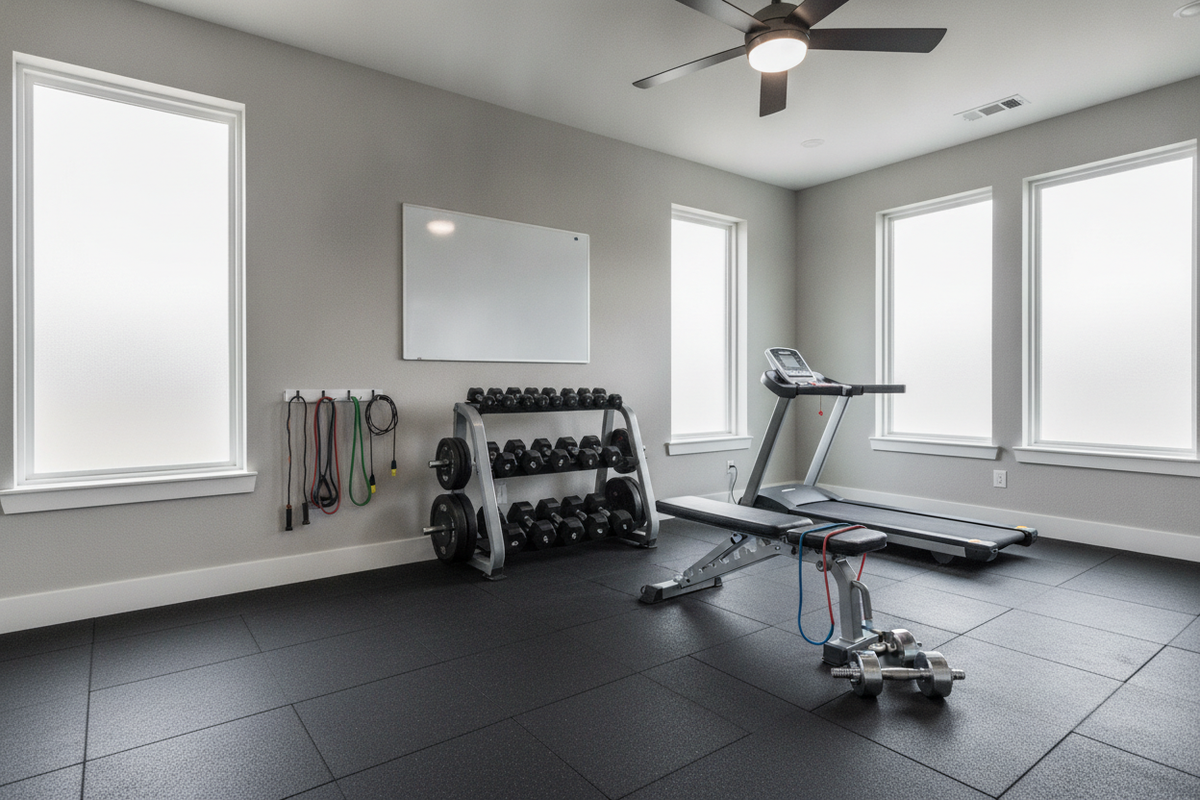
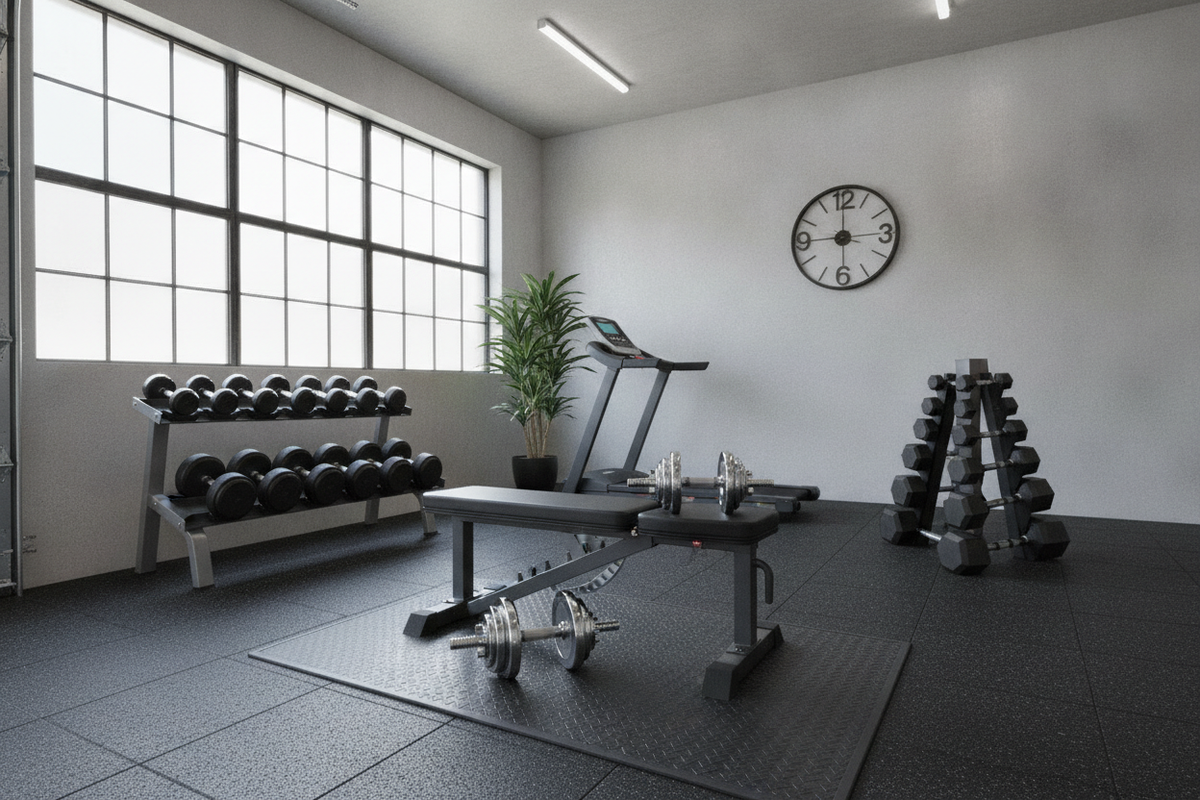
Home Gym Staging, Subfloor Protection, and Mat Stability
Lower-body lifting places distinct mechanical demands on home flooring. Dynamic lunges, wide-stance squats, and heavy dumbbell transitions generate downward and lateral forces that require a dedicated, non-yielding base of support.
Traction and Base of Support Under Heavy Loading
Foot slippage during a loaded squat or lunge compromises form and destabilizes joint alignment. Soft, spongy mats compress unevenly under heavy loads, leading to ankle instability and loss of balance. A firm, high-density exercise surface provides the rigid footing required to drive through the heels while offering surface texture that prevents horizontal foot drift during dynamic lunges.
Subfloor Protection During Dumbbell Transitions and Racking
Setting down heavy dumbbells between sets concentrates load over small contact areas, which can dent hardwood, crack ceramic tile, or compress carpet padding. Utilizing an expansive surface like a dedicated workout product helps disperse point-load forces across a wider surface area, protecting residential subfloors against scuffs, pressure marks, and incidental contact during intense training blocks.
Surface Maintenance and Care for High-Friction Strength Areas
High-friction training surfaces accumulate sweat, dust, and shoe debris over time, which can degrade surface grip if left uncleaned. Maintaining a stable training area requires simple routine care:
- Wipe the mat surface regularly with a mild soap-and-water solution or neutral cleaner.
- Avoid harsh chemical solvents that could break down mat materials or leave slippery residues.
- Allow the surface to dry completely before beginning loaded training sessions to maintain optimal traction.
Long-Term Progression and Safety Considerations
Consistent progress with home dumbbell leg training relies on gradual, systematic adjustments. When external weight increments are limited, progression can be achieved by adding repetitions, extending eccentric tempos, reducing transition times, or shifting from bilateral to unilateral variations. Maintaining strict movement standards, respecting joint comfort, and establishing a stable, slip-resistant training environment ensures long-term strength gains and sustainable home workouts.