Quad Circuit Workout: Dynamic Sequencing, Calves and Core Routines, and Home Floor Setup
Executing an effective lower-body conditioning session requires a calculated balance between continuous muscular tension, joint comfort, and deliberate movement pacing. A structured quad circuit workout challenges the knee extensors through compound squat variations, unilateral splits, and continuous tempo loading. By eliminating extended rests between complementary movements, circuits build conditioning and muscular endurance while demanding continuous stability through the trunk and lower leg.
Biomechanical Foundations of a Quad Circuit Workout
The quadriceps group comprises four distinct heads that work collectively to extend the knee joint while assisting in hip flexion. When designing a circuit focused on knee dominance, shifting joint angles and foot positions alters the primary line of force across the vastus lateralis, vastus medialis, vastus intermedius, and rectus femoris. Keeping the torso upright during squatting variations places greater mechanical demand on the knee joint rather than the hips, directing the primary workload into the anterior thigh musculature.
Unlike isolated machine training, a multi-exercise circuit challenges connective tissue resiliency and dynamic posture. Sequencing exercises with minimal transition delays sustains localized muscular tension, demanding rapid recovery between consecutive efforts. To explore foundational lower-body strength progressions alongside circuit programming, consult our workout quads guide for comprehensive exercise variations and volume frameworks.
Core Exercise Blueprints: Knee Flexion, Unilateral Loading, and Plyometrics
A balanced anterior-chain circuit should combine bilateral squatting, single-leg control, and dynamic propulsion. Selecting movements that complement one another ensures balanced loading across both legs without premature systemic exhaustion:
- Goblet Squats: Holding a counterbalance weight in front of the chest encourages an upright torso, maximizing knee travel and anterior thigh recruitment through full depth.
- Bulgarian Split Squats: Elevated rear-foot positioning isolates the lead leg, building unilateral knee stability while challenging active hip flexor mobility in the trailing limb.
- Deficit or Reverse Lunges: Stepping backward minimizes shear force on the lead knee, allowing controlled deceleration and powerful extension through the midfoot.
- Bodyweight Tempo Squats: Utilizing extended eccentric lowering phases keeps continuous tension on the quadriceps without external load.
If you are relatively new to sequencing high-density movement clusters, reviewing our circuit workout guide can provide foundational guidelines on managing work-to-rest intervals effectively.
Integrated Routine: Quads, Calves, and Core Workout Circuit
Integrating the lower legs and abdominal wall alongside anterior thigh movements creates a complete lower-kinetic-chain session. A structured quads calves and core workout pairs knee-dominant drive with plantarflexion and anti-extension trunk bracing to sustain balance under accumulated fatigue.
Sample Giant-Set Architecture
Perform the following movements sequentially with minimal rest between exercises. Take a short recovery period at the end of each round before repeating the sequence for the target number of circuits.
- Goblet Front-Loaded Squats: 10 to 12 controlled repetitions focusing on upright posture and smooth knee extension.
- Elevated Calf Raises: 15 to 20 slow-tempo repetitions with a distinct pause at peak plantarflexion to load the gastrocnemius and soleus.
- Bulgarian Split Squats: 8 to 10 repetitions per leg, emphasizing depth and constant quad engagement.
- Plank Knee-to-Elbow Drives or Hollow Body Holds: 30 to 45 seconds of active core bracing to reinforce pelvis alignment and spinal control.
This layout ensures that while the quadriceps recover between loaded squat patterns, the calves and trunk musculature continue active work. For additional multi-joint conditioning ideas and programming templates, browse through our dedicated workout resource directory.
Home Station Setup: Mat Traction, Joint Protection, and Subfloor Staging
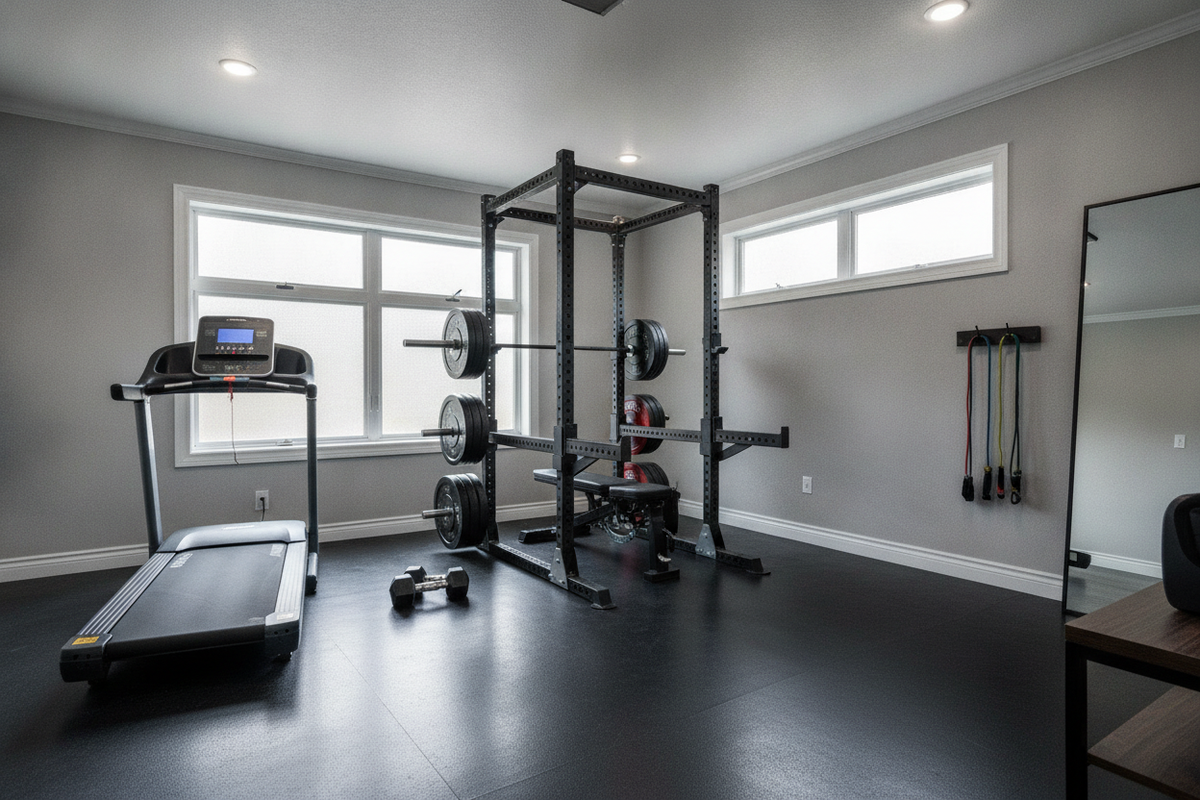
High-volume leg training involves repetitive knee drops during lunges, explosive foot plants during dynamic drills, and heavy foot pressure during loaded squats. Training on hard, unyielding floors such as concrete or bare hardwood can lead to joint discomfort and traction issues when sweat accumulates.
Deploying a dedicated, high-density exercise surface provides several key practical advantages during lower-body circuits:
- Traction and Stance Stability: Non-slip top textures prevent the lead or trailing foot from shifting during wide-stance squats or unilateral lunges.
- Impact Attenuation for Joints: Dense cushioning softens contact when the rear knee touches the floor during deep split squat repetitions.
- Subfloor Protection: Heavy dumbbells or kettlebells placed down rapidly between circuit stations are less likely to damage underlying domestic flooring.
Setting up your training station with a spacious, protective surface like our heavy-duty workout product ensures ample perimeter space for lunges, lateral steps, and floor-based core holds without leaving the padded zone.
Circuit Pacing, Equipment Care, and Floor Maintenance
Maintaining deliberate movement tempo is essential during high-density lower-body workouts. Rushing through repetitions often leads to shortened ranges of motion, excessive forward torso lean, or uncontrolled knee collapse. Focus on smooth eccentric descents and explosive, balanced drives through the midfoot on every repetition.
Because intense circuits generate elevated perspiration, keeping home gym flooring clean and dry preserves surface grip and material longevity. Wipe down high-traction mats after each session using a mild detergent or neutral gym cleaner, avoiding harsh abrasive chemicals that could degrade surface texture. Investing in a durable surface like our wide-format workout product offers a dependable foundation for long-term conditioning and strength routines at home.