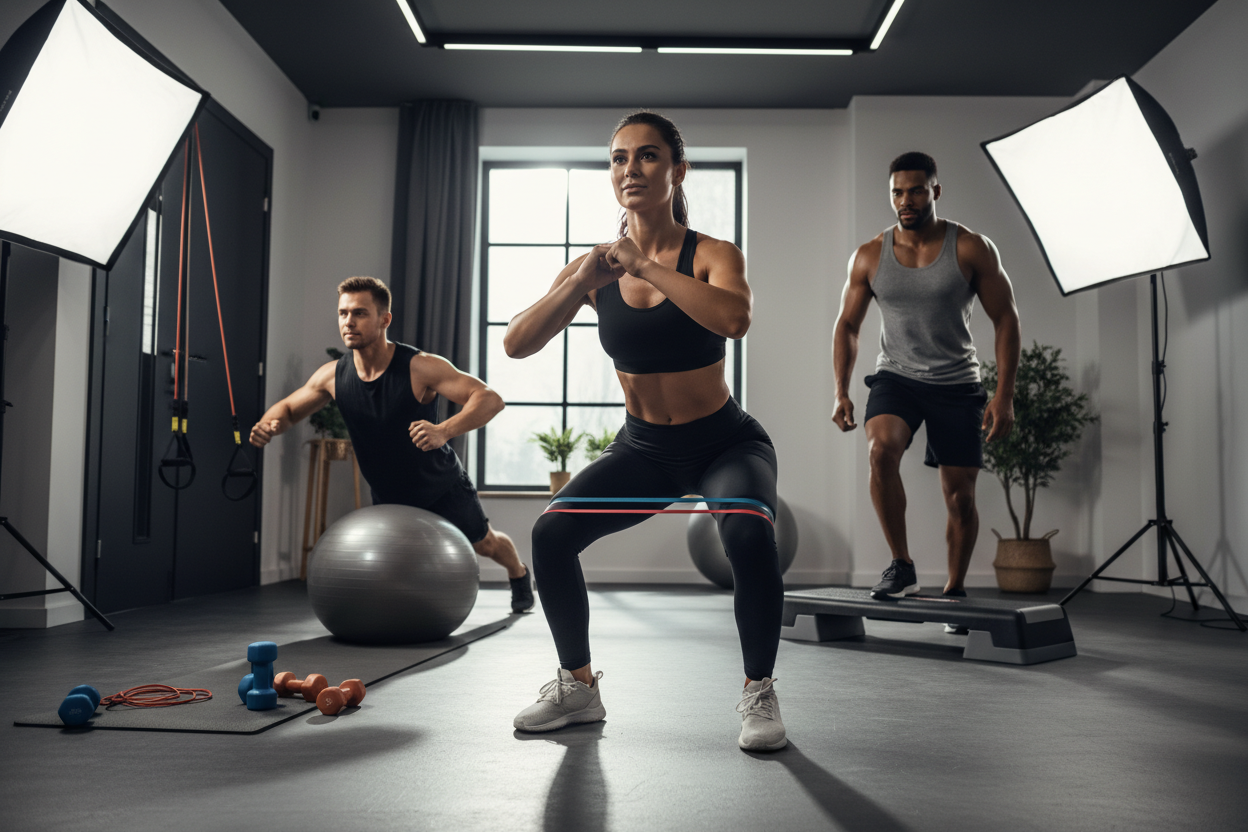
Beginner Circuit Workout: How to Start Without Burning Out
Let's face it: stepping into a crowded commercial facility or staring at a pile of newly assembled home gym equipment can feel completely overwhelming. If you are short on time, easily bored by long treadmill sessions, or just unsure of how to piece movements together, a beginner circuit workout is one of the most efficient ways to build strength and burn fat simultaneously. By moving quickly from one exercise to the next, you maximize your training time while keeping your heart rate elevated.
Whether you are setting up in a cramped garage or trying to navigate a busy fitness center, this guide will break down exactly how to structure an easy circuit workout that delivers real results without leaving you feeling defeated.
Key Takeaways
- A standard circuit for beginners involves 4 to 6 exercises performed back-to-back with minimal rest.
- Focus on simple circuit exercises that target the full body, alternating between upper and lower body movements.
- Start with a 1:1 work-to-rest ratio, such as 30 seconds of work followed by 30 seconds of rest.
- You do not need a massive commercial setup; a pair of dumbbells, a kettlebell, or just your bodyweight is enough to start.
Structuring Your First Routine
Choosing the Right Movements
The secret to an effective circuit training routine for beginners is exercise selection. You want to avoid highly technical lifts that break down when you get fatigued. Instead, rely on simple circuit training exercises like goblet squats, floor presses, and dumbbell rows. By picking easy circuit exercises, you can focus on your form and breathing rather than complicated mechanics. A great exercise circuit for beginners alternates muscle groups—for example, following a leg exercise with an upper-body pull—so one muscle group recovers while another works.
Work-to-Rest Ratios
When learning how to do circuit workout routines, timing is everything. A common mistake in circuit training workouts beginners try is resting too little. For your first few sessions, try 30 seconds of active work followed by 30 to 45 seconds of rest. As your conditioning improves, you can transition into a more demanding simple circuit workout by increasing the work time to 45 seconds and dropping the rest to 15 seconds.
Space and Equipment Planning
Home Gym Setup vs. Commercial Gyms
If you are exploring gym circuits for beginners, logistics are crucial. In a commercial setting, hoarding three different machines is a quick way to make enemies. A respectful gym circuit workout for beginners typically relies on a single station—like a bench and a set of dumbbells—where you can perform multiple movements without moving around the floor. On the other hand, if you are doing circuit training for beginners with equipment in your home gym, your main concern is floor clearance. Ensure you have at least a 6-foot by 6-foot area to safely transition from standing exercises to floor-based core work.
Incorporating Weights
While bodyweight routines are great, a weight training circuit for beginners will drastically accelerate your muscle-building progress. Adjustable dumbbells are the undisputed champions of home fitness circuits for beginners. They take up minimal space and allow you to quickly change resistance levels between a heavy squat and a lighter overhead press.
From Our Gym: Honest Take
When I first started testing a new circuit training program for beginners in my own garage gym, I made a classic rookie mistake: I didn't account for transition time. I had programmed a heavy dumbbell deadlift followed immediately by a stability ball plank. At 6'2", scrambling down to the floor and perfectly positioning my elbows on the ball took me almost 15 seconds. My heart rate spiked, my grip was completely fried from the aggressive knurling on my hex dumbbells, and my form suffered.
The lesson? Keep it practical. Now, when I design an easy circuit training routine, I group standing movements together and floor movements together. It keeps the workout flowing smoothly and prevents unnecessary frustration. Also, invest in a high-density mat; your knees will thank you during those fast transitions.
Frequently Asked Questions
What is the best circuit training beginner routine?
The best routine focuses on fundamental movement patterns: a squat, a hinge, a push, a pull, and a core exercise. An example of simple circuit training would be 30 seconds each of bodyweight squats, push-ups, dumbbell lunges, dumbbell rows, and plank holds, resting 30 seconds between each movement.
Can I build muscle with gym circuit training for beginners?
Absolutely. While circuit training workouts for beginners are fantastic for cardiovascular health and fat loss, incorporating progressive overload with dumbbells or kettlebells will stimulate muscle growth. Just ensure your weight training circuit for beginners uses challenging enough resistance for the given time interval.
How many days a week should I do a circuit workout for beginners?
For most people, 2 to 3 days a week is the sweet spot. This allows your muscles adequate time to recover while still providing enough stimulus to improve your cardiovascular endurance and overall strength.