
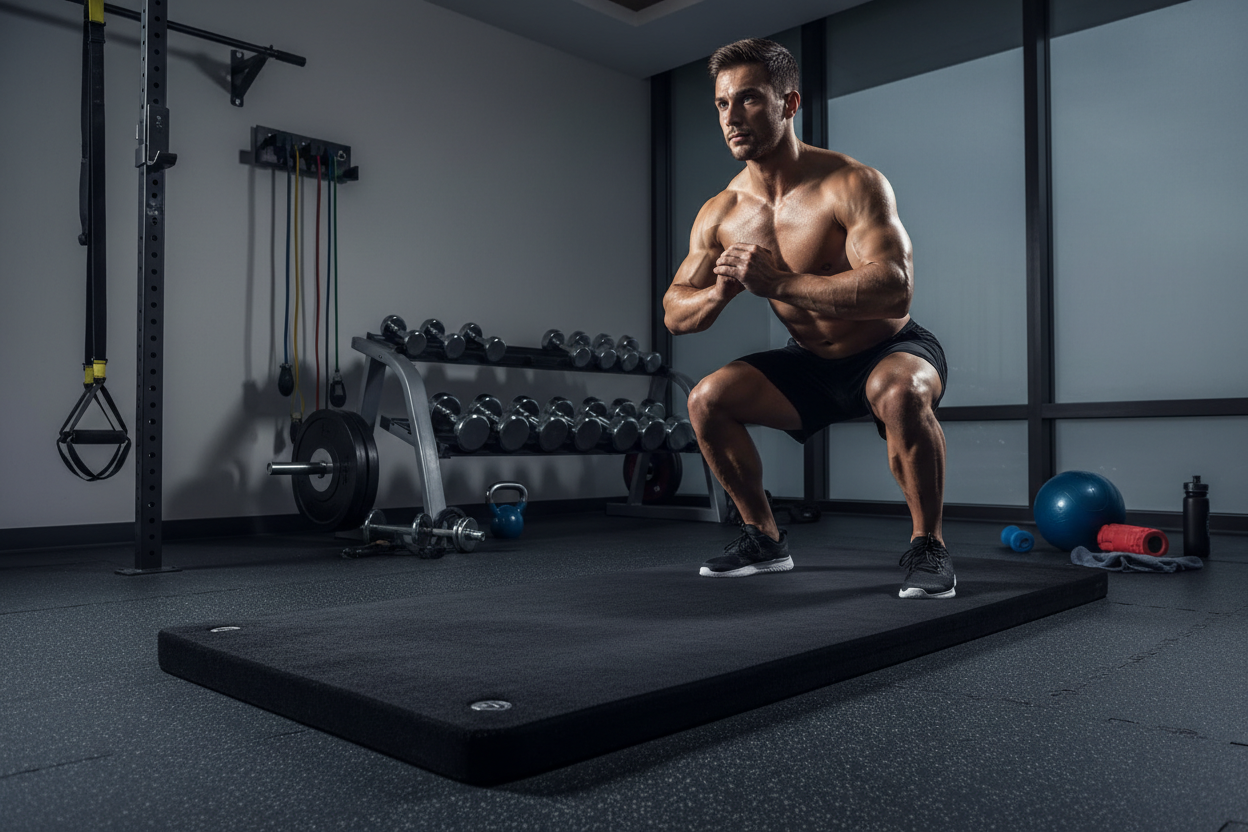
Plush Mat Explained: Is Extra Cushion Worth the Investment?
If you have ever dreaded floor exercises because of grinding knee pain or a bruised tailbone, you aren't alone. Most standard home gym flooring and basic yoga mats simply don't offer enough barrier between you and a hard concrete basement or hardwood floor. Enter the plush mat.
Designed with extra thickness and high-density foam, these mats promise a cloud-like experience for your joints. But before you swap out your current gear, it is crucial to understand how that extra cushioning impacts your workout stability, space requirements, and overall training goals.
Key Takeaways
- Optimal Thickness: Most plush mats range from 10mm to 15mm (about half an inch), offering maximum joint relief for floor work.
- Best Use Cases: Ideal for Pilates, deep stretching, core routines, and restorative yoga.
- The Stability Trade-off: Extra cushion can compromise your balance during standing or single-leg exercises.
- Storage Considerations: Thicker mats require more storage space and often need dedicated carrying straps to stay tightly rolled.
Balancing Comfort and Performance
Joint Protection vs. Stability
The primary draw of a thick mat is undeniable comfort. When you are performing kneeling push-ups, bird-dogs, or hollow body holds, that extra half-inch of foam absorbs the pressure that would otherwise travel directly into your joints. However, Newton's third law applies to fitness equipment, too. The more a mat compresses under your weight, the less stable your base becomes. If your routine heavily features standing balances, kettlebell swings, or dynamic HIIT movements, a highly cushioned surface can actually make your stabilizer muscles work overtime, leading to premature fatigue and poor form.
Durability and Maintenance Considerations
Material Matters: NBR vs. PVC
Not all thick mats are created equal. Entry-level options often use lightweight EVA foam, which feels incredibly soft but tends to flake, tear, or permanently compress under heavy use. For a home gym environment, look for closed-cell NBR (Nitrile Butadiene Rubber) or high-density PVC. These materials provide the plush feel you want while resisting moisture, sweat, and the permanent indentations left behind by resting dumbbells.
Space Planning for Thicker Mats
If you are outfitting a compact apartment corner or a multi-use garage gym, remember that a thick mat does not roll up as tightly as a standard 3mm yoga mat. A rolled 15mm mat can easily measure 8 to 10 inches in diameter. You will want to ensure you have a dedicated corner, a wall-mounted rack, or heavy-duty velcro straps to keep it contained between sessions.
From Our Gym: Honest Take
We recently spent three weeks testing a 15mm plush mat in our concrete-floored garage gym. The immediate relief during kneeling lunges and ab rollouts was night and day compared to our standard rubber stall mats. My knees did not ache once during long mobility sessions. However, I have to be completely honest about the drawbacks: when I transitioned to barefoot single-leg Romanian deadlifts, the mat simply had too much 'give'. I found myself wobbling and losing power. My recommendation? Keep a thick mat rolled up specifically for your floor work, mobility days, and core finishers, but step off it for heavy standing lifts.
Frequently Asked Questions
Is a plush mat worth it for a home gym?
Yes, especially if your home gym has hard flooring like concrete, tile, or hardwood. It is an inexpensive investment that significantly increases comfort during floor-based mobility and core exercises.
Can I drop weights on a thick exercise mat?
No. While they are thick, these mats are designed for bodyweight comfort, not impact absorption. Dropping heavy dumbbells or plates will likely puncture or permanently tear the foam. Stick to heavy-duty rubber drop pads for weightlifting.
How do I clean a plush exercise mat?
Because most high-quality options use closed-cell technology, they do not absorb sweat. A simple wipe-down with a damp cloth and a mild water-and-vinegar solution after your workout is all it takes to keep the surface fresh and grippy.


