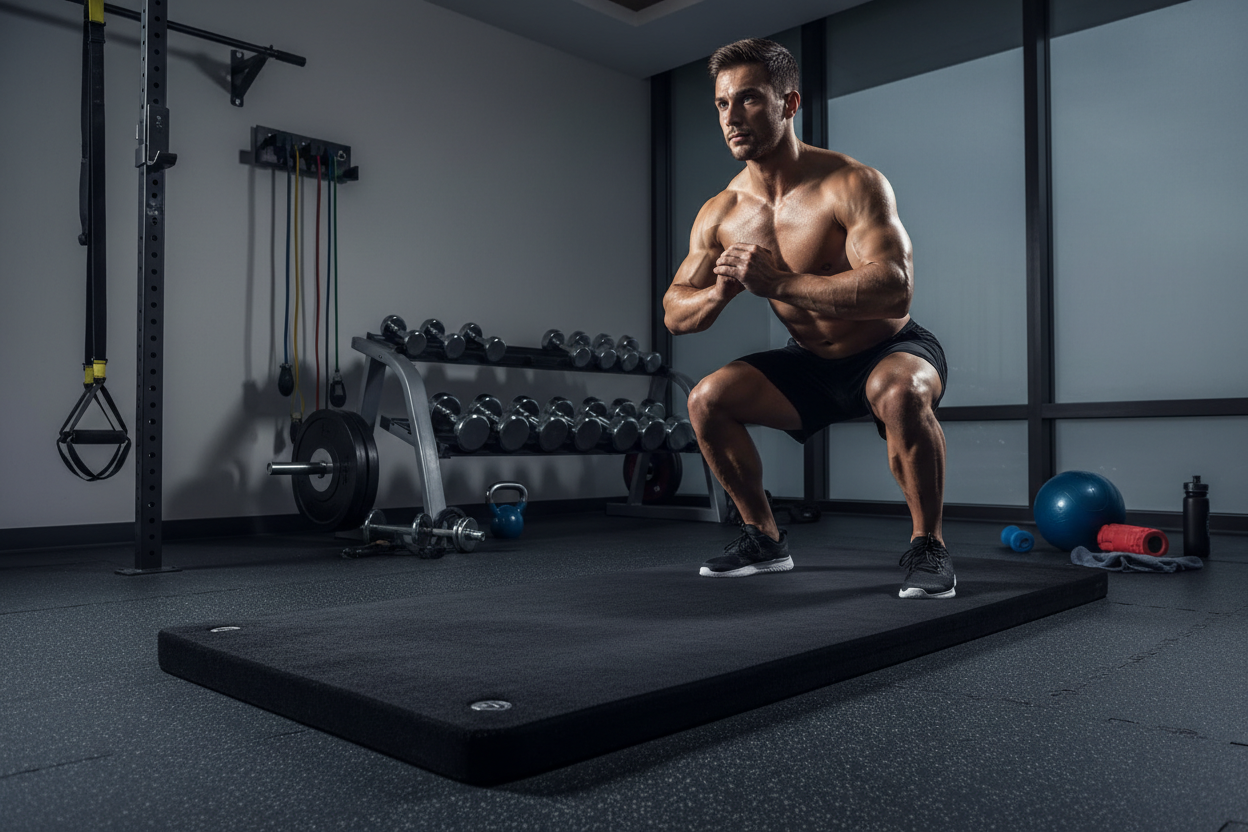
Rubber Floor Squares: The Ultimate Home & Wet Area Setup Guide
Building a home gym usually starts with a common headache: protecting your existing floors from cracked concrete, loud weight drops, and lingering moisture. Whether you are setting up a heavy lifting zone in a damp basement or outfitting a post-workout recovery area, choosing the right foundation is critical.
That is where rubber floor squares come in. Far from just basic gym mats, these modular pieces have evolved. In this guide, we will break down how to choose the right thickness, why they are expanding beyond the squat rack, and how to plan your layout effectively.
Key Takeaways
- Impact Absorption: High-density squares protect subfloors from heavy dumbbell and barbell drops.
- Moisture Resistance: Closed-cell options provide waterproof barriers, making them ideal for sweaty gym sessions and wet environments.
- Easy Installation: Interlocking edges eliminate the need for messy adhesives, allowing for quick DIY setups.
- Versatility: Modern designs seamlessly transition from heavy lifting zones to residential recovery spaces.
Planning Your Space: Gyms, Basements, and Beyond
The Ultimate Foundation for Heavy Lifting
When you are dropping a 400-pound deadlift, standard foam mats will not cut it. You need heavy-duty rubber floor tiles designed for impact. A 3/4-inch thick rubber floor tile provides the necessary shock absorption to protect your home's foundation and your equipment. For general fitness areas, a 3/8-inch thickness usually suffices. Because these are modular rubber tile squares, you can easily customize the footprint to fit awkward garage corners or basement layouts.
The Wet Area Crossover
One of the biggest trends in residential gym design is the integration of recovery zones, which brings us to a surprising but highly practical application: wet areas. Gym owners are increasingly looking for a seamless transition into their adjoining washrooms. Using rubber flooring for bathroom setups makes incredible sense due to its slip resistance and durability.
If you are building a basement gym with an attached washroom, waterproof rubber flooring for bathrooms is a game-changer. Unlike traditional ceramic, non slip rubber flooring for bathrooms provides superior grip even when wet. We are seeing a surge in people using rubber bathroom flooring tiles because they are warmer underfoot and virtually indestructible. Whether you are laying down a rubber shower floor or installing rubber wall tiles to protect against splashes, closed-cell rubber tiles indoor are built to handle high humidity without harboring mold.
Specs That Matter: Buying Guide
Material and Texture
Not all tiles rubber products are created equal. Vulcanized rubber offers the highest density and lowest odor, making it the top choice for enclosed residential rubber flooring tiles. When comparing rubber mat tile flooring, look for options with a textured surface. This is especially crucial if you plan on using rubber floor tiles for bathroom spaces or sweaty cardio zones, as the texture acts as an essential anti-slip mechanism.
Interlocking vs. Straight Edge
For most DIY home setups, interlocking rubber floor tiling is the easiest route. The puzzle-style edges hold firmly together under lateral stress (like during lateral lunges or burpees). Straight-edge rubber sheet flooring for bathrooms or gyms requires double-sided tape or glue, which is great for permanent commercial spaces but less ideal if you ever plan to move your home gym.
From Our Gym: Honest Take
When I built out my basement gym last year, the floor was an unlevel, cracked concrete nightmare. I started with cheap foam mats, which tore within a week of kettlebell swings. Upgrading to commercial-grade rubber floor tiles for home was the best investment I made.
However, the real surprise was the adjoining post-workout bathroom. I had leftover 8mm interlocking pieces and decided to test them out as rubber bathroom tiles over the cold concrete. The result? Incredible. The rubber floor in bathroom spaces stays warm during winter mornings, and water from the shower area wipes right up. One caveat: fresh rubber has a distinct odor. I had to run a dehumidifier and fan for about two weeks before the 'tire shop' smell completely faded. If you are using rubber vinyl flooring for bathroom spaces or small gyms, plan for an initial off-gassing period.
Frequently Asked Questions
Are rubber floor squares easy to cut?
Yes. You can trim residential rubber flooring tiles using a sharp utility knife and a straight edge. Score the rubber multiple times rather than trying to cut through it in one heavy slice. This ensures a clean fit around squat racks or bathroom fixtures.
Can you use rubber tiles for bathroom floor setups?
Absolutely. Closed-cell rubber flooring tiles bathroom setups are highly water-resistant and provide excellent traction. Just ensure you seal the seams or use an unbroken underlayment if you expect heavy, pooling water, to prevent moisture from reaching the subfloor.
How do you clean rubber bathroom flooring and gym tiles?
Maintenance is incredibly simple. For daily upkeep, vacuuming or sweeping works perfectly. For a deeper clean on your bathroom floor rubber tiles or gym mats, use a damp mop with a pH-neutral cleaner. Avoid harsh chemicals like bleach, which can degrade the rubber for tiles over time.