Pistol Squat Progression: How to Do Your First Pistol Squat
Quick answer: A pistol squat is a full single-leg squat: you stand on one leg, extend the other straight out in front, and squat all the way down and back up without touching the floor. It takes strength, balance and ankle and hip mobility. Most people get there by following a progression: box pistols to a high box, then a lower box, assisted pistols holding a rack upright, and counterbalanced pistols holding a light weight in front, practicing 2–3 times a week for several weeks.
Key takeaways
- Strength, balance and mobility all limit the pistol.
- Use a box to train the range you can control, then lower it.
- Hold a light weight in front: counterbalance makes it easier.
- Hold onto your rack for assisted reps.
- Knee tracks over the toes; heel stays down.
Muscles worked
| Muscle | Role |
|---|---|
| Quads | Drive you up out of the bottom |
| Glutes (including side glutes) | Extend and stabilize the hip |
| Hip flexors and core | Hold the free leg up |
| Calves and foot muscles | Balance and ankle control |
Are you ready? Quick checks
- Can you do 20 bodyweight squats and 10 reverse lunges per leg with good form?
- Can you balance on one leg for 30 seconds?
- Can you do a deep two-leg squat with heels down?
Not yet? Build a base with our squat guide and ankle mobility work first.
Pistol squat progression
| Step | Exercise | Goal before moving on |
|---|---|---|
| 1 | Single-leg box squat to a high box or bench, sitting down and standing up | 3 × 8 per leg |
| 2 | Same, lowering the box a few inches at a time | 3 × 6 per leg at knee height or lower |
| 3 | Assisted pistol holding a power rack upright | 3 × 5 per leg, using less help each week |
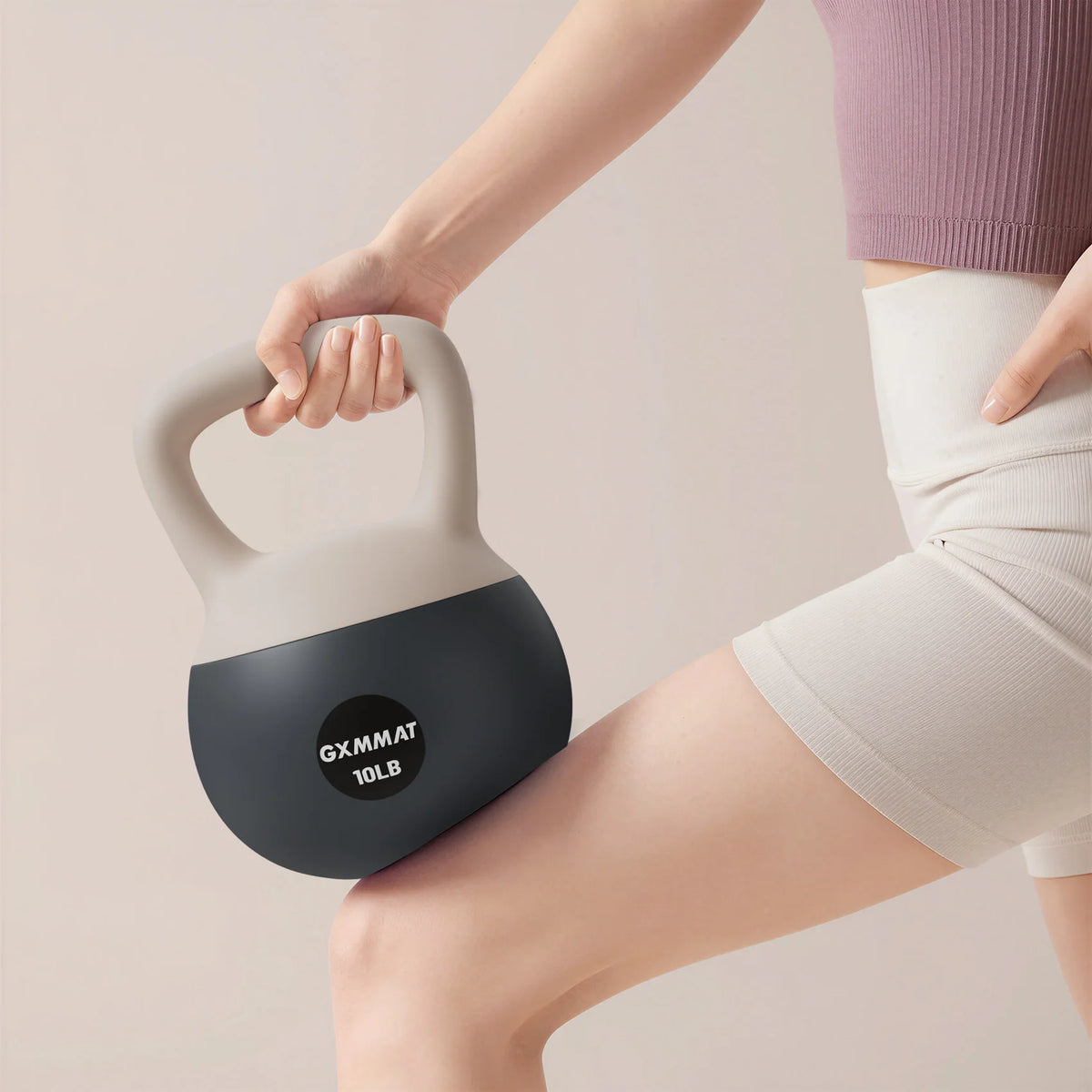
| 4 | Counterbalanced pistol holding a light kettlebell at arm's length | 3 × 5 per leg |
| 5 | Negative pistol: lower slowly to a low box | 3 × 5 per leg |
| 6 | Full bodyweight pistol | 3 × 3–5 per leg |
How to do a pistol squat
- Stand on one leg, arms out in front for balance.
- Lift the other leg slightly in front of you.
- Sit back and down, letting your knee travel forward over your toes.
- Reach the free leg forward as you descend; keep your chest up.
- Go as low as you can control, ideally hamstring to calf.
- Push through your whole foot to stand up, without letting the knee cave in.
Common problems and fixes
| Problem | Fix |
|---|---|
| Falling backward | Hold a light weight in front as a counterbalance; work ankle mobility |
| Heel lifting | Ankle mobility drills; a small heel lift under the foot |
| Can't stand up from the bottom | Box squats and negatives to build strength |
| Knee caving in | Slow down; strengthen side glutes; lower the range |
| Free leg drops and hits the floor | Stand on a box so the free leg can hang lower; train hip flexors |
Helpful accessory exercises
- Bulgarian split squats and reverse lunges for single-leg strength.
- Goblet squats with a pause at the bottom for depth.
- Calf raises and ankle mobility (knee-to-wall drill).
- Single-leg balance on a soft mat.
- Hanging knee raises for hip flexor strength.
Sample 6-week plan
| Weeks | Main work (2–3 × per week) |
|---|---|
| 1–2 | Box single-leg squats 3 × 8, goblet squats 3 × 10 |
| 3–4 | Lower box 3 × 6, rack-assisted pistols 3 × 5 |
| 5–6 | Counterbalanced pistols 3 × 5, negatives 2 × 5, test a full pistol |
Progress at your own pace; some people take longer. Track your training with our progressive overload guide.
Practicing pistols at home
- Counterbalance: a 10 lb GXMMAT soft kettlebell held at arm's length is an easy way to stay balanced, and its soft shell is forgiving if you set it down quickly.
- Assistance: hold an upright of a G5, V6 or X6 power rack for assisted reps.
- Surface: practice on a stable, non-slip large exercise mat. Avoid very soft foam that makes balance harder.
- Box: any sturdy bench or box at knee height or lower.
FAQ
Why are pistol squats so hard?
They need single-leg strength, balance and good ankle and hip mobility all at once. Training each piece separately makes them achievable.
How long does it take to do a pistol squat?
Many people take 4–12 weeks of regular practice, depending on their starting strength and mobility.
Are pistol squats bad for your knees?
Not for most people when progressed gradually with good alignment. If you have knee pain, check with a professional first.
Can I do pistol squats on a box?
Yes. Standing on a box lets the free leg hang lower, and squatting to a box is the best way to build up to a full pistol.
Do pistol squats build muscle?
Yes, especially in the quads and glutes. Add weight or slower tempo once bodyweight reps are easy.
Written by Yuvien Royer for GXMMAT. This article is general fitness information, not medical advice.