No Bench? This at home back and chest workout Still Works
I remember the exact moment I realized my local commercial gym was a ripoff. It wasn't the broken cable machines or the weird smell in the locker room; it was the monthly fee hike for 'upgrades' that never actually happened. I went home, cleared a space in my garage, and realized I didn't even have a bench. I had to figure out a high-intensity at home back and chest workout using nothing but the floor and a pair of adjustable dumbbells.
Most people think you need a $500 adjustable bench and a functional trainer to hit your upper body properly. They're wrong. If you know how to sequence chest and back exercises at home, you can build just as much slab-thick muscle on your carpet as you can in a shiny health club. It’s all about leverage, tempo, and not being afraid to get a little creative with the floor.
Quick Takeaways
- Antagonist supersets (push vs. pull) maximize recovery and save massive amounts of time.
- The floor press is a legitimate strength builder that protects your shoulders from over-extension.
- You don't need a bench; you need a solid surface and enough ego-check to use slow tempos.
- High-volume bodyweight movements can fill the gaps when your dumbbell selection is limited.
Why Supersetting Push and Pull Movements Ruins the Bro Split
The traditional 'Bro Split' has you hitting chest on Monday and back on Tuesday. That’s fine if you have two hours a day to kill. But for a home chest and back workout, supersetting antagonist muscles is the superior way to train. When you finish a set of rows, your chest is fresh; when you finish your presses, your lats have had a break.
Biochemically, this keeps your heart rate spiked and increases the metabolic stress on the muscle. More importantly, it ensures your posture stays balanced. Most home lifters over-train the mirror muscles. By forcing a 1:1 ratio of push to pull in every session, you’re actively preventing that rounded-shoulder look that plagues desk workers.
The Bare Minimum Gear You Actually Need
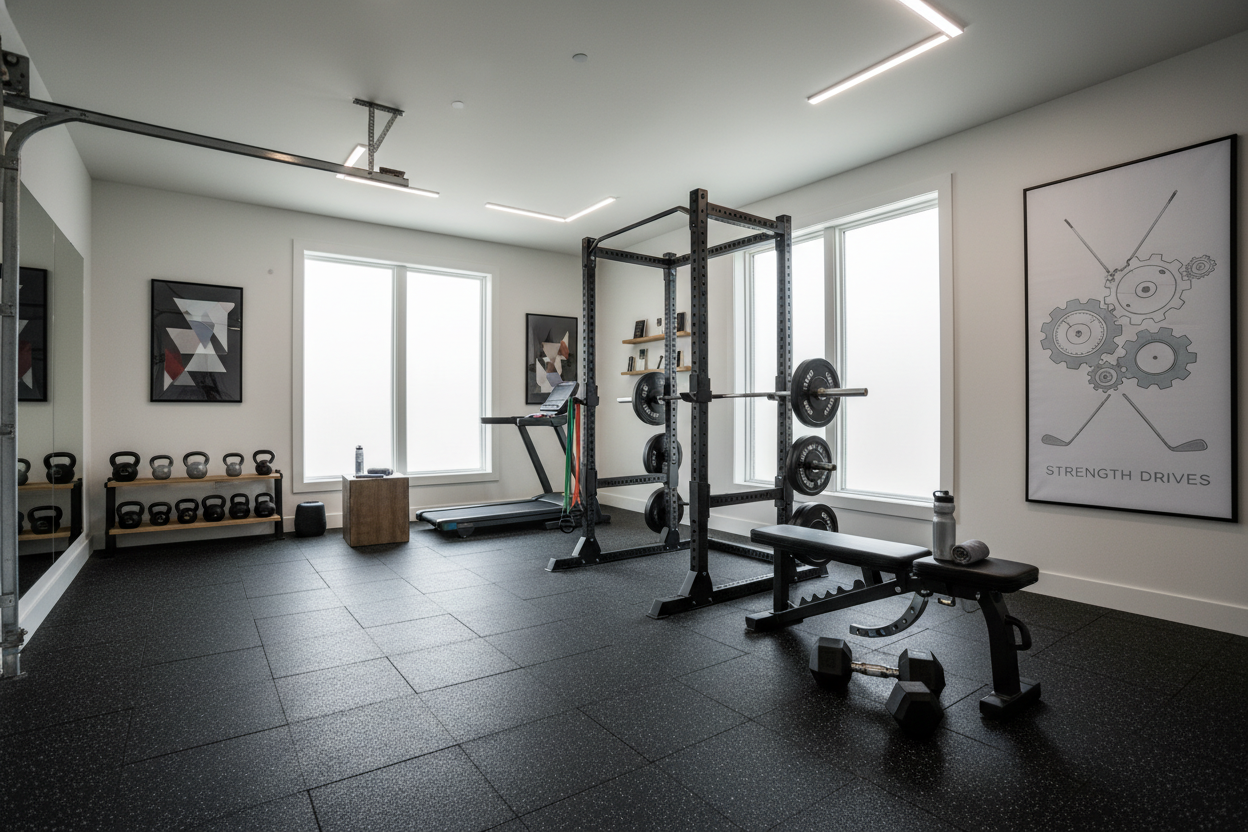
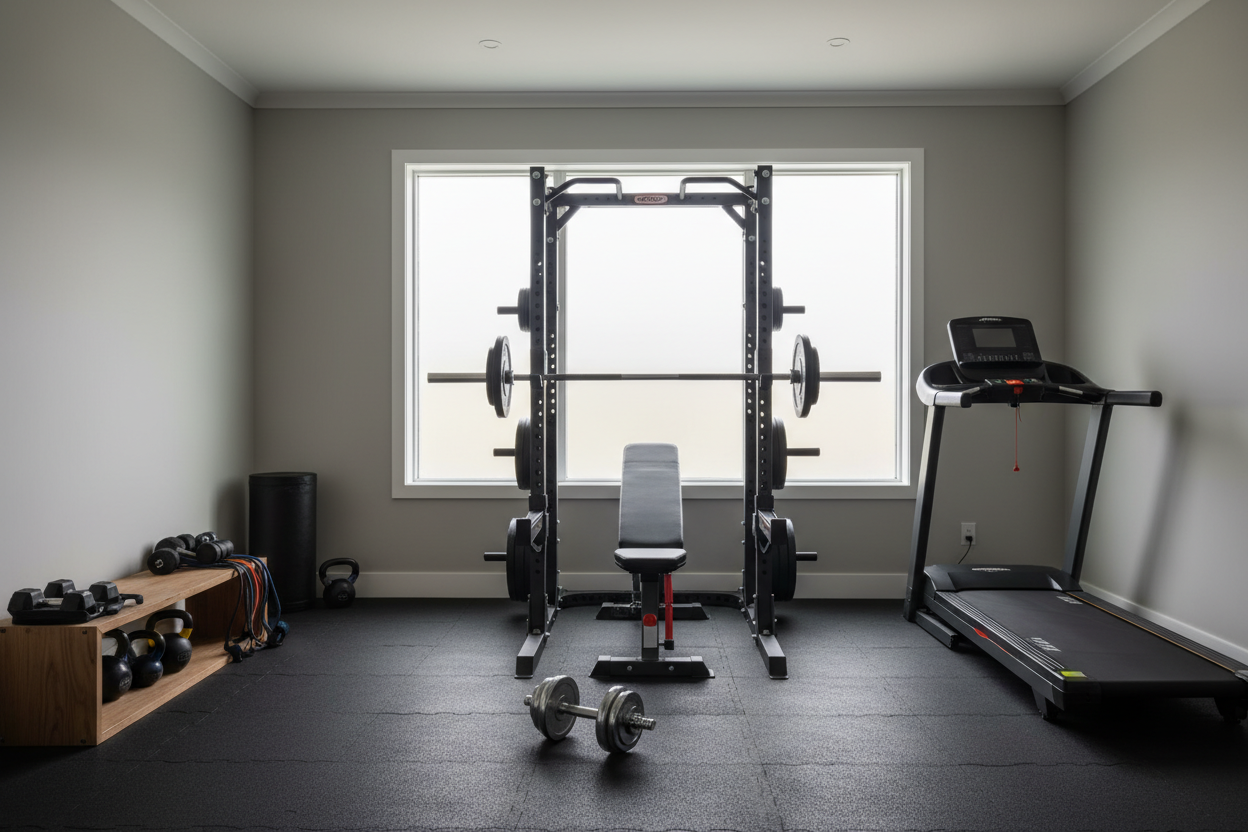
You don't need a rack, but you do need a floor that doesn't eat your joints. I’ve tried doing heavy renegade rows on bare concrete, and my wrists hated me for a week. A high-quality gym flooring for home workout is non-negotiable here. It provides the grip you need so your hands don't slip during deficit push-ups and protects the foundation when you set heavy weights down.
Beyond the mat, a pair of dumbbells is the gold standard. I prefer adjustables that go up to at least 50 lbs. If you’re working with lighter weights, you’ll just have to play with 'time under tension'—making each rep take 4-5 seconds. You might also want a pair of furniture sliders or even just a couple of towels if you're working on a hard surface for bodyweight flyes.
The 40-Minute Antagonist Gauntlet
This home chest back workout is designed to be done in four blocks. We start heavy and move toward high-rep finishers. If you find your weights are too light for the rep ranges, don't just go faster. Add a three-second pause at the bottom of every movement to eliminate momentum.
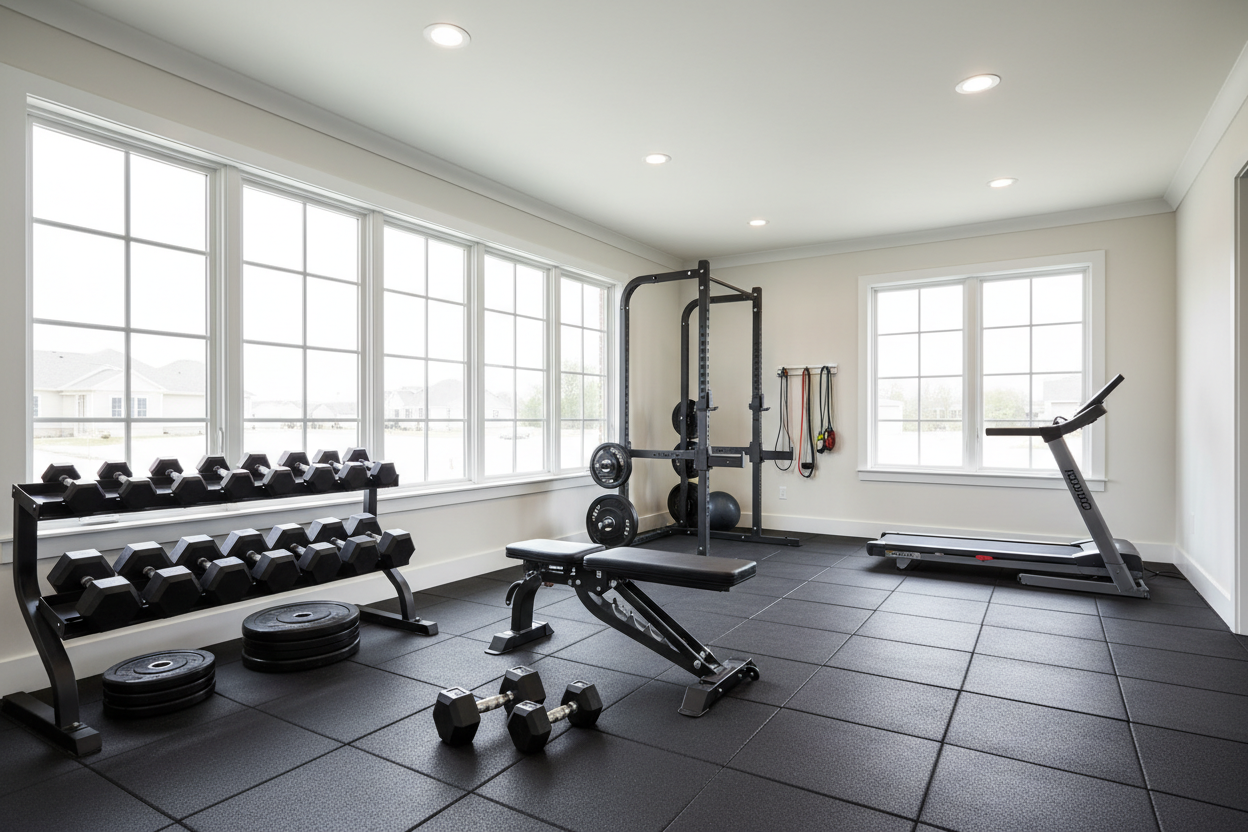
For those who have a solid rack of weights and want to push the intensity even further, check out this effective chest and back workout with dumbbells at home for more advanced scaling. We are aiming for 90 seconds of rest between supersets—just enough to catch your breath, but not enough to lose the pump.
Block 1: Floor Presses and Renegade Rows
The floor press is the secret weapon of this at home chest and back exercises routine. Because the floor stops your elbows, you can't use momentum. It’s essentially a 'dead bench' from the bottom up. Pair this with renegade rows. Hold a plank on your dumbbells and row one arm at a time. It’s a lat builder and a core shredder rolled into one.
Block 2: Deficit Push-Ups and Dumbbell Pullovers
Since we don't have a bench for a deep chest stretch, use books or blocks under your hands for push-ups. This creates a deficit, allowing your chest to sink lower than your hands. Immediately roll onto your back for pullovers. Keeping your lower back pressed into the floor, reach the weight overhead to stretch the lats and serratus. It’s an old-school bodybuilding staple for a reason.
What to Do When You Have Zero Weights
If you're looking for a chest and back workout at home without equipment, you have to get sneaky with physics. Use a doorframe for isometric chest squeezes—literally try to push the walls together for 30 seconds. It sounds goofy until you feel the pec activation.
For the back, the 'towel row' is your best friend. Wrap a long towel around a sturdy pole or door handle, lean back, and pull your body weight in. You can also perform 'floor slides' where you lie on your stomach and mimic a lat pulldown motion, pressing your forearms hard into the ground to create friction-based resistance.
Where Does This Fit Into Your Weekly Routine?
I usually run this at home chest and back workout twice a week with at least 48 hours between sessions. Your shoulders take a beating with this much volume, so don't try to max out your overhead press the next day. Focus on legs or steady-state cardio to let the upper body recover.
If you want to round out your physique, you might want to swap one of these days for a chest abs and arms workout at home later in the week. This keeps the volume high on the chest while giving your lats a break and hitting the smaller muscle groups that people tend to ignore when they're just focused on the big lifts.
Personal Experience: The 'Floor is Lava' Lesson
When I first started training at home, I tried to mimic a bench press by lying on a stack of firm cushions. Bad move. Halfway through a heavy set of 70-lb dumbbells, the cushions shifted, and I nearly pinned myself. I learned the hard way that the floor is your most stable ally. Now, I actually prefer the floor press for heavy days because I can fail safely without a spotter. It forced me to stop cheating with my legs and actually use my chest and triceps to move the weight.
FAQ
Can I build a big chest without a bench?
Absolutely. Floor presses and deficit push-ups provide more than enough stimulus. You just have to focus on the squeeze at the top since you lose a bit of the range of motion at the bottom.
How often should I do this workout?
Twice a week is the sweet spot for most. It allows for high frequency while giving your connective tissues time to heal from the heavy dumbbell work.
What if my dumbbells are too light?
Slow down. Use a 4-second eccentric (lowering) phase and a 2-second pause at the bottom. I promise 20 lbs will feel like 50 lbs by the tenth rep.