I Stopped Doing Metcons and Finally Built a Lean Physique
I remember staring at my reflection after three months of daily 20-minute AMRAPs and burpee-heavy circuits. I was lighter on the scale, sure, but I looked like a deflated balloon. I had spent a small fortune on high-end kettlebells just to swing them for cardio, completely ignoring the heavy iron gathering dust in the corner of my garage. That was the moment I realized that chasing a lean physique isn't about how much you sweat or how many calories your Apple Watch says you burned; it's about how much tension you can force your muscles to endure while eating in a deficit.
- Stop dropping the weight when you start a cut; heavy loads preserve muscle.
- Leg day is your primary metabolic engine—don't trade squats for air squats.
- Conditioning should involve resistance, not just flailing your arms.
- A dedicated 'heavy zone' in your gym prevents injuries during high-intensity intervals.
The Skinny-Fat Trap of Typical Home Workouts
Most home gym owners make the same mistake the second they decide to 'get ripped.' They trade their heavy bench press for 50-rep sets of push-ups and swap their barbell work for endless, lightweight metabolic conditioning (metcons). This is a fast track to a skinny-fat disaster. When you are in a calorie deficit, your body is looking for any excuse to shed expensive, calorie-hungry muscle tissue. If you stop lifting heavy, you are essentially telling your body that the muscle isn't necessary for survival.
The result? You lose weight, but you lose the wrong kind. You end up with a 'lean but muscular build' that is actually just thin and soft. To maintain a muscular lean physique, you have to keep the stimulus high. I found that keeping my sets in the 6-10 rep range with 80% of my max was the only way to signal to my central nervous system that the muscle stayed. If you want a lean gym body, you have to give your body a reason to keep the armor on while the fat melts away.
Why Heavy Lower Body Lifts Are Your Best Fat Burners
I used to think jump squats and mountain climbers were the ticket to a lean muscle physique. I was wrong. A heavy set of 8-12 reps on a lower body strength machine creates a systemic demand that light circuits can't touch. When you load up a leg press or a hack squat, you are hitting the largest muscle groups in the body with massive mechanical tension. This doesn't just build size; it spikes your metabolic rate for hours through a process called EPOC (Excess Post-exercise Oxygen Consumption).
Switching from high-rep 'burners' to foundational movements changed everything for me. By focusing on the best lower body exercises—think heavy RDLs, Bulgarian split squats, and safety bar squats—I was able to drive enough metabolic stress to stay lean while actually getting stronger. You don't need to do 100 air squats to burn fat. You need to do 10 reps that make you want to see your ancestors. That high-tension approach is what carves out the deep separations required for a lean and muscular physique.
Conditioning That Doesn't Kill Your Gains
You don't need to spend an hour on a treadmill to get a lean muscular look. In fact, too much steady-state cardio can actually blunt your recovery and make you weaker. I switched to what I call 'Resistance-Based Intervals.' Instead of just running, I started doing sled pushes or a HIIT workout with weights. The goal is to keep the heart rate high while still requiring your muscles to produce force against a load.
This type of conditioning is the secret to a lean strong physique. It builds work capacity without the muscle-wasting effects of long-distance running. I usually cap these sessions at 15-20 minutes. If you are doing it right—using sandbags, heavy carries, or weighted lunges—you won't be able to go longer than that anyway. This keeps the 'lean and muscular' look intact by ensuring your conditioning work looks more like a workout and less like a jog.
Setting Up Your Garage to Support Heavy Cuts
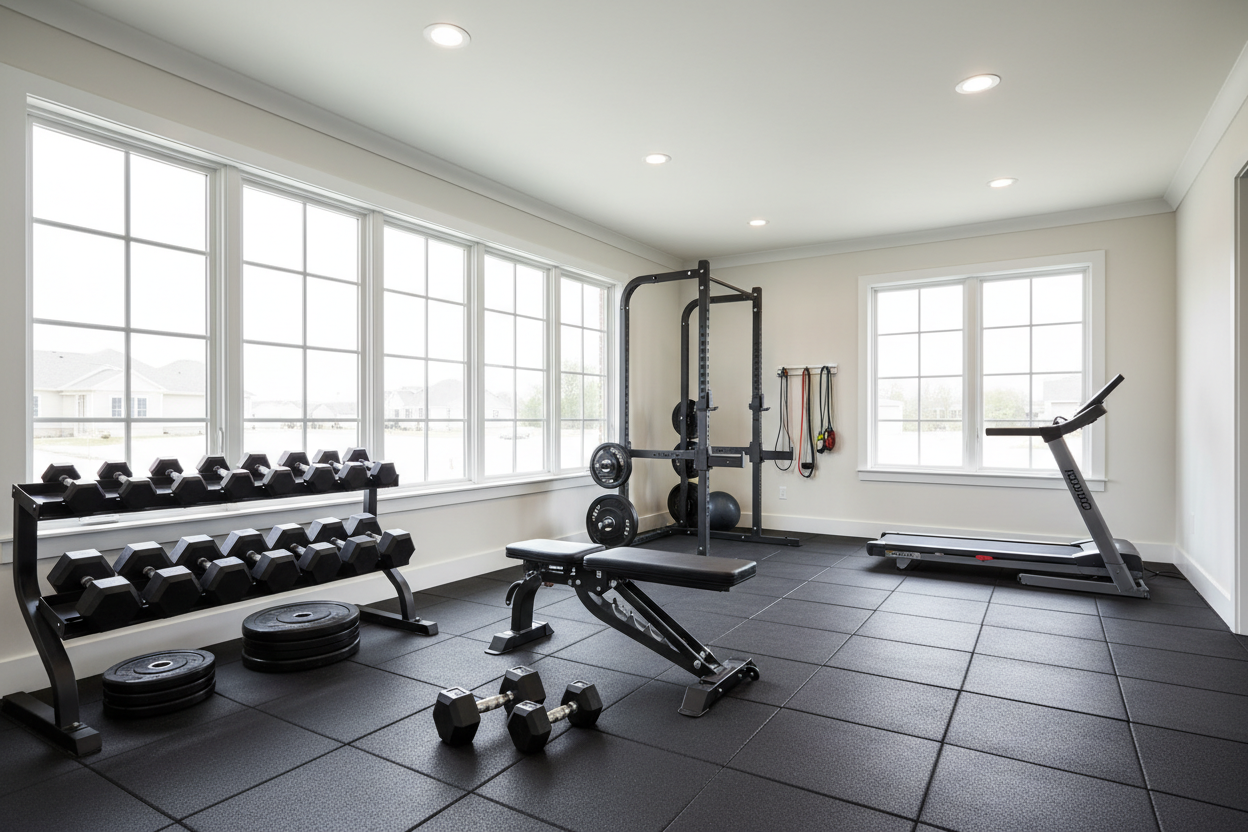
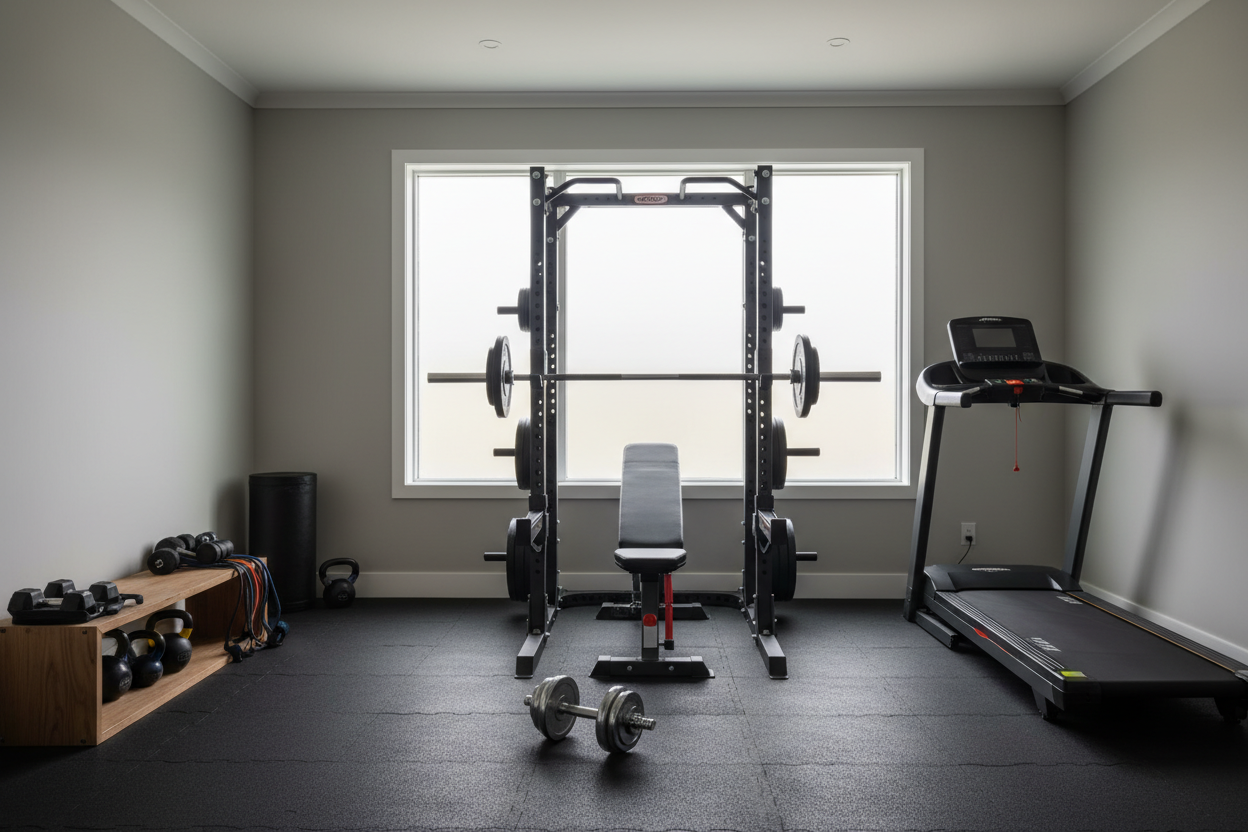
To build a lean gym body safely, your space needs to be functional for both heavy triples and fast-paced intervals. I see guys trying to do weighted lunges or heavy dumbbell rows on bare concrete or cheap, 1/4-inch foam tiles that slide around. That is a recipe for a blown-out knee or a dropped weight on your toes. When you are training for a lean muscular physique, you are often moving between stations with a high heart rate; stability is non-negotiable.
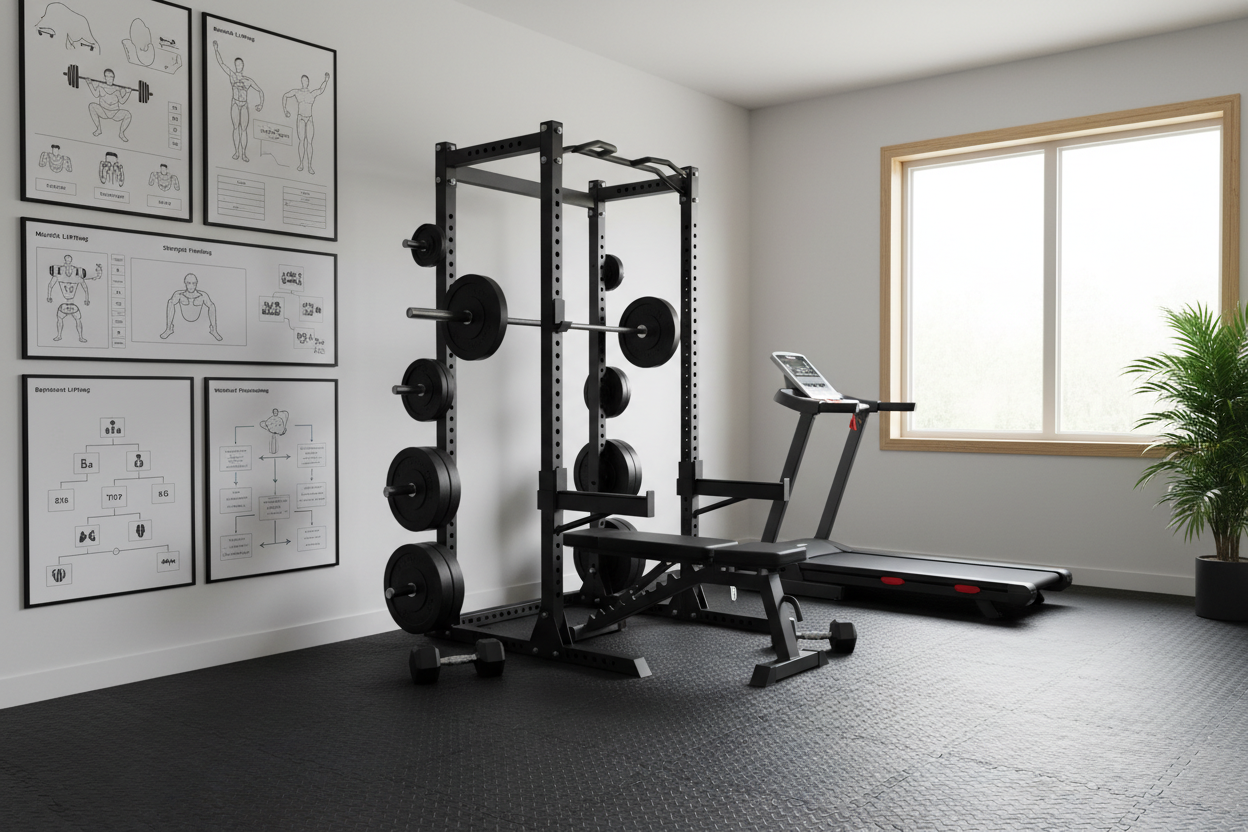
I laid down a large exercise mat gym flooring in my 12x12 space. It gives me a 6x8 ft 'kill zone' where I can drop heavy dumbbells or transition from a heavy overhead press to mountain climbers without slipping. Having a dedicated, high-traction surface allows you to push the intensity of your weighted intervals without worrying about the equipment (or your feet) sliding out from under you. If your floor isn't solid, your lifts won't be either.
FAQ
Can I get a lean gym body with just dumbbells?
Yes, provided they go heavy enough. You need to be able to hit the 8-12 rep range with significant struggle. If your max dumbbells are 20 lbs, you'll eventually hit a plateau where you're just doing cardio with weights rather than building a lean muscular physique.
How many days a week should I lift for a lean muscular look?
I've found 3-4 days of heavy lifting is the sweet spot. This allows for maximum intensity during the sessions and enough recovery time for your central nervous system to handle the calorie deficit.
Should I do cardio on rest days?
Keep it low impact. A 30-minute walk is better for a lean and muscular physique than a grueling run that ruins your recovery for leg day. Save the high intensity for your 'Heavy Conditioning' days.