My 400lb Squat Failed Me (Try Functional Exercises for Legs)
I spent three years obsessing over my squat depth and chasing a four-plate max. I finally hit it—405 lbs for a single, grinding rep that felt like my soul was leaving my body. Two weeks later, I tried to help my brother move a heavy sectional sofa up a flight of stairs. I stepped sideways to clear a corner, felt a sickening 'pop' in my groin, and spent the next month hobbling around my garage gym like an old man. That was the day I realized my massive barbell numbers were a lie; I had built strength, but I hadn't invested in functional exercises for legs.
- Heavy squats don't guarantee real-world mobility or injury prevention.
- Multi-planar movement is the missing link in most home gym programs.
- Sandbags and unilateral work expose weaknesses barbells hide.
- High-traction flooring is non-negotiable for lateral training.
The Wake-Up Call: When Gym Strength Doesn't Translate
There is a massive difference between being 'gym strong' and 'life strong.' In the gym, we control every variable. The bar is perfectly balanced, the floor is level, and the movement is predictable. When I went to move that couch, none of those conditions existed. I was under load in a staggered stance, moving laterally on an uneven surface. My adductors and stabilizers, which had been neglected by years of strictly linear training, simply gave out.
It is embarrassing to admit that a guy who can squat 400 lbs can be sidelined by a piece of furniture. But that is the reality for many of us who live inside the power rack. We build these massive engines but forget to upgrade the suspension. If you cannot lunge, pivot, or carry an awkward load without something snapping, your strength is a house of cards. I had to swallow my pride and start incorporating functional leg exercises that actually challenged my ability to move through space, not just up and down.
Why We Get Trapped in the Sagittal Plane
Most lifters live almost exclusively in the sagittal plane—moving forward and backward, or up and down. Squats, deadlifts, and lunges are great, but they are linear. Real life happens in the frontal plane (side-to-side) and the transverse plane (rotation). When you only train linearly, you develop 'blind spots' in your musculature. Your quads and glutes might be huge, but your abductors, adductors, and internal rotators are likely weak and brittle.
This imbalance is why so many 'strong' people deal with chronic knee or lower back pain. Your body is overcompensating for the lack of lateral stability. By integrating the best functional leg exercises into your routine, you force those stabilizer muscles to wake up. Functional leg training isn't about ditching the barbell; it's about making sure your body can actually handle the power that barbell strength generates when you're off the platform.
The Core Functional Lower Body Exercises You're Skipping
To build a truly resilient lower body, you need to stop thinking about muscles in isolation and start thinking about movement patterns. A functional leg day workout should challenge your balance, your grip, and your ability to stabilize under shifting loads.
Lateral Lunges and Cossack Squats
The lateral lunge is the antidote to the 'stiff lifter' syndrome. Instead of just stepping forward, you're forcing your hips to open up and your groin to handle load in a stretched position. Cossack squats take this a step further, requiring serious ankle and hip mobility. I started doing these with just bodyweight, and my hips felt like they were made of rusted iron. Now, I use a 24kg kettlebell, and the difference in my knee stability is night and day. These are essential functional lower body exercises for anyone who wants to stay mobile as they age.
Heavy Unilateral Sandbag Carries
A barbell is a static, cooperative partner. A 100lb sandbag is a chaotic mess that wants to fall out of your arms. Carrying a sandbag on one shoulder forces your opposite-side obliques and hips to work overtime to keep you upright. This is the definition of functional leg workouts. It mimics carrying a heavy bag of salt, a sleeping toddler, or a literal bag of concrete. If you can walk 50 yards with an 80lb sandbag on one shoulder without your gait collapsing, you have real-world leg strength.
Multi-Directional Box Step-Ups
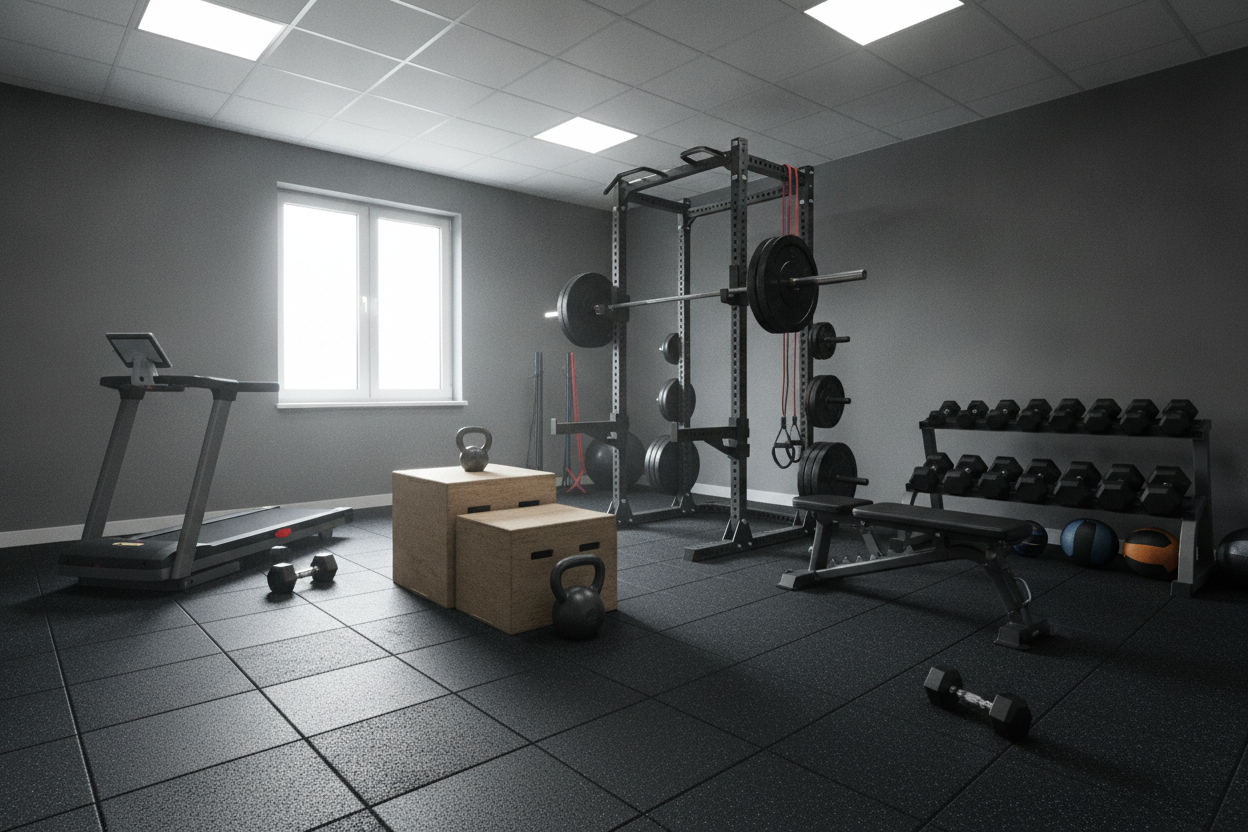
Stop just stepping straight up onto your plyo box. Try lateral step-ups or crossover step-ups. These variations mimic the act of climbing over obstacles or hiking on a trail. I use a standard 20-inch wooden box, but I make sure to rotate my foot position to hit different angles. This builds the kind of rotational strength that prevents ACL tears and keeps your ankles from rolling the second you hit a patch of uneven grass.
Setting Up Your Space for Dynamic Movement
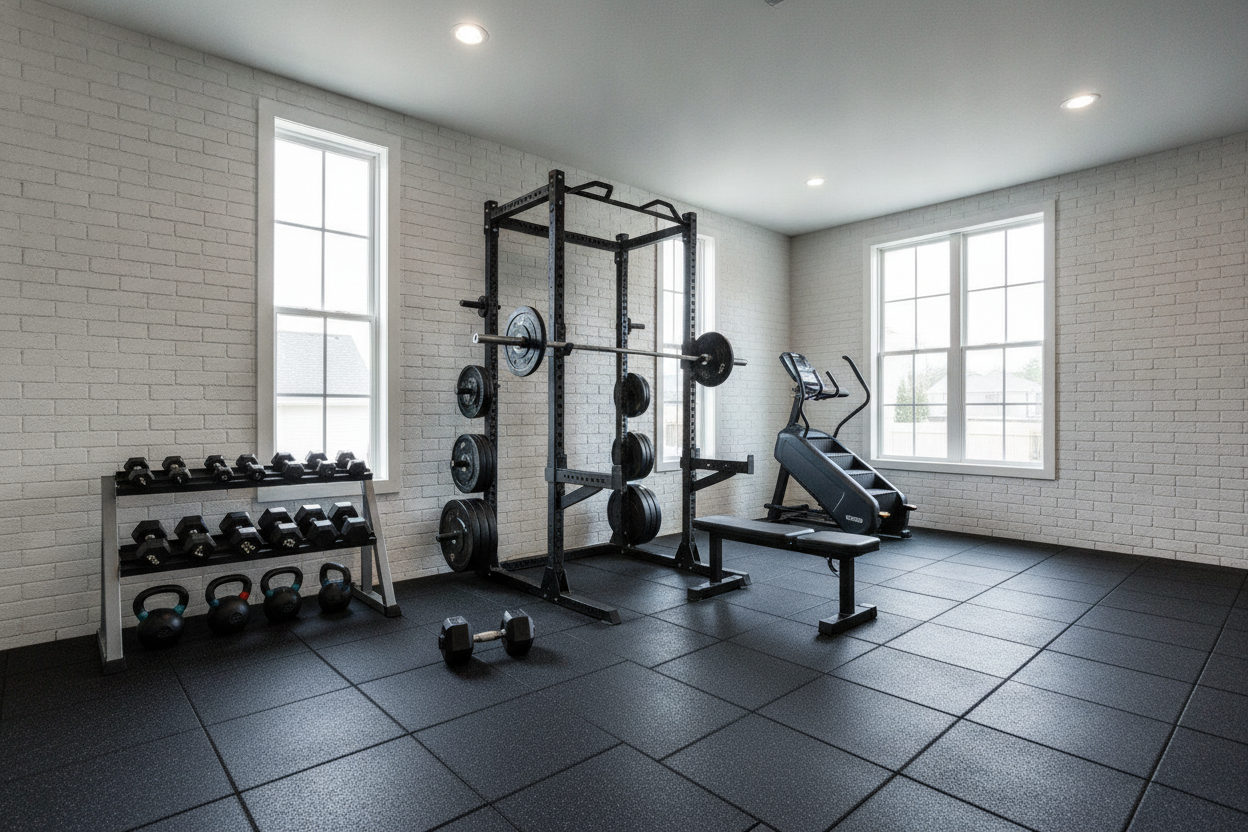
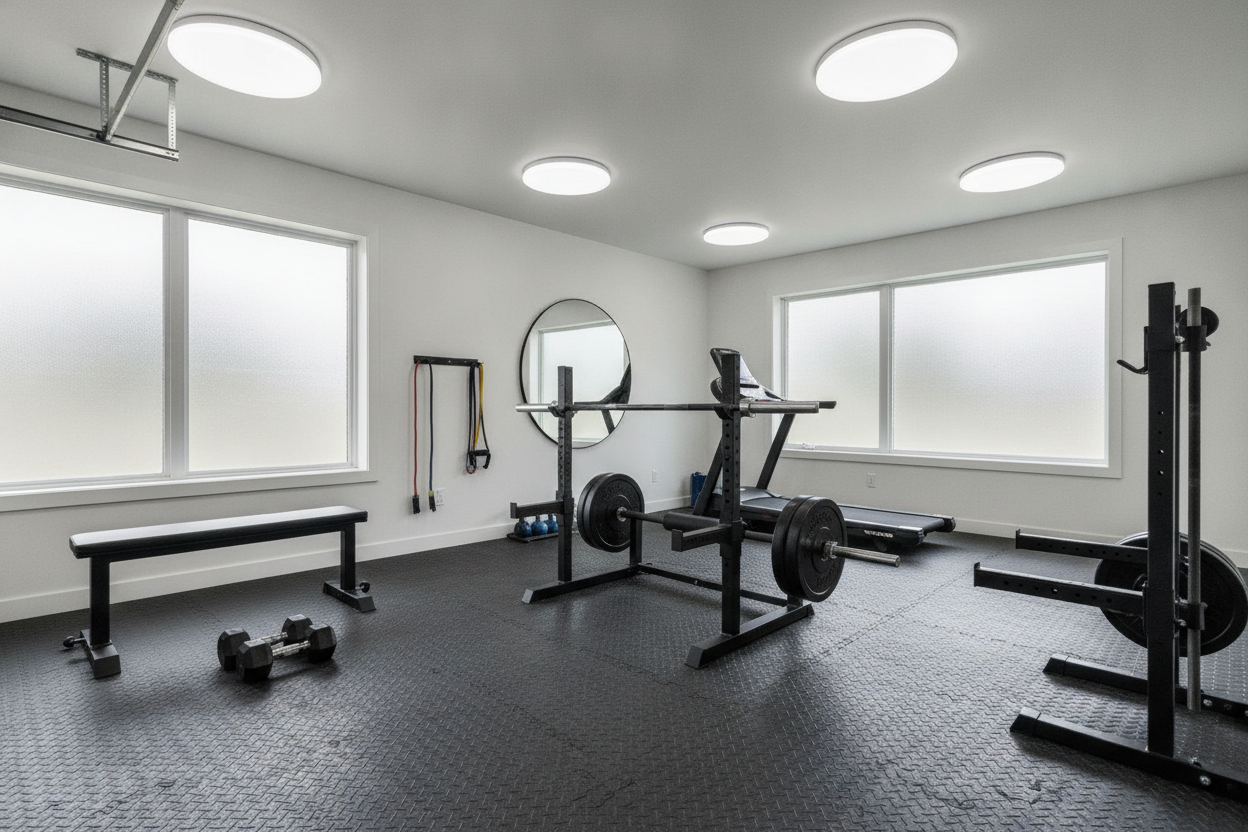
One thing I learned the hard way: you cannot do high-level functional leg training on cheap, slippery foam tiles. When you are exploding laterally or holding a deep Cossack squat, you need a surface that bites back. If your feet slide, you're going to pull something. I eventually ripped out my old puzzle mats and invested in durable gym flooring for home workout routines that could handle the friction of lateral movements.
You also need enough open floor space. A 6x8 ft area is the bare minimum for lunges and carries. If your rack takes up your entire garage, you're going to be limited to those linear movements that caused the problem in the first place. Clear some space, get some high-traction rubber under your feet, and give yourself room to move sideways. Your adductors will thank you.
How to Program This Without Losing Raw Strength
You don't have to choose between a 500lb deadlift and being functional. The goal is to use a blueprint for stronger more functional legs that blends both worlds. I still squat heavy once a week, but I've replaced my boring leg extensions with high-rep lateral lunges and sandbag carries. Use the big compound lifts as your 'main course' and these functional movements as your accessories.
If you're worried about losing size, you can still finish your session on a dedicated leg machine for pure hypertrophy. The key is to ensure that at least 30-40% of your total volume is spent moving in different directions or balancing on one leg. This approach has actually improved my barbell squat because my hips are more stable and my 'leaks' in power have been plugged. I'm not just moving weight anymore; I'm moving better.
FAQ
Do I need a sandbag for functional leg training?
No, but it helps. You can use a single heavy dumbbell or kettlebell held in a 'suitcase' position at your side. The goal is to create an asymmetrical load that forces your legs and core to stabilize.
Can I do these exercises if I have bad knees?
Usually, yes—and they might actually help. Many knee issues stem from weak hips and poor lateral stability. Start with bodyweight and limited range of motion, focusing on keeping your knee tracked over your toes.
How often should I do a functional lower body workout?
I recommend twice a week. You can have one 'heavy' day focused on the big lifts and one 'functional' day focused on mobility, stability, and multi-planar movement.