Momentum is Ruining Your Workout Program to Build Lean Muscle
I remember the day I realized my 315-lb bench press was a total lie. I was bouncing the bar so hard off my sternum I probably had a permanent bruise, and my 'reps' looked more like a trampoline act than a strength set. If you are hunting for a workout program to build lean muscle, the hardest pill to swallow is that your ego—specifically your reliance on momentum—is likely stealing your progress. We get obsessed with the number on the plate and forget that the muscle only cares about tension.
Quick Takeaways
- Momentum hides weakness by using the 'stretch reflex' to bypass the hardest part of a lift.
- Dead-stop reps force 100% muscle fiber recruitment from a dead halt.
- You can build more muscle with lighter weights, saving your joints from unnecessary wear.
- Simple home gym adjustments like floor presses and pin squats are the ultimate growth hacks.
The Problem With 'Touch and Go' Home Gym Lifts
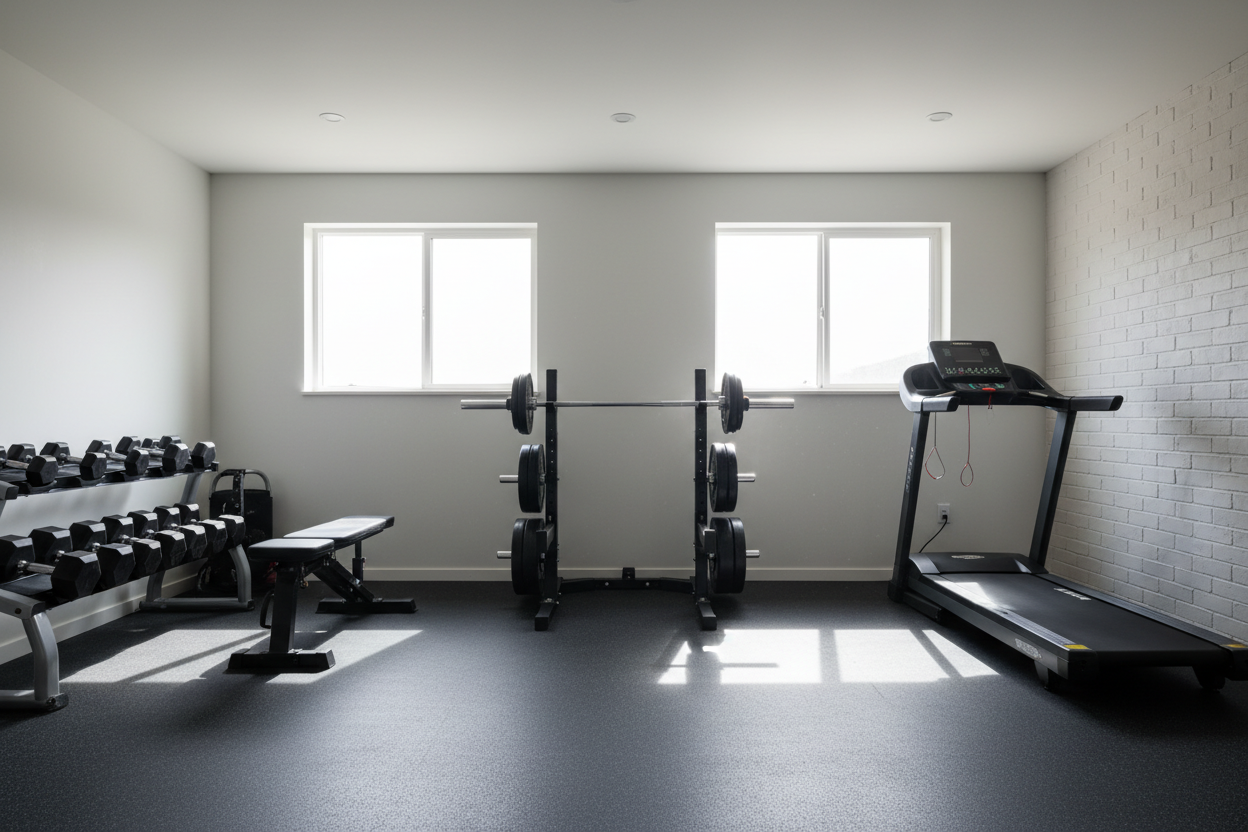
Most of us train alone in a garage or spare bedroom. Without a spotter yelling in our face, we naturally gravitate toward the path of least resistance. This usually manifests as 'touch and go' reps. You dive-bomb your squats to catch the bounce at the bottom, or you let the dumbbells plummet on a chest press just to spring them back up. You’re using the stretch-shortening cycle—a physiological phenomenon where your tendons act like rubber bands—to move the load.
The problem? The rubber band is doing the work, not your chest, quads, or back. When I hit a wall in my own training, I realized that The 3 Week Workout Plan to Gain Muscle That Fixed My Plateau worked because it forced me to stop cheating the eccentric phase. If you can only bench 225 lbs by bouncing it, you don't actually have a 225-lb bench. You have a 185-lb bench and a lot of physics on your side. Stripping the weight and killing the momentum is how you actually trigger hypertrophy.
What Are Dead-Stop Reps? (And Why They Force Growth)
A dead-stop rep is exactly what it sounds like: you let the weight come to a complete, motionless rest at the bottom of the movement. This dissipates all stored elastic energy. When you go to push again, you are starting from zero. This is why a build lean muscle workout program centered on dead-stops is so brutal. There is no 'cheating' the first three inches of the lift.
By removing the stretch reflex, you force the nervous system to recruit more high-threshold motor units. These are the muscle fibers with the most potential for growth. In a standard workout plan to build lean muscle, you might do 10 bouncy reps and only the last two are actually challenging. With dead-stops, every single rep is a 'first' rep. It’s a density play. You’re packing more actual work into the same timeframe. Even if you only have a basic barbell and 300 lbs of plates, this method makes that weight feel like 500 lbs.
Structuring Your Workout Routine for Lean Muscle Gain
You shouldn't pause every single movement in your arsenal. If you try to do dead-stop lateral raises, you’ll probably just look like you’re having a glitch. Instead, anchor your workout routine for lean muscle gain around heavy compound movements where momentum usually takes over. You want to pick the lifts that allow for a safe, stable 'rest' position at the bottom.
A solid workout plan to gain lean muscle focuses on three or four primary dead-stop 'anchors' per week. The goal isn't to move the most weight possible; it's to move the weight with the most control possible. You’ll find that your 'working weight' drops by 15-20% immediately. Don't panic. That drop in weight is the 'momentum tax' you’ve been paying. Now, that weight is actually going into the muscle tissue rather than your connective joints.
Swapping the Bench for the Dead-Stop Floor Press
The bench press is the king of ego lifting. To fix this, move to the floor. The floor press is one of my favorite variations because the ground acts as a literal hard stop for your triceps. You lower the bar until your triceps are flat on the floor, wait a full second, and then drive up. This eliminates leg drive and the 'chest bounce' entirely. It turns the movement into a pure upper-body power test. If you've been struggling with skinny arms, the floor press is the fastest way to blow up your triceps because they have to work significantly harder to get the bar moving from a standstill.
Pin Squats and Pendlay Rows
If you have a power rack with decent safety pins, start using them for squats. Set the pins just below parallel. Lower the bar until it settles on the pins, let go of the tension for a fraction of a second (while staying tight in your core), and then drive up. It is the most humbling experience you can have in a home gym. Similarly, the Pendlay Row—where the barbell returns to the floor between every single rep—is superior to the 'hang' row for back thickness. It forces your lats and mid-back to generate massive force from a static position, which is exactly how you build that 'thick' look rather than just 'wide' lats.
Why This Approach Saves Your Joints as You Age
I’m not 22 anymore. I can’t just throw weight around and hope my elbows don't scream at me the next morning. A build lean muscle mass workout plan based on dead-stops is a longevity play. Because the absolute load on the bar is lower, your tendons and ligaments aren't being red-lined, even though your muscles are working at 100% capacity. It’s 'heavy' training without the heavy toll.
Most lifting injuries happen during the transition from the eccentric (lowering) to the concentric (lifting) phase, especially when that transition is violent and bouncy. By stopping the weight, you control that transition. You’re not catching a falling object; you’re pushing a stationary one. It’s safer, more deliberate, and frankly, more professional. If you want to be lifting into your 50s and 60s, you need to stop treating your joints like shock absorbers for a car.
Protecting Your Garage Floor During Dead-Stop Lifts
The only downside to dead-stop training is the impact. If you’re doing Pendlay rows or dead-stop floor presses, that weight is hitting the ground every time. Standard 1/2-inch horse stall mats are okay, but if you’re moving serious weight, you’re going to eventually crack the concrete underneath. I’ve seen it happen in my own shop—a hairline fracture that turned into a $2,000 repair bill.
I highly recommend putting a large protective gym mat underneath your rack. You want something with enough density to absorb the shock of a 225-lb bar dropping from a row height. This isn't just about the floor; it's also about noise. If you train early in the morning, your neighbors will appreciate the muffled thud over the 'clang and bang' of metal on concrete. Once your floor is protected, you can find more specialized routines in our workout hub to keep your progress from stalling.
Personal Experience: The Day I Stripped the Bar
I used to pride myself on a 405-lb squat. It was ugly, it was fast, and it was shallow. I had 'big' legs, but they were soft. When I switched to pin squats, I couldn't even move 315 lbs for a single. It was embarrassing. But I stuck with it. Within four months of dead-stop training, my legs were noticeably denser, and my nagging knee pain disappeared. I realized I hadn't been getting stronger; I had just been getting better at falling and catching myself. Don't make my mistake. Kill the momentum before it kills your progress.
FAQ
Do I need a power rack for dead-stop training?
For squats and overhead presses, yes, you need safety pins. However, you can do floor presses and Pendlay rows with just a barbell and some floor space. If you have dumbbells, you can do 'dead-stop' chest presses by letting the bells rest on the floor if you lie between two elevated blocks.
Will dead-stop reps make me slower?
Actually, the opposite. Because you are forced to generate maximum force rapidly to get the weight moving, dead-stop training can improve your 'rate of force development' (RFD). It’s a favorite technique for athletes who need explosive power.
How long should the pause be?
One to two seconds is the sweet spot. You want enough time for the 'bounce' energy to dissipate. If you just touch the pins and go, you’re still using the stretch reflex. Wait until the bar is completely still.