Matching Your Workout Style to a Home Gym Setup
I see it all the time. A client clears out half their garage, drops $3,000 on a massive cable machine, and then realizes three months later they really just want to do heavy barbell squats. They bought the gear before defining their workout style. This is the fastest way to end up with an expensive clothes rack.
Before you buy a single dumbbell, you have to audit how you actually like to train. Building a home gym is fundamentally different from walking into a commercial facility with endless square footage. You have to be ruthless with your space and your budget.
- Define your primary training method before measuring floor space.
- Powerlifters need ceiling height for tall racks; cross-trainers need floor space for barbell cycling.
- Adjustable equipment saves money and square footage for hypertrophy-focused lifters.
- You can blend modalities, but your base setup should cater to your dominant training style.
Why Your Equipment Must Follow Your Exercise Style
A commercial gym has 10,000 square feet to cater to everyone. You have a 10x12 spare bedroom or a dusty two-car garage. If you try to buy equipment for every conceivable routine, you will run out of space and money. Your equipment choices must strictly follow your exercise style.
If you love heavy singles, a treadmill is a waste of 18 square feet. If you thrive on kettlebell flows, a bulky leg press machine will just get in your way. I usually tell my clients to look at their last six months of training logs. What movements show up the most? That data dictates your budget allocation.
By matching your purchases to your actual habits, you prevent buyer's remorse and create a space that practically pulls you in to train. Don't buy a rowing machine just because you think you should do more cardio; buy it only if you actually enjoy rowing.
Breaking Down Different Types of Workout Styles
When consulting with clients, I categorize their goals into core philosophies. Understanding the different types of workout styles helps us draw up an accurate floor plan.
A powerlifter needs a 6x8 foot footprint dedicated solely to a rack and platform. A calisthenics athlete might only need a pull-up bar mounted to the ceiling and some open floor. Recognizing your specific category dictates whether you spend your budget on 500 pounds of cast iron plates or a high-end functional trainer. Let's look at the primary categories and what they require in a residential setting.
Heavy Strength and Powerlifting
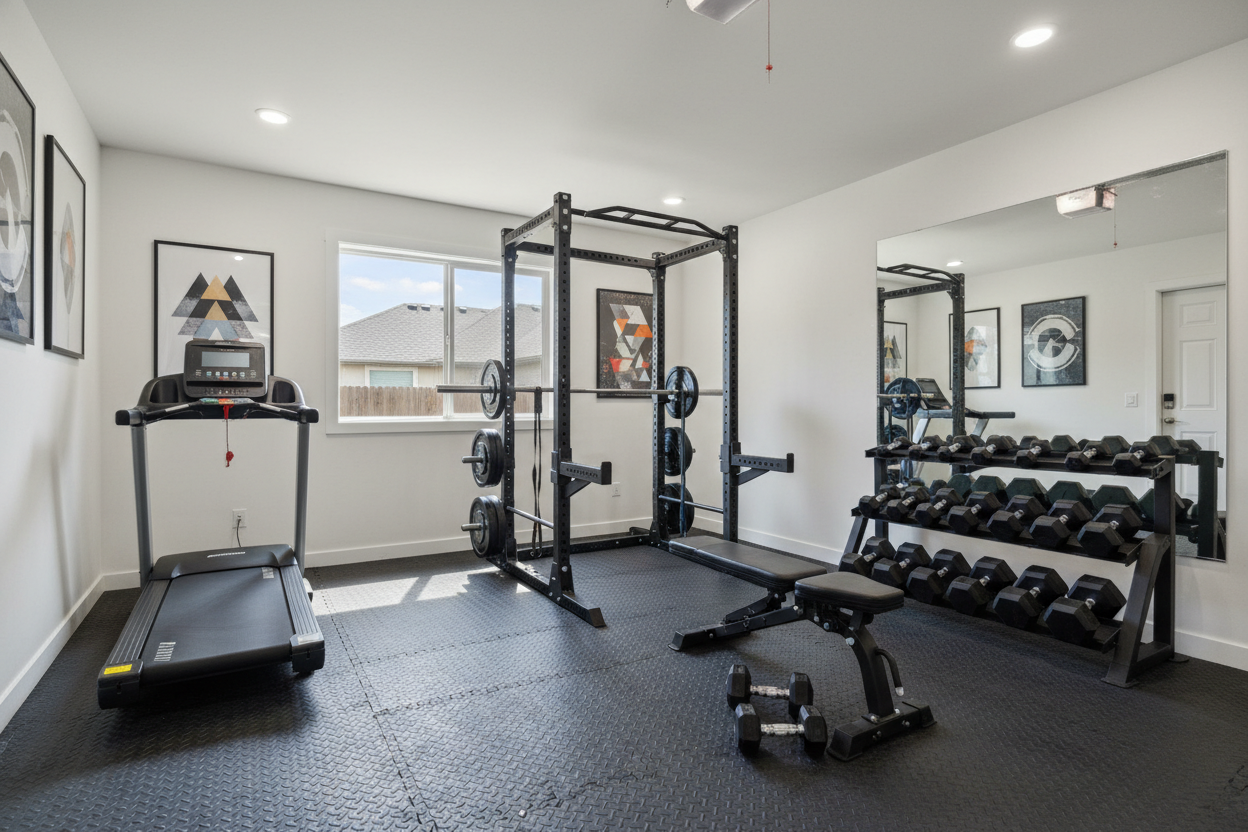
If your program revolves around the squat, bench, and deadlift, your setup is straightforward but requires heavy-duty gear. You need a power rack that can handle at least 1,000 pounds of static weight. Look for 3x3-inch 11-gauge steel uprights. Don't skimp here; a cheap rack will sway during heavy re-racking, which is genuinely terrifying when you are lifting alone in a basement.
You also need a high-quality 20kg barbell with aggressive knurling and plenty of cast iron or machined steel plates. Since you aren't dropping the bar from overhead, standard iron plates are fine and take up less sleeve space than bumpers.
Floor protection is critical. I recommend building a deadlift platform using two layers of 3/4-inch OSB plywood topped with a 3/4-inch horse stall mat. This protects your concrete foundation from cracking under a 400-pound deadlift. For space, plan for at least a 10x10 foot area so you have room to load a 7-foot barbell without smashing holes in your drywall.
Functional Fitness and High-Intensity
High-intensity interval training and functional fitness demand a completely different layout. You are doing Olympic lifts, wall balls, and burpees, which means you need open floor space and durable gear. Bumper plates are non-negotiable. You will be dropping the barbell from the overhead position, and iron plates will destroy your floor and your bar.
Go for high-density virgin rubber bumpers; they have a lower bounce and are significantly quieter, which keeps the neighbors happy. A wall-mounted folding squat rack is often the best choice here. It allows you to rack your barbell for squats, but folds flat to the wall to free up floor space for jump rope or kettlebell swings.
Speaking of kettlebells, a pair of 35-pound and 53-pound bells cover most conditioning needs. Flooring is also a major factor. Wall-to-wall 3/4-inch rubber flooring is ideal because you need a safe zone to drop weights anywhere in the room.
Hypertrophy and Traditional Bodybuilding
Replicating the isolation work of a commercial gym at home is tricky because machines take up massive amounts of space. If your goal is muscle hypertrophy, you need versatility. A sturdy flat-to-incline-to-decline (FID) bench is your centerpiece.
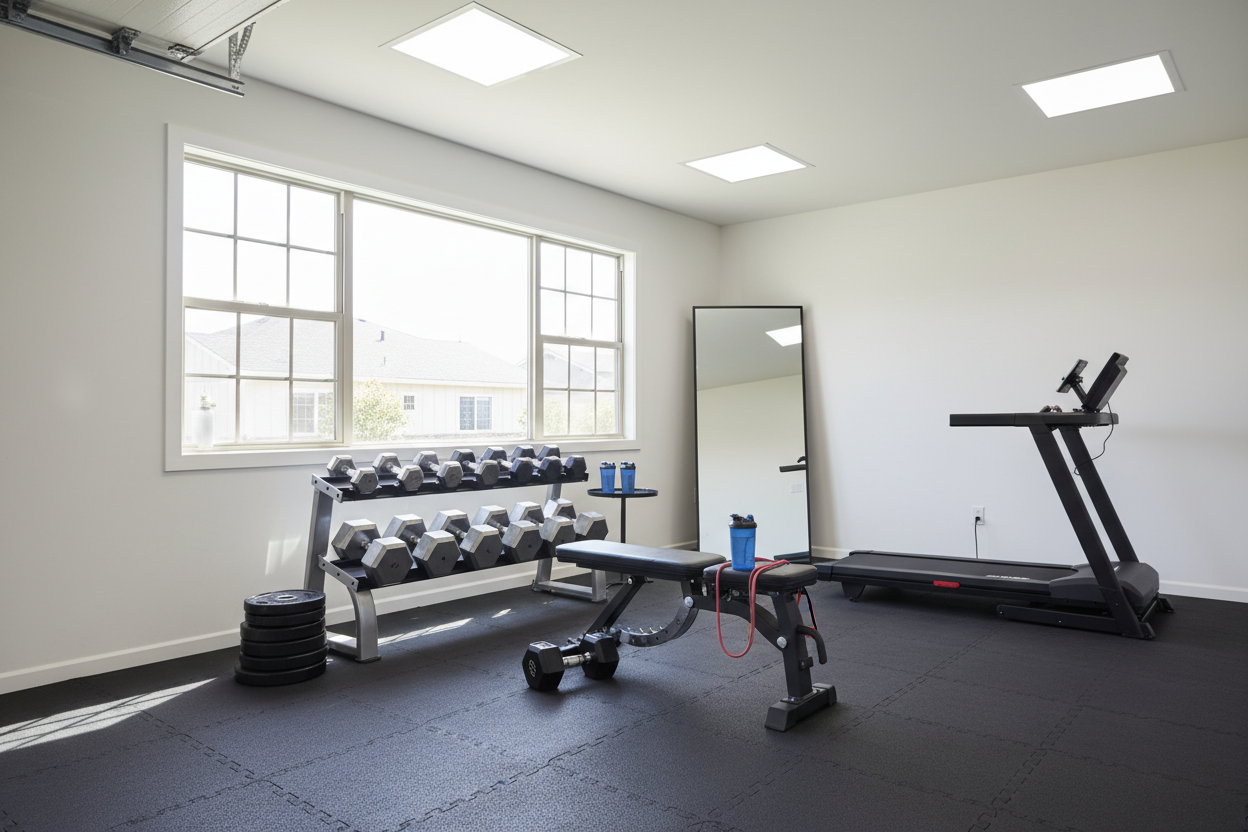
Pair this with a set of adjustable dumbbells. A good set that goes from 5 to 80 pounds replaces an entire rack of fixed dumbbells and saves you about 30 square feet of floor space. To replace bulky cable towers, look into plate-loaded functional trainers or wall-mounted pulley systems.
These allow you to do triceps pushdowns, lateral raises, and lat pulldowns without needing a 500-pound machine taking up a corner of your room. I've tested several wall-mounted pulleys, and while they can feel a bit jerky compared to commercial weight stacks, keeping the cables lubricated with silicone spray solves 90% of the friction issues. Focus on gear that allows you to hit muscles from multiple angles within a 6x6 foot area.
Bodyweight, Mobility, and Calisthenics
You don't need a ton of heavy steel to get incredibly strong. A bodyweight and calisthenics focus requires the smallest footprint and the lowest budget. The core of this setup is a heavy-duty, wall-mounted or ceiling-mounted pull-up bar. Ensure it is anchored directly into the studs or joists.
From there, hang a pair of wooden gymnastics rings. Rings are arguably the greatest upper body training tool ever invented, allowing for dips, rows, and muscle-ups while being easy on the joints. Add a set of wooden parallettes for handstand push-ups and L-sits, and you have a complete upper body gym that fits in a closet.
If you are making minimalist exercise work at home, your main constraint will be ceiling height. You need enough clearance above the pull-up bar to get your chest to the bar without hitting your head.
Can You Combine Different Workout Styles?
The reality is that most of us are hybrid athletes. You might want to pull heavy deadlifts on Monday and do a 20-minute kettlebell circuit on Wednesday. You can absolutely combine different workout styles, but you have to prioritize.
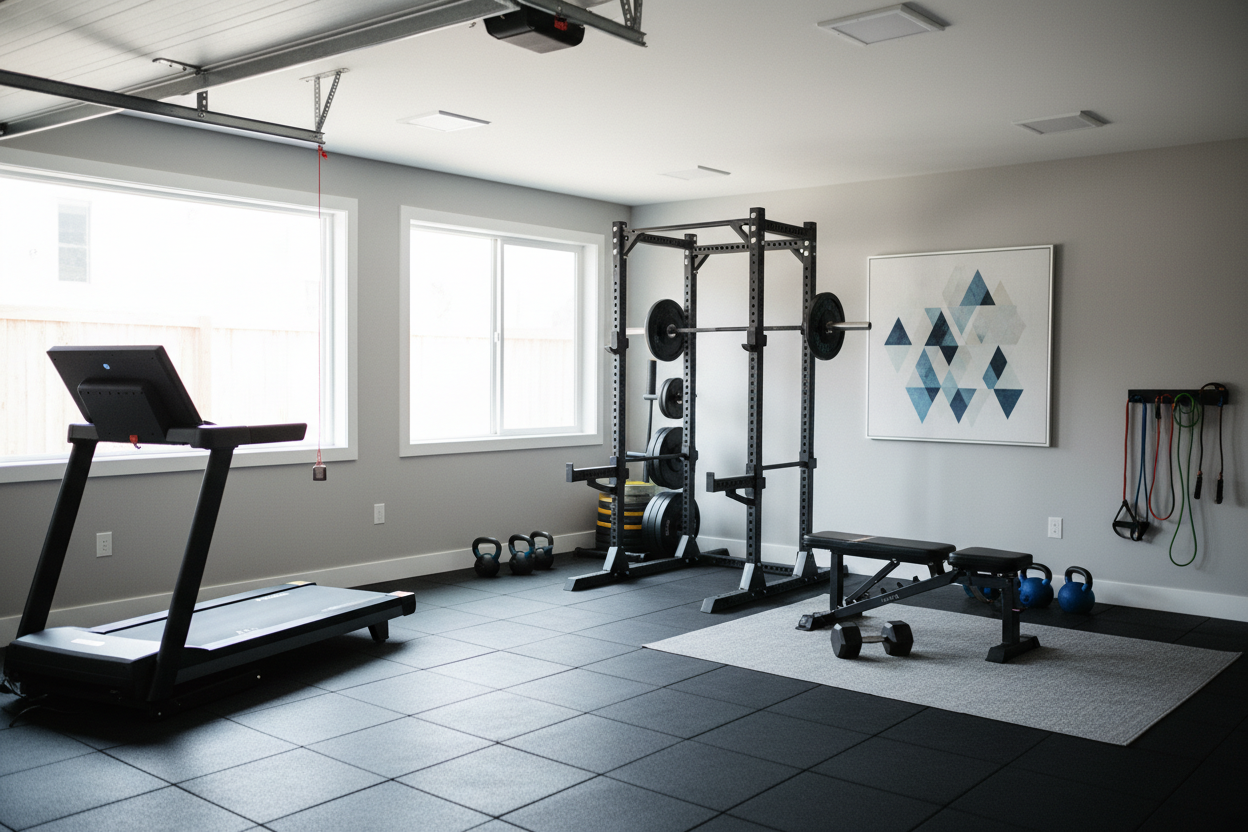
Identify your anchor style—the one you do 70% of the time. Build the gym for that first. If you are primarily a powerlifter who likes a little conditioning, buy the heavy power rack and just add a single heavy sandbag or an air bike for cardio. Don't buy a full set of bumper plates if you only do power cleans once a month.
I tested a hybrid setup in my own garage last year, combining a half-rack with a dual-pulley system. The downside? The pulleys got in the way when I tried to unrack a wide-grip squat. It was a compromise. Hybrid setups require equipment that serves dual purposes, like using a trap bar for both heavy pulls and farmers walks, rather than buying single-use machines.
Translating Training Styles Gym Environments Offer to Home
When you walk into a massive fitness center, you see distinct zones: the turf strip, the machine rows, the free weight area. Replicating the training styles gym facilities offer requires a bit of creativity at home.
You don't have 50 yards for a sled push, but you can buy a friction sled that works on standard rubber flooring, or simply use a heavy treadmill set to a dead-mill sprint. If you miss the leg press, invest in a belt squat attachment that hooks onto your power rack. It provides the same lower-back-friendly leg stimulus without requiring a massive standalone machine.
Look at the specific stimulus you get from the commercial equipment, not the equipment itself. If you love the chest fly machine, a cheap set of resistance bands anchored to your rack provides a nearly identical resistance curve. It is all about finding the space-saving equivalent of the massive commercial pieces you are used to.
Adapting Your Space to Changing Work Out Styles
Your fitness goals will naturally evolve. What you care about at 25 might look very different at 40. To ensure your home gym survives shifting work out styles, invest heavily in the basics.
A high-quality barbell, durable rubber flooring, and a solid rack will serve you whether you are training for a powerlifting meet or just trying to stay healthy. Avoid hyper-specific, trendy equipment. If you decide to transition from heavy lifting to mobility and kettlebell work, a good rack can easily hold your bands and rings.
Think of your gym as a modular system. You can always sell off an adjustable bench to make room for a rowing machine later. By establishing a solid, versatile foundation, your home gym will adapt to whatever training phase comes next.
Frequently Asked Questions
How much space do I need for a basic home gym?
A 10x10 foot area is the sweet spot. It provides enough room for a standard 7-foot barbell, a power rack, and enough clearance to load plates safely.
Is rubber flooring absolutely necessary?
If you are lifting free weights, yes. Horse stall mats that are 3/4-inch thick are the gold standard. They protect your foundation from cracking and drastically reduce noise.
Can I build a home gym on a second floor?
Yes, but you must factor in weight and noise. Avoid dropping heavy barbells. Stick to controlled movements, adjustable dumbbells, and consider using crash pads to absorb impact.