How I Wasted 6 Months as a Body Build Beginner
I remember sitting in my humid garage three years ago, staring at a printed-out chest routine that required four different cable angles and a pec deck. I didn't own a cable machine. I had a barbell, some rusty plates, and a dream of not being skinny-fat. As a body build beginner, I thought the secret was hidden in the complexity of the program. I was wrong.
I spent half a year chasing a 'pump' with light weights and 15 different exercises I found online. My physique didn't change, but my frustration did. If you're starting your journey in a home gym, stop looking at what the pros are doing. They have better genetics, better 'supplements,' and better equipment. You have a garage. Let's use it right.
- Keep it simple: Stick to 4-5 movements per session.
- Prioritize the floor: A stable base prevents injury and increases power.
- Track the big lifts: If your squat isn't going up, you aren't growing.
- Ignore the fluff: You don't need calf raises or forearm curls yet.
The Trap of the Magazine Routine
Most rookies start by downloading a bodybuilding com beginner workout. These programs are usually written by guys who train in 20,000-square-foot commercial facilities. They assume you have access to a leg press, a hack squat, and a row of Hammer Strength machines. When you try to translate that to a 10x10 space in your garage, it falls apart.
You end up trying to rig up 'creative' exercises—like balancing a dumbbell on your feet for leg extensions—that are more dangerous than they are effective. A garage gym is the ultimate tool for a novice bodybuilding program because it forces you to focus on the barbell. Barbells build more tissue than machines ever will. Stop trying to mimic a commercial gym split and start mastering the equipment you actually own.
Protecting Your Foundation First
Before you worry about your rep tempo or your protein timing, look at the ground. Most garage floors are sloped for drainage. If you're squatting or deadlifting on a 2-degree incline, your hips and spine are going to pay for it eventually. I learned this the hard way when my left sacroiliac joint decided to quit on me during a set of five.
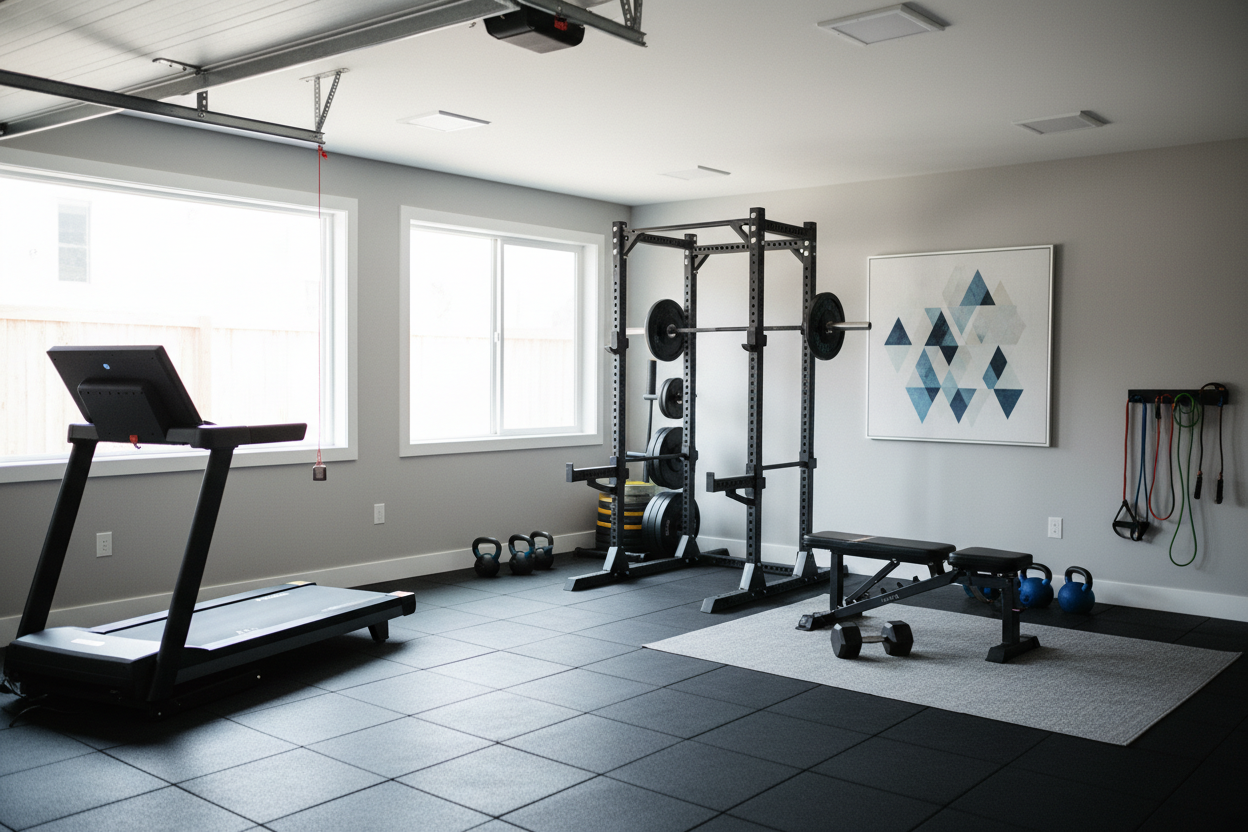
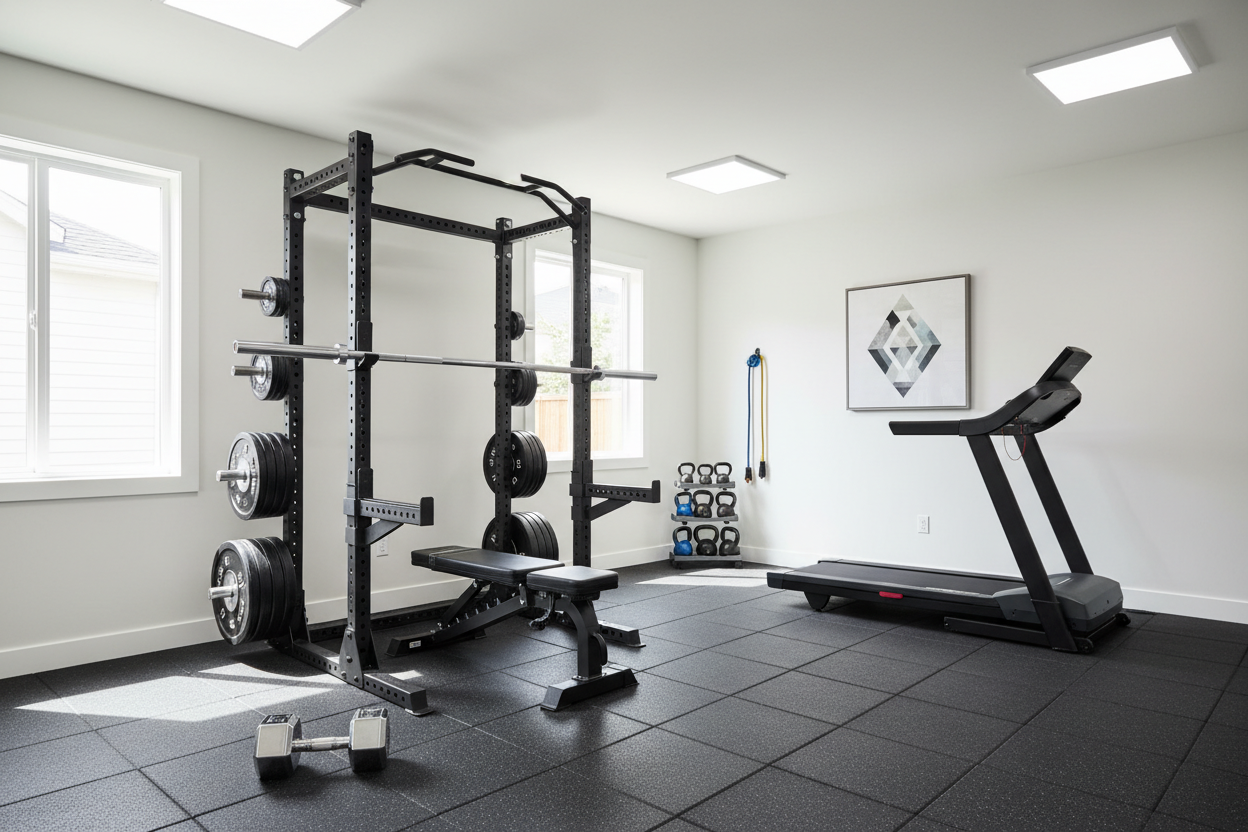
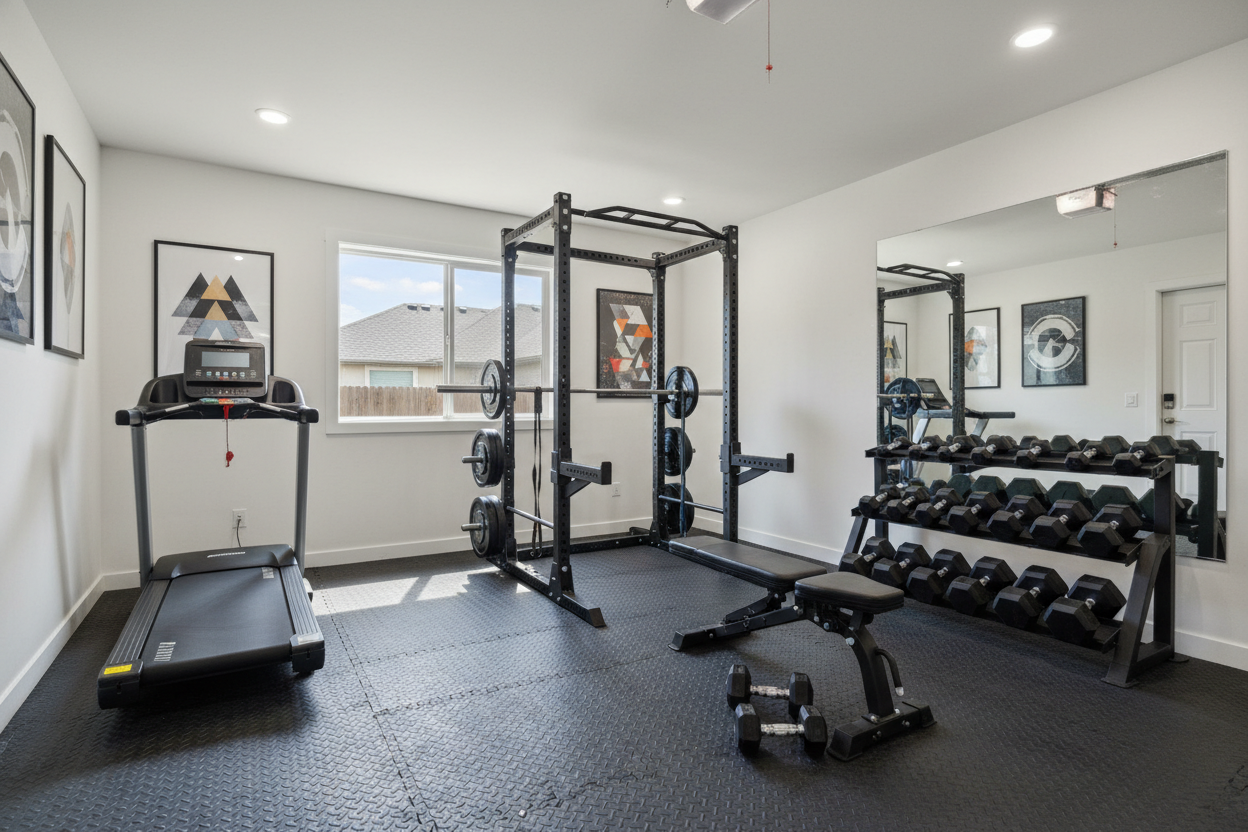
You need a flat, high-density surface that doesn't compress under load. Investing in proper gym flooring for home workout setups is the most underrated 'gains' hack there is. It’s not just about keeping the concrete from cracking; it’s about creating a non-slip, level platform. If your feet aren't locked in, your force production drops. No stability, no growth.
The 'Boring' Routine That Actually Grows Tissue
A real novice bodybuilding program should be brutally boring. You should be doing the same movements every week for at least three months. Muscle hypertrophy for a beginner is mostly about neurological adaptation—teaching your brain how to fire those fibers. If you change your exercises every week to 'confuse the muscle,' the only thing you're confusing is your own progress.
Focus on a three-day full-body split. This allows you to hit every muscle group 144 times a year instead of the 52 times you'd hit them on a 'bro-split.' More frequency equals more growth signals sent to the brain. Load the bar, hit your reps, and get out of the garage to recover.
Upper Body Simplicity
You don't need a cable crossover to build a chest. You need a heavy press. Whether it's a flat bench or a floor press, focus on driving the weight up with control. Pair that with a heavy row. I prefer a Pendlay row because it forces you to start from a dead stop, which builds massive thickness in the mid-back and lats. If you have a pull-up bar, use it every single session. Pull-ups are the 'squat' of the upper body—nothing else compares for building width.
Building the Leg Base
Leg day in a garage is simple: Squat and hinge. I see guys trying to buy cheap leg extension attachments that wobble and feel like junk. Skip them. A deep high-bar squat and a Romanian Deadlift (RDL) will build more leg mass than any budget machine. If you're struggling to structure your leg days without a leg press, check out this beginner lower body gym workout guide. It breaks down how to get maximum tension with minimal gear.
Why You Should Burn That Complex Spreadsheet
I’ve seen every bodybuilding chart for beginners ever made. Most of them are a mess of RPE scales, percentage charts, and 12-week periodization models. You don't need a spreadsheet; you need a notebook. Your only job as a rookie is to do one more rep or add five more pounds than you did last time. That’s it.
Over-analyzing a chart leads to 'paralysis by analysis.' I spent weeks worrying if I was resting 60 seconds or 90 seconds between sets. It didn't matter. What mattered was that I wasn't eating enough and I wasn't adding weight to the bar. If you can't track your progress on a single sheet of paper, your program is too complicated for your current level.
Where Do You Go After 12 Weeks?
After three months of heavy basics, you’ll likely have a solid foundation of strength and some noticeable new tissue. This is the point where you can graduate to a more traditional bodybuilding beginner workout routine. You might move to an Upper/Lower split or add a few isolation movements for your arms or side delts.
The key is to never lose the 'Minimalist Base' mindset. Even when you add more volume, the core of your workout should still be the heavy barbell work you mastered in the first 12 weeks. When you're ready to see what's next, dive into our workout hub for more advanced home gym programming that doesn't require a commercial membership.
Personal Experience: The 'Cheap Rack' Lesson
My biggest mistake wasn't just the program; it was the gear. I bought a 'bargain' rack that claimed a 500-lb capacity but wobbled when I racked 135 lbs. It made me scared to push myself. I eventually bit the bullet and bought a rack with 3x3-inch 11-gauge steel uprights. The difference in confidence was immediate. If your equipment feels like a toy, you'll train like it's a game. Buy stuff that feels industrial.
FAQ
Do I need a barbell or can I use dumbbells?
Dumbbells are great, but you'll outgrow a 50-lb set in two months. A barbell allows for infinite scaling and is the gold standard for building raw mass quickly.
How long should my garage workouts take?
If you're doing it right, 45 to 60 minutes. If you're in there for two hours, you're talking to your neighbors too much or resting too long between sets.
Is it okay to train on a concrete floor?
It’s okay for your feet, but it’s terrible for your joints and your plates. At the very least, get some 3/4-inch horse stall mats. Your knees will thank you in five years.