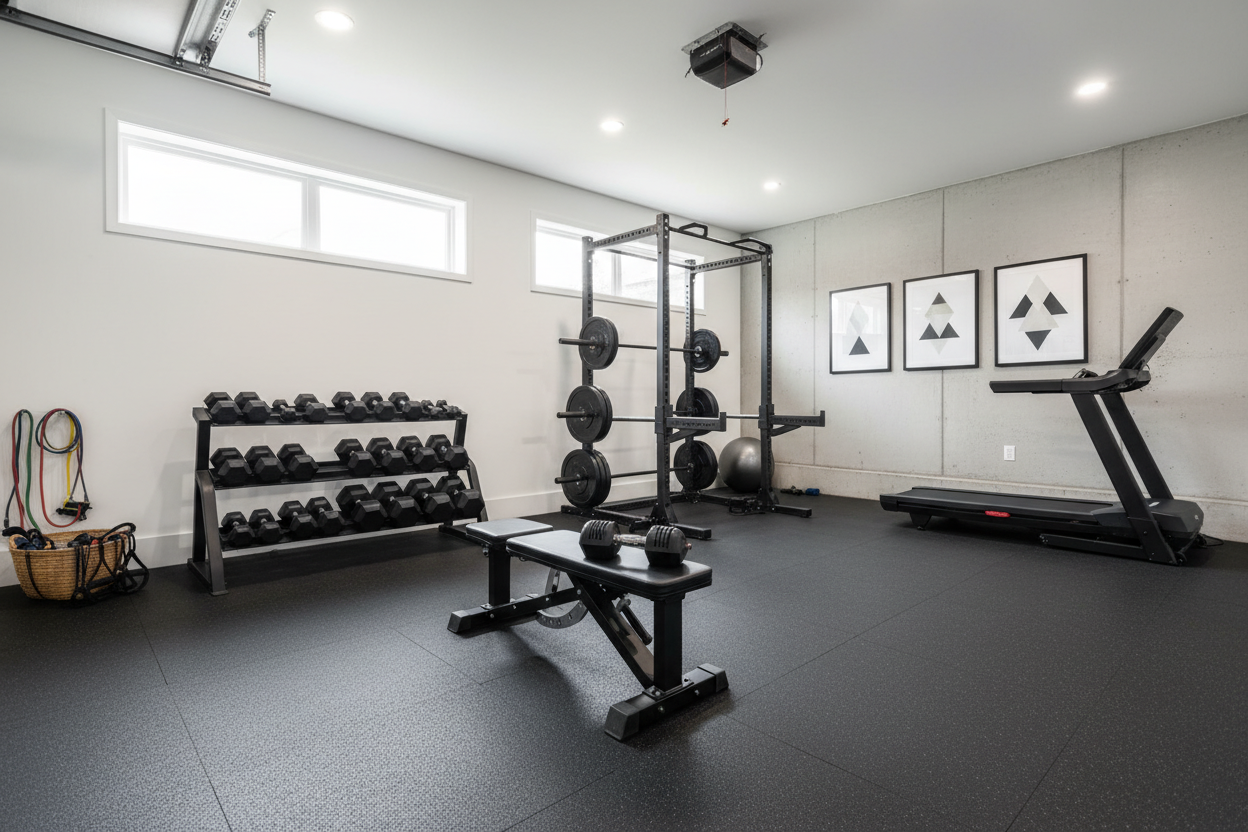
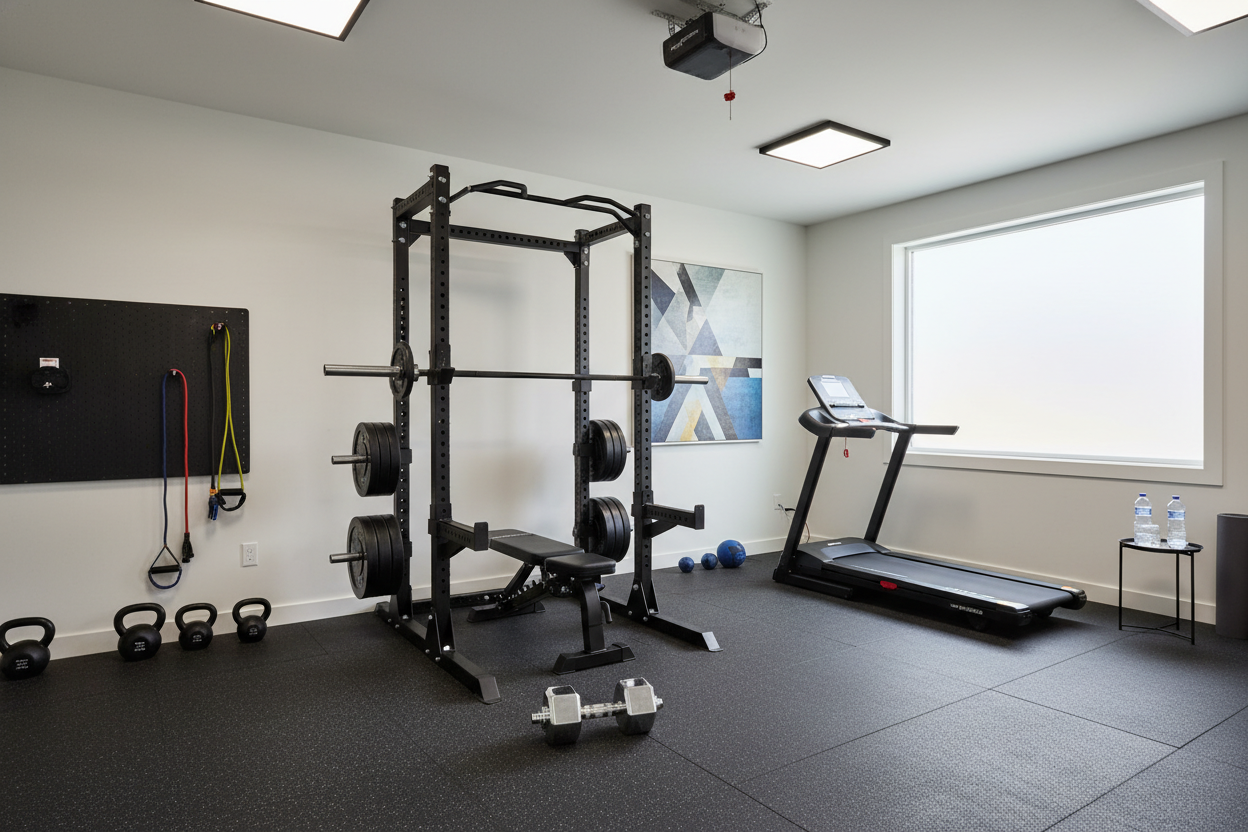
Machine vs Free Weight Lift: What I Learned in My Garage
I remember the day my ego finally met my orthopedic reality. I was trying to grind out a heavy set of squats in my freezing garage, my knees feeling like they were filled with crushed glass. I had spent a decade convinced that a real weight lift required a barbell and nothing else. If it wasn't raw iron, it was fluff. I was wrong, and my joints were paying the price for my stubbornness.
Building a home gym is an exercise in compromise. You have limited floor space and a finite budget. When I was first mapping out my weight lifting home gym blueprint, I ignored anything with a pulley or a lever. I thought machines were for people who didn't want to work hard. Three years later, my garage looks a lot different because I realized that variety isn't just about fun—it is about staying in the game.
- Free weights build better stability and core strength.
- Machines allow you to train to absolute failure safely.
- A mix of both prevents overuse injuries in smaller joints.
- Space-saving hybrid equipment is the ultimate garage gym hack.
Confession: I Used to Be a Barbell Snob
For years, I lived by the 45-lb plate. I thought that if you weren't fighting to keep a bar from crushing you, you weren't actually lifting weight. This dogmatic thinking led me straight to a massive plateau. My lower back would give out on squats before my quads were even tired. My shoulders would scream during heavy benching, but my chest still looked like a flat piece of plywood.
I finally swallowed my pride when I realized that my favorite pro bodybuilders all used machines. They weren't weak; they were precise. I started looking for a better weight for lifting that didn't just tax my central nervous system but actually hit the target muscle. Opening my mind to machines didn't make me softer—it made me bigger and, surprisingly, less prone to those nagging aches that used to keep me on the couch.
What Is Lifting Weights on a Machine Actually Doing?
When people ask me what is lifting weights on a machine actually doing for your body, I tell them one word: stability. On a machine, the manufacturer has already handled the balance for you. You are locked into a fixed path. This sounds like a downside to the 'functional' crowd, but it is actually a superpower for muscle growth.
Because you don't have to worry about the bar tipping or your ankles wobbling, you can take a set to absolute, soul-crushing failure. Modern weight lifting machines use high-quality bearings and smooth cable ratios that keep the tension on the muscle through the entire range of motion. You can't 'cheat' the weight as easily with momentum. If you want to grow your lats or your hamstrings without your grip or your lower back failing first, the machine is your best friend.
The Undeniable Power of a Heavy Free Weight Lift
Despite my new love for cables, the barbell is still king for building raw, systemic power. There is a neurological drive you get from a heavy free weight lift that a machine simply cannot replicate. Your brain has to coordinate dozens of muscles just to keep you upright. That core bracing and total-body tension are what build 'real-world' strength.
If you are doing heavy dumbbell work, you need a foundation that doesn't flex under pressure. I learned this the hard way with a cheap department store bench that felt like a seesaw. You need a solid adjustable weight bench with a high weight capacity—ideally 800 lbs or more—to feel secure when you are pressing. When you feel stable, you lift heavier. When you lift heavier, you get stronger. It is that simple.
Finding the Right Weight For Lifting Unilaterally
When you switch from a barbell to dumbbells or kettlebells, don't expect to just divide your total weight by two. If you bench 200 lbs, you probably won't be doing 100-lb dumbbells for the same reps. Stabilizing two separate weights is significantly harder. I usually recommend starting at about 40% of your bilateral weight when moving to unilateral work. This ensures your form stays crisp and you don't end up wearing a dumbbell as a necklace.
How I Program Both in a Tiny Space
In a 200-square-foot garage, you have to be smart. I always start my sessions with the big, ugly free weight movements—squats, deadlifts, or overhead presses. This is when my focus is highest and my stabilizers are fresh. Once I've done the heavy work, I move to machines or cables to finish the muscle off. I use the machine to 'trash' the muscle without the risk of dropping a bar on my face.
If you are tight on space, you don't need a dozen separate units. A versatile power rack weight bench package that includes a lat pull-down or a cable crossover attachment is the holy grail. It gives you the best of both worlds in a single footprint. I can squat in the rack and then immediately pivot to cable rows or tricep pushdowns without moving more than two feet.
The Final Verdict: What Lifting Style Actually Wins?
When people ask what lifting style is superior, the answer is always 'both.' If you only use machines, you'll be strong in a vacuum but weak in the real world. If you only use free weights, you'll likely hit a wall where joint pain limits your volume. The smartest home gym owners use free weights to build the foundation and machines to build the detail.
Before you invest in home weight lifting machines, look at your current weaknesses. If your joints are perpetually sore, a cable system might be the best money you ever spend. If you feel 'unstable' or weak during daily tasks, get back to the barbell. My garage is a hybrid now, and I've never been stronger or felt better.
FAQ
Is lifting weights on machines safer than free weights?
Generally, yes. Machines have built-in stops and a fixed path, making it much harder to lose control of the weight. They are ideal for training alone in a garage where you don't have a spotter.
Can I get big using only dumbbells?
Absolutely. Dumbbells offer a greater range of motion than a barbell and force each side of your body to work independently. You just have to be willing to buy heavy enough sets as you progress.
How much floor space do I need for a home gym?
You can do a lot in an 8x10 foot space. A power rack and a bench are the essentials. If you have extra room, adding a functional trainer or a cable tower is the next logical step for variety.