Weight Lifting Home Gym Blueprint: What to Know Before You Buy
Tired of waiting twenty minutes for the only squat rack to open up? We have all been there. The commute, the crowds, and the monthly fees can quickly drain your motivation. Building a weight lifting home gym is the ultimate solution to take back your time and accelerate your gains.
But creating a space that actually works for heavy training takes more than just dragging a rusty barbell into your garage. In this guide, we break down exactly how to plan, budget, and equip your space so you can build a setup that rivals any commercial facility.
Key Takeaways
- Space dictates equipment: Measure your ceiling height and floor footprint before buying any power rack.
- Prioritize the big three: A quality rack, a sturdy bench, and an Olympic barbell set form the foundation of any serious setup.
- Flooring is non-negotiable: High-density rubber mats protect your foundation and your gear.
- Machines vs. Free Weights: Decide early if you want a free-weight focus or a multi-station machine based on your training style.
Sizing Up Your Space for a Full Home Gym
Before you spend a single dollar, you need to know exactly what your room can handle. A true complete at home gym requires more than just floor space; it demands vertical clearance and structural support.
Garage vs. Spare Room Setups
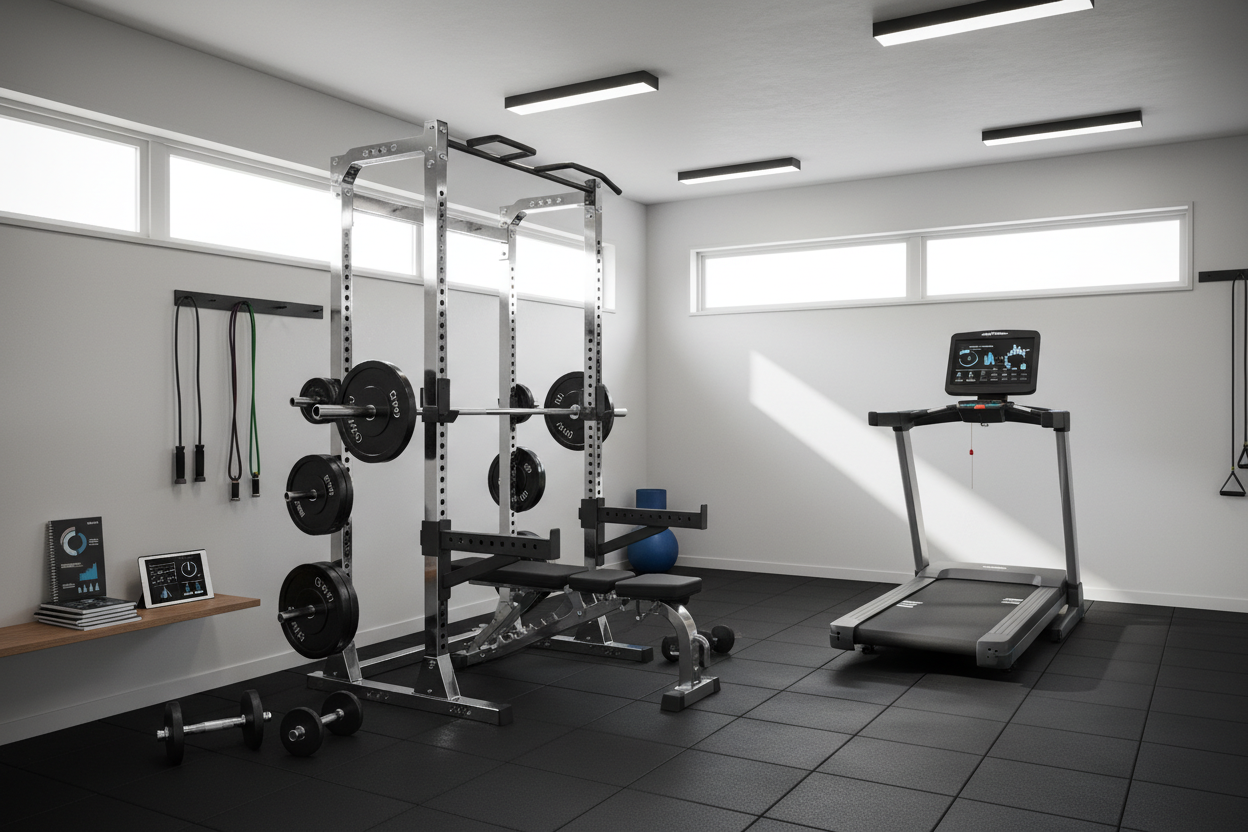
Garages are the gold standard for a whole home gym because concrete floors can handle heavy deadlifts and dropped weights. If you are setting up in a spare bedroom or basement, you must factor in ceiling height. A standard power rack is around 82 to 90 inches tall. If your basement ceilings are under 8 feet, you will need a specialized short rack or a half-rack to ensure you have enough room for overhead presses.
Essential Gear for Full Body Gyms
When outfitting a home weight lifting gym, it is easy to get distracted by flashy accessories. Stick to the foundational pieces that allow for progressive overload across all major muscle groups.
Racks, Benches, and Weights
Your power rack is the centerpiece. Look for one with 3x3-inch 11-gauge steel uprights if you plan on lifting heavy. Pair this with a heavy-duty adjustable bench and a 300-pound Olympic weight set. This trio alone allows you to perform squats, bench presses, overhead presses, and deadlifts.
The All-In-One Alternative
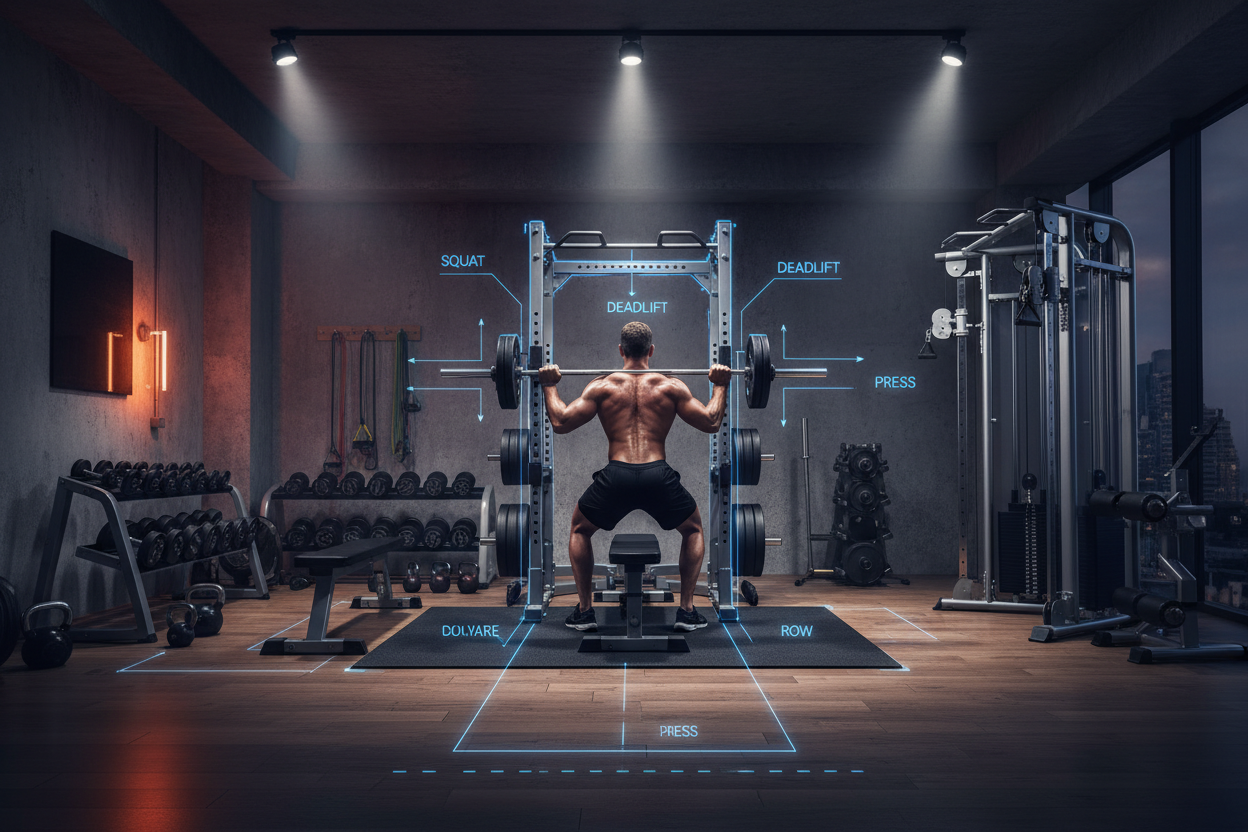
If you have severe space limitations or prefer guided movements, a complete home gym machine (like a functional trainer or a Smith machine combo) might be the better route. These all-in-one full body gyms offer cable resistance and built-in safety mechanisms, making them excellent for solo lifters who want to push close to failure without a spotter.
From Our Gym: Honest Take
When I built my first home complete gym in a standard two-car garage, I made a classic rookie mistake: I bought cheap, interlocking foam tiles instead of 3/4-inch vulcanized rubber stall mats. Within a month of heavy deadlifting, the foam was shredded, and I had chipped the concrete underneath.
I also learned that while a 2x2-inch rack is fine for beginners, upgrading to a heavier 3x3 rack drastically reduced the side-to-side sway when racking heavy squats. The minor con? The heavier rack took up a slightly larger footprint and required me to bolt it directly into the concrete foundation to maximize stability. It was an afternoon of extra work, but the rock-solid feel during pull-ups and heavy lifts was absolutely worth it.
Frequently Asked Questions
How much space do I need for a weight lifting home gym?
For a basic power rack, bench, and barbell setup, you need a minimum footprint of 8 feet by 10 feet. This allows enough clearance for the 7-foot Olympic bar and room to load plates on either side safely.
Is a complete home gym machine better than free weights?
It depends on your goals. Free weights are superior for building functional strength and stabilizer muscles. However, a complete home gym machine is often safer for training alone and allows for quicker weight transitions during circuit training.
How much does a whole home gym cost?
A budget-friendly entry-level setup can cost between $1,000 and $1,500. For a mid-tier, commercial-grade setup that will last a lifetime, expect to invest between $2,500 and $5,000 depending on the specialty attachments you add.