Lunges vs. Step-Ups: Which Is Actually Better for Leg Exercise?
I spent years thinking my squat rack was the only way to get big legs. Then I realized my lower back was giving out before my quads did. That is when I started obsessing over unilateral movements. If you are looking for leg exercise options that actually work without requiring a forklift to move plates in your garage, you are looking at lunges and step-ups.
Quick Takeaways
- Step-ups are superior for raw quad and glute isolation because balance is less of a limiting factor.
- Reverse lunges are the gold standard for joint longevity and athletic stability.
- Forward lunges are generally a bad idea for anyone with pre-existing knee issues.
- Floor traction is the most underrated factor in how much weight you can actually move.
Why Unilateral Work Is Non-Negotiable at Home
Most home lifters do not have enough plates to max out a barbell squat. Even if you do, the risk-to-reward ratio of a 405-lb squat in a cramped garage is sketchy. Unilateral work is the ultimate cheat code. It doubles the effective weight of your dumbbells and fixes those weird strength imbalances we all have from sitting at desks.
In my experience, these are easily the most important leg exercises for growth because they force every fiber to fire just to keep you upright. You cannot hide a weak side when you are standing on one leg. Plus, you do not need a massive footprint to get a world-class workout.
Lunges: The Good, The Bad, and The Wobbly
Lunges are a classic, but they can be a nightmare if your floor is slippery or your ego is too big. I have seen guys with 500-lb squats look like newborn giraffes on ice the moment they try walking lunges. The balance requirement is massive. Often, your stabilizers give out before your quads do, which is frustrating when you are trying to build muscle.
When people talk about 'le exercises' (or whatever shorthand you use for these unilateral movements), they often forget that lunges require a lot of deceleration. That is great for sports, but it can be a distraction if you just want to hammer your quads until they grow. If you are wobbling, you are not growing.
Why You Need to Stop Doing Forward Lunges
Forward lunges are knee killers. Period. The deceleration phase puts massive shear force on the patella. I learned this the hard way after a month of high-rep forward lunges left my knees feeling like they were filled with crushed glass. Stepping backward is the superior move.
Reverse lunges keep the shin vertical and the tension on the glutes and quads, not the cartilage. It is a much better alternative, especially when looking for gentle leg exercises for seniors or anyone with high-mileage joints. If you cannot do a reverse lunge pain-free, you probably should not be doing lunges at all.
Step-Ups: The Most Botched Leg Movement Exercises
Step-ups are the most cheated movement in the gym. Most people use their back foot to bounce off the floor like a pogo stick. That is not a leg exercise; that is a calf raise with extra steps. To perform these leg movement exercises correctly, you have to keep your trailing toes pulled up so you cannot cheat.
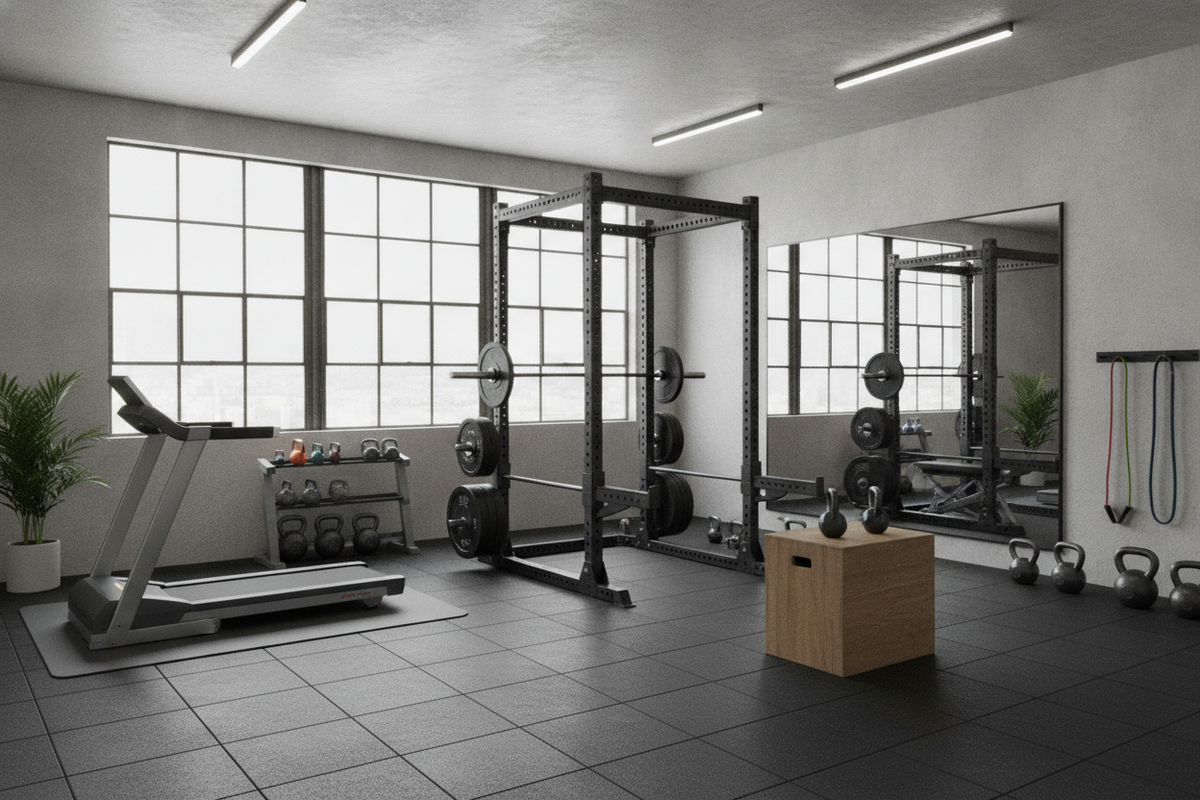
Safety is also a huge factor here. I always anchor my bench or plyo box on a large exercise mat. If your box slides mid-rep while you are holding 50-lb dumbbells, you are going to have a very bad day. I have seen boxes tip because the lifter did not have a stable base, and it is a quick way to end your training season.
Setting Up Your Floor for Maximum Power
Traction is everything. If your feet are sliding, you cannot produce force. Your brain literally will not let your muscles fire at 100 percent if it senses you are about to slip. I use a thick 6x8ft exercise mat in my main lifting area. It is dense enough that it does not squish under heavy loads but grippy enough that my plyo box stays glued to the floor. It turns a sketchy balancing act into a stable platform for heavy sets.
The Final Verdict: Which Is Better for Leg Exercise?
If I had to pick one for the rest of my life, I would take the step-up. It allows for more consistent loading and less knee strain. However, you need the right setup. If you are training on bare concrete or a thin yoga mat, you are asking for an injury. Get a real mat, find a sturdy box, and stop bouncing off your back foot.
For those who want purely athletic performance, keep the reverse lunges in your rotation. They build the kind of stability that translates to the field. But for raw quad size? Step up to the box. Just make sure your equipment is as solid as your form.
FAQ
Do I need a plyo box for step-ups?
A sturdy weight bench works, but a dedicated plyo box is better because it offers different heights. Just make sure whatever you use is anchored on a non-slip surface.
How high should the step be?
Aim for a height where your thigh is parallel to the floor. Anything higher usually leads to lower back rounding and excessive cheating from the bottom foot.
Are lunges better for glutes?
Reverse lunges with a slight forward lean are incredible for glutes, but a deep step-up where you drive through the heel is just as effective without the balance struggle.