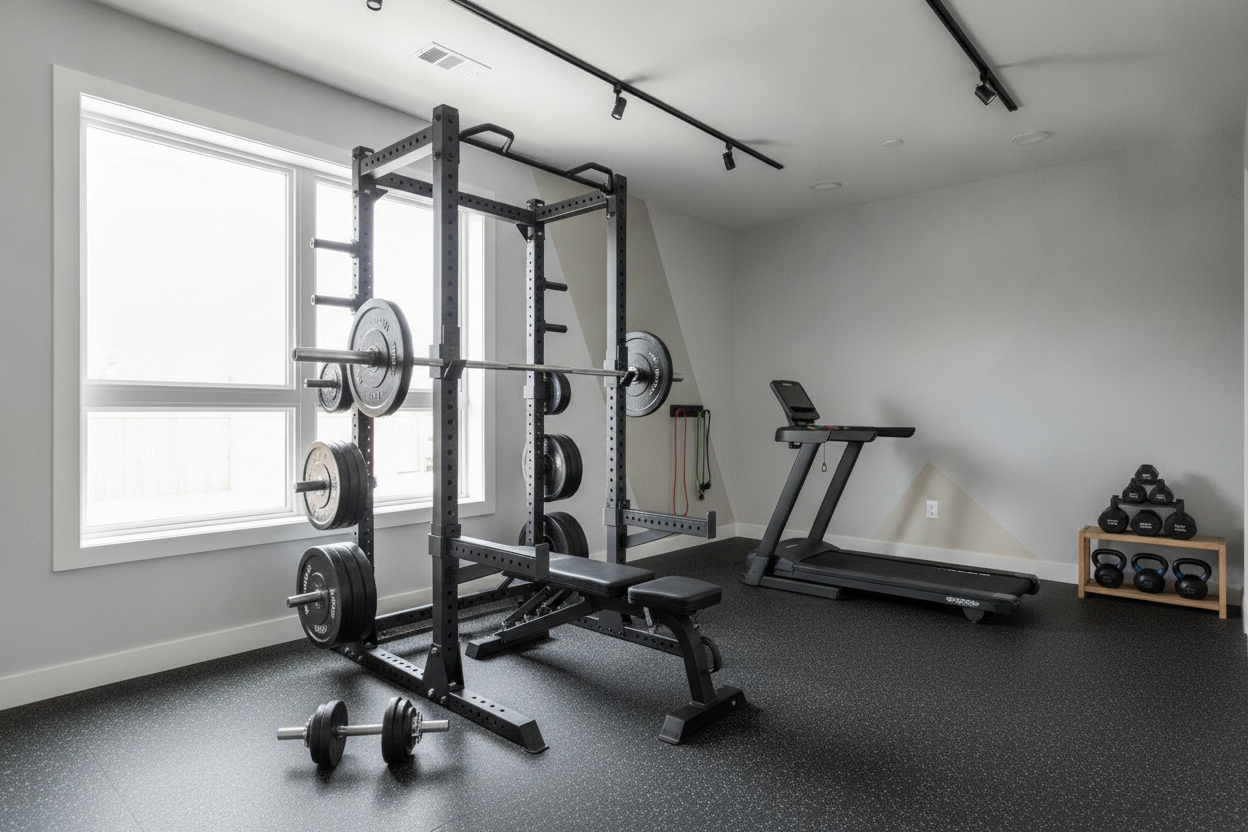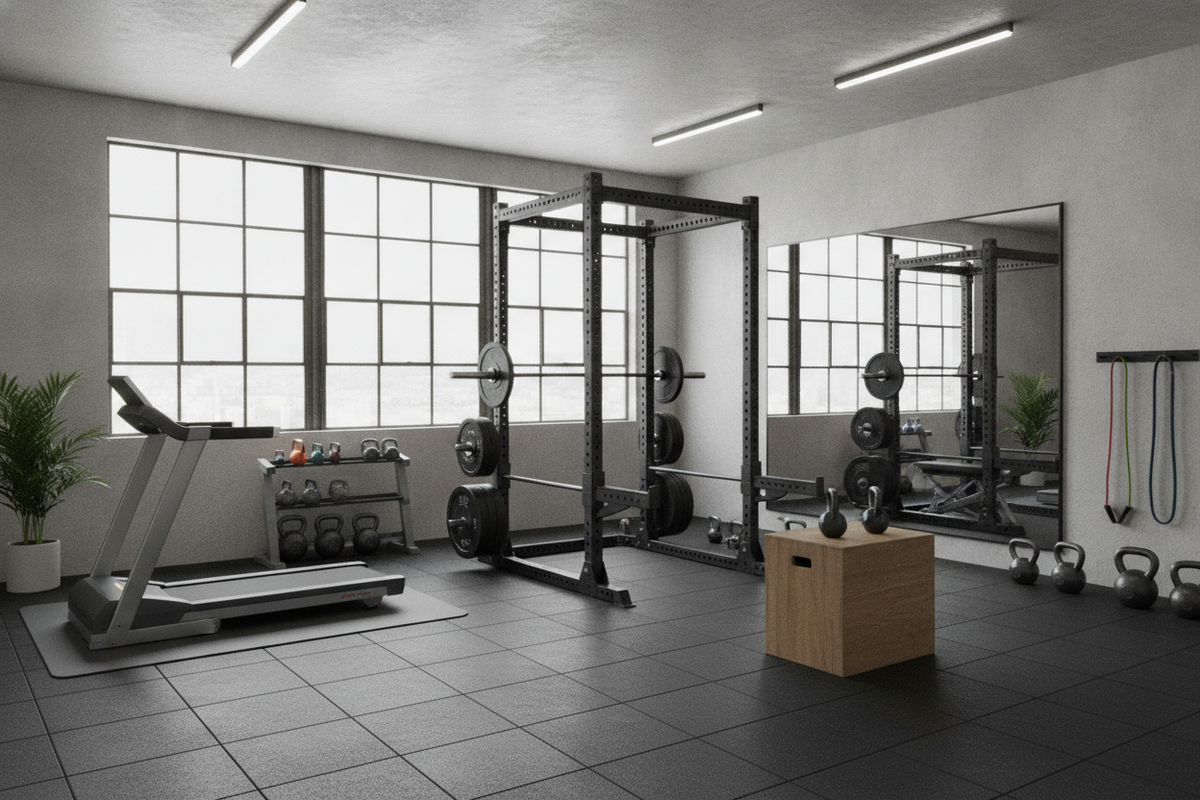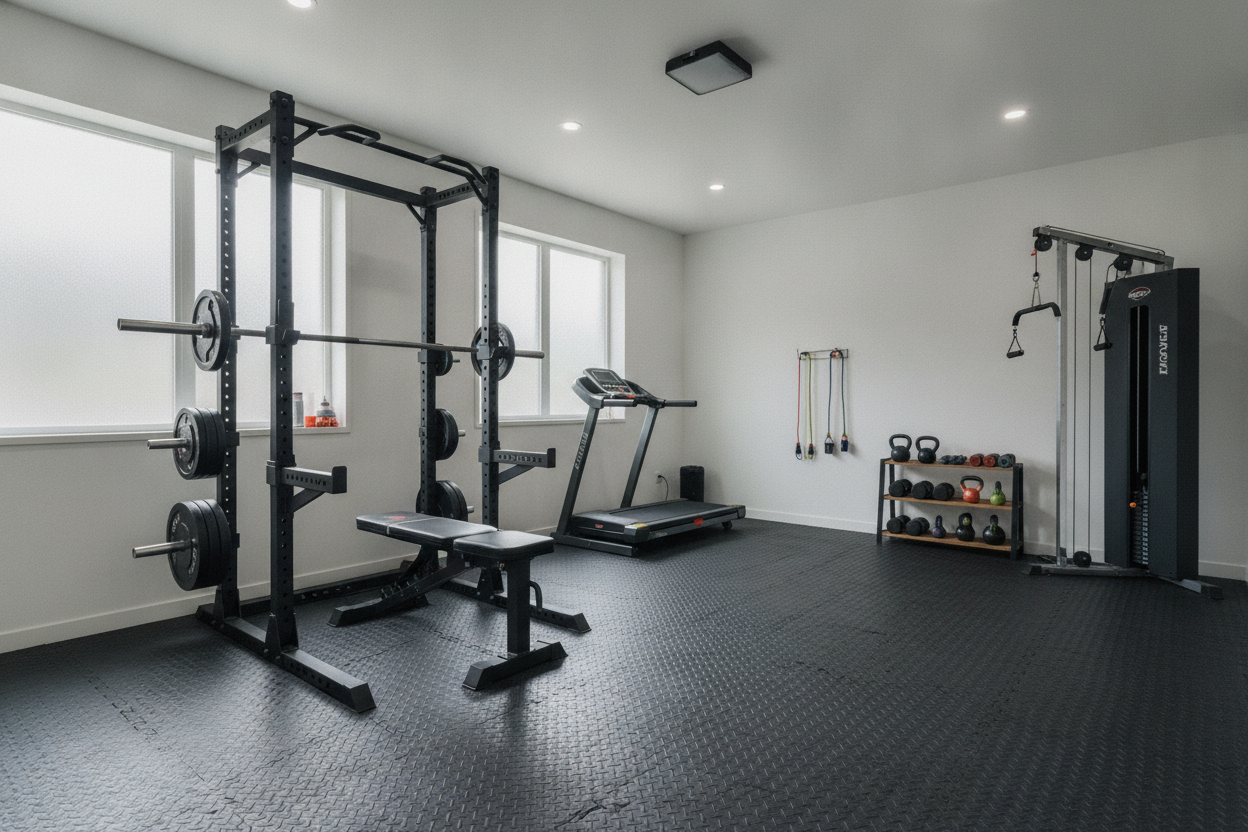
How to Mix Different Types of Fitness Equipment Without Going Broke
I remember standing in my garage three years ago, staring at a brand-new $800 chest press machine and realizing I already had a power rack, a barbell, and a full set of dumbbells. I had just spent a month's mortgage on a piece of gear that did the exact same thing as the equipment I already owned. It was a classic rookie move: buying for the 'vibe' rather than the function.
The truth is, most people overcomplicate their setups. You don’t need every single one of the types of fitness equipment you see in a commercial gym to get elite results. You just need to understand how to layer different gym machines and free weights so they actually complement each other instead of just taking up space.
Quick Takeaways
- Prioritize free weights for your foundation; they offer the highest ROI for strength.
- Use cables to fill the gaps where gravity fails (constant tension).
- Only buy fixed-path machines for movements where you want to train to absolute failure safely.
- Always protect your subfloor before dragging in heavy selectorized units.
- Audit your 'movement patterns' before your next purchase to avoid redundancy.
The Trap of Buying the Same Movement Twice
The biggest mistake I see in home gym builds is the 'redundancy tax.' Eager lifters often end up with a barbell bench, a dumbbell bench, and a selectorized chest press. Unless you’re running a commercial facility with high foot traffic, you’ve just wasted thousands of dollars and 30 square feet of floor space. These are all horizontal pushes.
When you're looking at different gym machines, ask yourself: 'Does this offer a resistance profile I don't already have?' If you have a rack and a bar, you have your heavy compounds covered. Adding a plate-loaded machine that mimics a squat is usually a waste unless you have specific injury limitations or you're a high-level bodybuilder needing isolation. Stop collecting different workout machines that hit the same muscle from the same angle.
Category 1: Free Weights (Your Unforgiving Baseline)
Barbells, dumbbells, and kettlebells are the absolute core. If you don't have a solid 20kg bar and at least 300 lbs of iron, don't even look at a machine. Free weights require you to stabilize the load, which recruits more muscle fibers and fries your central nervous system in a way a smith machine never will.
I recommend starting with a pair of adjustable dumbbells—something like the 52.5-lb or 80-lb sets—to save space. They allow for natural planes of motion that fixed exercise machines types simply can't replicate. You can’t 'cheat' a heavy dumbbell overhead press; your stabilizers will tell on you immediately.
Category 2: Cables and Constant Tension Tools
Free weights are great, but they have a flaw: the resistance curve. In a bicep curl or a lateral raise, there is zero tension at the bottom and maximum tension in the middle. This is where cables shine. A functional trainer or a simple wall-mounted pulley provides a continuous pull throughout the entire range of motion.
I've decoded the types of workout machines in the past to show why pulley ratios matter. A 2:1 ratio is smoother for isolation, while a 1:1 ratio is better for heavy rows. If you’re trying to build a hybrid gym, a high-quality cable tower is the best bridge between raw iron and specialized machinery.
Category 3: Fixed-Path and Selectorized Gear
There is a specific time and place for heavy-duty, fixed-path machinery. If you’re training alone and want to push your legs to the point of collapse, a leg press or a hack squat is significantly safer than a barbell squat. You can hit absolute failure without worrying about a 400-pound bar pinning you to the floor.
Selectorized gear (the ones with the pin and weight stack) is all about efficiency. I use these for 'finisher' sets where I want to change weight in two seconds without stripping plates. For a deeper dive into the mechanics of these systems, check out this guide to fitness machines types. Just remember, these take up the most space, so choose the one movement you struggle to do with free weights—usually a leg curl or a lat pulldown.
Protecting Your Foundation Before You Load Up
Before you drag a 500-pound functional trainer or a plate-loaded leg press into your garage, look at your floor. Standard 4-inch concrete slabs aren't meant to take point-load pressure from heavy machine feet, especially if you're dropping weights nearby. I learned this the hard way when I cracked a section of my floor dropping a 100-lb dumbbell near my rack.
Invest in a high-density large exercise mat for home gym use. Don't buy the cheap foam puzzle pieces from the big-box stores; they'll compress under a real machine in a week. You need 1/4-inch to 1/2-inch rubber to actually disperse the weight and protect your equipment's frame from moisture and vibration.
How to Build Your Hybrid Setup (A 3-Step Blueprint)
Step one: Audit your current gear. Write down every movement you can currently do (Push, Pull, Squat, Hinge, Lunge). If you have three ways to do a 'Pull,' you don't need a fourth machine for it. Step two: Identify the gaps. If you have no way to do a seated leg curl or a cable fly, that’s your next purchase.
Step three: Buy for the footprint. In a home gym, square footage is more valuable than the equipment itself. Look for 'all workout machines' that offer multi-functionality, like a power rack with a built-in cable attachment. This gives you all types of gym machines in one compact footprint, saving you money for more plates.
Personal Experience: My $1,200 Mistake
I once bought a dedicated seated calf raise machine because I saw a pro bodybuilder using one in a video. It looked cool, it felt 'hardcore,' and it sat in the corner of my gym for eight months. I eventually realized I could get the same stimulus by putting a block of wood under my toes and holding a dumbbell. I sold it for half what I paid just to get my floor space back. Now, I never buy a machine unless I can prove that my free weights can't do the job better.
FAQ
What are the most common gym machines for beginners?
The lat pulldown, seated row, and leg press are the big three. They help you learn the movement patterns without needing the balance required for free weights.
Should I buy plate-loaded or selectorized machines?
Plate-loaded is cheaper and easier to move. Selectorized (weight stacks) is faster for drop-sets but much more expensive and heavy to ship.
Can I get a full workout with just one type of equipment?
Absolutely. You can get elite results with just a barbell and a rack. Machines are the 'icing on the cake' for isolation and safety at failure.